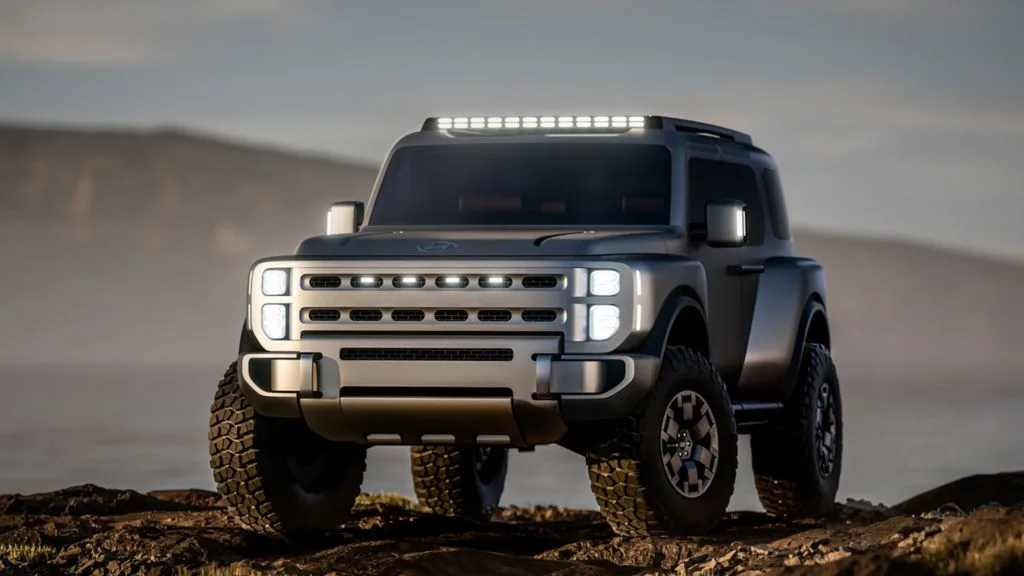
Hyundai just dropped one of the most surprising reveals of 2026: a rugged, Bronco-fighting, ladder-frame-equipped concept truck that signals the Korean automaker is coming for a piece of America’s most profitable automotive segment. The Hyundai Boulder Concept, unveiled at the 2026 New York International Auto Show on April 1, is unlike anything the brand has produced before — and it’s a preview of a real production truck coming to U.S. dealers by 2030.
Here’s a full breakdown of what the Boulder Concept is, what it reveals about Hyundai’s future, and why it matters for American truck buyers.
What Is the Hyundai Boulder Concept?
The Boulder Concept is officially described by Hyundai as a “pure design study” — but don’t let that term fool you. This is not a one-off fantasy vehicle that will never be built. According to Hyundai’s official announcements at the New York Auto Show, the Boulder Concept previews the brand’s first fully-boxed body-on-frame platform, a new architecture that will directly underpin a production midsize pickup truck scheduled for market delivery by 2030.
Body-on-frame construction — where the vehicle body sits on top of a separate ladder-style frame — is the foundation of nearly every serious truck and off-road SUV in America: the Ford F-150, Chevy Silverado, Ram 1500, Toyota Tacoma, Jeep Wrangler, and Ford Bronco all use it. Hyundai has historically built its vehicles on unibody platforms, which are lighter and more car-like but not as capable for heavy-duty towing, hauling, and extreme off-road use. The Boulder represents a fundamental architectural leap for the brand.
Design: “Art of Steel” Meets Off-Road Brutality
Visually, the Boulder Concept is a bold departure from Hyundai’s sleek, aerodynamic design language. The concept features:
- A boxy, upright two-box silhouette that prioritizes interior volume and off-road visibility over aerodynamics
- Enormous fender flares accommodating substantial off-road tires
- Chunky front and rear bumpers with integrated off-road lighting
- A spare tire mounted on the liftgate — a clear nod to serious trail-duty credibility
- Physical, tactile controls throughout the interior for reliability in harsh conditions
- A modular interior with fold-out work tables and rugged materials
Hyundai calls this design philosophy “Art of Steel” — a nod to the advanced high-strength steel technologies pioneered by Hyundai Steel. The concept was designed at Hyundai Design North America’s Southern California studio, with a deliberate focus on American off-road culture.
The head-up display inside the Boulder offers some interesting hints about the production truck’s intended character: suspension settings are shown with a “Baja” mode selected, there’s a part-time four-wheel-drive system with a two-speed transfer case visible, and an “Exhaust” setting is shown turned to “loud.” This is unmistakably a gas-powered truck with performance ambitions — not an EV concept.
The closest visual comparisons in the market? Think Jeep Wrangler meets Ford Bronco, with a hint of Toyota 4Runner — all filtered through Hyundai’s interpretation of American rugged utility.
Why Is Hyundai Building a Truck? The Business Case 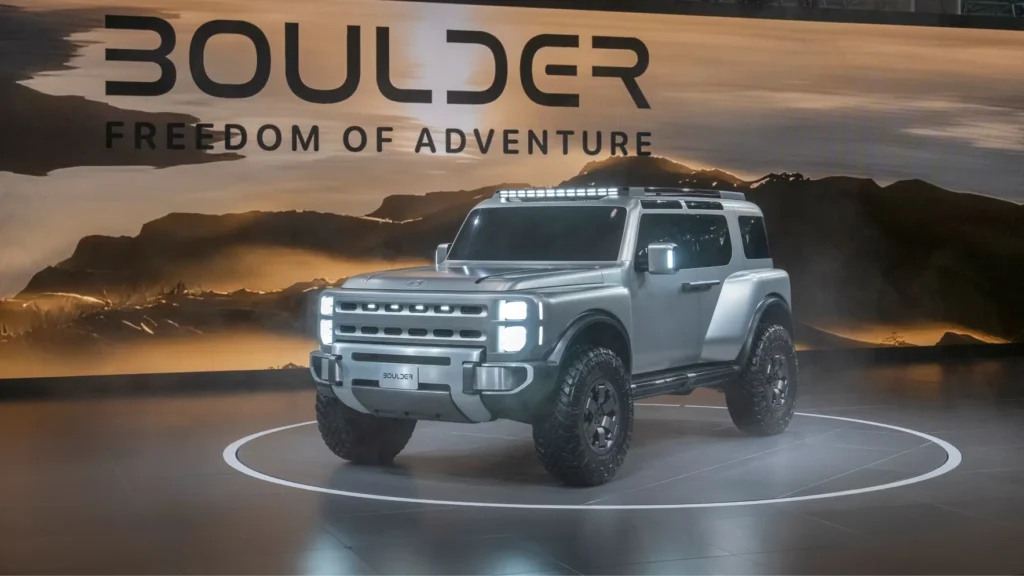
If you’re wondering why a Korean brand best known for affordable sedans and crossovers is suddenly building body-on-frame trucks, the answer is simple: trucks and truck-based SUVs are where the money is in America.
The midsize truck segment — which includes the Toyota Tacoma, Ford Ranger, Chevy Colorado, Nissan Frontier, and the upcoming Honda Ridgeline successor — represents hundreds of thousands of annual sales and profit margins that sedans simply can’t match. Hyundai’s CEO José Muñoz said it plainly at the New York show: “Body-on-frame trucks play a central role in this market, and we see a clear opportunity to bring customers a new alternative.”
The Boulder-based production truck is one of 36 new Hyundai vehicles planned for North America by 2030, and the brand has committed that it will be designed in America, developed for America, and built in America using U.S. steel — a strategically critical decision given current trade policy and tariff concerns. By building domestically, Hyundai insulates the truck from the kind of import tariff exposure that has hurt several of its own EV models in 2026.
How Does It Stack Up Against the Competition?
The production truck that the Boulder previews will enter one of the most competitive segments in automotive history. By 2030, the midsize truck landscape will likely include:
- Toyota Tacoma — the perennial segment leader with a loyal following and now available with hybrid powertrains
- Ford Ranger — a strong seller with Bronco Sport styling cues and off-road Raptor variant
- Chevy Colorado / GMC Canyon — GM’s capable mid-sizers with ZR2 off-road versions
- Jeep Gladiator — still the only convertible pickup on the market
- Scout Terra — the all-new electric/EREV pickup from Volkswagen’s resurrected Scout brand
Hyundai’s challenge will be to differentiate meaningfully in a crowded field. Based on the Boulder Concept’s positioning — heavy emphasis on off-road credibility, American manufacturing, and rugged design — the brand appears to be targeting buyers who want a Gladiator-style adventure truck rather than a construction site workhorse. If the production truck stays true to the concept’s spirit, it will be more Moab-bound than contractor-spec.
What Comes Next?
Hyundai says more details about how the Boulder Concept will influence the production truck will be released in the coming months. The 2030 on-sale target gives the brand roughly four years to finalize the platform, complete engineering development, and ramp up production at a U.S. facility.
For truck enthusiasts, the Boulder Concept is a fascinating sign of how the pickup market is evolving. Four years ago, the idea of Hyundai building a ladder-frame American truck would have seemed far-fetched. Today, after watching the Korean brand become one of the fastest-growing automakers in the U.S. — outselling legacy brands in several key segments — nothing feels impossible.
The American truck wars just got a new contender. And it’s coming from Seoul.
Interested in comparing what a Hyundai truck might cost to operate vs. a gas or electric pickup? Bookmark our EV vs Gas Cost Calculator and Road Trip Cost Calculator — both tools will help you crunch the numbers when Hyundai’s truck finally hits the market. Planning to finance? Our Car Loan EMI Calculator is ready whenever you are.