
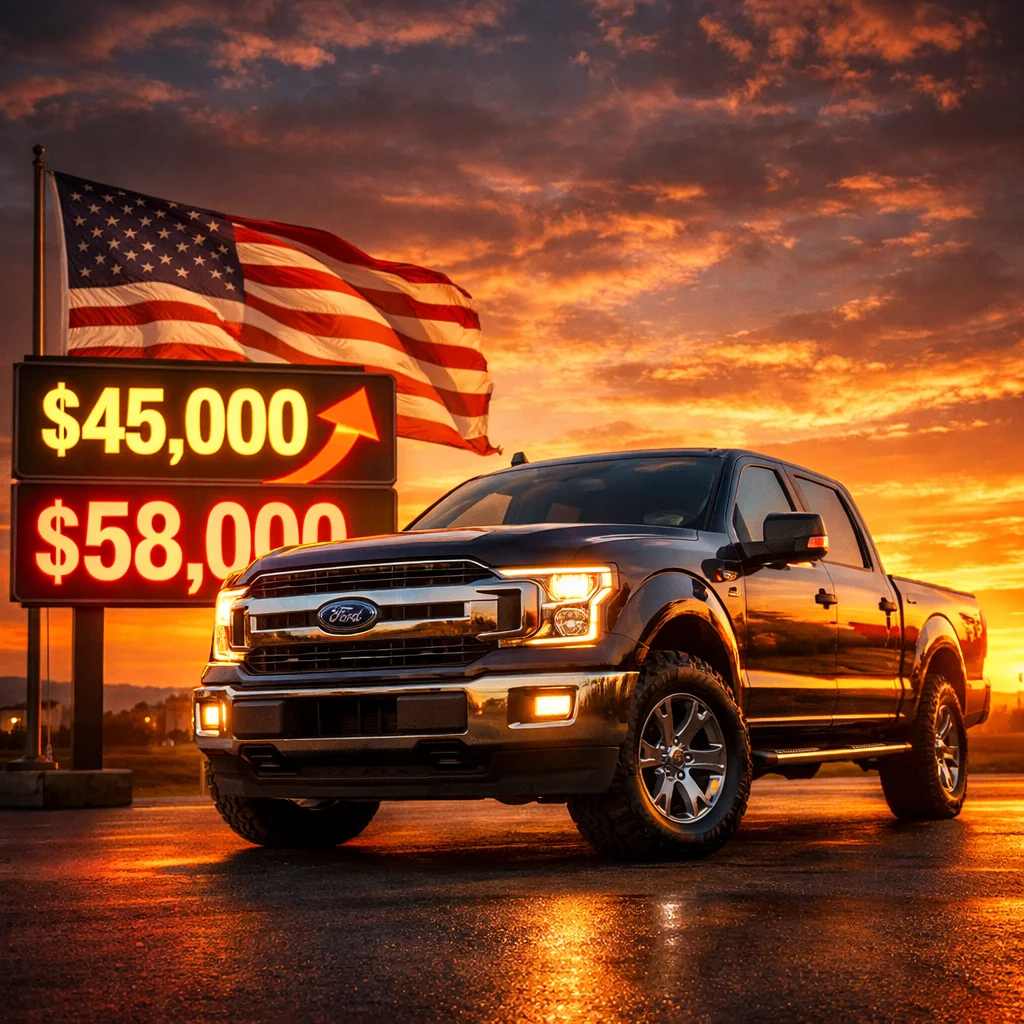
If you’re shopping for a new car in 2026, you’ve probably heard the word “tariffs” mentioned more times than you’d like. The Trump administration’s 25% tariffs on imported vehicles and auto parts — which took effect in April 2025 — have added tens of billions of dollars in costs to the automotive industry. The big question every American car buyer is asking right now: how much of that is coming out of your wallet?
The short answer is: more than you might think, and more than you were paying six months ago.
The Tariff Bill So Far: $35 Billion and Counting
According to analysis of financial reports by Automotive News, auto tariffs have cost the global auto industry more than $35 billion since they were implemented. Toyota has been the single hardest-hit automaker, projecting roughly $9.1 billion in tariff-related costs for the fiscal year ending March 2026. The three major Detroit automakers — General Motors, Ford, and Stellantis — collectively absorbed about $6.5 billion in 2025 alone. BMW, Honda, and Hyundai-Kia each reported tariff impacts exceeding $1 billion.
For much of 2025, automakers chose to absorb these costs rather than pass them to consumers. They had strategic reasons: avoiding buyer backlash, keeping sales volumes up during a soft market, and not wanting to appear to be exploiting the tariff situation. But that buffer is running out in 2026.
What Are Buyers Actually Paying More?
The impact varies significantly depending on where a vehicle is built. According to industry data:
Imported vehicles have borne the heaviest price increases, ranging from $5,000 to $8,900 per vehicle depending on the model and origin. European luxury brands, Japanese models built overseas, and Korean vehicles not assembled in the U.S. have all seen the biggest sticker price adjustments.
Domestically assembled vehicles aren’t immune either. Even American-built cars like the Toyota RAV4 (made in Georgetown, Kentucky) use significant percentages of imported components — transmissions, electronics, steel and aluminum. The estimated average tariff impact on U.S.-assembled vehicles is $1,600 to $2,000 per vehicle.
J.P. Morgan Research estimates that the total combined tariff impact on vehicles and parts will hit approximately $41 billion in the first year, representing an average increase of roughly $2,580 per vehicle — about 5.8% of the average retail price. That figure is expected to climb to $45 billion in year two and $52 billion by year three.
Who’s Raising Prices — and Who’s Trying to Hold the Line 
Automakers have taken very different approaches to managing tariff costs. Here’s where major brands stand heading into spring 2026:
Audi raised prices across most of its 2026 lineup by $800 to $4,100 depending on the model. To offset the sting, the German brand added three years of pre-paid maintenance for all 2026 models.
BMW announced nearly 2% price increases on its 2026 lineup, effective July 2025. On high-performance models like the X5 M, that translated to a $2,500 hike.
Ford raised prices on Mexico-built models including the Bronco Sport, Maverick, and Mustang Mach-E by up to $2,000 in mid-2025. U.S.-built models like the F-150 have seen more modest increases hidden in destination fees.
Kia raised prices on the Sportage by up to $1,300, citing “new content” — though industry analysts are skeptical the increase is purely feature-driven.
Toyota has largely absorbed costs so far, but reported a 25% decline in net income for the first nine months of its fiscal 2026, with tariffs cited as a major factor. Price increases on Toyota models are increasingly expected as the fiscal year progresses.
Honda publicly committed to absorbing tariff costs rather than passing them to consumers, and has been relocating production — including CR-V manufacturing — back to the U.S. to reduce exposure.
Hyundai raised financing rates in a manner that creates an effective $2,300 increase for financed buyers, even without a formal MSRP hike.
The Hidden Price Increases Buyers Often Miss
One tactic automakers and dealers have been using is raising costs in ways that don’t show up as obvious sticker price increases. These include:
Higher destination fees. Destination and delivery fees for 2026 model full-size GM and Ford trucks and SUVs reached a record $2,795 — built into the price before negotiations even begin.
Reduced incentives. Several brands have quietly cut cash-back offers, loyalty bonuses, and financing deals even as MSRPs appear stable.
Higher financing rates. As noted with Hyundai and Mazda, raising interest rates on financing by even 1% can add $1,500 to $2,300 to the total cost of a loan without touching the sticker price.
Smaller rebates. Nissan, for example, cut prices on some Rogue models by $1,930 while simultaneously eliminating rebates worth up to $1,500 — a net benefit of only $430 for buyers.
What Should Car Buyers Do Right Now?
Given the current tariff environment, here’s practical advice for anyone shopping for a new vehicle in 2026:
Buy American-assembled when possible. Vehicles built in the U.S. — think Toyota RAV4, Honda CR-V, Ford F-150, Chevy Silverado, Tesla Model Y — face lower direct tariff exposure than imports. Check the Monroney sticker for the “final assembly point” before you buy.
Consider the used car market. Tariffs do not directly affect previously owned vehicles. As new car prices creep higher, late-model used cars are becoming increasingly attractive on a value basis. Used car prices are expected to rise as demand shifts, so acting sooner rather than later may be wise.
Get pre-approved financing independently. With dealers adjusting financing rates to offset costs, walking in with pre-approved financing from your bank or credit union gives you negotiating power and helps you see through hidden rate increases.
Don’t wait indefinitely. The tariff relief measures in place — including a partial reimbursement offset for automakers on U.S.-assembled vehicles — begin phasing down after April 2026. As those offsets shrink, more costs are likely to flow to consumers.
Run the full cost of ownership numbers. With tariffs making some imports significantly more expensive and gas prices high, hybrids and domestically built EVs are increasingly competitive on total cost of ownership. Use our EV vs Gas Cost Calculator and Car Loan EMI Calculator to see your real numbers before you sign anything.
The tariff situation is not going to resolve overnight. American car buyers in 2026 are navigating one of the most complex new-car markets in decades — but being informed and strategic can still save you thousands.
Already considering an EV or PHEV to beat the tariff impact on imported gas cars? Check whether you qualify for any remaining credits with our EV Tax Credit Calculator 2026. And use our Road Trip Cost Calculator to compare what gas vs. electric driving would cost on your regular routes.