
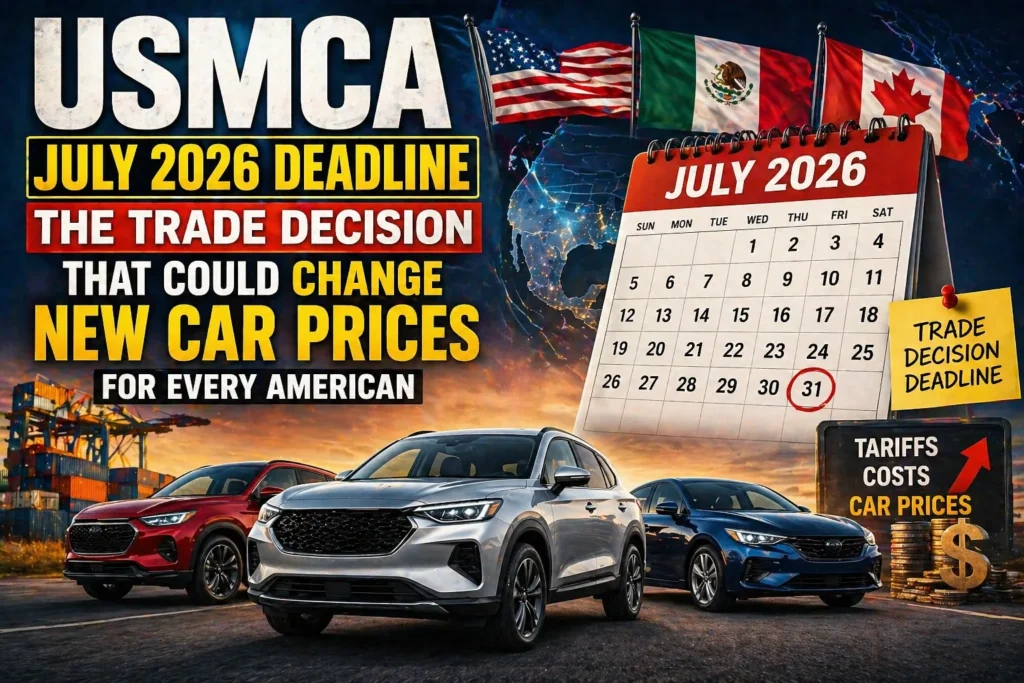
USMCA July 2026 Deadline: The Trade Decision That Could Change New Car Prices for Every American : A trade policy deadline that could directly affect every new car sold in America is just weeks away — and most buyers have no idea it’s coming. On July 1, 2026, the United States, Mexico, and Canada must decide whether to extend the USMCA free trade agreement in its current form. The outcome of that decision could either maintain the trade framework that currently keeps vehicle prices from rising further — or trigger a new wave of tariff increases that would hit American car buyers hard.
The Trump administration is considering potential changes to North American trade rules that would raise tariff costs on U.S. automobile imports and push manufacturers to boost domestic production, according to people familiar with the matter. sec
Here’s what’s actually at stake, who is affected, and what it means for you if you’re shopping for a car in the next six to twelve months.
What Is the USMCA and Why Does It Matter for Car Prices?
The United States-Mexico-Canada Agreement replaced NAFTA in 2020 and governs how vehicles and auto parts can move between the three countries without facing tariffs. For the auto industry, the USMCA is enormously consequential: approximately 20% of total U.S. vehicle demand is satisfied by vehicles assembled in Mexico or Canada, including many of the most popular models Americans buy.
The agreement includes tariff rate provisions — rules that allow automakers to reduce their tariff burden on North American vehicles by sourcing a minimum percentage of content from within the USMCA region. Under current rules, automakers who source sufficient North American content pay significantly reduced tariffs compared to a flat rate on fully imported vehicles.
U.S. carmakers have said the tariff relief is crucial, in part because it helps level the playing field with Asian rivals who pay a flat 15% tariff on autos imported from South Korea and Japan. sec
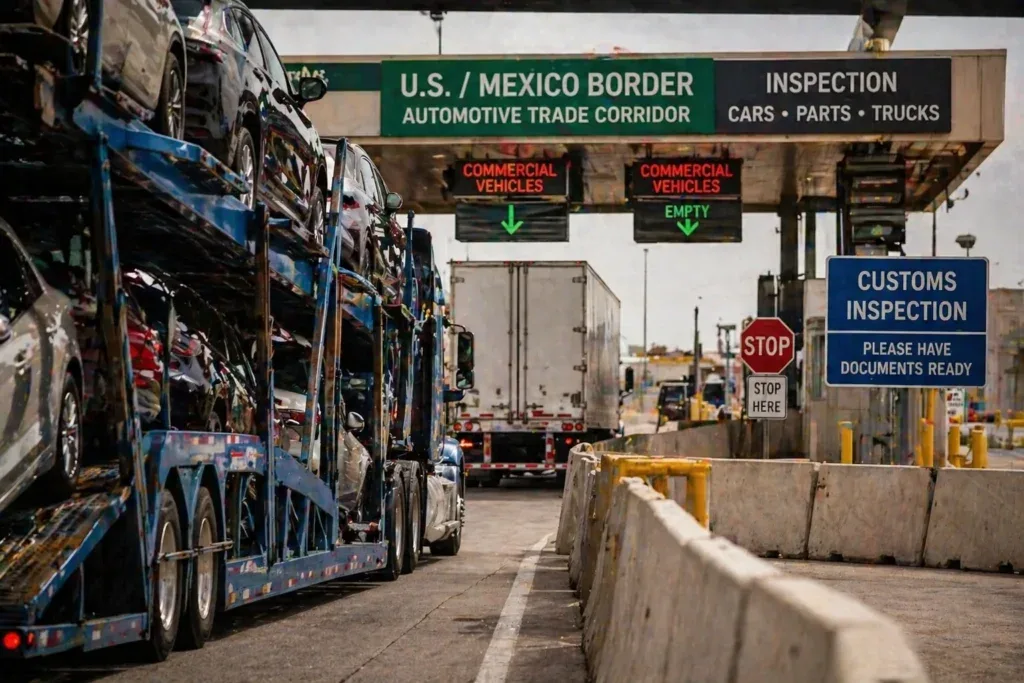
What Washington Is Considering: Two Options That Could Raise Your Car’s Price
U.S. officials have discussed requiring vehicle imports to have a minimum amount of U.S. parts — not just North American parts — as a condition for tariff relief. Another option under consideration would limit the ability of automakers to lower their tariff rates under USMCA, effectively raising the costs to bring vehicles across the border. That could subject USMCA-compliant vehicle imports to an effective tariff of roughly 10%, higher than what Detroit’s carmakers currently pay. sec
Both options reflect the same underlying frustration in Washington. The considerations reflect frustration that trade policies have yet to produce a substantial reshoring of automobile and component factories to the U.S. President Trump imposed a 25% tariff on imported vehicles and auto parts last year to push companies to build more domestically. While automakers have pledged billions in new investment and announced plans to move some production to the U.S. from Canada, Mexico, and Japan, a substantial uptick in auto investment has yet to materialize. sec
The core tension is this: Washington wants more manufacturing jobs in America. Automakers need time — typically 3–5 years minimum — to plan, fund, construct, and tool a new assembly plant. That mismatch between political timelines and industrial timelines is driving the USMCA pressure.
Which Cars Would Be Affected?
The list of popular American vehicles built in Mexico and Canada is extensive. Key models that could face higher tariff exposure under a revised USMCA framework include:
Built in Mexico: Ford Maverick pickup, Ford Bronco Sport, Chevy Blazer, Chevy Equinox, GMC Terrain, RAM ProMaster, Jeep Compass, Volkswagen Tiguan, Honda HR-V, Honda Passport, Toyota Tacoma (partial), Audi Q5, BMW 3 Series.
Built in Canada: Honda CR-V, Lincoln Nautilus, Lexus RX, Toyota RAV4 Hybrid (partial).
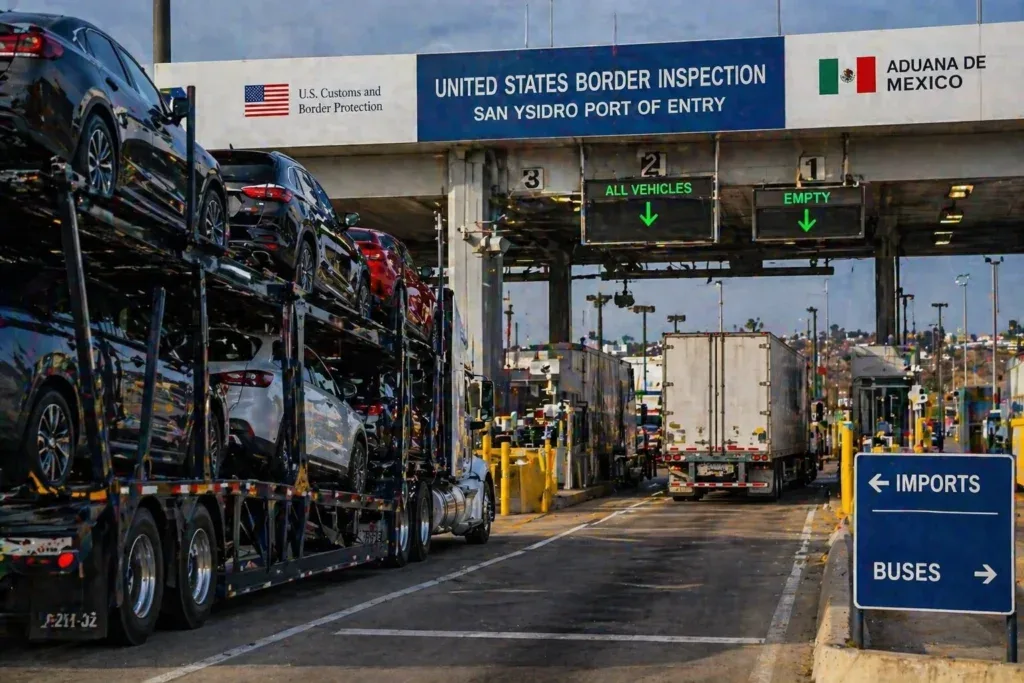
For buyers shopping any of these models in the next 6–12 months, USMCA uncertainty is a real pricing risk factor.
The Industry’s Response: Alarm Bells
Every major automaker with North American operations has been vocal about opposing USMCA changes that would tighten content rules or restrict tariff-reduction mechanisms.
Volkswagen’s position aligns with that of the Detroit Three automakers, who have also advocated for preserving USMCA’s current framework to avoid destabilizing supply networks. The outcome of the 2026 USMCA review is expected to significantly influence vehicle costs, sourcing strategies, and pricing across North America, with automakers closely watching how trade policies evolve. Hagerty Media
GM CEO Mary Barra, Ford CEO Jim Farley, and Stellantis leadership have all emphasized that their U.S. investment plans — representing tens of billions of dollars in factory commitments — require policy stability to proceed. Changing the rules mid-investment cycle creates uncertainty that slows, rather than accelerates, the reshoring Washington wants.
The automakers’ argument: the tariff pressure is already working. Multiple brands have announced U.S. production expansions for models currently built abroad. But construction takes years. Changing the USMCA rules before those investments can materialize would punish companies that are already moving in the right direction.
What the 2026 Auto Market Is Already Dealing With
The USMCA deadline arrives on top of an auto market already under significant stress. Cox Automotive chief economist Jeremy Robb noted that “after a year marked by policy-driven sales volatility, the new-vehicle market has settled into a slower rhythm in early 2026. The pull-ahead demand created by last spring’s tariff announcements and the loss of EV tax credits is now firmly in the rearview mirror. The new-vehicle market today is being shaped by higher vehicle prices, ongoing inflationary pressures, and still-elevated interest rates.” La Cornue
Cox Automotive expects new-vehicle sales pace for the full year of 2026 to be 15.8 million, down about 2.6% from 2025. La Cornue
Layering new tariff costs on top of already-elevated prices and already-stressed buyer affordability would be a significant additional headwind for the industry.
What Should Car Buyers Do Before July 1?
The USMCA decision could go several ways — an extension of current rules, a modest tightening, or a more aggressive revision. The range of outcomes creates genuine uncertainty for buyers considering vehicles built in Mexico or Canada.
Practical advice:
If you’re planning to buy a Ford Maverick, Bronco Sport, Honda CR-V, Chevy Equinox, or any other popular Mexico/Canada-assembled vehicle in the next six months, the period before July 1 represents lower-tariff-risk territory than the period after. If Washington announces tighter USMCA rules effective later this year, vehicles in the pipeline could see price adjustments.
Prioritizing U.S.-assembled vehicles — Toyota RAV4 (Kentucky), Honda Pilot (Alabama), Hyundai Ioniq 5 and 9 (Georgia), Jeep Grand Cherokee (Michigan), Ford F-150 (Michigan/Missouri) — eliminates USMCA exposure entirely. Use our Car Ownership Cost Calculator to compare total annual costs between U.S.- and foreign-assembled alternatives.
The July 1 deadline is not guaranteed to produce a crisis — trade negotiations often result in extensions and compromises. But in 2026’s volatile tariff environment, being informed is the most valuable thing a car buyer can be.
Planning your next vehicle purchase around tariff uncertainty? Our Car Loan EMI Calculator helps you model payments at current and potentially higher prices. Our Car Ownership Cost Calculator compares US-built vs. imported vehicle total costs. And our EV vs Gas Cost Calculator shows whether fuel savings on a hybrid can offset today’s elevated vehicle prices.