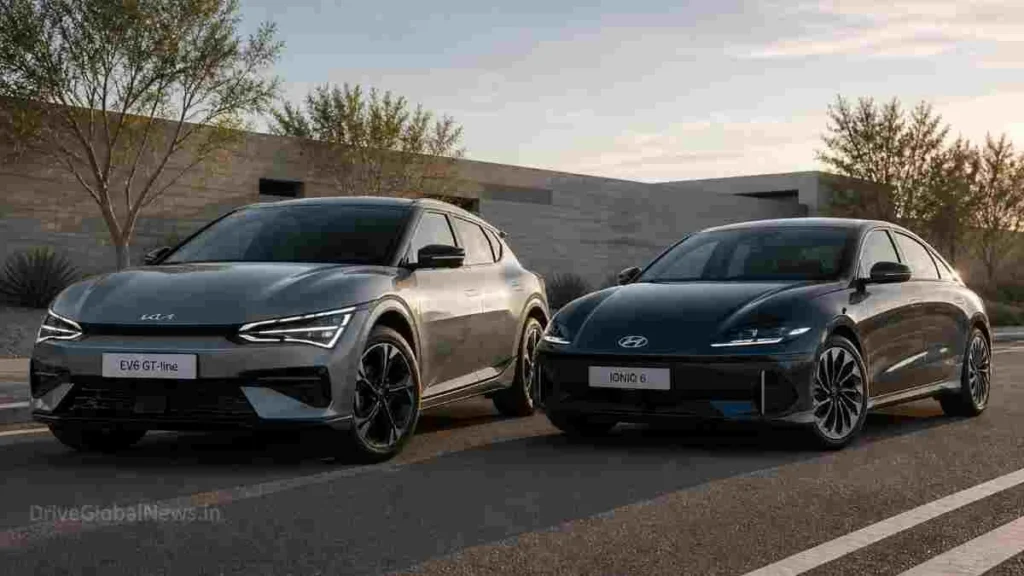
Kia EV6 vs Hyundai Ioniq 6 Same Platform : This is the Korean twin question that every EV shopper in 2026 eventually faces.
The Kia EV6 and Hyundai Ioniq 6 share the same E-GMP platform. They share the same 800-volt electrical architecture. They’re priced within a few thousand dollars of each other. Both offer up to 310-330 miles of range. Both charge at up to 350 kW.
On paper, they’re essentially the same car.
But they’re not. Not even close to the same car to drive, to look at, or to live with.
Here’s the honest breakdown.
The Numbers
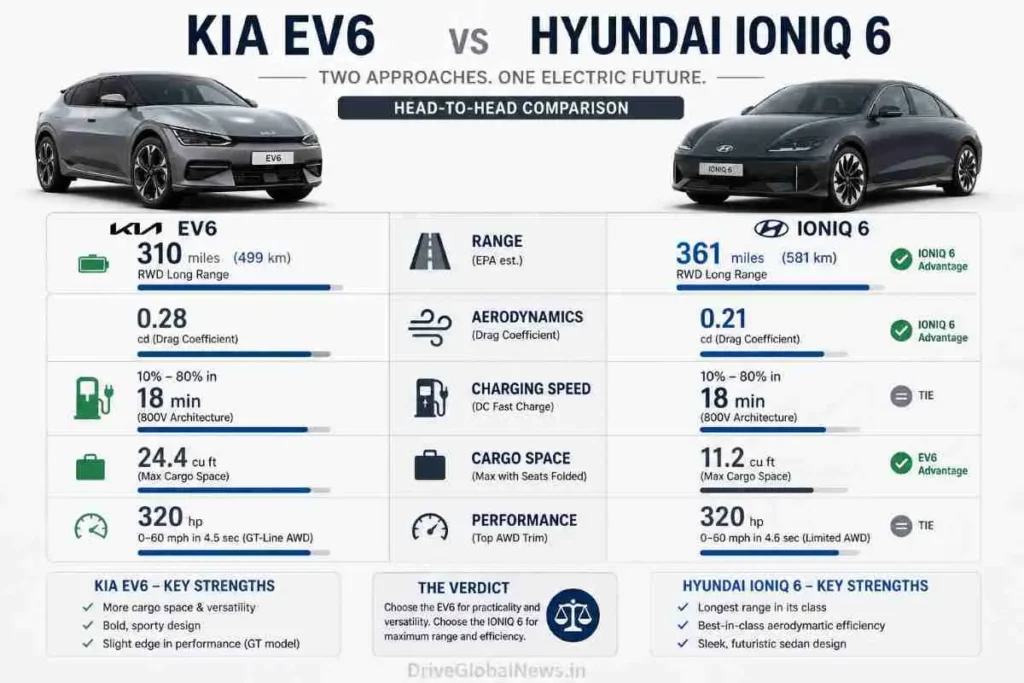
| Kia EV6 GT-Line AWD | Hyundai Ioniq 6 SEL AWD | |
|---|---|---|
| Starting Price | ~$47,000 | ~$46,000 |
| Range (AWD) | 274 miles | 266 miles |
| Range (RWD Long) | 310 miles | 361 miles |
| Horsepower (AWD) | 320 HP | 320 HP |
| 0-60 mph | 5.1 seconds | 5.1 seconds |
| Fast Charge | 350 kW (800V) | 350 kW (800V) |
| Cargo | 27.4 cu ft | 21.0 cu ft |
| Drag Coefficient | 0.28 | 0.21 |
That drag coefficient difference is the key to the whole story.
also read : https://driveglobalnews.in/detroit-3-are-getting-2-3-billion-back-from/
The Ioniq 6 Is the Range King — And Here’s Why
The Ioniq 6’s 0.21 drag coefficient is among the lowest of any production car on the planet. Lower than a Bugatti Chiron. Lower than a Ferrari Roma. It is aerodynamically extraordinary.
That extreme slipperiness is why the Ioniq 6 RWD Long Range achieves 361 miles of EPA range — 51 more miles than the equivalent EV6. On the same battery. Same motors. Just the shape of the car doing the work.
For buyers who prioritize maximum range above everything else — long commuters, frequent road trippers, range-anxious first-time EV buyers — the Ioniq 6 is unambiguously the better choice. That 361-mile figure is the best range of any non-luxury EV in America right now.
The Ioniq 6 also wins on fuel efficiency numbers and highway comfort. The streamlined body generates very little wind noise. Long highway drives are genuinely serene.
also read : https://driveglobalnews.in/bmw-x5-vs-mercedes-gle-vs-hyundai-palisade/
The EV6 Is More Fun — And More Practical
But here’s where many buyers — especially those coming from sporty or practical backgrounds — find themselves choosing the Kia.
The EV6 looks better to a lot of eyes. It’s a proper hatchback — more aggressive proportions, a raised roofline, and a design that reads as sporty crossover rather than futuristic jellybean. It turns more heads on the street. Design preference is personal, but in every informal survey of non-enthusiasts, the EV6’s styling wins more often.
That higher roofline translates into something practical: more cargo space. The EV6’s 27.4 cubic feet beats the Ioniq 6’s 21.0 cubic feet by 30%. If you regularly haul gear, luggage, or grocery runs — this gap is something you’ll notice every week.
The EV6 GT trim — 576 horsepower, 0-60 in 3.4 seconds — is a performance option the Ioniq 6 simply doesn’t have. If power matters, EV6 wins decisively.
And on a canyon road, the EV6’s slightly higher, sportier seating position and steering calibration feel more engaging than the Ioniq 6’s ultra-smooth, highway-biased setup. They’re both good. But the EV6 is more fun.
Who Should Buy Which 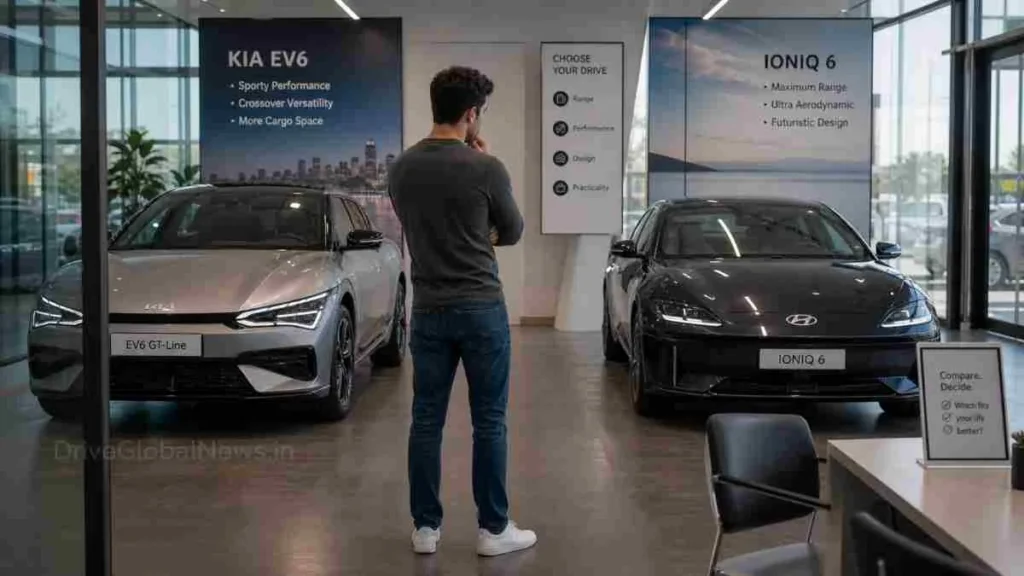
Buy the Ioniq 6 if: Range is your top priority. You drive a long daily commute or take frequent road trips. You value fuel efficiency and quiet highway cruising. The futuristic styling appeals to you — or at least doesn’t put you off.
Buy the EV6 if: You need more cargo space. You want a car that looks sporty and conventional at the same time. You might eventually want the GT performance version. Or you just find the EV6 more attractive and would look forward to getting in it every day.
The one thing nobody says enough: for daily use within 150 miles, the range difference between these two is completely irrelevant. Both have 800-volt fast charging. Both have NACS ports for Supercharger access. You will never feel range anxiety in either car on a normal day.
The choice, honestly, comes down to design and cargo space. Look at both in person. The one you want to look at in your driveway is probably the right answer.
Compare total ownership costs between both with our Car Ownership Cost Calculator — the fuel savings difference between RWD and AWD variants might surprise you.