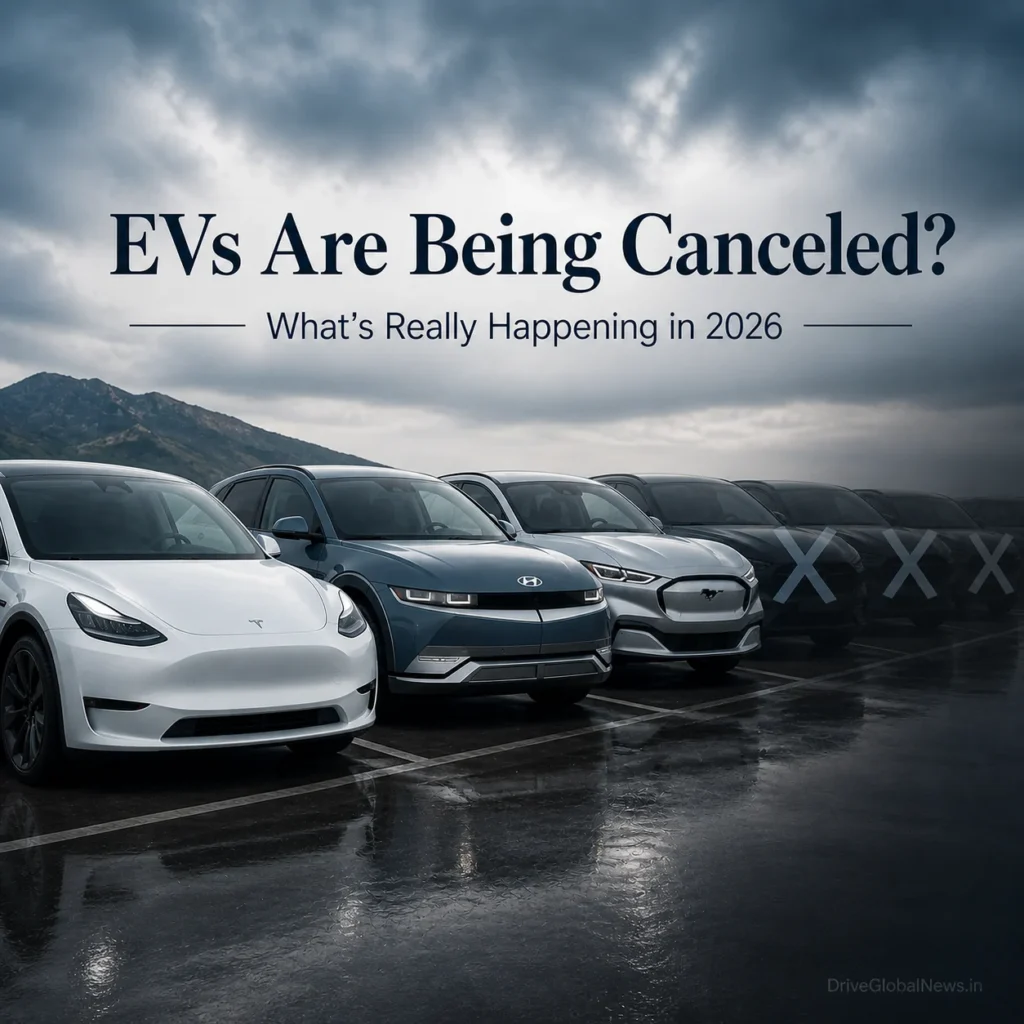
Automakers Are Canceling EVs Faster Than They’re Launching Them : Something uncomfortable is happening in the EV market — and most people haven’t noticed because each cancellation gets reported separately, never as the pattern it actually is.
Automakers are quietly killing electric vehicles. Not delaying them. Not repositioning them. Canceling them.
Motor1 just ran the headline: “From Acura to Volvo, automakers are pulling the plug on their EVs before 2027.”
That’s not one brand struggling. That’s an industry-wide pattern. Here’s the full picture — and what it means for you.
also read : https://driveglobalnews.in/kia-ev6-vs-hyundai-ioniq-6-same-platform-same/
The Cancellation List
Nissan Ariya — Being discontinued in the U.S. later this year. Import tariffs made it uncompetitive against the Georgia-built Ioniq 5 at $35,000. Nissan is pivoting to gas trucks and hybrids. 
Honda Prologue — Honda confirmed the Prologue will not continue beyond its current generation. The GM-platform EV never found its footing. Honda is redirecting resources toward its own in-house EV platform.
Sony Honda Afeela 1 — Canceled on March 25, 2026. Honda wrote off nearly $16 billion. The $90,000 tech showcase never made it to a customer’s driveway.
Stellantis EVs — The Fiat 500e is selling 68 units per quarter nationally. The Jeep Wagoneer S collapsed 93% year-over-year. Both are effectively dead products waiting for official discontinuation announcements.
Volvo EX30 — Pulled from the U.S. market in its original form due to import tariff exposure from its European manufacturing location. A U.S.-built version is planned eventually.
Various Acura and Genesis EVs — Both brands are reconsidering their full EV timelines, with hybrids taking priority over battery-electric expansion in the near term.
Why This Is Happening
Three forces converged at the worst possible time for EV expansion:
The $7,500 federal tax credit expired in September 2025. Overnight, every EV became effectively more expensive — with no offset available to buyers who didn’t own homes capable of charging infrastructure.
Import tariffs made EVs built outside the U.S. significantly less competitive. A Korean or European-built EV facing 15-25% tariffs cannot undercut a Georgia-built Hyundai on price. Most couldn’t before tariffs either.
Buyers are choosing hybrids. The data is unambiguous. Hybrid market share hit record highs in Q1 2026. EV share dropped. Consumers want electrification without infrastructure commitment — and hybrids deliver that without requiring a home charger or route planning around charging stops.
also read : https://driveglobalnews.in/10-best-family-suvs-for-road-trips-in-2026/
What’s NOT Being Canceled 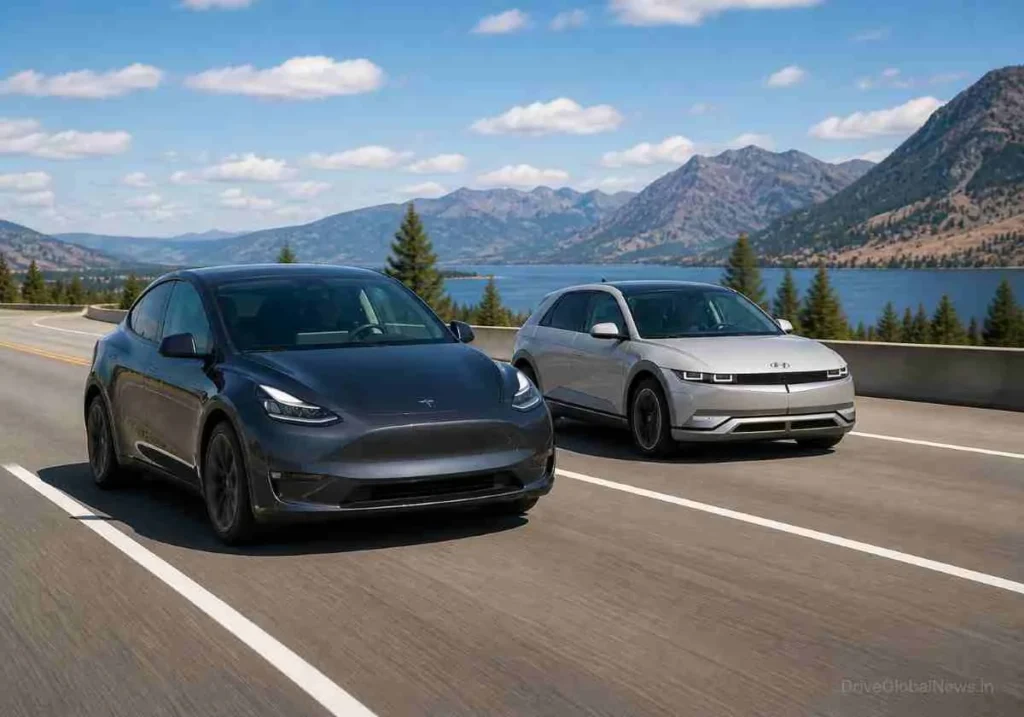
This is the more important list for buyers.
The EVs that are thriving — and will be around for years — share a common profile: domestically built, competitively priced, with class-leading charging speed and real-world range.
Hyundai Ioniq 5 and Ioniq 9 — Georgia-built, $35,000+, thriving.
Kia EV6 and EV9 — Strong sales, competitive pricing, 800V charging.
Tesla Model Y and Model 3 — Domestically built, Supercharger network advantage.
Rivian R1T, R1S, and R2 — Adventure identity, loyal customer base, Normal Illinois production.
Chevrolet Equinox EV — North American built, competitive pricing, though still finding its footing.
What Should EV Buyers Do With This Information?
If you were considering one of the canceled models — the Ariya, Prologue, or Afeela — this is actually useful news. You weren’t imagining the lack of inventory. These brands were pulling back long before announcing it officially.
If you’re in the market for an EV in 2026: stick to the brands that are investing, not retreating. The Ioniq 5 at $35,000, the EV6, and the Rivian R2 represent manufacturers who are doubling down on their EV commitments — not quietly unwinding them.
The EV market isn’t dying. It’s consolidating around winners. The cancellation wave is clearing out the products that should never have launched in the first place. What’s left standing deserves your serious consideration.