While every other American automaker was retreating from electric vehicles last week, Ford quietly did something different.
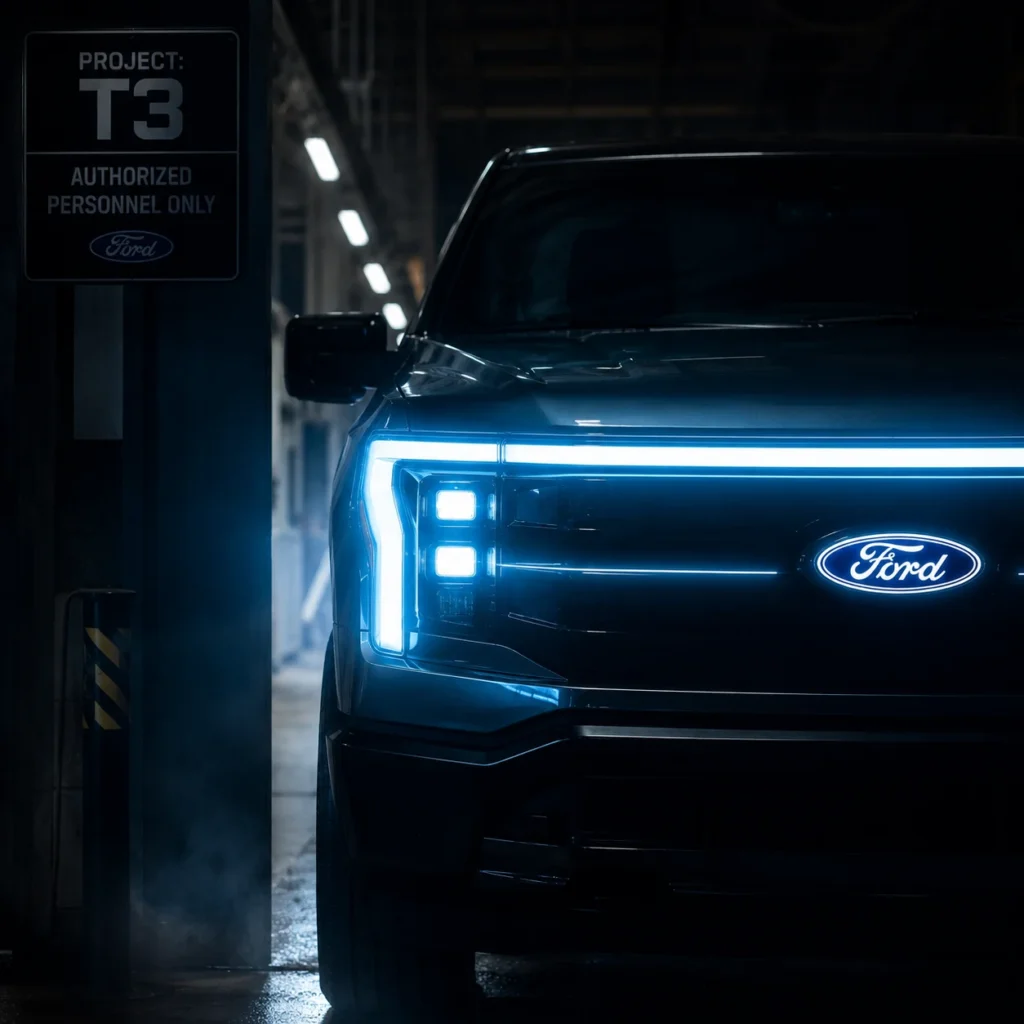
On May 5, Ford opened the doors of its Electric Vehicle Development Center in Long Beach, California — a facility so secretive that even most Ford employees didn’t know what was being built inside. What came out of that building is one of the most interesting automotive stories of 2026.
A completely new EV platform. A new manufacturing approach. And a target that nobody expected from a company that’s lost nearly $20 billion on EVs:
A $30,000 electric pickup truck.
The Platform That Changes Everything
Ford calls it the Universal Electric Vehicle platform — UEV for short. And it’s not an iteration on what they’ve been building. It’s a ground-up redesign of how Ford makes electric vehicles.
The numbers are striking. Compared to the current Mustang Mach-E:
- 20% fewer parts
- 25% fewer fasteners
- 40% fewer assembly workstations
- 15% faster to build
That last number is what makes the $30,000 price target believable. Electric vehicles are expensive primarily because they’re complex to build. More parts, more labor, more time. The UEV platform attacks that complexity directly — not by using cheaper materials, but by engineering parts that don’t exist in the first place.
The centerpiece of this approach is megacasting — pouring molten aluminum into large molds to create single massive structural pieces instead of welding dozens of smaller ones together. The new electric pickup will use just two structural parts at the front and rear. The gas-powered Maverick it’s compared against uses 146 such components. Same result. 144 fewer parts.
Tesla pioneered megacasting with the Model Y. Ford has been studying that approach — and applying it to a truck platform designed specifically for American buyers.
The $30,000 Target — Real or Marketing?
Ford hasn’t confirmed a final MSRP. But engineers were specific: the goal is a midsize electric pickup comparable in cost to gas-powered vehicles.
The current cheapest electric truck you can buy is the F-150 Lightning at $49,780. The Rivian R2 starts at $45,000 for a compact SUV. The Slate Truck is targeting $25,000 but hasn’t reached production yet.
A $30,000 Ford electric pickup from a brand with an established dealer network and service infrastructure would be genuinely transformative. It would be the first mainstream electric truck that normal working Americans could actually afford without stretching their budget.
The battery makes this possible. Instead of the large, expensive lithium-ion packs in current EVs, the new platform uses a smaller LFP (lithium iron phosphate) battery with a 48-volt electrical architecture. LFP chemistry costs less to produce, lasts longer in daily use, and performs better in the heat exposure that trucks face. The trade-off is typically lower range — but for a truck used primarily for commuting and light hauling, 200-250 miles of range covers most real-world use cases.
The Chinese Competition Angle Nobody Talks About Enough 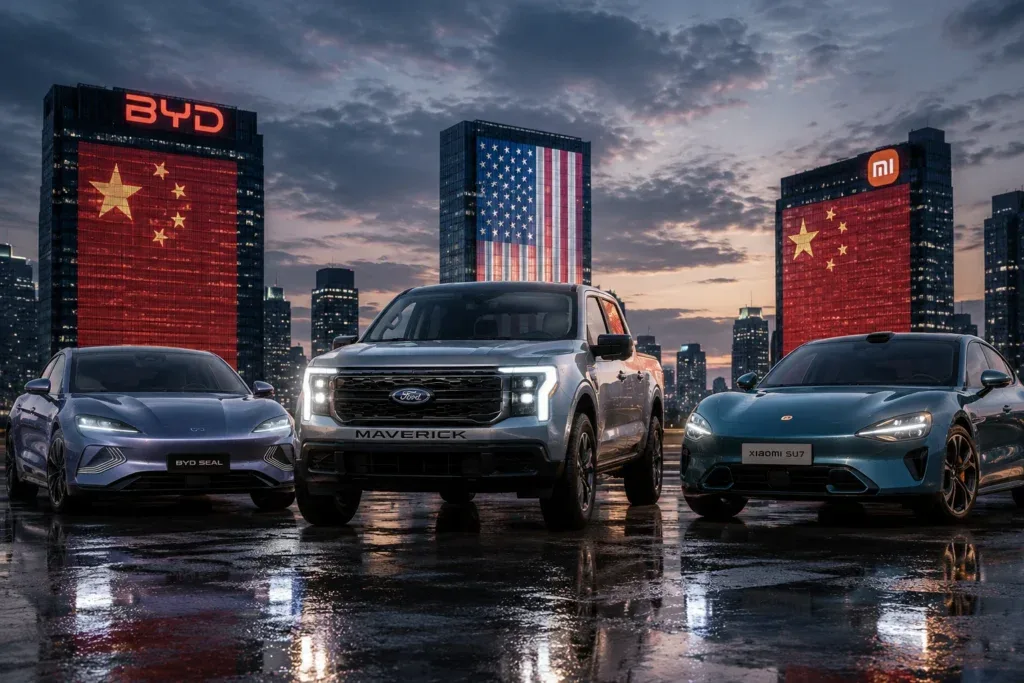
Ford CEO Jim Farley has been unusually direct about why this project exists: Chinese automakers.
BYD, Xpeng, and Xiaomi are building EVs at costs that American automakers cannot currently match. They’re not in the US market yet — import tariffs block them. But Farley believes that barrier won’t last forever, and when it falls, an American automaker without a cost-competitive EV platform will be in serious trouble.
The Long Beach center exists specifically to close that gap. The engineers there have been studying Chinese manufacturing techniques, supply chains, and software approaches — taking what works and applying it to American vehicles built in American factories.
The UEV platform is Ford’s answer to BYD before BYD arrives. Whether it works depends entirely on execution — and on whether Ford can actually hit that $30,000 price target when the truck reaches production.
Timeline: Ford hasn’t confirmed a launch date. Given where the platform development stands, a 2028 production start seems realistic. But in a company that’s already restructured once around EVs and absorbed $19.5 billion in losses — every deadline comes with caveats.
What’s clear is this: Ford hasn’t given up on electric vehicles. While rivals canceled programs and pivoted to gas trucks, Ford was quietly building the thing that could make affordable American EVs actually work.