Something quietly remarkable is happening on used car lots across America right now.
Used electric vehicles — the ones people were returning from leases, the ones sitting unsold at dealerships for months — are suddenly flying off lots. Sales jumped 27.7% year-over-year in March 2026. Compared to February? Up 53.9% in a single month.
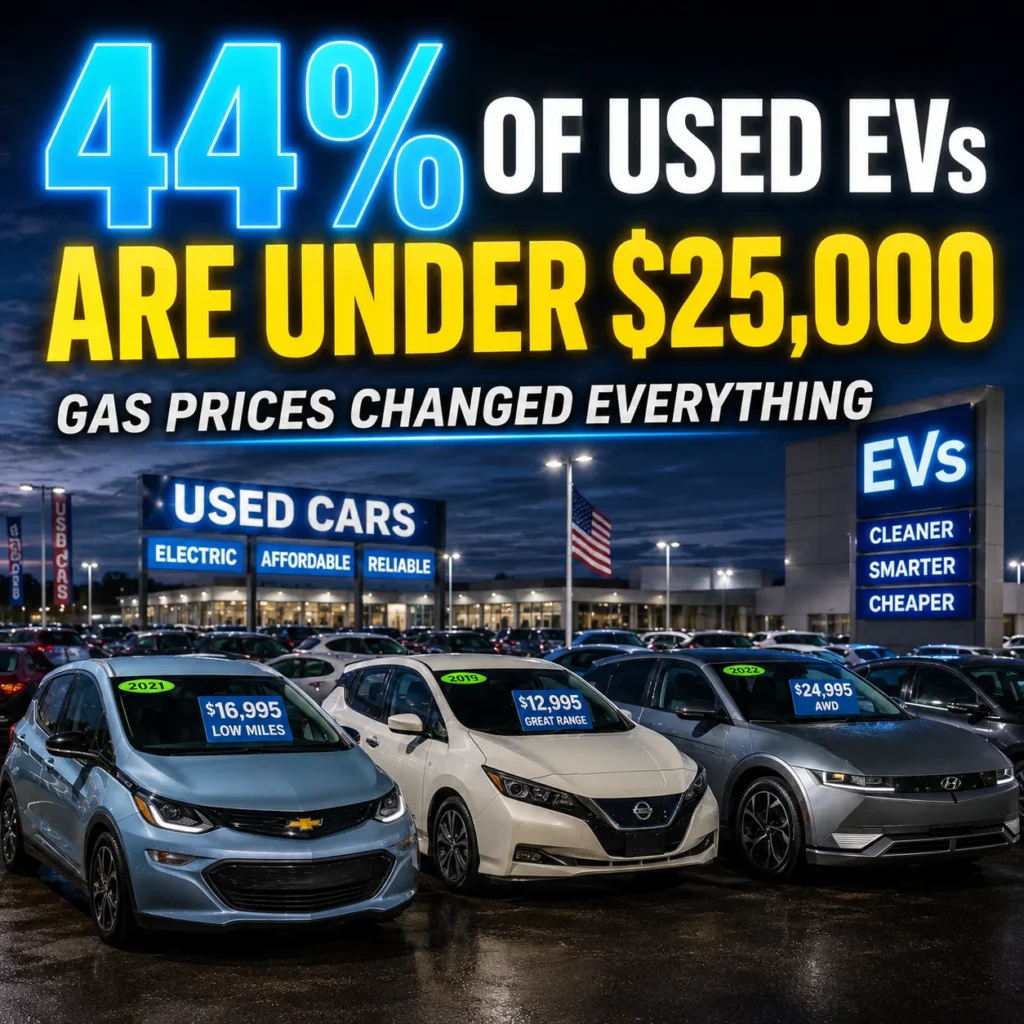
And the number that matters most for regular buyers: 44% of used EVs sold in March cost under $25,000.
Nearly half. Under $25,000. For a car that runs on electricity when gas is over $4 a gallon.
This story doesn’t get nearly enough attention. Let’s fix that.
Why Used EVs Are Suddenly Available
A few years ago, used EVs were rare. Leases were short but volumes were small — there simply weren’t many three-year-old EVs coming back to market.
That changed in 2026. The EV surge of 2022-2023 meant a wave of lease returns hitting dealer lots right now. The share of EVs in total lease returns is jumping to 8% in 2026, up from just 2% in 2025. That’s a fourfold increase in used EV supply in a single year.
More supply means lower prices. The average used EV price in March was $34,653 — down 6.1% from a year ago. Even more striking: the gap between a used EV and a used gas car has nearly closed. One year ago, used EVs carried a $3,923 premium over comparable gas cars. Today? That gap is just $1,102.
Price parity between used EVs and used gas cars is almost here.
The Gas Price Factor 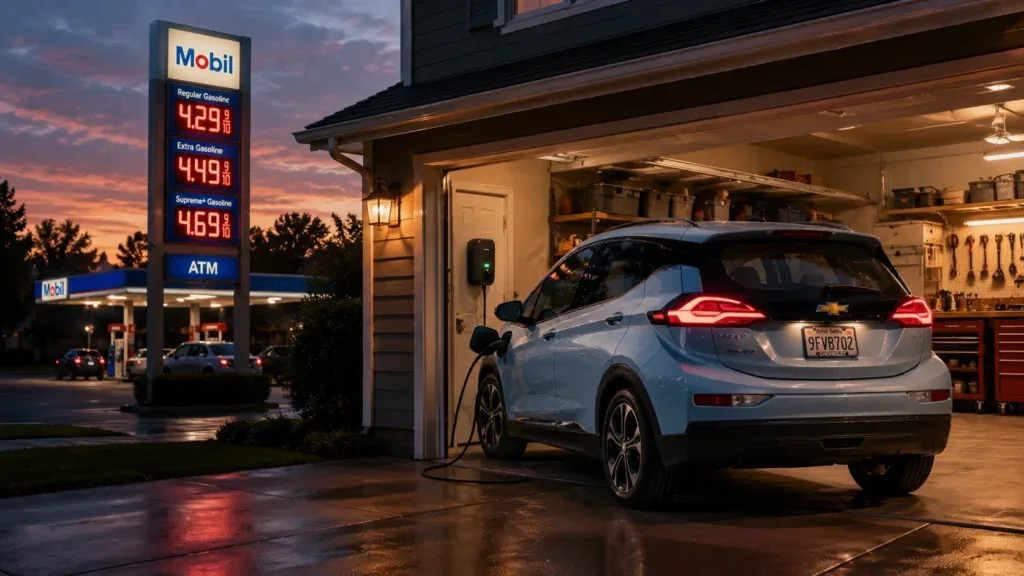
At $4+ per gallon nationally, the operating cost math for EVs has shifted dramatically.
Here’s the actual number from Kelley Blue Book’s latest data: driving 1,015 miles per month costs $59.66 charging at home on a Level 2 charger. The same miles in a gas car averaging 30 MPG costs $147.24 at current gas prices.
That’s $87 per month in fuel savings. Over a year — $1,044 back in your pocket.
If you find a used Nissan Leaf, Chevrolet Bolt, or first-gen Hyundai Ioniq 5 at $22,000-$25,000, you’re paying a premium over a comparable used gas car of roughly $1,000. You recover that in fuel savings within 12 months.
The financial case for a used EV has genuinely never been stronger for everyday drivers.
What to Actually Buy
The used EV market in 2026 isn’t all equal. Three categories make sense for different buyers: 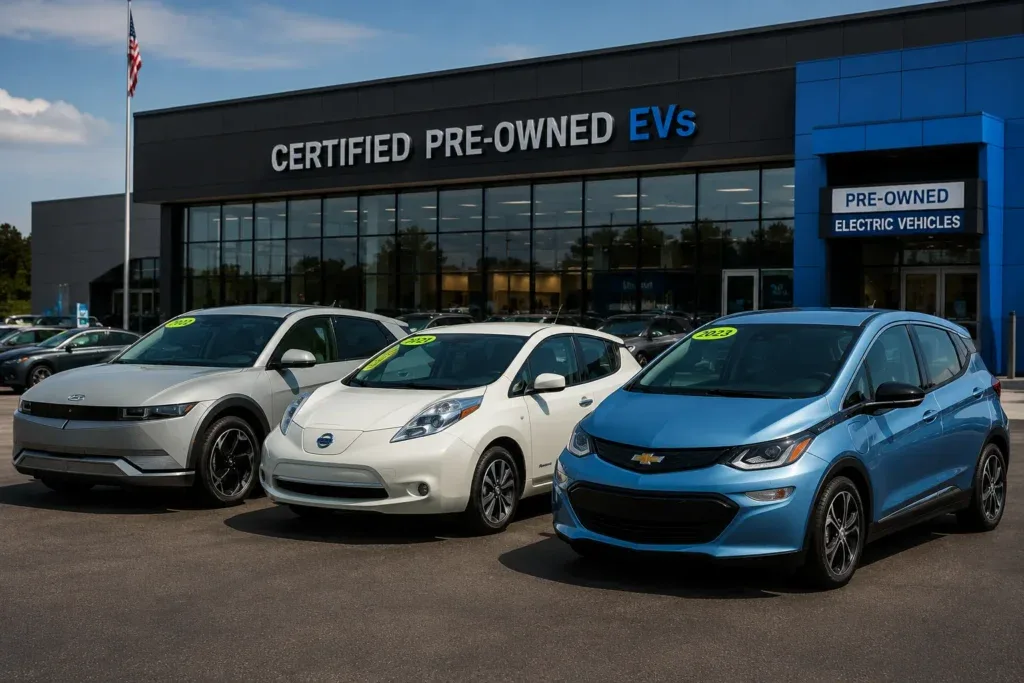
Under $20,000 — Nissan Leaf (2019-2022) Range is limited — 150-226 miles depending on battery size. But for a second car, a city commuter, or someone with reliable home charging and a short daily drive — a clean used Leaf under $20,000 with 50,000 miles is excellent value. Nissan’s reliability reputation holds up. Maintenance costs are minimal.
$20,000-$28,000 — Chevrolet Bolt (2020-2024) The Bolt has had its reputation battered by a recall and negative press. But a 2022-2024 Bolt with the battery replacement done is essentially a new battery in a proven car. 259 miles of range. Simple mechanics. GM dealer network for service. At $22,000-$25,000, genuinely compelling.
$28,000-$35,000 — First-Gen Hyundai Ioniq 5 or Kia EV6 (2022-2023) This is where used EVs get genuinely exciting. A 2022-2023 Ioniq 5 with 800-volt charging, NACS port access via adapter, and 266-303 miles of range at $30,000-$33,000 is one of the best value propositions in the used car market today. You get premium EV capability at well below new car pricing.
The One Thing to Check Before Buying
Battery degradation. This is the question every used EV buyer needs to answer before signing anything.
Most modern EVs degrade slowly — a 2022 Tesla Model 3 or Ioniq 5 with 40,000 miles typically shows 90-95% of original battery capacity. That’s completely acceptable. But a Leaf with 70,000 miles on the original 40 kWh pack may have lost 20% of range — suddenly your 150-mile rated car does 120 miles.
Ask the dealer for a battery health report. For Tesla, the app shows current range. For Hyundai and Kia, any dealer can run a diagnostic. For Nissan Leaf specifically — check the battery capacity bars on the dashboard. 12 bars means full health.
Used EVs are a genuinely different buying experience than new ones. But in May 2026 — with falling prices, rising gas costs, and a flood of quality lease returns — the window for a great deal has never been wider.