Here’s a number that should make every EV fan uncomfortable.
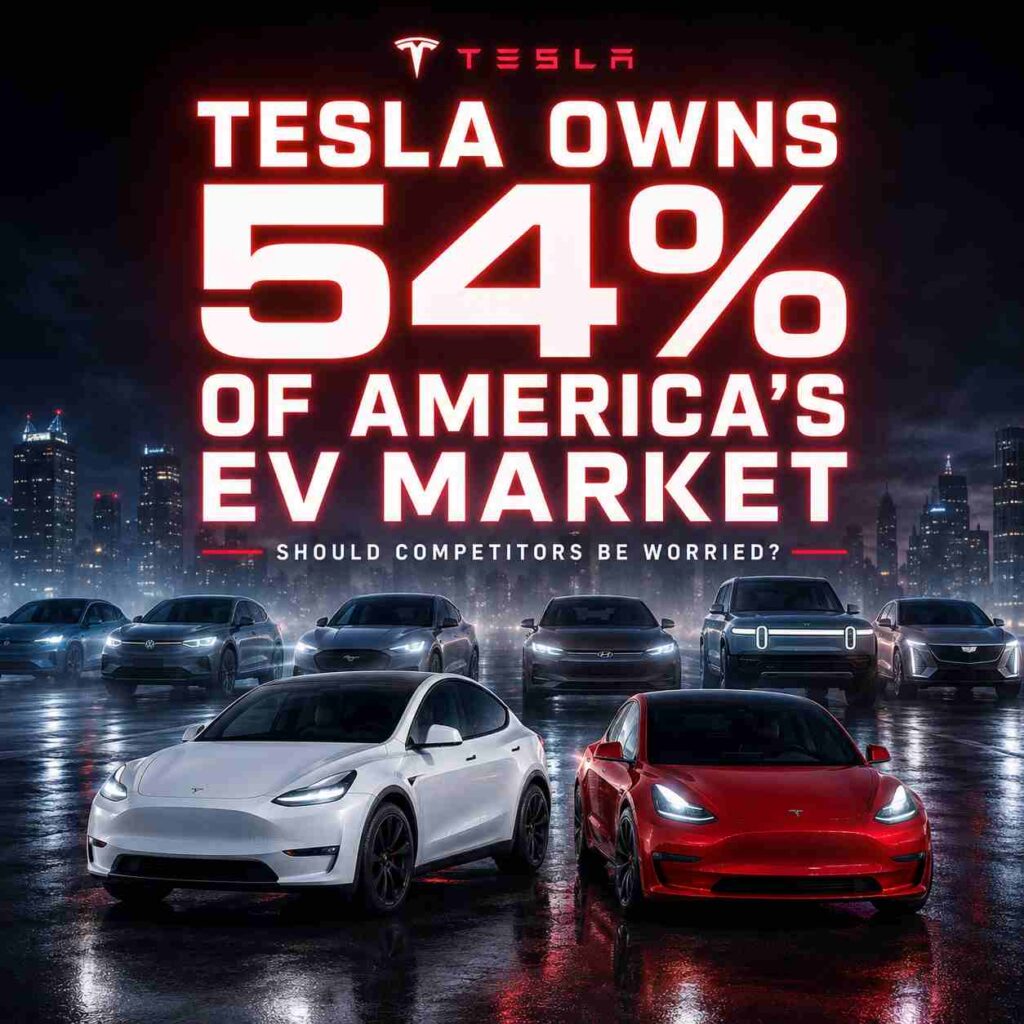
In Q1 2026, Tesla claimed 54.2% of all electric vehicle sales in America. One company. More than half the market. In a country that supposedly has dozens of EV options from every major automaker.
A year ago, Tesla’s share was 43.2%. The market has contracted — and Tesla is somehow getting bigger inside a shrinking pie.
This is not a sign of a healthy EV market. It’s a sign of one.
How Did This Happen? 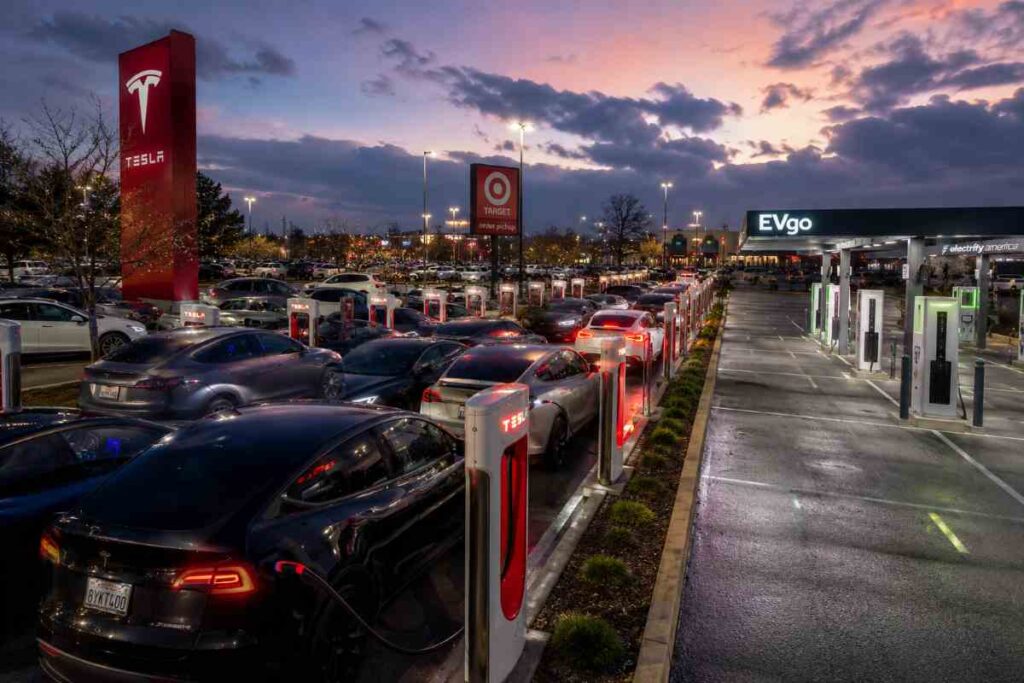
The math is brutally simple. Americans bought roughly 216,000 new EVs in Q1 2026 — down 27% year-over-year. Tesla sold approximately 117,000 of them.
Everything else — Hyundai, Kia, GM, Ford, Rivian, BMW, Mercedes combined — shared the remaining 46%.
The collapse happened on two fronts simultaneously. First, the federal EV tax credit expired in September 2025. That removed $7,500 of buying incentive that had been keeping borderline EV buyers on the right side of the decision. Second, and more damaging long-term, automakers started canceling EV models.
Nissan discontinued the Ariya. Honda discontinued the Prologue. Stellantis has essentially abandoned its EV lineup — the Fiat 500e sold 68 units in Q1 nationally. The Jeep Wagoneer S sold 175 units. The Dodge Charger EV was outsold 7-to-1 by its own gas twin.
When models disappear, sales disappear. You can only buy what’s on the lot.
Tesla didn’t cancel anything. Their models kept improving. Their Supercharger network kept expanding. And while rivals retreated, Tesla held ground.
also read https://driveglobalnews.in/jaguar-just-named-its-comeback-car-and-its/
The One Bright Spot That Nobody Talks About
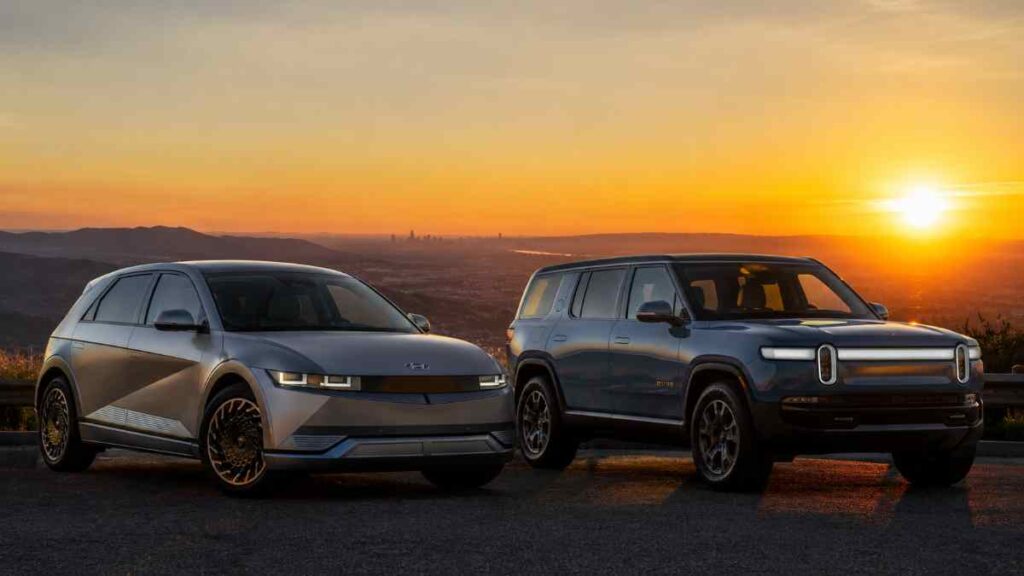
Non-Tesla EV sales actually rose 3% quarter-over-quarter in Q1 2026 — from Q4’s disaster to something resembling stability. That’s not exciting, but after a 63% free fall between Q3 and Q4 2025, even flat is progress.
The brands holding up despite the chaos? Hyundai and Rivian — for very different reasons.
Hyundai’s Ioniq 5 stayed roughly flat year-over-year after a permanent $10,000 price cut to $35,000. Cutting the price and building in Georgia — domestically, tariff-free — created a floor under sales that other brands couldn’t manufacture. The lesson is simple and nobody wants to hear it: price competitiveness and domestic manufacturing are not optional in 2026’s EV market.
Rivian grew year-over-year too. Their R1T and R1S attract buyers who are genuinely committed to the EV lifestyle and aren’t primarily driven by tax credit calculations. Customer loyalty at Rivian is exceptional. The R2 launch adds a new entry point that should accelerate that momentum through Q2 and Q3.
also read : https://driveglobalnews.in/kia-ev9-vs-hyundai-ioniq-9-in-2026-two-korean/
What 54% Market Share Actually Means for You
If you’re buying an EV in 2026, Tesla’s dominance has a practical implication: the Supercharger network advantage is real and growing.
When Tesla controls 54% of EV sales and the Supercharger network is the most reliable and widely available in America, the competitive moat compounds. Every new Tesla buyer strengthens the case for the next Tesla buyer. Every NACS port on a non-Tesla EV adds Supercharger users — but also adds slight congestion to a network Tesla built and maintains.
The good news: the non-Tesla EVs that are thriving — Ioniq 5, EV6, Rivian R2 — all now have NACS ports. The charging network advantage has narrowed even as the sales gap widened.
The bad news for competition: a market where one company owns 54% of the segment is not a sustainable competitive environment. Less competition means less pressure on Tesla to innovate aggressively, less pressure to cut prices, and less pressure to improve reliability.
For buyers, the most important takeaway is this: don’t buy a Tesla simply because it dominates the market. Buy it because it’s the right car for your needs. The Ioniq 5 at $35,000 beats the Model Y on price and charging speed. The Rivian R2 beats both on adventure capability. The BMW iX3 beats all three on driving dynamics.
Market share is not a specification. Choose the car that fits your life.