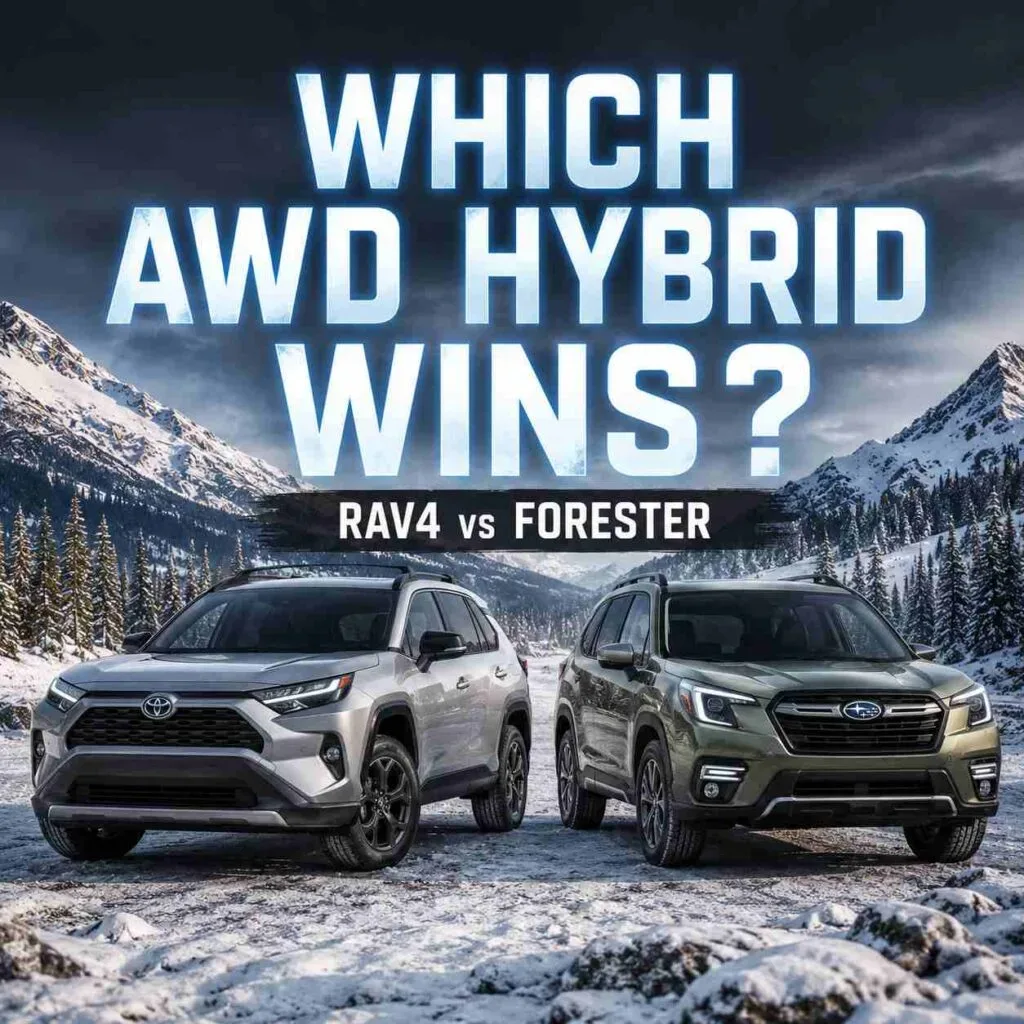
Two hybrid SUVs. Both with standard AWD. Both from brands that Americans trust more than almost any other for reliability. Both priced within a few thousand dollars of each other.
And yet the buyer for each one is almost completely different.
The Toyota RAV4 Hybrid and the Subaru Forester Hybrid are not really competing for the same customer — even though they sit in the same segment, at the same price point, on the same dealer street in a thousand American towns.
Understanding why tells you exactly which one you should buy.
The Numbers
| 2026 Toyota RAV4 Hybrid | 2026 Subaru Forester Hybrid | |
|---|---|---|
| Starting Price | $33,700 | ~$34,730 |
| Fuel Economy | 40 MPG combined | ~35-37 MPG combined |
| Horsepower | 236 HP | ~180 HP (est.) |
| Ground Clearance | 8.1 inches | 9.2 inches (Wilderness) |
| Cargo (seats up) | 37.8 cu ft | 35.4 cu ft |
| Towing | 3,500 lbs | 3,000 lbs |
| AWD | Standard | Standard (Symmetrical) |
| Warranty | 5 yr / 60K basic | 5 yr / 60K basic |
The RAV4 Hybrid wins on fuel economy by a meaningful margin — 40 MPG vs 35-37 MPG is roughly $300-$400 in annual fuel savings at current prices. The Forester Wilderness wins on ground clearance — 9.2 inches vs 8.1 inches. For most buyers, that’s the entire comparison in two numbers.
also read : https://driveglobalnews.in/kia-ev9-vs-hyundai-ioniq-9-in-2026-two-korean/
Where the Toyota RAV4 Hybrid Wins
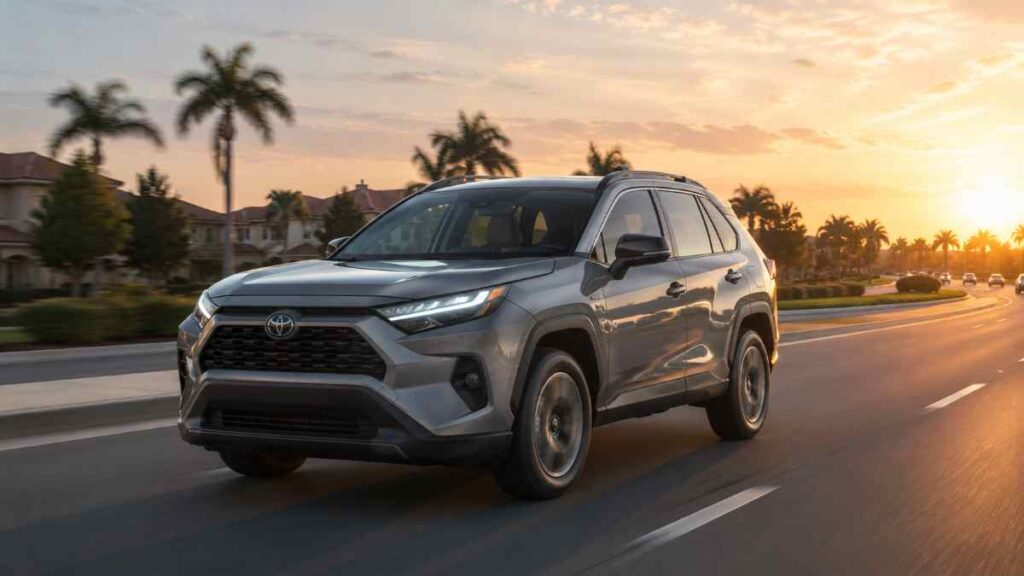
The RAV4 Hybrid is the better car for the majority of American drivers. Full stop.
40 MPG combined is class-leading among compact hybrid SUVs. For a driver covering 15,000 miles annually at $4+ per gallon, that fuel economy translates to approximately $1,300 in yearly savings versus a comparable gas-only SUV. Over five years — $6,500. That’s not abstract math. That’s a real vacation, or a year of car insurance, sitting in your bank account instead of a gas station’s.
The RAV4 Hybrid’s naturally aspirated 236 HP feels noticeably stronger in everyday driving — merging onto highways, passing at 65 mph, loading a full car of passengers. The Forester’s hybrid system is more conservative in character.
Cargo space, towing, and interior tech all favor the RAV4 at equivalent price points. The new 2026 redesign — now hybrid-only — makes it even more compelling with a bigger screen, improved materials, and the new 12.9-inch infotainment system across the lineup.
The RAV4 Hybrid is the financially smarter choice for most buyers — especially in states without extreme winter weather or off-road demands.
also read : https://driveglobalnews.in/jaguar-just-named-its-comeback-car-and-its/
Where the Subaru Forester Hybrid Wins
Here’s the thing about the Forester that the fuel economy comparison misses entirely: Subaru’s Symmetrical All-Wheel Drive is not the same as Toyota’s rear electric motor AWD system.
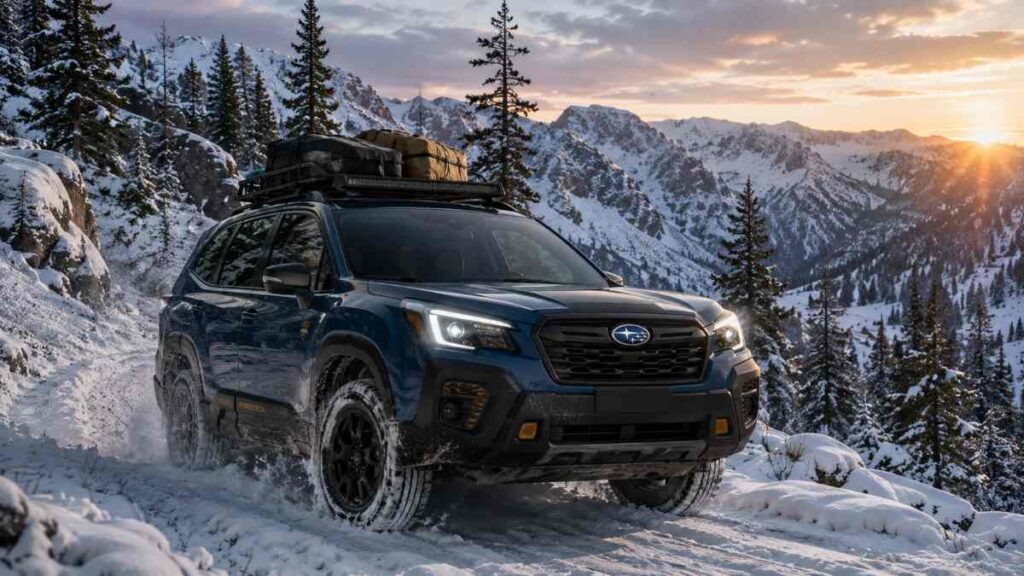
They both work. But they work differently.
Toyota’s RAV4 Hybrid AWD uses an electric motor to power the rear wheels independently. It’s excellent in rain, good in light snow, and very capable for normal winter driving. In severe conditions — deep snow, ice-covered hills, genuine off-road terrain — the limits show.
Subaru’s Symmetrical AWD is a mechanically connected, torque-vectoring system that has been refined over 50+ years of real-world winter and off-road use. The Forester Wilderness trim — with 9.2 inches of ground clearance, all-terrain tires standard, and X-MODE traction management — goes places that a RAV4 Hybrid simply cannot follow.
The Forester Wilderness also comes standard with all-terrain Yokohama Geolandar tires from the factory. The RAV4 ships with highway-biased all-season tires. On an icy mountain road or a muddy trail to a ski resort, that tire difference is felt immediately.
Buy the Forester Hybrid if: You live in a mountain state, regularly deal with severe winter weather, occasionally use unpaved roads, or ski/camp/hike to destinations that require genuine off-road capability.
Buy the RAV4 Hybrid if: Your winter driving means wet roads and occasional light snow, fuel economy is your top priority, and you want the highest resale value in the compact hybrid SUV segment.
The Honest Verdict
For buyers in Atlanta, Dallas, Phoenix, Los Angeles, or anywhere that doesn’t see serious winter — RAV4 Hybrid. It’s cheaper to run, more powerful, and holds its value better.
For buyers in Denver, Minneapolis, Burlington, Bozeman, or anywhere that regularly deals with real winter and occasional off-road driving — Forester Hybrid. The AWD system’s character, the ground clearance, and the all-terrain tires are worth the fuel economy trade-off.
One more thing worth knowing: the Forester Hybrid is a brand-new arrival as of 2026. The RAV4 Hybrid has been proven across millions of units for years. If you’re risk-averse and reliability data matters more than spec comparisons — the RAV4 Hybrid’s long track record is a genuine advantage.
Both cars will last 200,000 miles with basic maintenance. Neither one is a wrong answer. The right answer is the one that matches where you live and how you drive.
See exactly how much you’d save on fuel annually with our EV vs Gas Cost Calculator — plug in your real mileage and see the hybrid difference in actual dollars.