Twelve months ago, you could have walked into almost any automotive betting market and gotten long odds on this outcome.
Toyota — the company that spent years publicly skeptical of battery-electric vehicles, the company whose CEO once called BEVs “overhyped,” the company that was miles behind Hyundai and Kia in EV development — just became the best-selling non-Tesla EV brand in America.
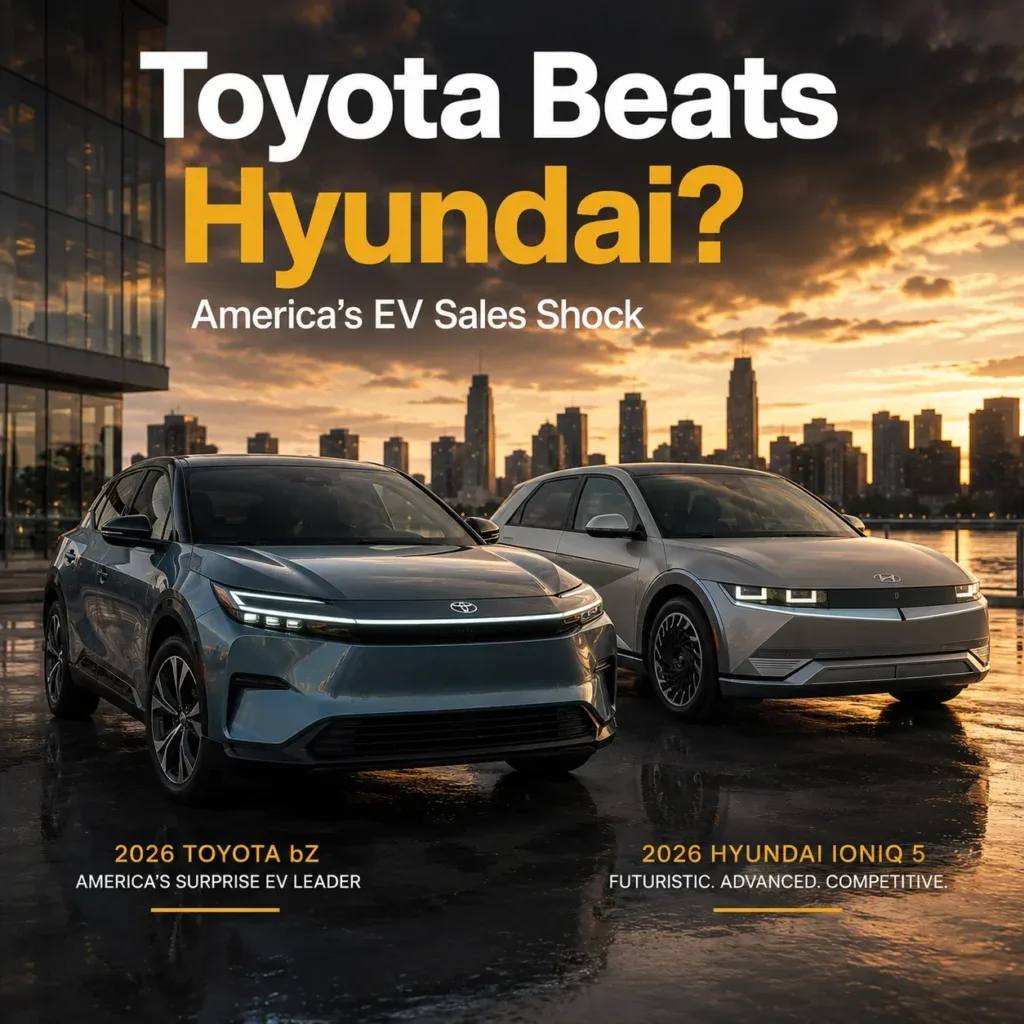
The 2026 Toyota bZ outsold the Hyundai Ioniq 5. Outsold the Chevrolet Equinox EV. Outsold every Ford EV combined.
In Q1 2026. The worst quarter for EV sales in four years.
How did this happen?
also read : https://driveglobalnews.in/chrysler-is-secretly-working-on-a-car-under/
The bZ Did What Reviewers Said It Did
Let’s start with the product itself. The 2026 Toyota bZ — the renamed and heavily updated version of the disappointing bZ4X — addressed almost every complaint about its predecessor with surgical precision.
Range jumped from 252 miles to up to 314 miles. Fast charging speed improved meaningfully. The charging curve — the outgoing model’s most embarrassing weakness — was fixed. The new native NACS port gave owners Supercharger access without an adapter. And Toyota used its hybrid-engineering expertise to tune the powertrain for real-world efficiency, with one reviewer recording an extraordinary 5.4 miles per kilowatt-hour in a week of normal driving — higher than virtually any other EV currently on sale.
Starting at $37,900 after a significant price reduction, the bZ also positioned itself well against the Ioniq 5 at $35,000. Not dramatically cheaper, but close enough that price wasn’t a dealbreaker.
Then Toyota added something that none of its EV rivals could match: up to $7,500 off plus 0% APR financing as part of an aggressive launch incentive push. Some buyers were effectively getting the bZ for around $30,000 after incentives. At that price, with that range, with a NACS port and Toyota’s reliability reputation behind it — the demand was obvious in hindsight.
also read : https://driveglobalnews.in/chevy-equinox-ev-vs-ford-mustang-mach-e-in-2026/
The Reliability Angle Is Real and Different
Here’s the thing that data tells you and that individual reviews sometimes miss.
The buyers who chose the bZ over the Ioniq 5 in Q1 weren’t doing it on spec sheets. The bZ has slower charging than the Ioniq 5. It has 3 fewer miles of range than the Ioniq 5 Long Range. On paper, the Ioniq 5 wins the comparison fairly easily.
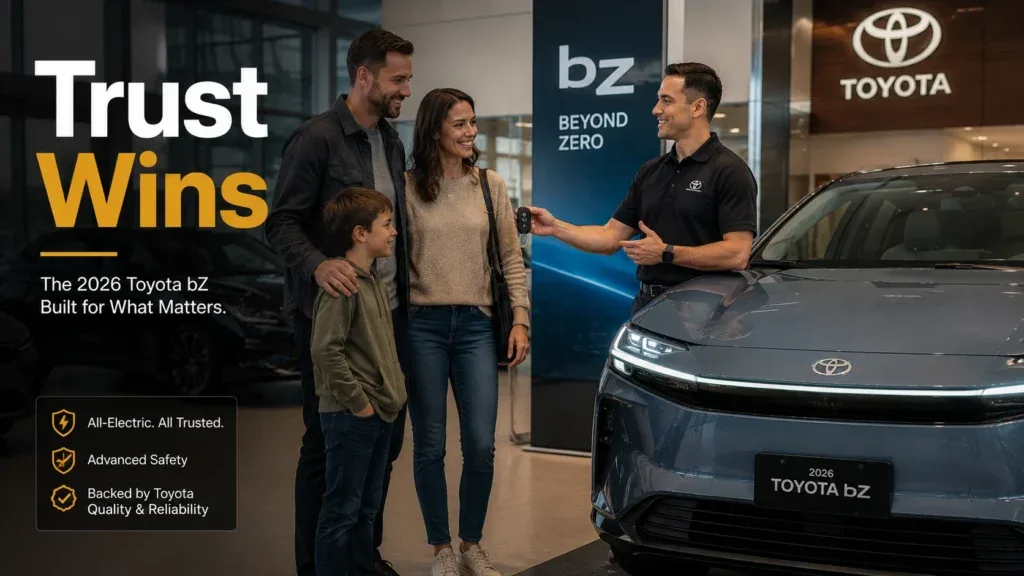
But a significant portion of American car buyers don’t buy cars on spec sheets. They buy cars based on the answer to one question: “What brand can I trust not to fail me?”
For those buyers, Toyota’s answer has been the same for 50 years. The Camry, the Corolla, the RAV4 — they run. They run for 200,000 miles. They run in Minnesota winters and Phoenix summers. The service network is everywhere. The resale value holds.
Transferring that trust to an EV is not guaranteed. But in the absence of any evidence that the bZ is unreliable — and the early ownership data has been positive — Toyota’s brand history is doing meaningful work in the buying decision.
The bZ doesn’t have to be the best EV on paper. It has to be the best EV for a buyer who has trusted Toyota for 20 years and wants their first electric car to feel like a Toyota.
For Q1 2026, that turned out to be a very large number of buyers.
What It Means for the EV Market
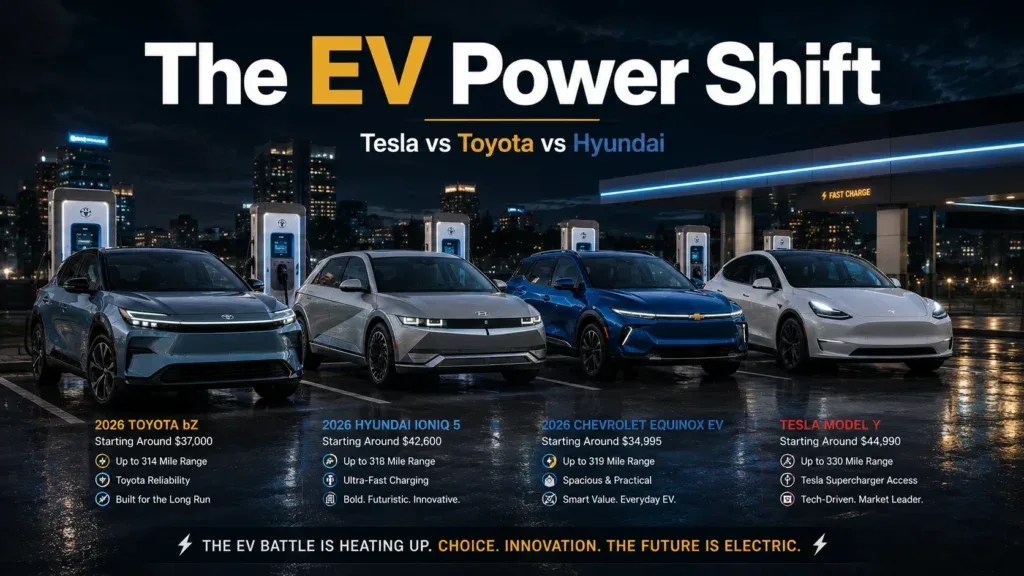
Toyota entering the EV conversation seriously — not as a curiosity but as the volume leader among non-Tesla brands — changes the market in ways that matter.
Toyota’s dealer network is one of the largest in America. When your EV is sold and serviced by Toyota dealers with existing customer relationships, trust infrastructure, and service departments that people already use — you have distribution advantages that startups and even established brands building new EV identities from scratch can’t quickly replicate.
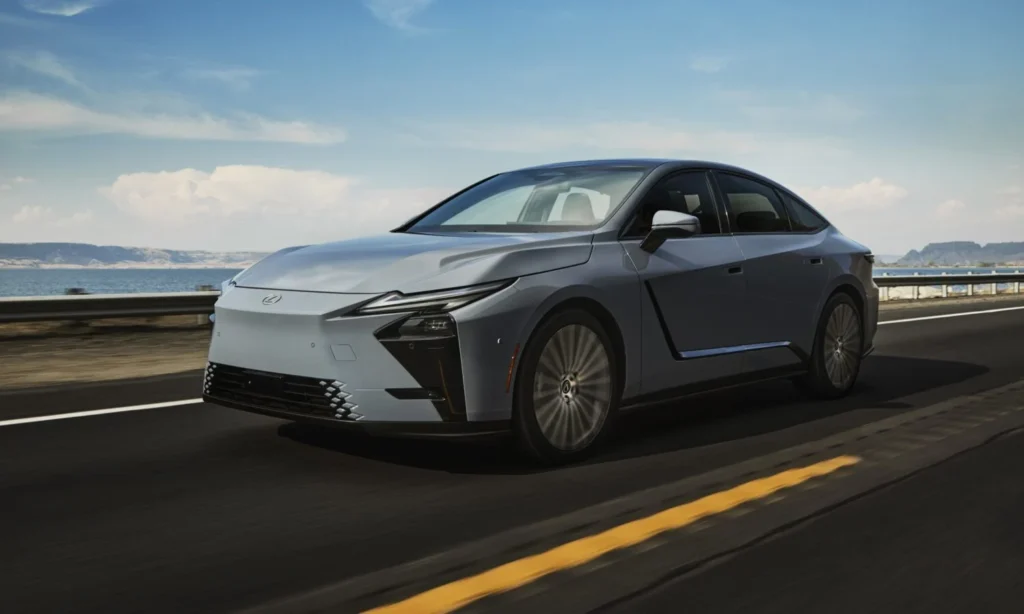
The bZ’s Q1 win is probably not a fluke. Toyota is launching the Lexus ES Electric at $47,500, expanding the bZ lineup, and rolling out its EV products across a dealer network that sees more customer traffic than almost any other brand.
Hyundai isn’t going anywhere. The Ioniq 5 at $35,000 is still the best value EV in America. But the bZ’s Q1 performance is a clear signal: the EV market is not a two-horse race between Tesla and Hyundai anymore. Toyota just showed up.