There’s a version of this story where Porsche builds an electric Cayenne and it’s just a fast, expensive SUV that does 0-60 quickly and parks in the same garages as the gas version.
That’s not the story.
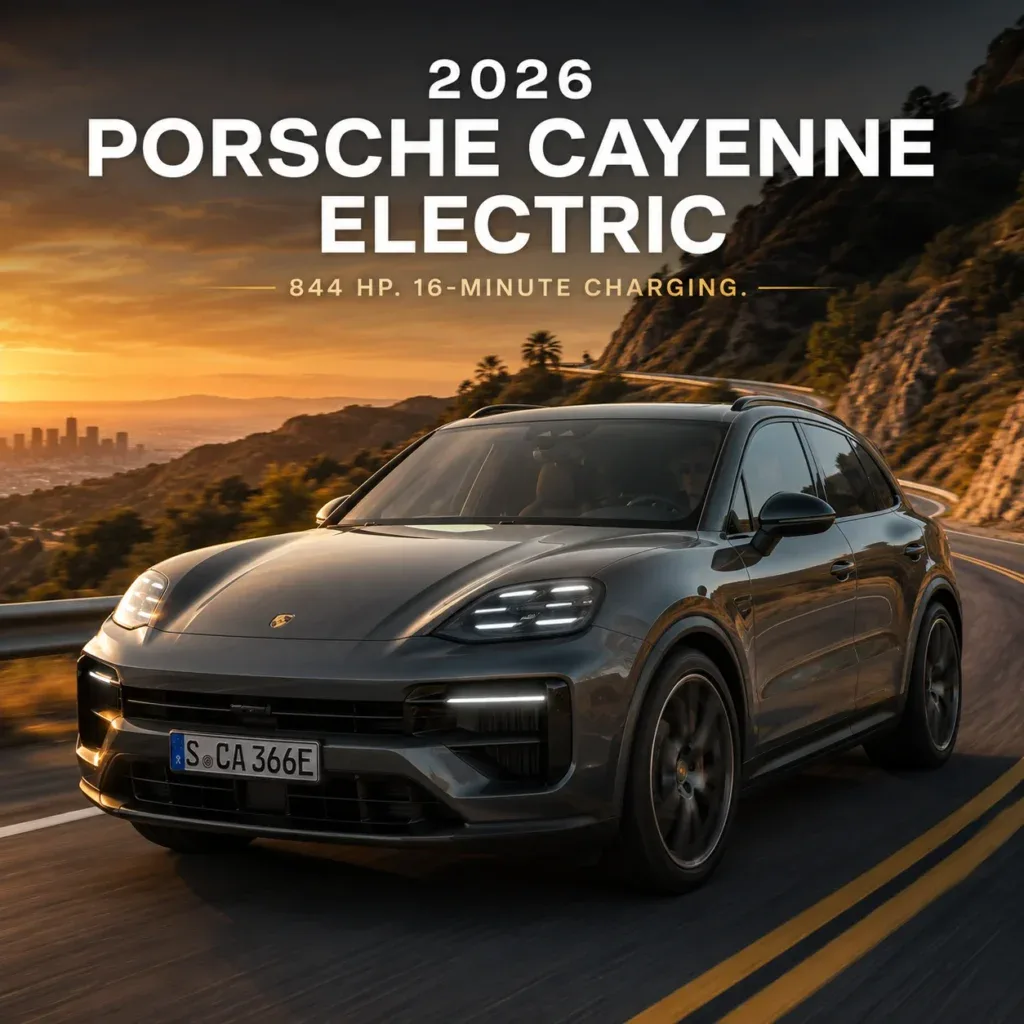
The 2026 Porsche Cayenne Electric — arriving at US dealers late summer at a starting price of $109,000 — is a genuinely different vehicle from anything you’ve driven before. Not because of the performance numbers, which are extraordinary. Not because of the charging speed, which is class-leading. But because Porsche found a way to make an electric SUV feel like a Porsche.
That’s harder than it sounds. And most brands haven’t managed it.
also read : https://driveglobalnews.in/subaru-getaway-vs-kia-ev9-in-2026-two-three-row/
The Numbers That Matter
844 horsepower in the Turbo Electric variant. 2.4 seconds to 60 mph. A top speed of 162 mph.
Those are headline numbers. The ones that go in the press release and the spec sheet. They’re real and they’re remarkable — but they’re not the reason to buy this car.
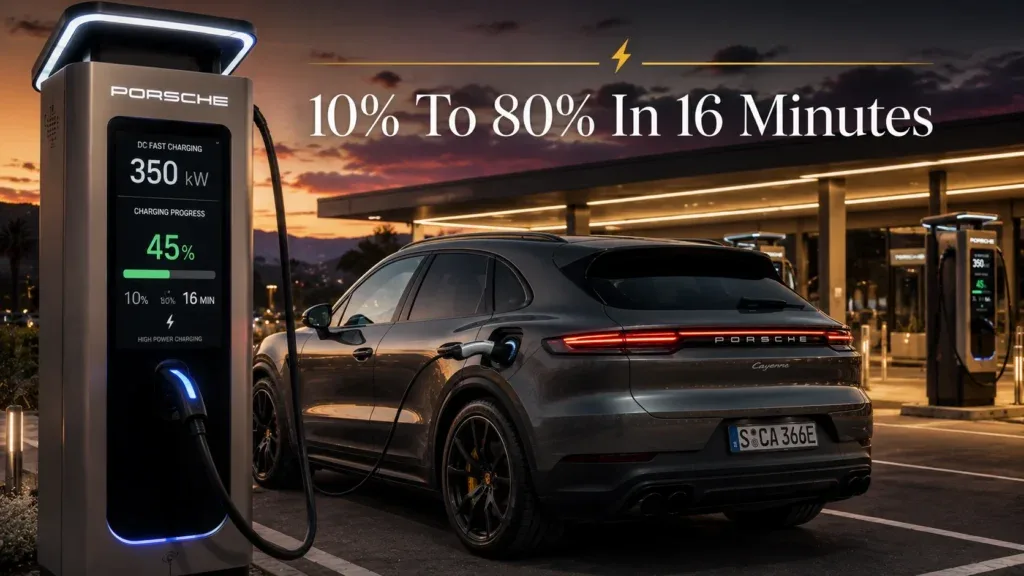
The reason is what happens at 16 minutes.
That’s how long it takes to charge the Cayenne Electric from 10% to 80% at a DC fast charger. Sixteen minutes. For context: the Hyundai Ioniq 5 — the fastest-charging mainstream EV sold in America — takes 18 minutes. The Porsche Cayenne Electric, at $109,000, charges faster than that.
At that charging speed, range anxiety stops being a concept that applies to your life. 325 miles of EPA range, plus a 16-minute stop to 80% — you’re doing the math of a gas car, not the anxiety math of an early EV owner with range limitations and an unreliable charging network.
also read : https://driveglobalnews.in/tesla-just-killed-the-model-s-and-model-x-the/
Why This Is Specifically a Porsche
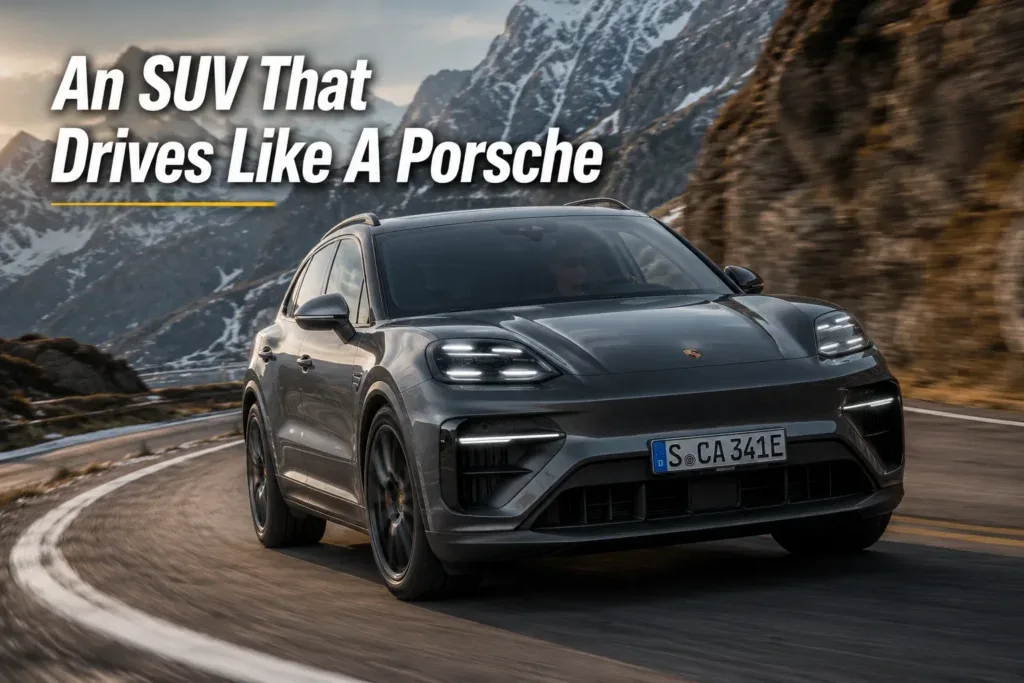
Porsche has a century of chassis engineering behind every car they make. That history isn’t marketing. It shows up in how a car responds when you push it.
The Cayenne Electric uses active suspension that reads the road ahead and adjusts each wheel independently before the bump arrives rather than reacting after the fact. The result is a 5,200-pound electric SUV that handles in ways that should be physically impossible for something this heavy.
Every reviewer who has driven the European-spec Cayenne Electric says the same thing: it doesn’t feel like a heavy car. It doesn’t feel like it’s fighting its own weight on a corner. It feels like a sports car that happens to have four doors, a proper rear seat, and 844 horsepower available when you want them.
That’s the Porsche difference. The Tesla Model S Plaid is faster in a straight line. The BMW iX3 is cheaper. The Mercedes EQS SUV is more luxurious. But none of them feel like a driver’s car the way the Cayenne Electric does.
If you’ve ever owned a 911 and wondered whether an electric SUV could feel remotely similar — this is the answer.
The Variants and Pricing
Three configurations arrive for late summer:
Cayenne Electric — base variant, still produces over 500 HP. Starting at $109,000. Expect 300+ miles of EPA range.
Cayenne 4S Electric — mid-spec, meaningful performance step-up. Approximately $130,000-$140,000.
Cayenne Turbo Electric — the 844 HP, 2.4-second, 16-minute-charging variant. Starting around $165,000.
All three variants charge using a NACS port — standard Supercharger network access. All three get active suspension as either standard or available equipment. All three are built in Leipzig, Germany.
That last point matters. The 25% EU tariff announced earlier this month applies to German-built vehicles. The Cayenne Electric is subject to it. Porsche hasn’t announced final pricing adjustments — the figures above reflect pre-tariff expectations. Actual sticker prices when the cars arrive on lots may be higher.
If you’re serious about the Cayenne Electric, the conversation to have with your Porsche dealer right now is about vehicles in transit — units that were priced under the old tariff rate.
Is It Worth $109,000?
For the specific buyer the Cayenne Electric is designed for — yes, without hesitation.
If you drive enthusiastically, want an SUV that genuinely rewards driving rather than just tolerating it, need practical family space, and want the fastest-charging luxury EV in its class — the Cayenne Electric justifies every dollar it costs.
For everyone else: the Hyundai Ioniq 9 at $60,000-$76,000 does the practical family SUV job excellently. The BMW iX3 at $60,000 is technically impressive. You don’t need to spend $109,000 for a good electric SUV.
But if driving a great one matters to you — the Cayenne Electric is the answer. Late summer can’t come fast enough.
Plan your monthly payment with our Car Loan EMI Calculator.