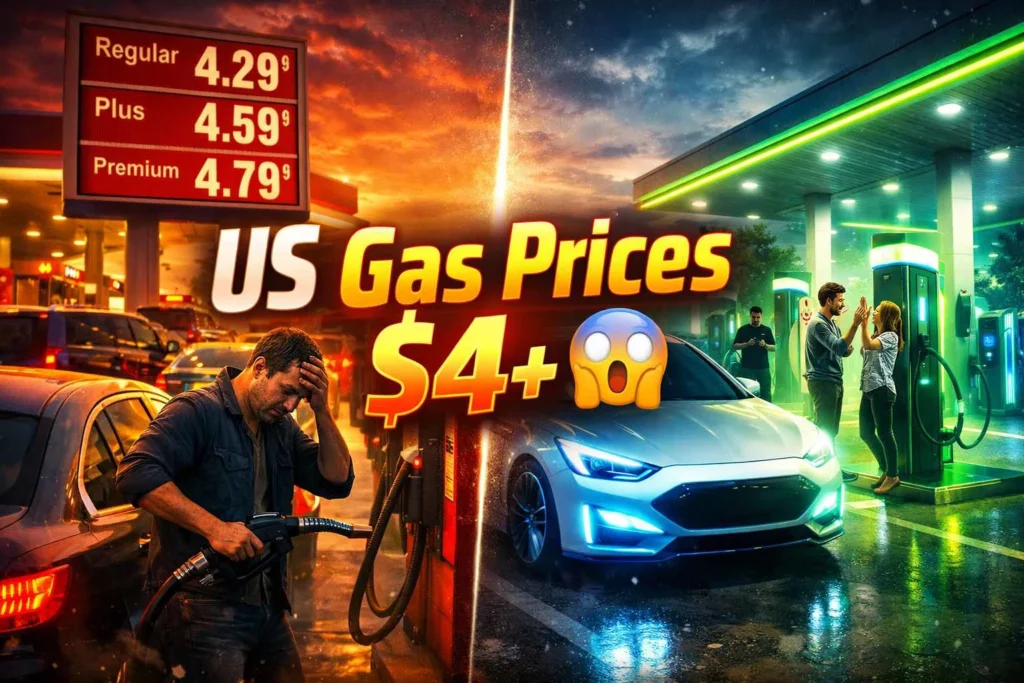
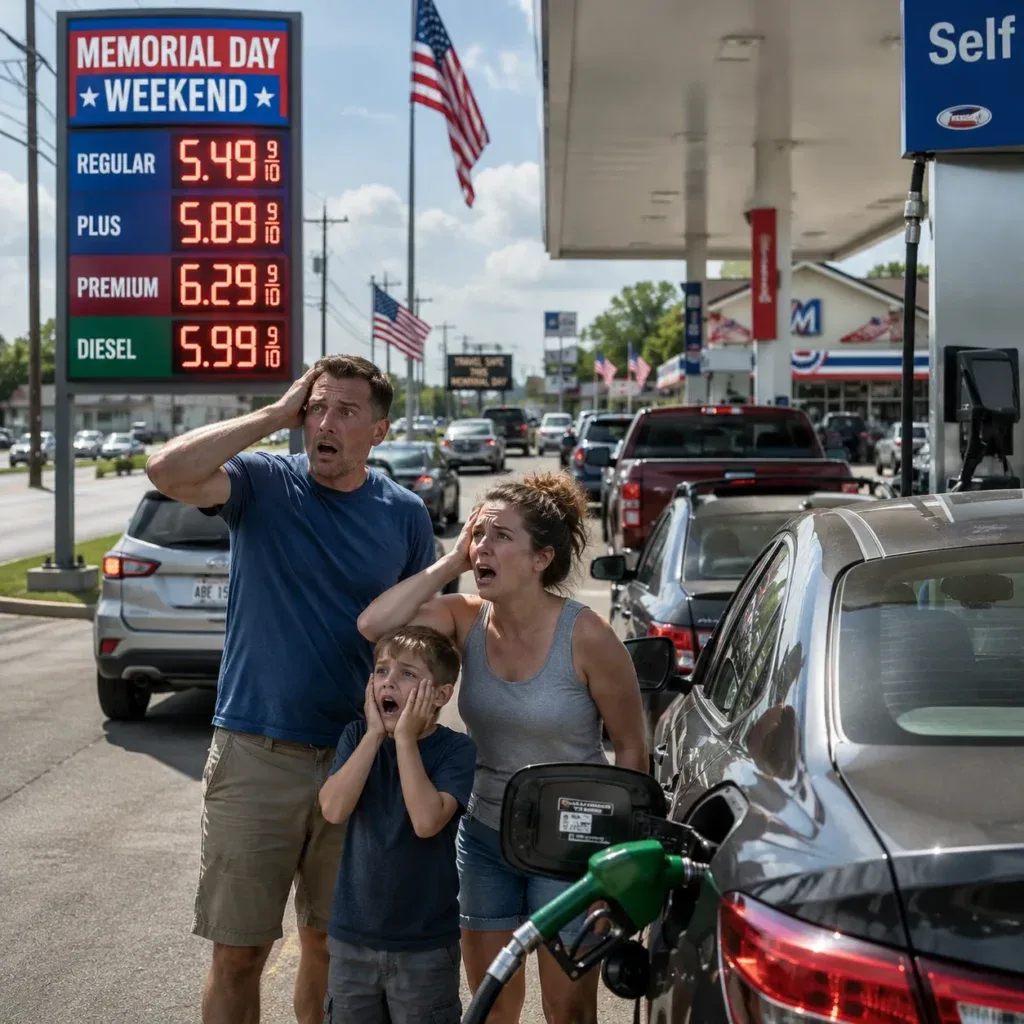
39.1 million Americans are driving somewhere this Memorial Day weekend.
Most of them are going to stop at a gas station. Most of them are going to wince at the price. And almost none of them are going to know this number:
$45 billion.
That’s how much more Americans have collectively spent on gasoline and diesel since the Iran war began on February 28 — compared to the same period a year ago. Forty-five billion dollars. Pulled out of household budgets, vacation funds, grocery money, and emergency savings. Transferred directly to oil companies that are reporting record profits.
Free cash flow for major oil companies rose 84% to $36 billion in the first quarter of 2026. The companies extracting oil from the ground are having one of their best financial years in history. The families driving to those gas pumps are having one of their worst.
The Numbers Behind the Number

$45 billion across approximately 230 million licensed American drivers works out to roughly $196 per driver in additional fuel costs since late February. That’s about three months of the conflict. Annualized — if the Iran situation isn’t resolved — we’re talking $780+ per driver per year in additional fuel spending compared to pre-war prices.
For a middle-income American household with two cars, each driving 13,500 miles annually, the math lands somewhere around $1,300-$1,600 in extra annual fuel costs compared to late 2025. That’s not abstract money. That’s the difference between a family vacation and not having one. Between saving for a down payment and watching that goal slip further away.
The disproportionate impact on lower-income families is the part that gets lost in the headline numbers. Wealthier households spend a smaller percentage of their income on fuel — and many can more easily switch to hybrid or electric vehicles that insulate them from pump prices. Lower-income families, who are more likely to drive older, less fuel-efficient vehicles and less likely to be able to absorb a $35,000+ hybrid purchase — are spending a larger share of their income on gas than at any point in recent memory.
also read : https://driveglobalnews.in/memorial-day-car-deals-2026-which-brands-are/
AAA Says 39.1 Million Will Drive This Weekend — At $4.50 Per Gallon
Memorial Day 2026 is one of the busiest travel weekends in American history. AAA projects 39.1 million people will travel by car over the holiday — a slight increase over last year, suggesting that despite the fuel cost burden, Americans are determined to travel.
The average Memorial Day road trip — roughly 600 miles round trip for many families — costs approximately $85-$110 in fuel at current national average prices. That’s $20-$35 more than the same trip would have cost in Memorial Day 2025. For a family of four driving a minivan or full-size SUV, the fuel cost for a long weekend trip has become a meaningful budget line item.
One interesting footnote from this weekend’s fuel news: Growth Energy, the biofuel trade association, estimates Americans could collectively save $115 million this weekend by choosing Unleaded 88 (E15) — the blend made with 15% bioethanol — over standard 87 octane. E15 is available at roughly 4,000 stations nationally, is approved for all 2001 and newer vehicles, and typically costs 5-10 cents per gallon less than regular unleaded.
It’s not a solution to $4.50 gas. But $0.08 per gallon saved across a 14-gallon fill-up is $1.12. For a family making three fill-ups over a holiday weekend — it adds up.
also read : https://driveglobalnews.in/honda-accord-vs-bmw-3-series-insurance-in-2026/
Where the $45 Billion Went
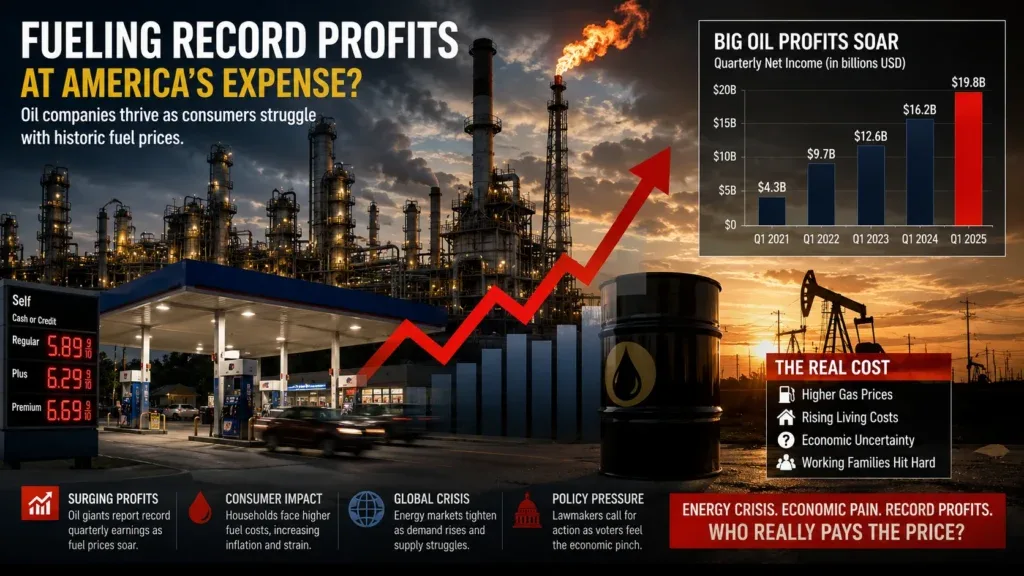
The oil company profit picture is the uncomfortable flip side of the consumer pain story.
Record profits at a moment of consumer suffering aren’t inherently a policy failure — oil companies are responding rationally to supply constraints caused by Iran’s Strait of Hormuz blockade. When supply falls and demand holds steady, prices rise and producers profit. That’s how commodity markets work.
But the political pressure is building. Multiple senators have proposed windfall profit taxes on oil companies. The Trump administration’s interest in opening additional domestic drilling permits is directly connected to the Iran-driven price environment. And the case for hybrid and electric vehicles — which reduce or eliminate household exposure to oil price volatility — has never been stronger simply by looking at what $45 billion in extra fuel costs means for real American families.
The One Thing Every Driver Should Do This Weekend
If you’re driving somewhere this Memorial Day — check GasBuddy before you leave. The price variation between the cheapest and most expensive gas stations within five miles of most American homes is typically $0.15-$0.30 per gallon. On a 14-gallon fill-up, that’s $2.10-$4.20 per stop.
It’s not $45 billion. But it’s yours to keep.