A few years ago, the biggest question facing Ford seemed fairly simple.
How quickly should the company move into the future?
Electric vehicles were dominating headlines.
Technology was changing rapidly.
The industry was talking about transformation almost every day.
Today, the conversation feels different.
Not because the future disappeared.
Because customers started asking different questions.
Questions about affordability.
Questions about ownership costs.
Questions about value.
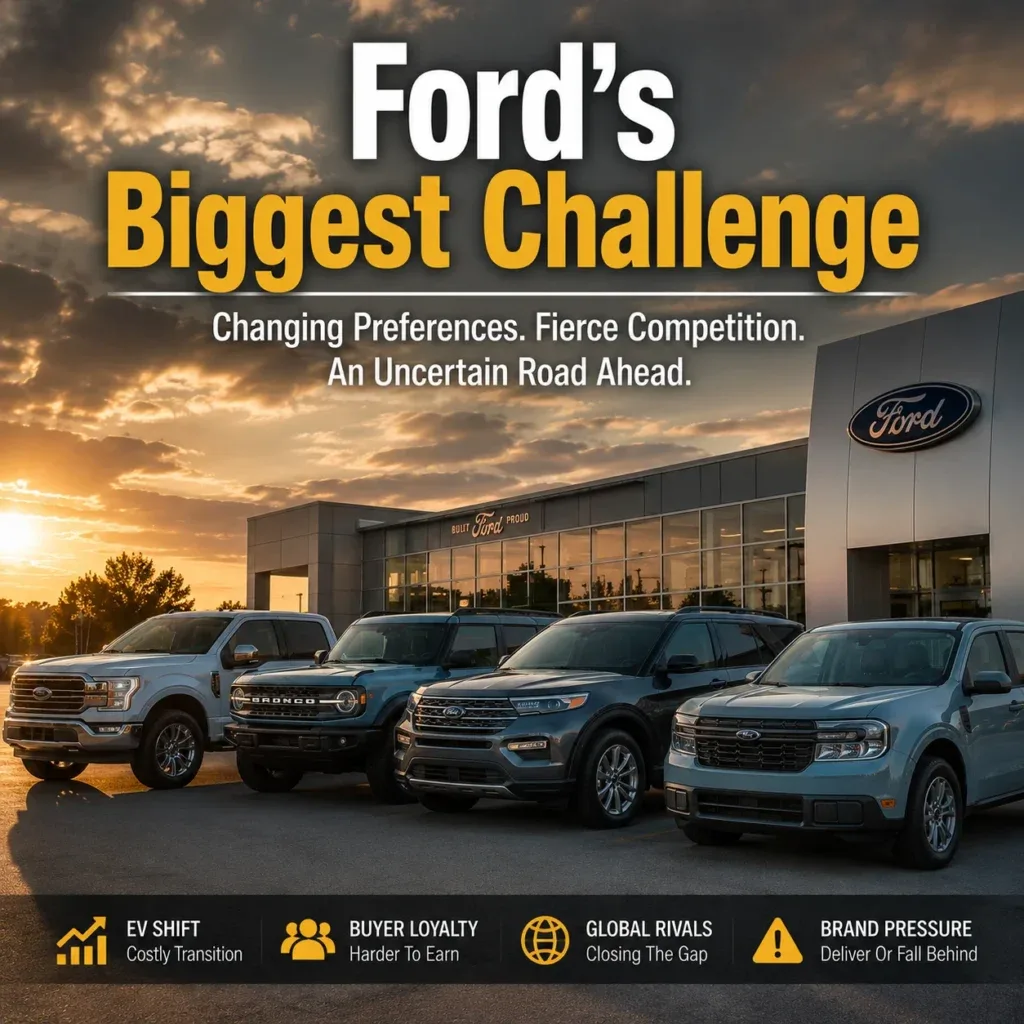
And that shift may be creating Ford’s biggest challenge yet.
Not building great vehicles.
Understanding what buyers actually want from them.
Ford Still Owns Some Of America’s Most Important Vehicles
Let’s start with something that’s easy to forget.
Ford isn’t searching for relevance.
The company already has it.
The F-150 remains one of the most recognizable vehicles in America.
The Bronco successfully returned from automotive history and became one of the industry’s biggest comeback stories.
The Explorer continues attracting families.
The Maverick proved that buyers still love practical solutions when they’re offered at the right price.
Ford doesn’t have a product problem.
If anything, its lineup is stronger than many competitors.
The challenge is something else.
Consumers Are Becoming More Careful
Walk through any dealership today and you’ll hear conversations that sound very different from those of a decade ago.
People still care about performance.
They still care about technology.
But they’re also paying attention to things they once ignored.
Insurance costs.
Fuel expenses.
Monthly payments.
Long-term ownership costs.
The average buyer has become more cautious.
Not because they dislike vehicles.
Because they’re trying to make smarter financial decisions.
Every automaker is dealing with this reality.
Ford included.
The F-150 Continues To Carry The Brand
There are successful vehicles.
And then there’s the F-150.
For generations, it has been one of the foundations of the American automotive market.
Contractors rely on it.
Families rely on it.
Small business owners rely on it.
The F-150’s importance extends beyond sales numbers.
It’s part of Ford’s identity.
And what’s remarkable is how the truck continues adapting to changing expectations.
Modern buyers want capability.
But they also want comfort.
Technology.
Efficiency.
Ford understands that balancing act better than most.
The Maverick Might Be More Important Than People Realize
Sometimes the most important vehicle in a lineup isn’t the most expensive one.
It’s the one that identifies a market opportunity.
That’s exactly what the Maverick did.
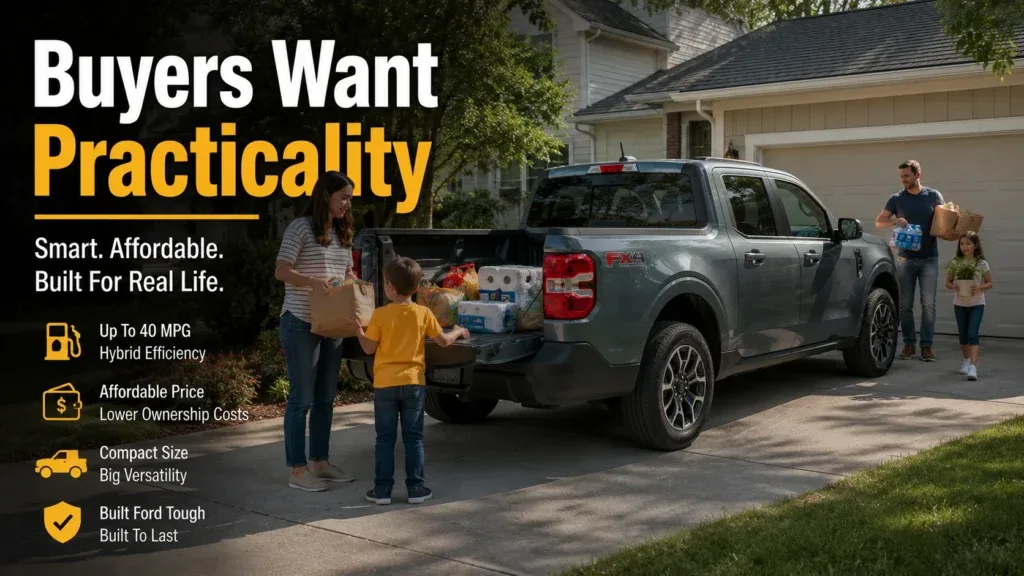
At a time when many vehicles were becoming larger and more expensive, Ford introduced something different.
A compact pickup.
Affordable.
Practical.
Efficient.
The response surprised much of the industry.
Because it revealed something important.
Not every buyer wants more vehicle.
Many simply want the right amount of vehicle.
That’s a lesson likely to influence future product decisions.
Also Read:
https://driveglobalnews.in/the-hidden-cost-of-owning-a-large-suv/ – Why many buyers are reconsidering how much vehicle they actually need.
Ford’s SUV Strategy Continues Evolving
The Bronco remains one of the most interesting stories in Ford’s lineup.
Not because it sells more than everything else.
Because it reminds people what a strong brand can accomplish.
Ford didn’t just launch an SUV.
It revived an identity.
The Bronco succeeded because buyers connected with the idea behind it.
Adventure.
Capability.
Freedom.
At the same time, vehicles like the Explorer and Escape continue serving a completely different audience.
Families.
Commuters.
Everyday drivers.
Ford’s challenge is satisfying both groups simultaneously.
So far, it has done a respectable job.
The Market Is Becoming Less Predictable
This may be the most important Ford story of all.
Consumer preferences aren’t moving in a straight line.
Some buyers want EVs.
Some want hybrids.
Some still prefer traditional gasoline vehicles.
That creates a complicated environment for manufacturers.
Predicting the future has become harder.
Flexibility has become more valuable.
Ford appears increasingly aware of that reality.
The company isn’t simply building vehicles.
It’s trying to build options.
And in today’s market, options matter.
Why Ford Still Has An Advantage
One thing Ford rarely receives enough credit for is understanding American buyers.
The company knows trucks.
It understands SUVs.
It understands work vehicles.
And it understands that practicality often matters more than headlines.
That’s why Ford products continue appearing in driveways, job sites, farms, suburbs, and cities across the country.
The brand remains deeply connected to how many Americans actually live.
That’s difficult for competitors to replicate.
Also Read:
https://driveglobalnews.in/why-more-americans-are-keeping-their-cars-past-200000-miles/ – The surprising reasons many owners are holding onto vehicles longer than ever before.
The Bigger Story Behind Ford
The easiest mistake is viewing Ford as a truck company.
Or an SUV company.
Or an EV company.
The truth is more complicated.
Ford is increasingly becoming a company trying to serve multiple futures at the same time.
And that’s not easy.
Some customers want innovation.
Others want familiarity.
Some want cutting-edge technology.
Others want reliability and value.
The companies that thrive over the next decade will likely be the ones that can serve all of those buyers without losing their identity.
The View From A Ford Parking Lot
If you want to understand Ford’s position, don’t start with sales reports.
Start with a parking lot.
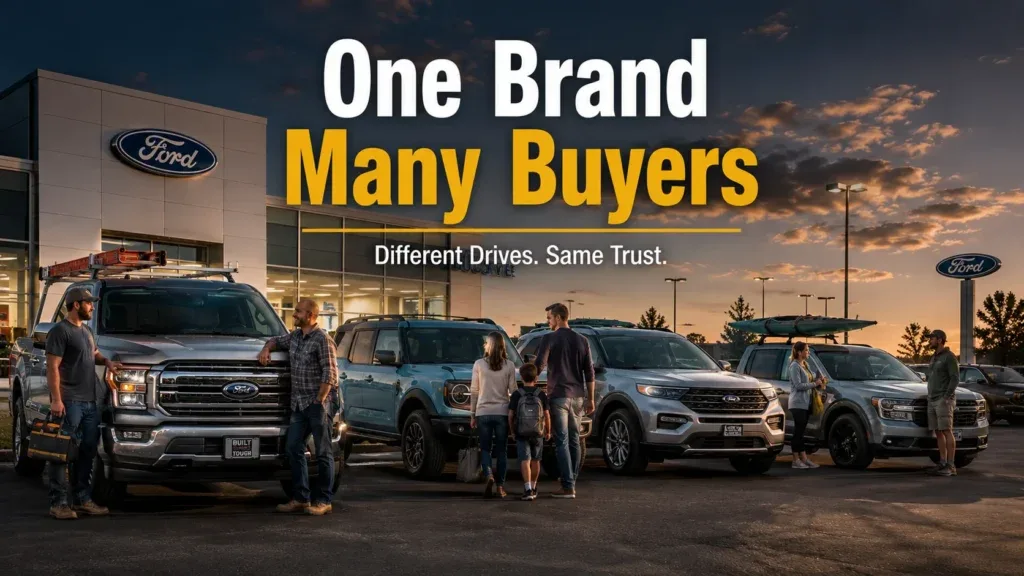
You’ll see a contractor climbing into an F-150 before sunrise.
A family loading luggage into an Explorer.
A Bronco owner planning a weekend trip.
A Maverick owner smiling because they found exactly what they needed and nothing they didn’t.
At first glance, those vehicles seem completely different.
But they share something important.
They were bought by people trying to solve real-world problems.
And that’s why Ford remains relevant after all these years.
The automotive industry loves talking about what’s next.
Ford’s real challenge is something much simpler.
Making sure the next thing still makes sense for the people who buy it.