The Biggest Car Buying Mistake Americans : A salesman once told me something that stuck.
He said the easiest customer to sell a car to isn’t the person who loves cars.
It’s the person who just had a bad day.
Maybe their old vehicle broke down.
Maybe they’re tired of repair bills.
Maybe they’re frustrated, stressed, and ready to be done with the whole process.
Those buyers walk into a dealership wanting a solution.
And when people desperately want a solution, they often stop asking questions.
That’s where mistakes happen.
Not small mistakes.
Expensive ones.
The kind that follow people home.
The kind that sit in the driveway for the next five or six years.
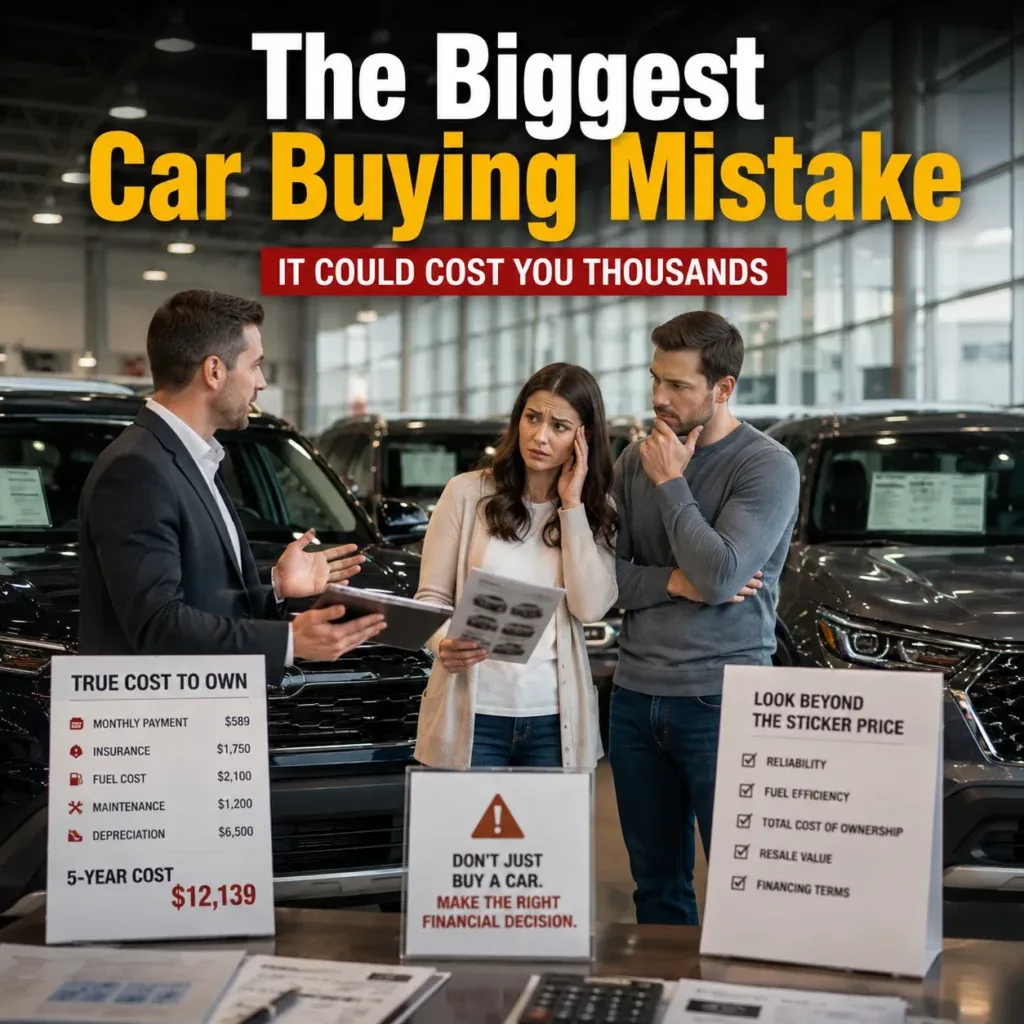
And strangely enough, the biggest car-buying mistake Americans will make this year has nothing to do with choosing the wrong brand.
It starts much earlier than that.
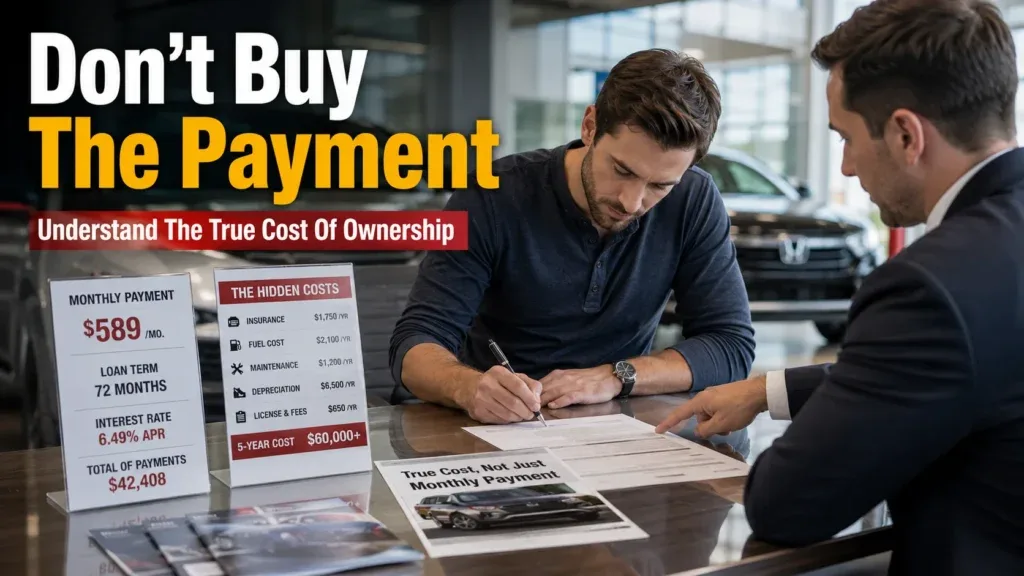
Most People Focus On The Monthly Payment
Walk into almost any dealership and listen carefully.
You’ll hear the same question again and again.
“What’s the monthly payment?”
Not:
“What’s the total cost?”
Not:
“What’s the ownership cost over five years?”
Not:
“How much depreciation should I expect?”
The monthly payment becomes the entire conversation.
That’s understandable.
People have budgets.
But focusing only on the monthly payment is like shopping for a house based solely on the electric bill.
You’re looking at one piece of a much larger picture.
And sometimes it’s the wrong piece.
A $700 Problem Can Wear A $500 Mask
Here’s how it happens.
A buyer arrives planning to spend $35,000.
Then they see a nicer trim.
A larger SUV.
A more powerful engine.
A few extra features.
The payment only increases a little.
Maybe $40 more per month.
Maybe $60.
It doesn’t seem dramatic.
So they say yes.
Then yes again.
And sometimes yes one more time.
By the end of the process, the vehicle is far more expensive than originally planned.
Yet the buyer feels comfortable because the monthly payment still seems manageable.
That’s the trap.
The payment hides the true cost.
Americans Are Buying More Vehicle Than They Need
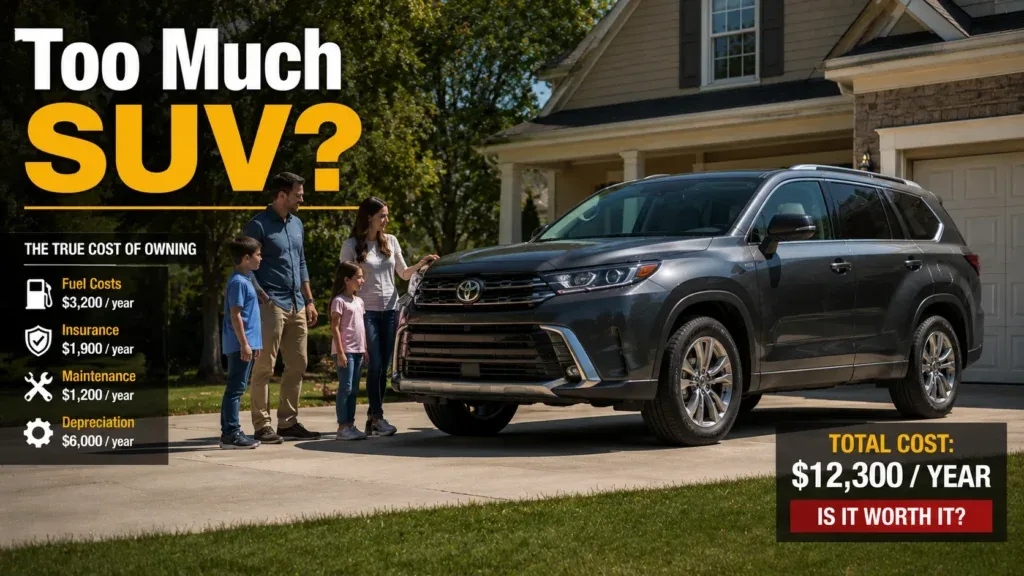
This might be the most common mistake in the country right now.
People buy vehicles for the life they imagine.
Not the life they actually live.
A family of four buys a massive three-row SUV because they might need the space.
A commuter buys a truck because it might be useful one day.
Someone chooses a luxury trim because they don’t want to regret not getting it.
The keyword is “might.”
And “might” gets expensive.
Very quickly.
The Ownership Costs Nobody Calculates
Purchase price gets attention.
Monthly payment gets attention.
Everything else often gets ignored.
Insurance.
Fuel.
Maintenance.
Tires.
Registration fees.
Depreciation.
These costs don’t arrive all at once.
They arrive gradually.
Quietly.
Month after month.
Which makes them easy to underestimate.
A buyer can save thousands of dollars simply by considering ownership costs before signing paperwork.
Unfortunately, many don’t.
Also Read:
https://driveglobalnews.in/the-hidden-cost-of-owning-a-large-suv/ – The ownership expenses that surprise many buyers long after the excitement of purchase day disappears.
The Test Drive Creates A Dangerous Illusion
A test drive usually lasts fifteen or twenty minutes.
Ownership lasts years.
That’s an important difference.
A vehicle can feel exciting for twenty minutes.
What matters is how it feels after 700 commutes.
After 40 trips to the grocery store.
After countless school runs.
Many buyers unknowingly purchase based on a temporary feeling rather than a long-term experience.
And feelings have a way of fading.
Payments don’t.
The Wrong Question
A surprising number of buyers ask:
“Can I afford this vehicle?”
That’s not the question that matters most.
The better question is:
“Will I still be happy paying for this vehicle three years from now?”
Those are completely different conversations.
The first focuses on today.
The second focuses on reality.
Reality tends to be more useful.
Why Smart Buyers Often Walk Away
One of the most underrated car-buying skills is leaving.
Walking away.
Going home.
Thinking about it overnight.
People rarely regret decisions they delayed by twenty-four hours.
They often regret decisions they rushed.
Excitement creates urgency.
Good decisions usually require patience.
The best buyers understand the difference.
The Industry Isn’t Helping
To be fair, dealerships aren’t entirely responsible.
Manufacturers advertise lifestyles.
Adventure.
Luxury.
Freedom.
Success.
Nobody runs commercials about depreciation.
Nobody markets insurance premiums.
Nobody highlights maintenance costs.
That’s not how advertising works.
The result is that buyers often enter the process focused on emotions while the financial realities remain hidden in the background.
Until ownership begins.
Also Read:
https://driveglobalnews.in/why-more-americans-are-keeping-their-cars-past-200000-miles/ – Why millions of owners are choosing to keep vehicles longer instead of replacing them.
The Real Mistake
The biggest car-buying mistake isn’t choosing Ford instead of Toyota.
Or Honda instead of Hyundai.
Or SUV instead of sedan.
Those decisions matter.
But they’re rarely the most expensive mistakes.
The biggest mistake is buying a vehicle without understanding the life that comes with it.
Every vehicle creates a relationship.
Some relationships save money.
Some create stress.
Some quietly fit into daily life.
Others constantly demand attention.
The badge on the hood matters less than most people think.
The ownership experience matters far more.
What Buyers Will Remember
A year from now, most buyers won’t remember the negotiation.
They won’t remember the dealership coffee.
They won’t remember the sales pitch.
They’ll remember something else.
How they feel every time a payment leaves their account.
How they feel at the gas station.
How they feel when insurance renews.
How they feel after another year of ownership.
That’s the part nobody talks about during the buying process.
Yet it’s the part that matters most.
Because the smartest vehicle purchase isn’t the one that feels exciting for an afternoon.
It’s the one that still feels smart on a random Tuesday three years later, when the excitement is gone, real life has returned, and the car has finally become what it was always meant to be:
Just another part of everyday life.
And that’s exactly where expensive mistakes reveal themselves.