
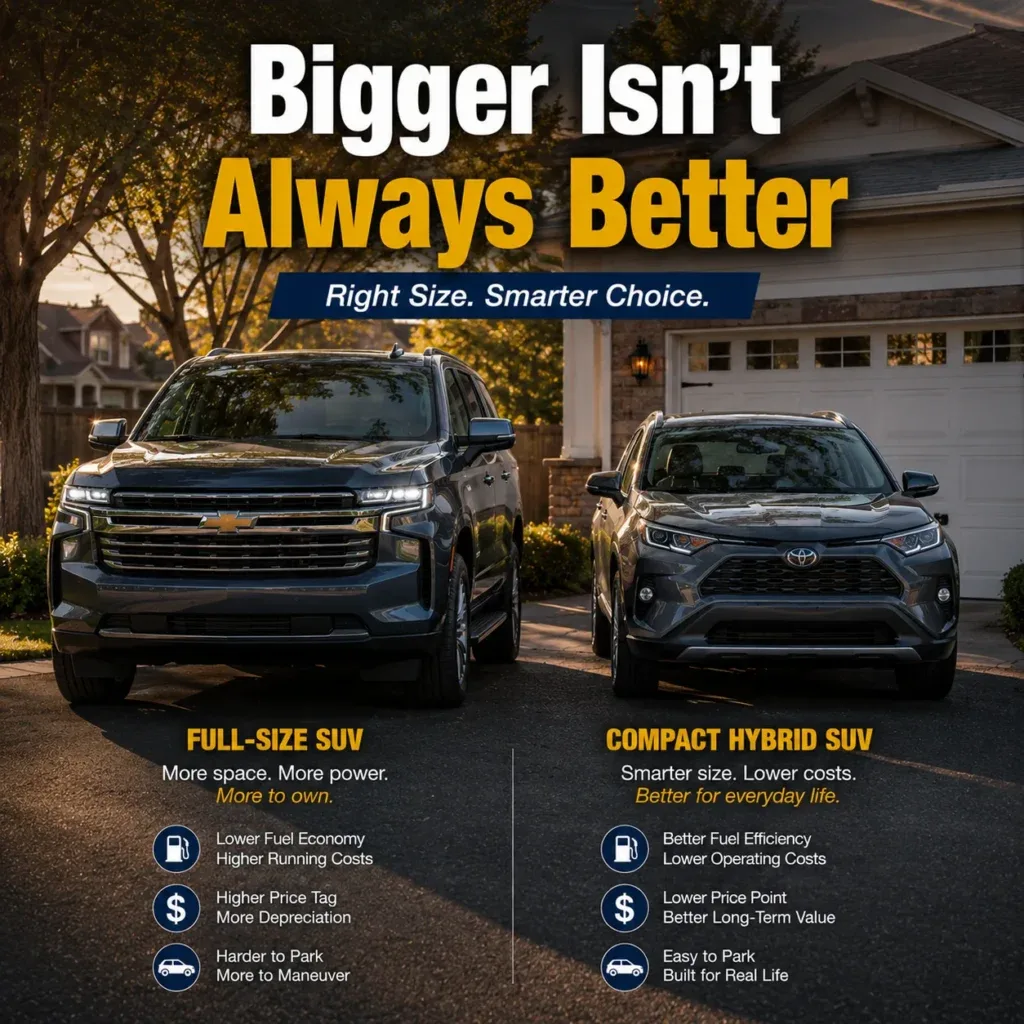
Americans Thought Bigger SUVs : A few years ago, buying an SUV felt a little like shopping for a television.
Most people followed the same logic.
If you can afford bigger, buy bigger.
A larger screen.
A larger house.
A larger vehicle.
The assumption was simple.
More is better.
And nowhere was that idea more visible than America’s SUV market.
Families upgraded from compact SUVs to midsize SUVs.
Midsize SUV owners moved into three-row models.
Three-row owners started looking at full-size SUVs.
Every step felt like progress.
Every upgrade felt logical.
Then reality showed up.
Not all at once.
But slowly.
Through gas station receipts.
Insurance renewals.
Monthly payments.
Parking garages.
And ordinary life.
That’s when many Americans started asking a question they hadn’t asked before.
“What exactly am I getting from all this extra SUV?”
The Dream And The Reality
Most SUV purchases begin with imagination.
Buyers picture family vacations.
Camping trips.
Holiday travel.
Unexpected adventures.
They imagine every seat occupied.
Every cargo compartment full.
Every capability being used.
There’s nothing wrong with that.
The problem is that real life often looks different.
Most days involve commuting.
School drop-offs.
Coffee runs.
Grocery stores.
A quick trip to Home Depot.
The average SUV spends far more time handling ordinary life than extraordinary adventures.
And that’s where many owners started noticing something.
They weren’t using all that space.
The Third Row Nobody Sits In
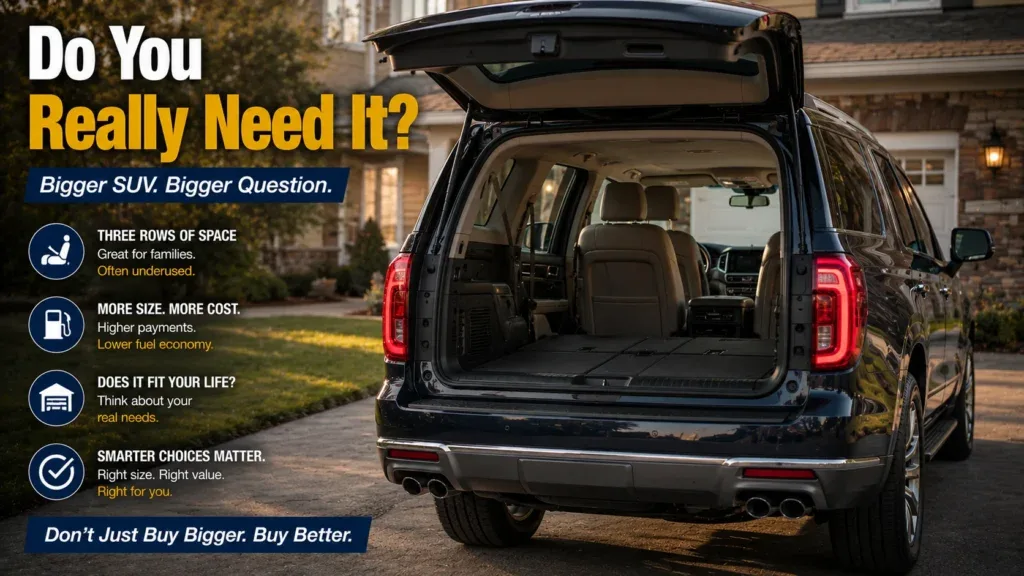
Ask a few SUV owners a simple question.
“How often do you actually use the third row?”
The answers can be surprisingly honest.
“Only during holidays.”
“A few times a year.”
“Mostly when relatives visit.”
For many families, the third row becomes an insurance policy.
Nice to have.
Rarely used.
The issue isn’t that third-row SUVs are bad.
The issue is that owners pay for that extra space every day, even when nobody is sitting there.
They pay through fuel costs.
Insurance.
Purchase price.
Maintenance.
And once people start adding up those costs, the math changes.
Bigger Vehicles Bring Bigger Bills
Automakers love talking about capability.
They should.
Capability sells vehicles.
What gets less attention are the expenses attached to that capability.
Larger tires cost more.
Larger vehicles often use more fuel.
Insurance premiums can increase.
Replacement parts can cost more.
The difference isn’t always dramatic month to month.
But over five years?
The numbers become difficult to ignore.
That’s why many families are starting to rethink what value actually means.
Also Read:
https://driveglobalnews.in/the-hidden-cost-of-owning-a-large-suv/ – The ownership expenses many buyers don’t notice until years later.
Hybrid SUVs Changed The Conversation
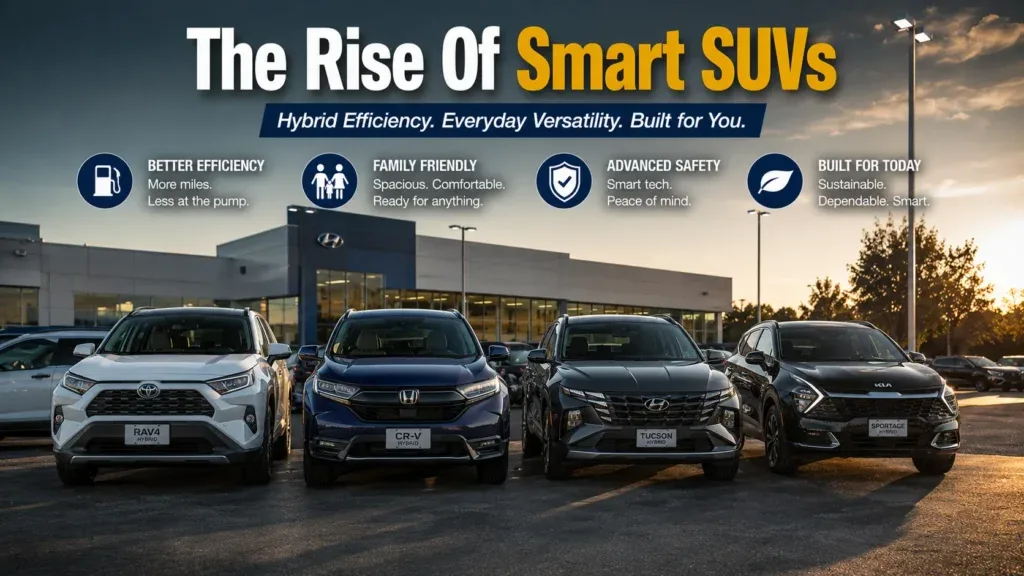
This trend probably wouldn’t be happening without hybrid SUVs.
Vehicles like the Toyota RAV4 Hybrid, Honda CR-V Hybrid, Hyundai Tucson Hybrid, and Kia Sportage Hybrid quietly changed buyer expectations.
They proved something important.
A family SUV doesn’t need to be huge to be useful.
Modern compact and midsize hybrids offer impressive cargo space.
Excellent fuel economy.
Comfortable interiors.
Strong safety technology.
For many households, they handle 95% of daily needs.
Once buyers realize that, oversized SUVs become harder to justify.
Americans Are Becoming More Practical
This isn’t about people becoming less ambitious.
Or less adventurous.
It’s about becoming more realistic.
Consumers today are asking smarter questions.
Do I really need this much vehicle?
How often will I use these features?
What will ownership cost after five years?
Those questions weren’t always part of the buying process.
Today they’re becoming central to it.
And that’s influencing purchasing decisions across the country.
The Rise Of The “Right-Sized” SUV
The biggest trend isn’t downsizing.
It’s right-sizing.
There’s a difference.
Most buyers don’t want the smallest vehicle available.
They want the vehicle that fits their actual life.
Not their imagined life.
A family of four may discover a compact SUV works perfectly.
A retired couple may realize they no longer need three rows.
A commuter may decide fuel savings matter more than extra cargo capacity.
Those decisions don’t make buyers less successful.
They make them more intentional.
Parking Is Part Of The Story Too
Nobody dreams about parking when shopping for an SUV.
Then ownership begins.
Suddenly parking lots matter.
Garages matter.
Urban streets matter.
Drive-thru lanes matter.
Large SUVs can feel wonderful on open highways.
They can feel much less wonderful in crowded shopping centers.
It’s a small frustration.
But small frustrations repeated hundreds of times eventually become part of ownership.
And buyers are noticing.
Also Read:
https://driveglobalnews.in/the-suv-trend-nobody-expected-to-take-off-america/ – The surprising market shift changing how families shop for SUVs.
Automakers Are Paying Attention
Manufacturers didn’t miss this trend.
They’re responding.
Hybrid compact SUVs continue growing in popularity.
Manufacturers are investing heavily in efficient family vehicles.
The market is rewarding practicality.
Not because people stopped wanting SUVs.
Because they started demanding smarter SUVs.
That’s an important distinction.
And it may shape the next decade of vehicle development.
What Buyers Are Really Changing Their Minds About
This isn’t actually a story about SUVs.
It’s a story about assumptions.
For years, buyers assumed bigger automatically meant better.
Now many are discovering that bigger simply means bigger.
Better depends on how you live.
How you drive.
How you spend.
What you value.
That’s a much more personal calculation.
And it’s producing very different answers.
The View From The School Pickup Line
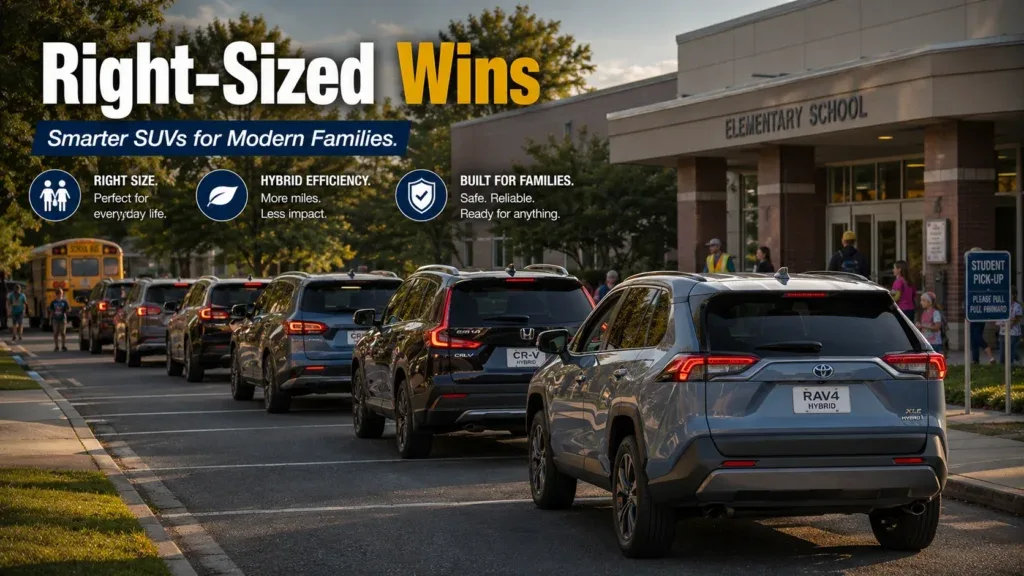
If you want to see where the market is heading, don’t look at advertisements.
Look at a school pickup line.
Look at a grocery store parking lot.
Look at suburban driveways.
You’ll notice something.
The vehicles attracting attention aren’t always the biggest anymore.
They’re often the ones that seem perfectly matched to the lives of the people driving them.
Not too large.
Not too small.
Just right.
And maybe that’s the lesson many Americans are learning.
For years they thought bigger SUVs represented freedom.
Now they’re discovering that the right SUV often provides something even better.
Freedom from paying for space, size, and capability they never really needed in the first place.