Hyundai Ioniq 5 vs Tesla Model Y in 2026 : Imagine walking into two different dealerships with the same goal.
Buy an electric vehicle your family can live with for the next five years.
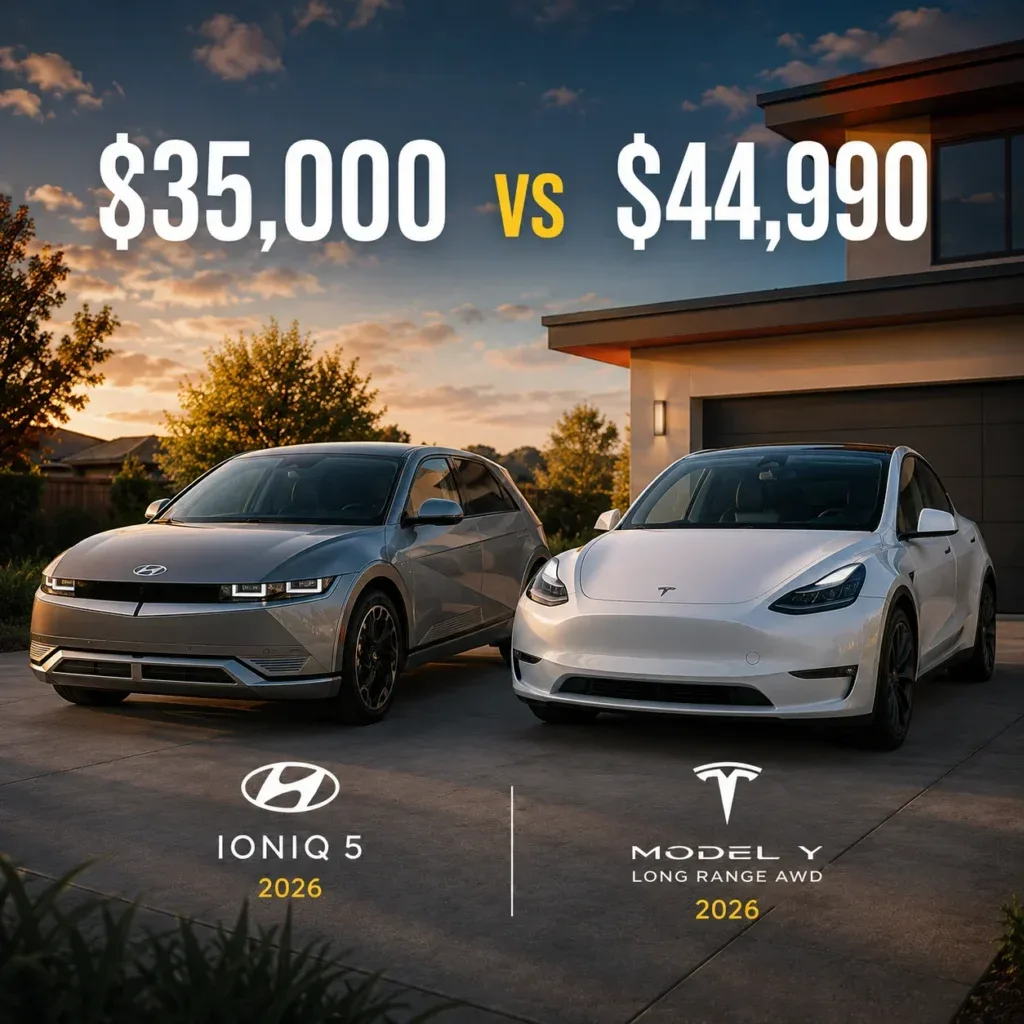
One salesperson points you toward a Hyundai Ioniq 5 priced around $35,000.
The other shows you a Tesla Model Y at nearly $45,000.
Both promise lower running costs.
Both offer impressive technology.
Both have become symbols of the EV transition.
But there’s one obvious question hanging in the air.
What exactly are you getting for that extra $10,000?
Because in 2026, this comparison isn’t really about electric vehicles anymore.
It’s about value.
And value means different things to different people.
The Price Difference Changes Everything
Ten thousand dollars isn’t a rounding error.
It’s meaningful money.
That difference can lower your monthly payment.
Reduce your financing costs.
Cover several years of insurance.
Or stay invested somewhere else.
The Hyundai enters this fight with a huge advantage.
It simply costs less.
And for many families, that fact alone deserves serious consideration.
The Model Y asks buyers to spend more upfront.
That means Tesla needs to justify the premium.
Sometimes it does.
Sometimes it doesn’t.
Tesla Still Owns The Charging Conversation
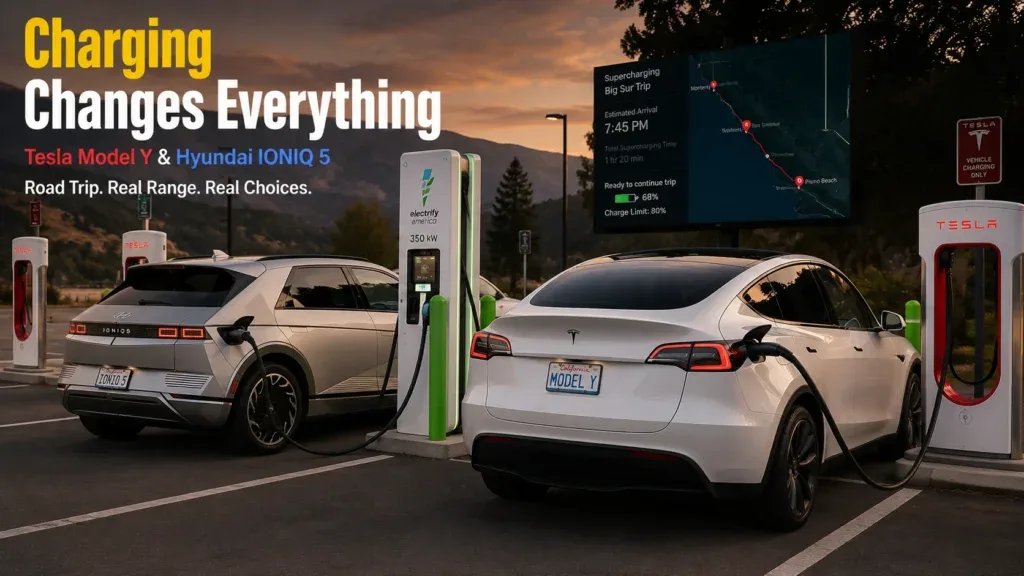
Let’s start with Tesla’s biggest advantage.
The Supercharger network.
It’s easy to underestimate until you own an EV.
Charging convenience matters.
A lot.
Road trips feel easier.
Route planning feels simpler.
Long-distance travel creates less stress.
For buyers who frequently drive across states, this alone can justify paying more.
The Hyundai offers access to a growing charging network.
But Tesla still delivers the smoother overall experience.
And smooth experiences create loyal customers.
The Hyundai Wins The First-Impression Test
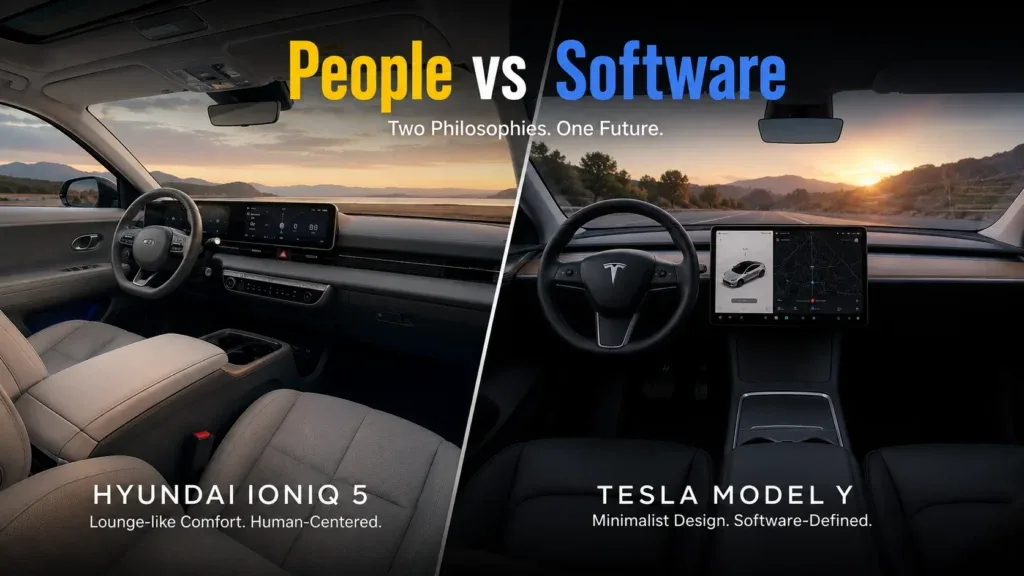
Step inside the Ioniq 5 and you’ll notice something immediately.
It feels different.
The cabin feels open.
Relaxed.
Almost futuristic.
The flat floor creates a sense of space that many SUVs struggle to match.
The seats are comfortable.
The materials feel upscale.
The entire experience feels thoughtful.
The Model Y takes the opposite approach.
Minimalism defines everything.
One central screen controls almost every function.
Some buyers love the clean design.
Others miss physical buttons.
The Hyundai feels designed around people.
The Tesla feels designed around software.
Cargo Space And Family Life
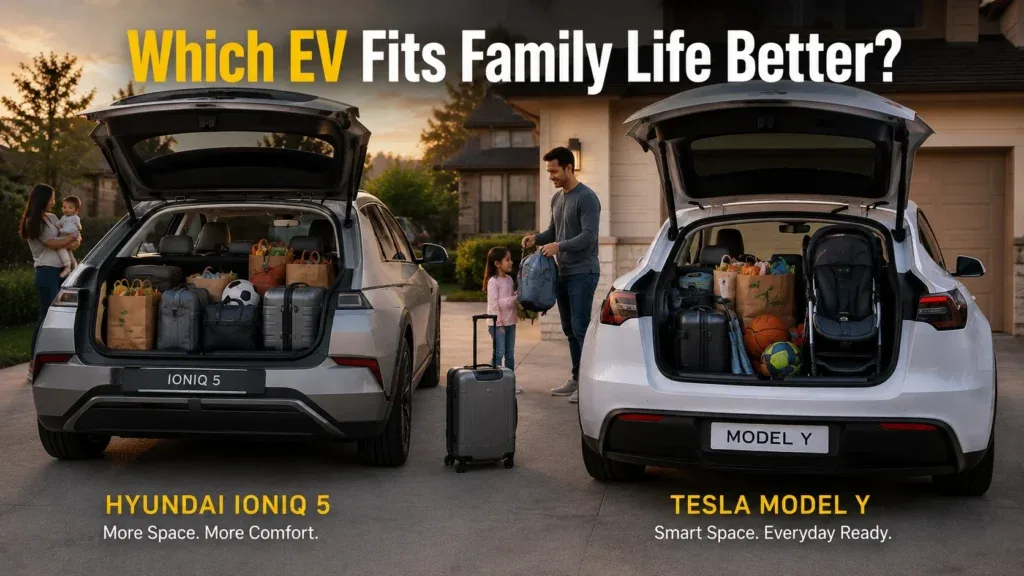
This category matters more than acceleration.
Families need room.
Groceries.
Sports equipment.
Luggage.
Strollers.
The Model Y remains one of the most practical EVs in America.
Its cargo area is excellent.
The extra storage space from the front trunk helps.
The Ioniq 5 isn’t far behind.
But Tesla’s packaging efficiency still gives it a slight advantage for larger families.
If practicality is your top priority, the Model Y deserves credit.
Also Read:
https://driveglobalnews.in/the-family-suv-americans-keep-buying-even-when-better-options-exist/ – Why practicality often wins over excitement.
The Driving Experience Depends On Your Personality
Tesla prioritizes performance.
Even the standard Model Y feels quick.
Acceleration is immediate.
The handling feels responsive.
The Ioniq 5 takes a calmer approach.
The ride quality feels smoother.
The cabin remains quieter.
Long drives feel more relaxing.
Neither approach is wrong.
The better choice depends on how you use your vehicle.
Do you want excitement?
Or comfort?
Ownership Costs Tell A Different Story
Many buyers focus entirely on the sticker price.
That’s a mistake.
Insurance matters.
Depreciation matters.
Charging costs matter.
Repair costs matter.
Tesla owners sometimes discover that insurance premiums are higher than expected.
Repair expenses can also surprise people.
The Hyundai’s lower purchase price creates breathing room.
That matters.
Especially for families watching monthly budgets.
Also Read:
https://driveglobalnews.in/why-monthly-payments-matter-more-than-vehicle-price/ – The ownership costs many buyers ignore until it’s too late.
Which One Would I Buy?
If I drove long distances regularly and wanted the simplest charging experience possible, I’d choose the Tesla Model Y.
The charging network changes everything.
It’s Tesla’s biggest advantage.
But if I were spending my own money and wanted the best overall value in 2026, I’d choose the Hyundai Ioniq 5.
The lower price matters.
The interior feels more inviting.
The ride quality is excellent.
And for most families, it delivers nearly everything they need.
Without asking them to spend an extra $10,000.
The Final Answer
Five years ago, comparing another EV to Tesla felt unfair.
Today, it’s expected.
And that’s because competitors like Hyundai have changed the conversation.
The Ioniq 5 doesn’t beat the Model Y in every category.
It doesn’t need to.
It simply asks a smarter question.
How much extra are buyers willing to pay for convenience?
Some will happily spend the extra money.
Others won’t.
That’s what makes this comparison so interesting.
Because the best electric vehicle isn’t the one with the longest range or the fastest acceleration.
It’s the one that fits naturally into your everyday life.
For some families, that’s still the Tesla Model Y.
For many others, the Hyundai Ioniq 5 may be the first EV that makes them realize they don’t need a Tesla at all.