
Moving to a new state is exciting — until you realize your car insurance is about to change. In 2026, relocating can significantly affect your rates, coverage requirements, and even which insurance companies you can use.
Here’s exactly what happens when you move to a new state and how to handle it.
You Must Switch Insurance (Usually)
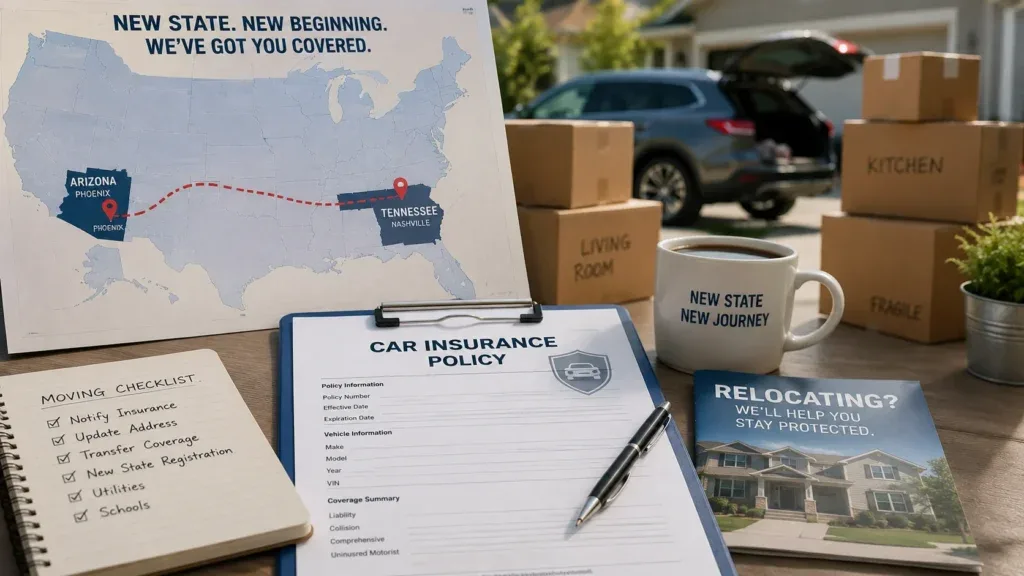
Most insurance policies are state-specific. When you move, your current policy may not be valid in the new state for long. You typically need to:
- Get a new policy that meets the new state’s minimum requirements
- Update your address with your current insurer (if they operate in the new state)
- Cancel your old policy once the new one is active
Deadlines vary, but most states require you to update insurance within 30–90 days of moving.
Your Rates Will Almost Certainly Change
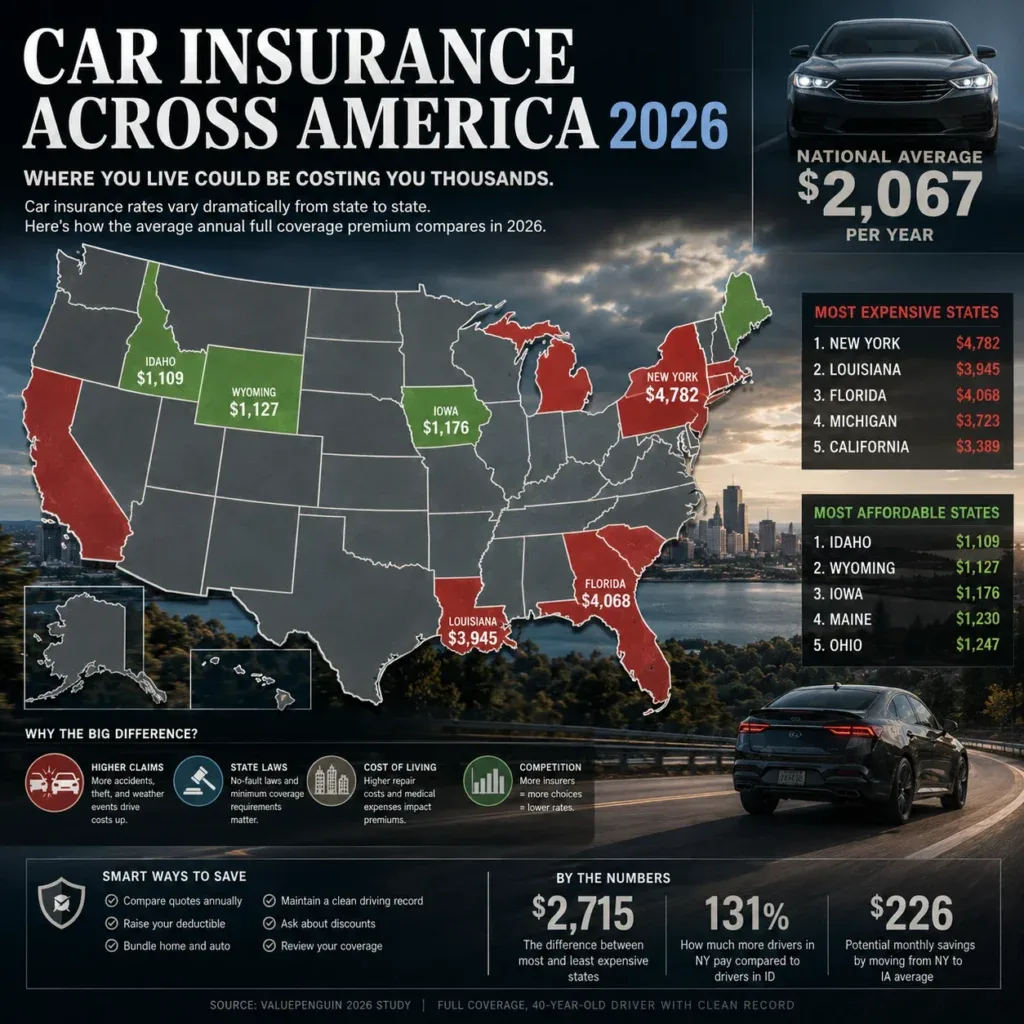
This is the biggest impact. Insurance rates vary dramatically by state and ZIP code. Moving from a low-cost state (like Ohio or Maine) to a high-cost state (like Florida, Michigan, or California) can increase your premium by hundreds or even thousands of dollars per year.
The reverse is also true — moving to a cheaper state can lower your rates significantly.
Minimum Coverage Requirements Differ
Every state has its own minimum liability requirements. Some states require higher coverage limits, uninsured motorist coverage, or personal injury protection (PIP). Your old policy may not meet the new state’s rules.
What You Should Do When Moving
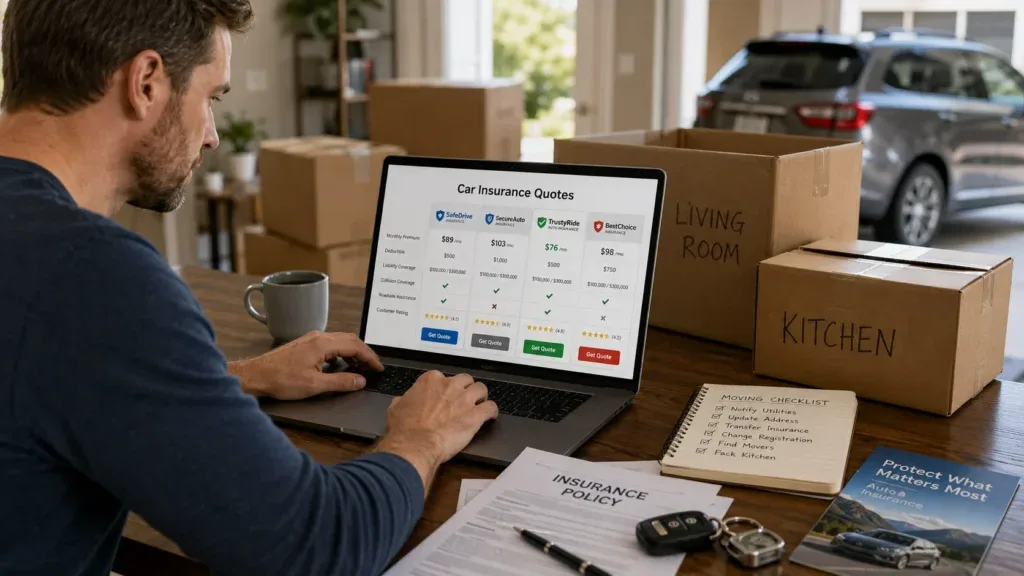
- Shop for insurance before or right after you move — Don’t wait until the last minute.
- Compare multiple companies — Rates can vary widely in your new location.
- Update your driver’s license and vehicle registration — These are usually required within a set time.
- Notify your current insurer — Let them know your move date.
- Keep proof of continuous coverage — Gaps in insurance can raise future rates.
Special Situations
- Military moves: Some insurers offer more flexibility for service members.
- Temporary moves: Short-term stays may allow you to keep your existing policy longer.
- Moving between no-fault and at-fault states: Coverage needs can change significantly.
The Bottom Line

Moving to a new state almost always changes your car insurance. Rates, coverage requirements, and available companies can all shift. The smartest approach is to research insurance in your new location early and shop around for the best rates.
Failing to update your insurance after a move can lead to lapses in coverage, fines, or problems with vehicle registration.
If you want to see how rates vary by location, check our guide on car insurance rates by state in 2026. And if you’re looking for ways to lower your bill after the move, see how to lower your car insurance before renewal.
Have you moved states recently? How much did your insurance change? Share your experience in the comments below.