I’ve driven a lot of compact hybrid SUVs over the last couple of years, and every time someone asks me for the best one under $40,000, the same two names come up: the Hyundai Tucson Hybrid and the Kia Sportage Hybrid. They’re built on the same bones, share a lot of the same technology, and both deliver excellent fuel economy without asking you to give up space or features. So which one actually wins?
After spending time in both and looking at the real ownership picture in 2026, I finally have a clear answer. Here’s the full breakdown.
Shared DNA, Different Personalities
Let’s get the obvious out of the way first. The Tucson Hybrid and Sportage Hybrid are corporate cousins. They share the same hybrid powertrain, similar platforms, and a lot of the same safety and tech hardware. Both use a 1.6-liter turbocharged four-cylinder paired with an electric motor for a combined output that feels stronger than the numbers suggest in daily driving. Real-world fuel economy for both usually lands in the high 30s to low 40s mpg combined if you’re not constantly stomping on it.
Because they’re so closely related, the differences come down to design, driving feel, interior execution, features, and how each one ages as an ownership proposition. Those differences matter more than most people expect once you’ve lived with the vehicle for a few years.
Exterior Design and Presence
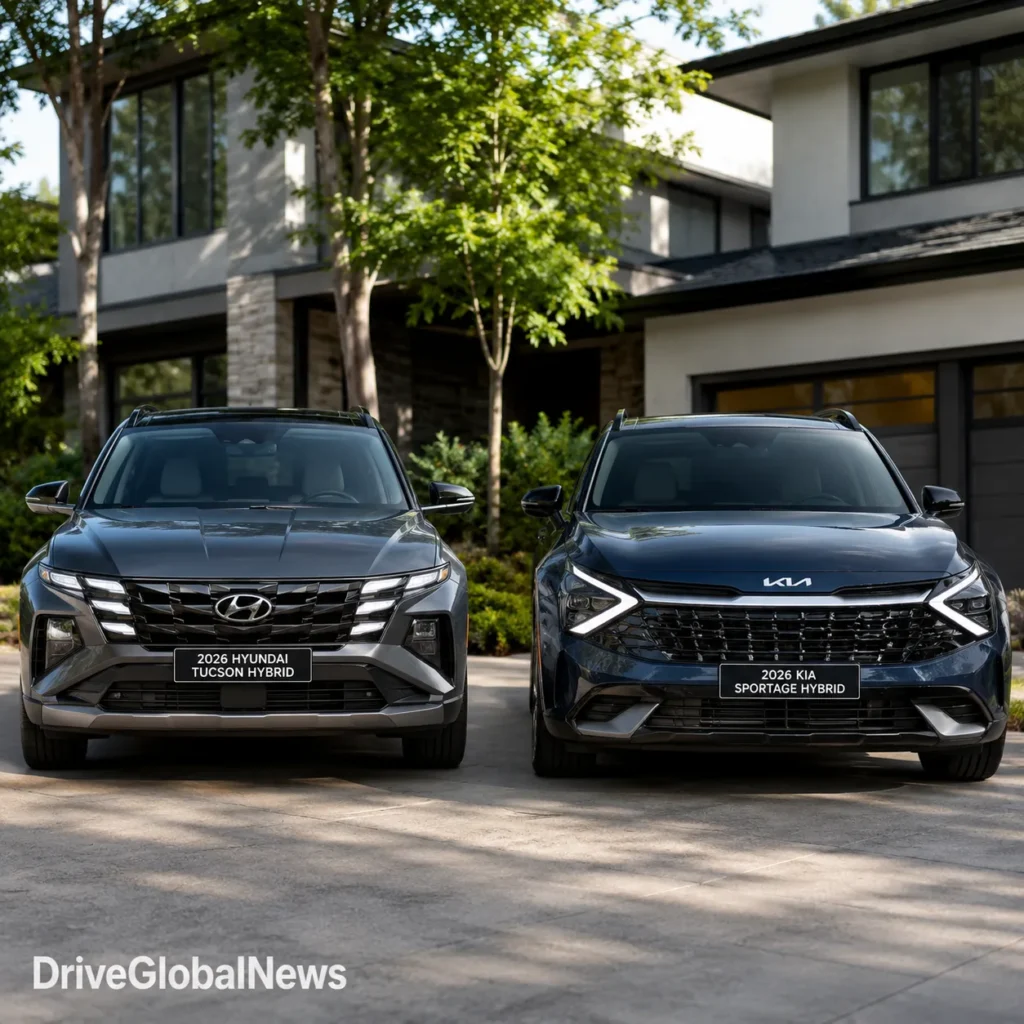
The Hyundai Tucson Hybrid has the more polarizing look. Its parametric grille, sharp lighting signatures, and sculpted body lines make it stand out in a parking lot full of soft-edged crossovers. Some people love the bold design. Others think it tries a little too hard. Either way, it doesn’t blend in.
The Kia Sportage Hybrid takes a cleaner, more muscular approach. It looks tougher and more conventional at the same time. The upright stance and strong shoulder line give it a more traditional SUV presence. If you prefer something that feels substantial without being flashy, the Sportage usually wins the driveway test.
Neither one looks cheap. Both have stepped up their exterior quality significantly compared to the previous generation.
Interior Space and Comfort
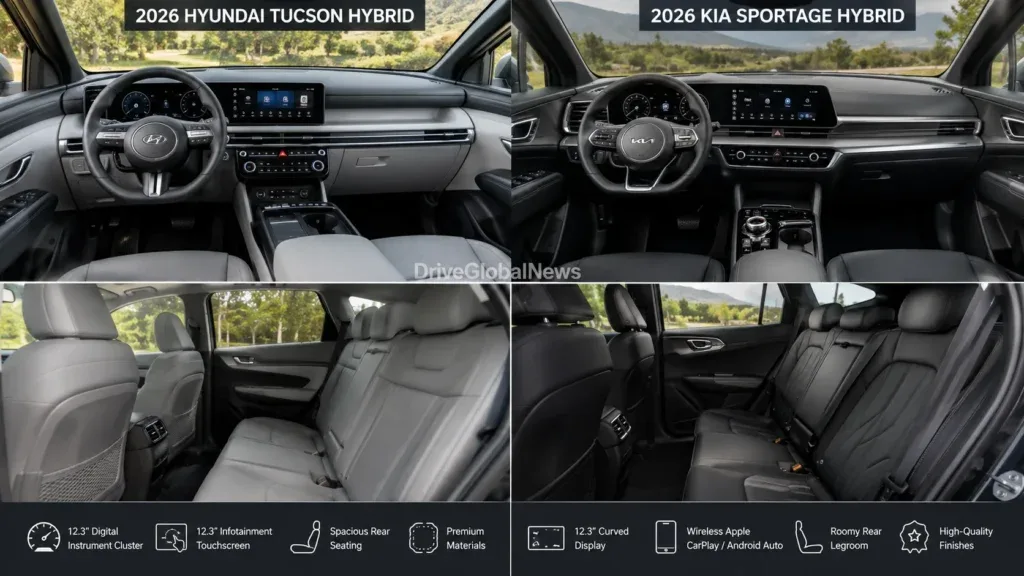
This is where the Tucson Hybrid starts to pull ahead for a lot of families. The Tucson offers slightly more rear legroom and a more open feeling in the second row. The seats are comfortable for long drives, and the overall cabin feels airy.
The Sportage Hybrid is no slouch — it’s still very roomy for the class — but the Tucson edges it out in pure passenger space. Cargo room is close between the two, with both offering useful under-floor storage and a low load floor that makes grocery runs and weekend trips easy.
Material quality is strong in both. Soft-touch surfaces, decent stitching, and thoughtful storage solutions are standard. Higher trims on both models feel surprisingly premium for the money.
Driving Experience
Here’s one of the bigger differences. The Kia Sportage Hybrid feels a bit more buttoned-down and composed on the road. Steering is a touch more precise, and the suspension does a better job of controlling body motion when the road gets choppy. It feels more like a small crossover that happens to be efficient.
The Hyundai Tucson Hybrid is tuned a little softer. It’s comfortable and quiet, but it can feel slightly less composed when you push it through corners or hit broken pavement at higher speeds. For pure commuting and highway cruising, both are excellent. If you care about how the vehicle responds when the road isn’t perfect, the Sportage has a small advantage.
Both benefit from the hybrid system’s smooth power delivery. There’s very little of the rubber-band feeling that older hybrids used to have. Acceleration is more than adequate for merging and passing.
Fuel Economy and Real-World Efficiency
On paper the numbers are nearly identical. In the real world, most owners report very similar results. Highway efficiency is strong in both, and city driving is where the hybrid system really shines. If you do a lot of stop-and-go commuting, either one will save you meaningful money at the pump compared to a regular gas-powered compact SUV.
One small note: how you drive matters more than which badge is on the front. Smooth inputs and anticipation will get you closer to the higher end of the mpg range in both vehicles.
Features and Technology
Hyundai and Kia have been aggressive with standard equipment, and it shows. Both offer large touchscreens, wireless smartphone integration, solid voice recognition, and comprehensive safety suites that include adaptive cruise, lane-keeping help, and blind-spot monitoring.
The Tucson Hybrid’s dual-screen setup on higher trims looks more modern and is generally easier to live with day to day. Kia’s interface is clean and responsive, but Hyundai currently has a slight edge in overall tech polish and screen clarity.
Both come with excellent warranties — 5 years/60,000 miles basic and 10 years/100,000 miles powertrain — which is still one of the strongest offerings in the industry.
Reliability and Ownership Costs
This is where things get interesting for long-term buyers. Both brands have improved dramatically over the last decade, and recent reliability data shows them performing well. Toyota still holds the crown for hybrid longevity in many people’s minds, but the Tucson and Sportage hybrids have been strong so far.
Resale value is solid for both, though neither quite matches the Toyota RAV4 Hybrid. Insurance costs are typically reasonable, especially compared to some European alternatives. Maintenance costs remain lower than average thanks to the brands’ competitive service pricing and long warranty coverage.
Price and Value
Pricing is extremely close. You can find well-equipped versions of both in the mid-to-upper $30,000 range depending on incentives and location. The Sportage Hybrid sometimes edges out on pure feature content for the money, while the Tucson Hybrid often feels like the more premium package once you’re sitting inside.
Shop both. Dealers are motivated in 2026, and the difference in out-the-door price between a similarly equipped Tucson Hybrid and Sportage Hybrid is often smaller than people expect.
The Final Answer
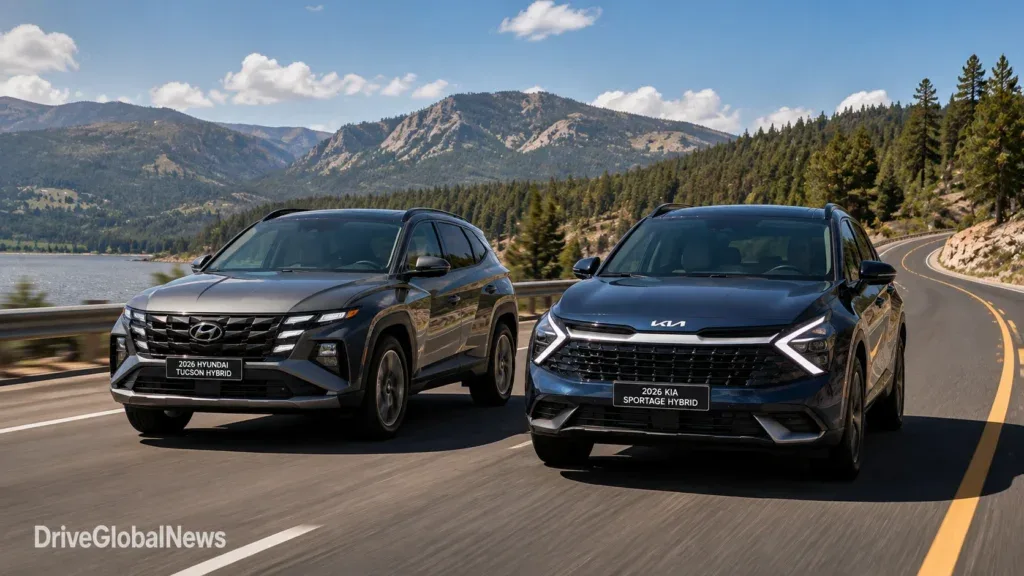
After driving both and looking at the complete ownership picture, the Hyundai Tucson Hybrid is the better choice for most buyers in 2026.
It offers more rear passenger space, a more modern cabin tech experience, and a slightly more premium overall feel. The bold design won’t be for everyone, but the practical advantages add up over years of family use. The Kia Sportage Hybrid is extremely close and actually preferred by drivers who want a more composed, conventional driving experience and a tougher-looking exterior.
If you prioritize space, tech, and a more upscale interior, get the Tucson Hybrid. If you care more about driving dynamics and a cleaner design language, the Sportage Hybrid is an excellent alternative. You genuinely cannot go wrong with either.
These two remain the strongest affordable hybrid SUV options for American buyers who want efficiency without sacrificing daily usability. They’ve closed the gap on the Toyota RAV4 Hybrid in meaningful ways while usually undercutting it on price and features.
Who Should Buy Which?
- Choose the Hyundai Tucson Hybrid if you want maximum rear space, modern dual-screen tech, and a more distinctive design.
- Choose the Kia Sportage Hybrid if you prefer sharper driving manners, a more muscular look, and slightly better body control.
The Bottom Line
The Tucson Hybrid and Sportage Hybrid are the clearest example of how far Hyundai and Kia have come. Ten years ago this comparison wouldn’t have been interesting. In 2026 it’s one of the best matchups in the entire compact SUV segment.
My final recommendation for most families and daily drivers is the Hyundai Tucson Hybrid. It does more things well for more people. But test-drive both. The difference in personality is real, and the right one for you might come down to which cabin feels more like home after twenty minutes behind the wheel.
If you’re shopping for either of these hybrids this year, make sure you understand how your ZIP code affects car insurance rates in 2026 — the difference can be surprisingly large. And check our guide on best SUVs under $35,000 in 2026 if you want to see how these two stack up against other strong budget options.
Which one are you leaning toward — Tucson Hybrid or Sportage Hybrid? Have you driven both? Tell us which one felt better in the comments.