

Nissan just made a quiet but important change. The company has reduced the time it takes to develop a new vehicle by roughly 40 percent. Full new models that once took around 50 to 55 months now target 37 months. Related or derivative models can be done in about 30 months. In at least one case — the next-generation Skyline — development took just 26 months.
That may sound like an internal engineering story. It is not. Faster development cycles change what shows up in dealerships and how quickly buyers see updates.
What Nissan Actually Changed
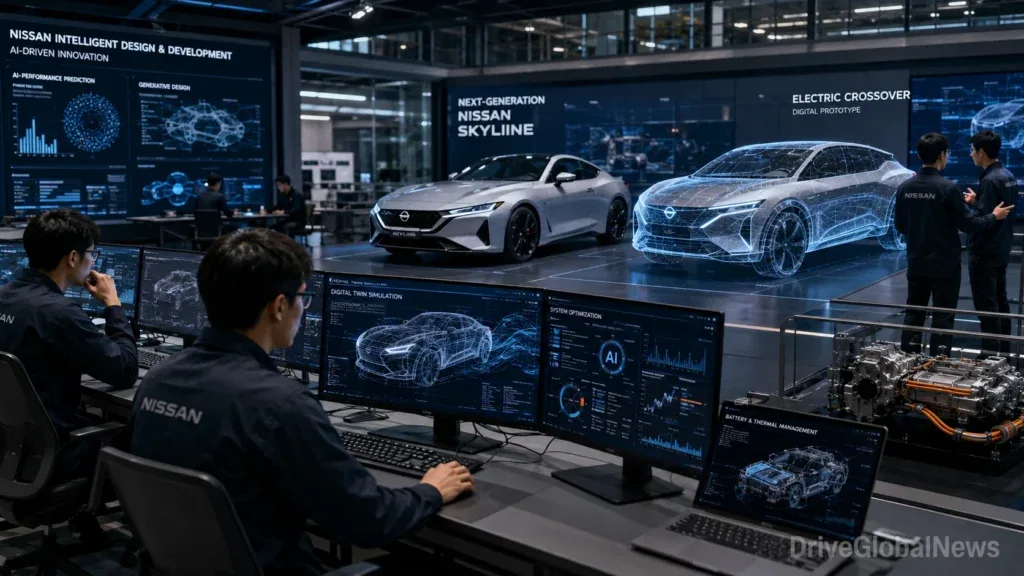
The company leaned hard into digital tools. AI-driven modeling, digital twins, virtual testing, and fewer physical prototypes replaced a lot of the old slow, sequential process. Designers and engineers now focus on core strengths earlier instead of exploring multiple full design directions. Platforms and key hard points are shared more aggressively across related models — what Nissan calls a “family” approach.
Nissan also studied the speed of Chinese manufacturers, including work done with its Dongfeng joint venture. Chinese brands routinely operate on 18- to 24-month cycles. Nissan is not fully matching that yet, but closing a big part of the gap is significant for a traditional Japanese automaker.
CEO Ivan Espinosa has been direct: the industry is too unpredictable to rely on long forecasts. The only real defense is becoming faster and more flexible.
Why This Matters for Buyers
Long development cycles used to mean cars could feel dated by the time they arrived. Technology, safety features, and design trends moved faster than the product pipeline. A 40 percent reduction shortens that lag.
For shoppers it can mean:
- Fresher designs and technology arriving sooner
- More frequent updates instead of long waits between generations
- Better ability for Nissan to respond to changing demand (hybrids, specific body styles, regional preferences)
- Potentially tighter competition on features and pricing as the company gets products to market faster
The new Skyline is the first clear example under the accelerated process. More models are expected to follow the same playbook, with the goal of applying the faster method to the majority of future programs.
The Bigger Industry Context
Almost every legacy automaker is under pressure to speed up. Chinese brands set a new benchmark for development speed, and the rest of the industry is scrambling to adapt. Nissan’s progress shows that traditional companies can meaningfully compress timelines when they change both tools and decision-making culture.
Faster development does not automatically equal better cars. Quality and reliability still matter. But a company that can react in roughly three years instead of four-plus has a real advantage in a market that shifts quickly.
The Bottom Line
Nissan cutting product development time by about 40 percent is more than an efficiency win. It is a structural change that should deliver newer vehicles, faster feature updates, and a more responsive product lineup. For buyers, that means the gap between what the market wants and what actually reaches showrooms is getting smaller.
If you are shopping for a new or used vehicle, keep an eye on upcoming Nissan and Infiniti launches — the pipeline is moving faster than it used to. And as always, factor in the full cost of ownership. Check how much car insurance costs for popular models in 2026 and our guide on best cars to buy with the biggest discounts right now.
Do you think faster development cycles will actually improve the cars we drive, or is there a risk that speed comes at the expense of refinement? Share your thoughts in the comments.