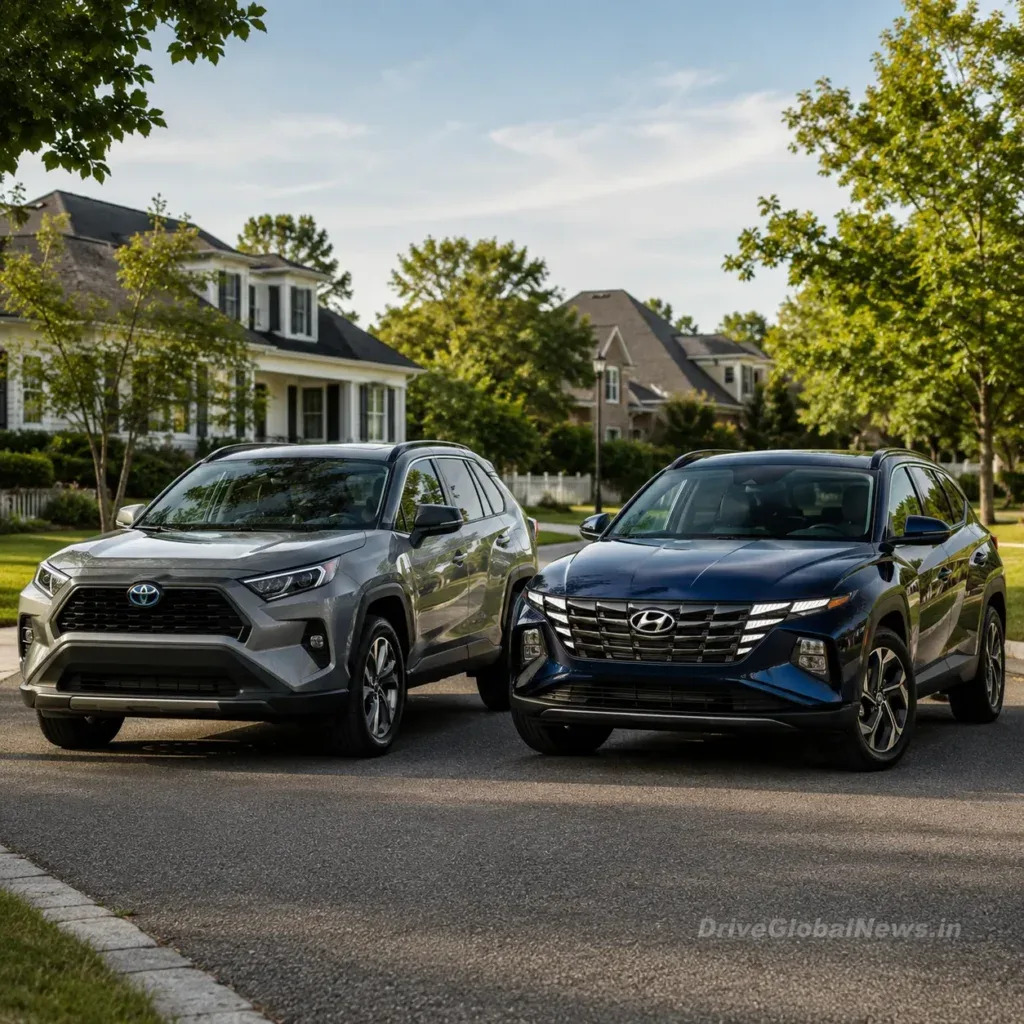
The compact hybrid SUV segment is where most American buyers who want lower fuel costs without going full electric end up shopping. Two models dominate the conversation in 2026: the completely redesigned Toyota RAV4 Hybrid and the Hyundai Tucson Hybrid. Both deliver strong real-world efficiency, practical packaging, and competitive pricing. One prioritizes maximum miles per gallon and long-term reliability. The other leans into style, features, and a stronger standard power delivery.
Here is a clear, practical comparison that settles which one makes more sense for different buyers.
Price and Value The 2026 Toyota RAV4 Hybrid starts in the low-to-mid $33,000s including destination for the base LE. Well-equipped versions climb into the low-to-mid $40,000s, with higher Limited and special trims going further. Every RAV4 is now a hybrid or plug-in hybrid — there is no pure-gas option.
The Hyundai Tucson Hybrid undercuts that slightly on the base end. New front-wheel-drive SE and similar trims start around $32,200–$32,550 including destination. Most AWD versions begin in the mid-$30,000s, with Limited models reaching the low-to-mid $40,000s. Hyundai often includes more standard equipment at comparable price points, which strengthens its value case for buyers who want technology and comfort without adding options.
Power and Efficiency The RAV4 Hybrid uses Toyota’s proven 2.5-liter hybrid system. Front-wheel-drive models produce 226 horsepower; all-wheel-drive versions add a rear motor for 236 horsepower.
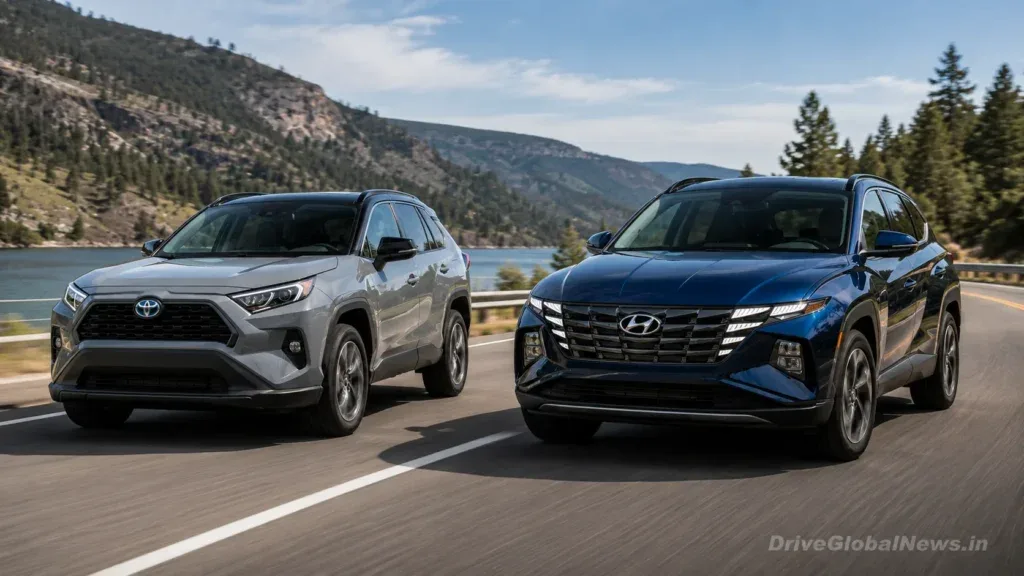
EPA ratings reach as high as 47 city / 40 highway / 43 combined on the most efficient FWD trims. AWD versions typically land in the 41–42 mpg combined range. Real-world highway testing often shows figures in the mid-to-high 30s at steady 75 mph, which is still excellent for a compact SUV.
The Tucson Hybrid pairs a turbocharged 1.6-liter engine with an electric motor for 231 horsepower and a healthier 271 lb-ft of torque. That extra torque makes it feel more responsive in everyday driving and when merging. AWD models are rated around 36–38 mpg combined depending on wheels and trim. New front-wheel-drive versions are expected to improve on those numbers and close the gap with the RAV4, though they still trail Toyota’s best figures. In short, the RAV4 wins on pure efficiency; the Tucson feels stronger and more eager off the line.
Driving Experience Both are composed daily drivers rather than sporty machines. The RAV4 Hybrid prioritizes refinement and predictability. The hybrid system is smooth, and the higher trims feel solid on the highway. The Tucson Hybrid’s turbo-hybrid combination delivers more immediate pull, and many drivers find the steering and ride slightly more engaging. Neither will satisfy enthusiasts, but both handle commuting, road trips, and light adventure without drama. Available all-wheel drive on both adds confidence in rain, snow, or light off-pavement use.
Interior, Space, and Features The redesigned RAV4 brings larger screens, improved materials, and a more modern cabin than the previous generation. Cargo space is competitive for the class, and the rear seat is usable for adults on shorter trips. Toyota has moved more functions to the touchscreen, which some drivers like and others find less convenient than physical controls.
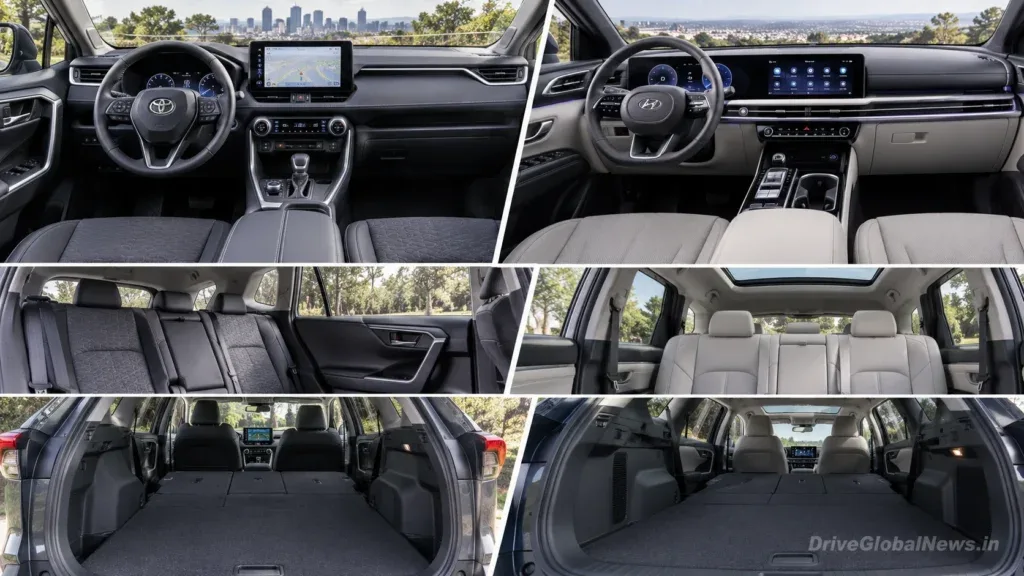
The Tucson Hybrid generally offers a more stylish and feature-rich interior at similar prices. It often feels more upscale, with available dual large screens, nicer available materials, and strong standard safety and convenience equipment. Rear-seat space and cargo volume are at least as good as the RAV4’s and frequently praised as more accommodating. Hyundai’s warranty (typically 5 years/60,000 miles basic and 10 years/100,000 miles powertrain) is longer than Toyota’s standard coverage and remains a meaningful ownership advantage.
Reliability and Ownership Costs Toyota’s hybrid systems have an outstanding long-term reputation. Resale values for RAV4 Hybrids are among the strongest in the segment, which reduces total cost of ownership for many buyers. Maintenance is generally predictable and inexpensive.
Hyundai has improved dramatically in reliability rankings over the past decade, and its hybrid powertrains have performed well in real-world use. The longer warranty provides extra peace of mind. Fuel costs will usually favor the RAV4, especially on higher-mileage drivers who keep the vehicle for many years. Insurance and routine maintenance are comparable between the two.
Which One Should You Buy?
Choose the Toyota RAV4 Hybrid if:
- Maximum fuel economy is your top priority
- You value proven long-term reliability and strong resale
- You want the most efficient compact hybrid available
- You prefer a slightly more conservative, proven formula
Choose the Hyundai Tucson Hybrid if:
- You want stronger everyday performance and more standard features for the money
- Style, interior design, and technology matter more
- You like the longer warranty coverage
- You are willing to trade a few mpg for a more engaging drive and richer cabin
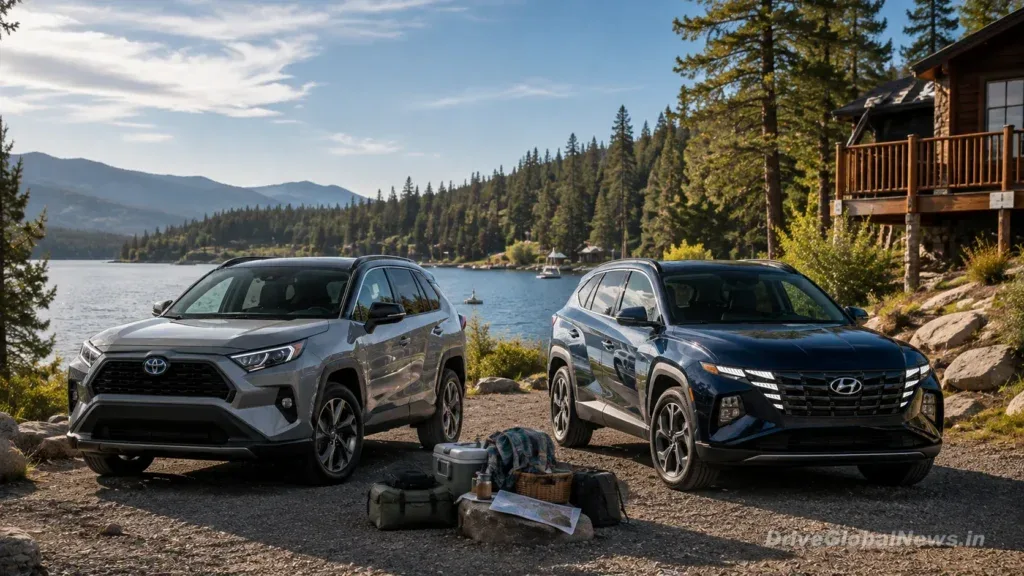
The Bottom Line These are the two best mainstream compact hybrids in America right now, and the choice is clearer once you rank your priorities. The 2026 Toyota RAV4 Hybrid is the efficiency and ownership champion. It delivers the highest real-world mpg, excellent durability expectations, and the confidence that comes with Toyota’s hybrid track record.
The 2026 Hyundai Tucson Hybrid is the more complete package for many buyers. It undercuts or matches the RAV4 on price while offering stronger torque, a more stylish and often better-equipped cabin, and a longer warranty. It is less efficient than the top RAV4 figures but still excellent, and it feels more modern and responsive in daily use.
If you drive a lot of miles and plan to keep the vehicle a long time, the RAV4 Hybrid is the smarter financial play. If you want the better-equipped, more enjoyable daily driver with strong value and warranty coverage, the Tucson Hybrid edges ahead.
Test both back-to-back if possible. The right answer becomes obvious once you sit in them and drive your usual roads.
Which matters more to you — squeezing every last mile from a gallon of gas, or getting more features, style, and power for similar money?