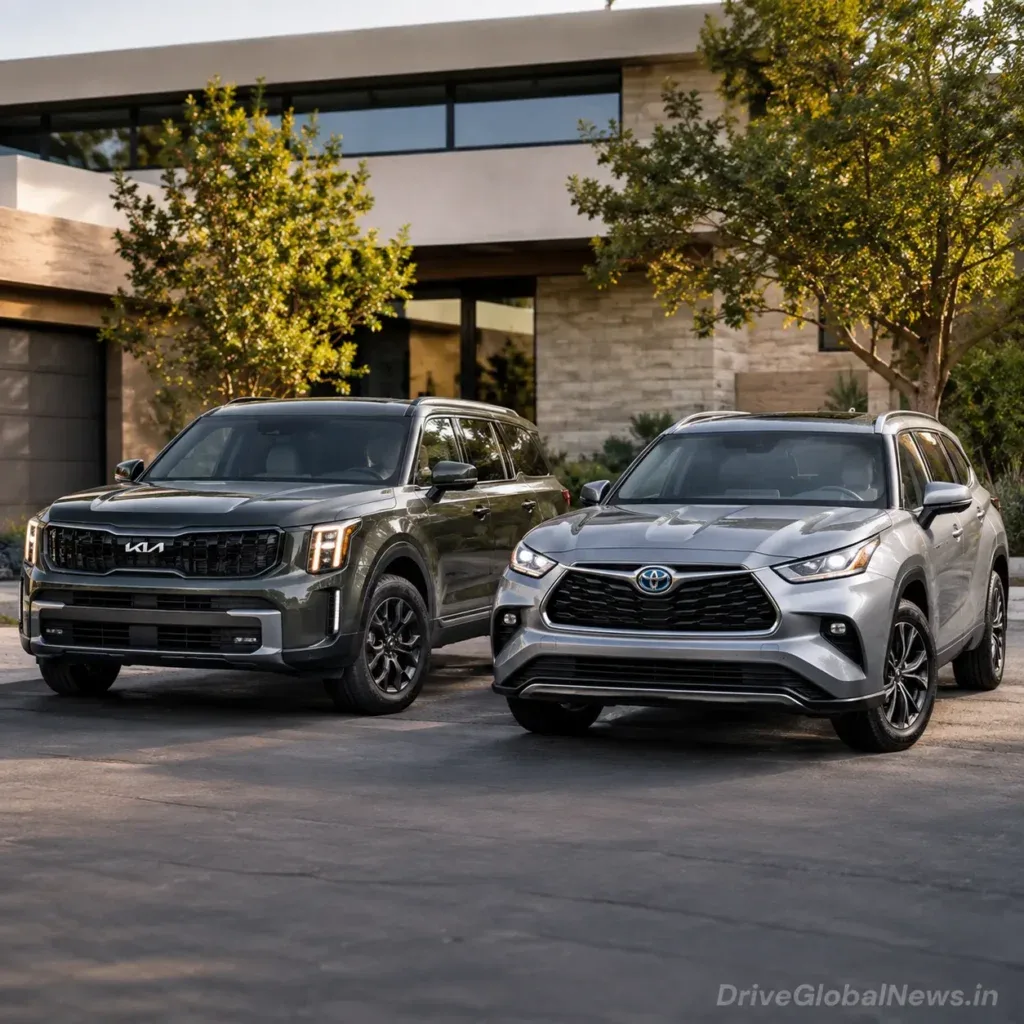
Three-row hybrid SUVs used to be a short list. In 2026 the two most relevant options for most American families are the Kia Telluride Hybrid and the Toyota Highlander Hybrid. Both promise meaningful fuel savings without forcing a jump to a full electric vehicle. One prioritizes power, style, and features. The other prioritizes efficiency consistency and long-term ownership confidence.
Here is how they compare and which one comes out ahead for the majority of buyers.
Price and Positioning The 2026 Kia Telluride Hybrid starts around $46,490 for the EX and climbs into the mid-to-high $50,000s for loaded X-Line SX Prestige models. It arrives well-equipped even in lower trims and frequently undercuts comparably outfitted rivals.
The 2026 Toyota Highlander Hybrid starts higher, typically in the upper $48,000s to low $49,000s for the XLE, with Limited and Platinum trims pushing into the mid-$50,000s. Toyota charges a smaller premium over its gas Highlander than many expect, but the absolute starting point sits above the Telluride’s.
Power and Performance This is one of the clearest differences. The Telluride Hybrid uses a turbocharged 2.5-liter four-cylinder paired with electric assistance for 329 horsepower and 339 lb-ft of torque.
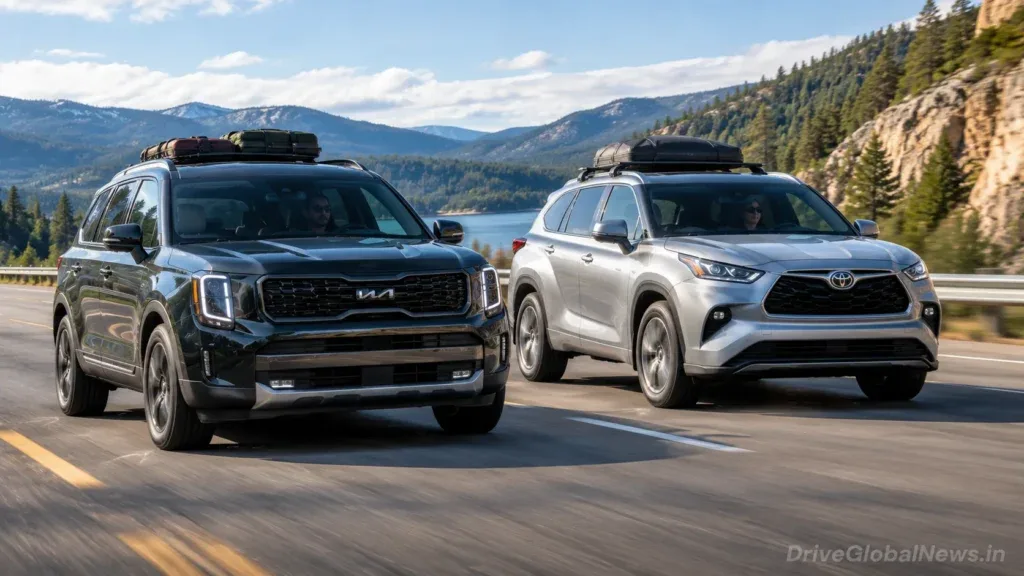
It feels stronger in everyday driving, merges more confidently, and has more reserve when the vehicle is fully loaded with passengers and cargo.
The Highlander Hybrid pairs a 2.5-liter engine with three electric motors for 243 combined horsepower. It is adequate and refined, but noticeably less urgent than the Kia. Toyota’s system is smooth and predictable; the Kia’s is simply more powerful.
Fuel Economy The Highlander Hybrid posts a strong and consistent 35 mpg combined across most configurations, with standard all-wheel drive. Real-world numbers often stay competitive even on the highway.
The Telluride Hybrid reaches up to 35 mpg combined on front-wheel-drive models and around 31 mpg combined with all-wheel drive. That is a major improvement over the gas Telluride and competitive in the class, though the Highlander generally holds a slight edge in efficiency, especially in AWD form. Both will save substantial fuel compared with traditional three-row gas SUVs.
Interior, Space, and Features Both seat seven or eight depending on configuration and offer usable third-row space for kids or occasional adults.
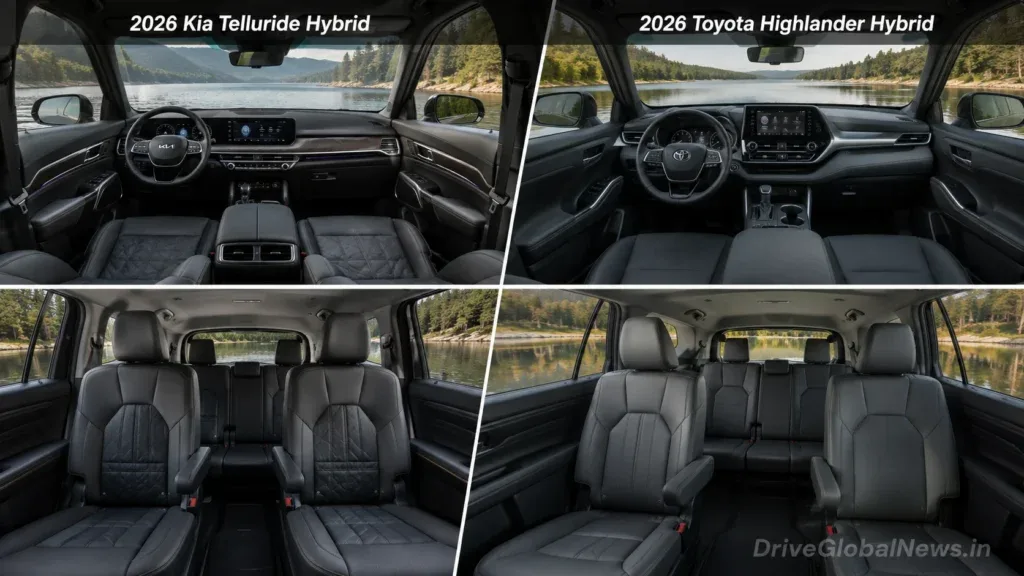
The Telluride is frequently praised for its stylish cabin, higher material quality at a given price, and generous standard and available features. Higher trims feel near-luxury. Cargo space behind the third row is limited on both but expands significantly when seats are folded.
The Highlander is practical, well-built, and easy to live with. Its cabin is more conservative. Toyota’s latest interface is improved, but Kia often packs more equipment and a more modern appearance for the money. Rear-seat comfort and overall spaciousness are close; many shoppers give the edge to the Telluride for design and feature content.
Driving and Ownership The Highlander Hybrid rides smoothly and feels composed. Toyota’s hybrid system has a long, proven track record, and resale values remain among the strongest in the segment. Reliability expectations and long-term ownership costs favor Toyota for many buyers.
The Telluride Hybrid is more engaging and confidence-inspiring when loaded or when extra power is needed. Kia’s warranty coverage is competitive (typically longer basic and powertrain terms than Toyota’s standard coverage). The hybrid is newer to the Telluride lineup, so long-term data is still developing, but Kia’s recent reliability trajectory has been solid.
Which One Wins?
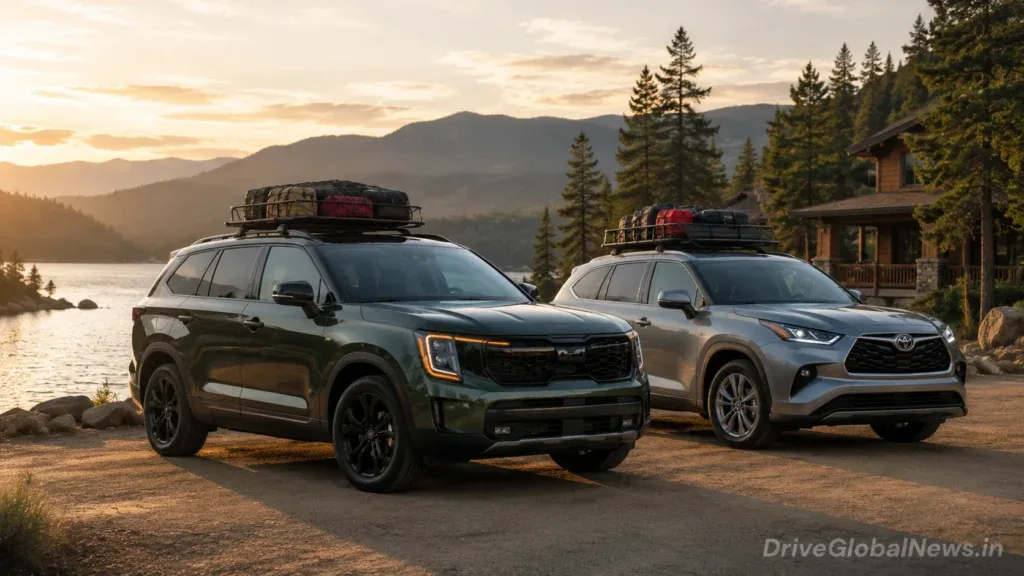
The Kia Telluride Hybrid is the clearer overall winner for most families in 2026. It delivers significantly more power, a more stylish and feature-rich interior, strong efficiency (especially in FWD form), and better value at comparable trim levels. It feels like the more complete modern three-row hybrid.
The Toyota Highlander Hybrid remains the smarter choice if maximum fuel economy consistency, proven long-term reliability, and strong resale are your top priorities. It is the safer, more conservative pick and still an excellent vehicle.
The Bottom Line Both of these hybrids succeed at making a three-row family SUV far less expensive to fuel than traditional gas models. The 2026 Toyota Highlander Hybrid is the efficiency and ownership specialist. The 2026 Kia Telluride Hybrid is the more powerful, better-equipped, and more compelling daily driver for the majority of buyers.
If you want the strongest all-around package — power when you need it, competitive mpg, modern features, and strong value — the Telluride Hybrid takes the win. If you prioritize Toyota’s hybrid reputation and the highest consistent efficiency numbers above all else, the Highlander Hybrid still makes a strong case.
Test both with your typical passenger load if possible. The power difference and cabin feel usually decide it quickly.
Do you need the extra power and features of the Telluride, or is Toyota’s efficiency and resale record more important for your situation?