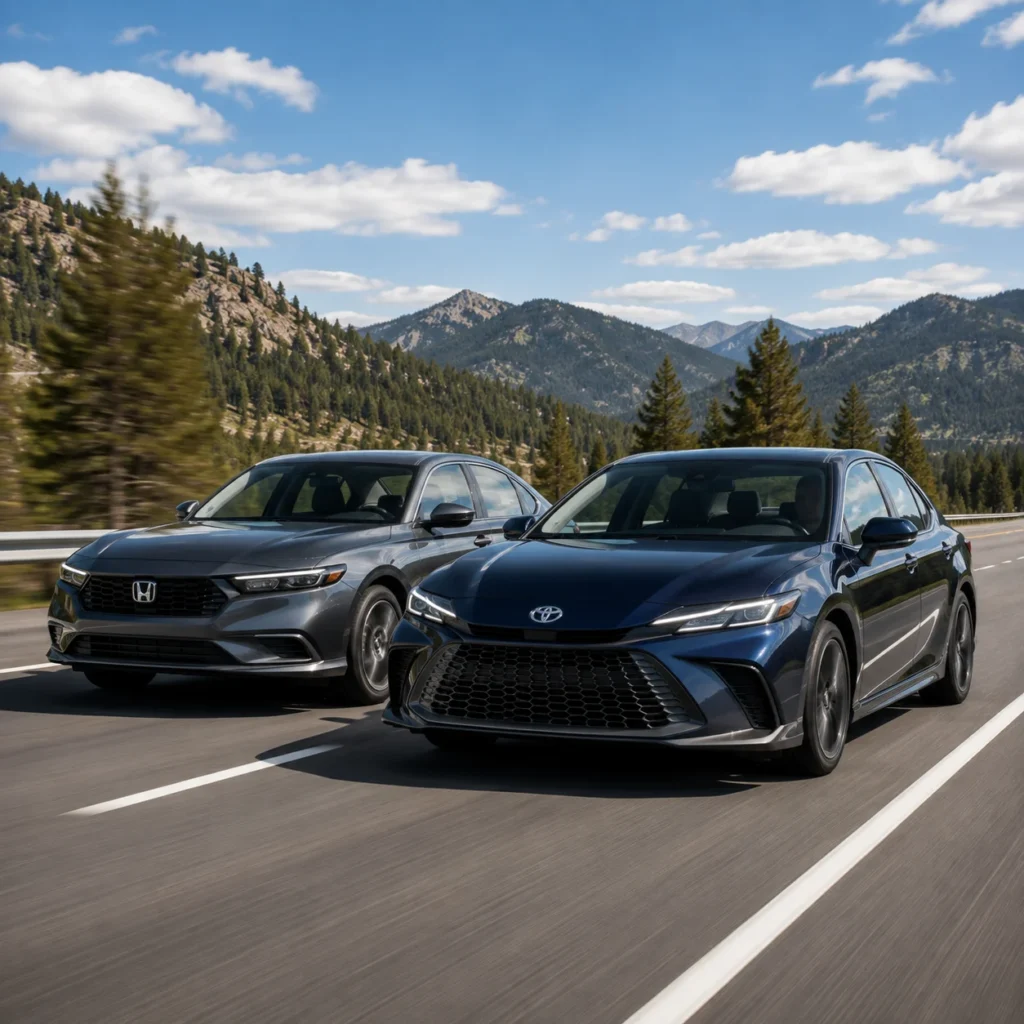
The headline numbers are real, but they are not comparing identical cars. The 2026 Toyota Camry Hybrid LE with front-wheel drive is EPA-rated at 52 city / 49 highway / 51 combined. The 2026 Honda Accord Hybrid EX-L is 51 city / 44 highway / 48 combined. Sport, Sport-L, and Touring Accords fall to 46/41/44. So “51 vs 44” is Camry’s efficiency leader against Honda’s less efficient hybrid trims — not a slam dunk against every Accord.
Here is the honest comparison.
Fuel Economy, Power, and Drivetrain Every 2026 Camry is a hybrid. A 2.5-liter four-cylinder plus electric motors makes 225 horsepower with FWD and 232 with the available electric AWD. The LE FWD is the mileage champ at 51 mpg combined. Step up in wheels or add AWD and you land around 46 combined on most trims, or as low as 43 on the XSE AWD.
The Accord Hybrid uses a 2.0-liter four and two motors for 204 horsepower and 247 lb-ft of torque. It is FWD only. The EX-L with smaller wheels is the efficiency pick at 48 mpg combined. Larger-wheel hybrids are rated 44 combined. Honda’s city number on the EX-L matches the Camry’s city rating; the Camry pulls ahead on the highway and in combined figures on the cheapest, lightest trim. 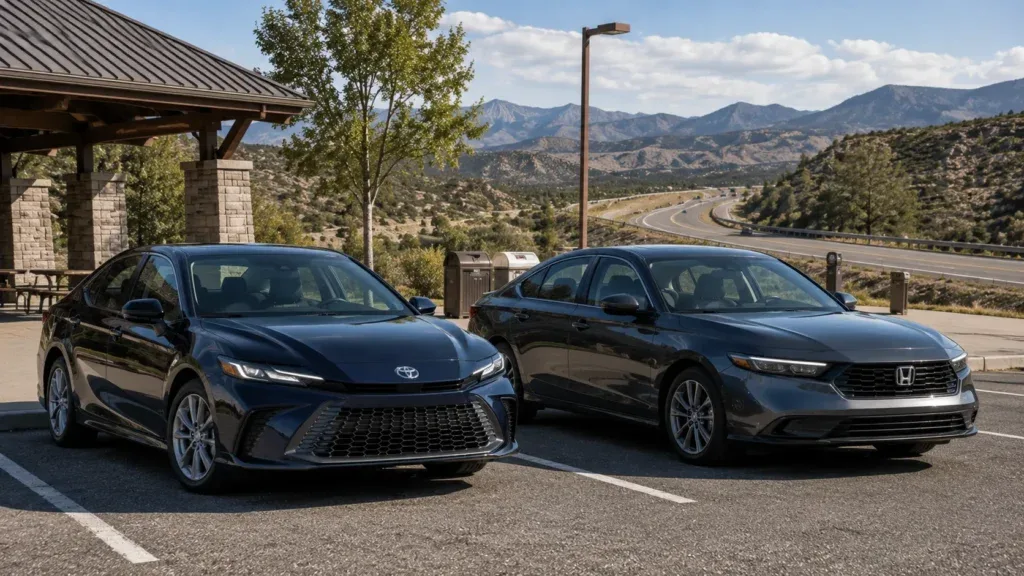
In the real world, both will do well in mixed driving. The Camry LE is the one more likely to deliver mid-40s to around 50 mpg if you drive it gently. The Accord often feels a bit stronger off the line because of that electric torque, even though peak horsepower is lower.
Price and Positioning Camry LE starts near $30,200–$30,600 including destination, depending on the source listing. That is the cheapest way into a 50-plus-mpg midsize sedan. SE and XLE prices climb into the mid-$30,000s; AWD adds about $1,500.
Accord Hybrid pricing starts in the mid-$33,000s to about $35,000 for EX-L, with Touring near $39,500. Honda still sells cheaper gas Accords in the high $20,000s, but those do not compete on mpg. On a hybrid-to-hybrid basis, Toyota undercuts Honda at the efficiency-focused end of the lineup.
Ride, Handling, and Cabin This is where the Accord has long held an edge. The chassis is more composed, the steering more natural, and the ride better sorted on imperfect pavement. Many drivers will prefer how the Honda feels after 30 minutes, not just how it looks on the window sticker.
The current Camry is quieter and more substantial than older generations. It is comfortable and easy to live with. It is not as engaging as the Accord. Seats, visibility, and controls are straightforward in both. The Accord’s interior design and driving position still feel a notch more grown-up to a lot of reviewers. The Camry counters with available AWD and a reputation for long-term reliability that remains the class benchmark.
Trunk space is similar and usable. Neither is a wagon. Both will take a family’s airport luggage if you pack reasonably.
Ownership and the Long Game Toyota’s hybrid systems have a long, boring reliability record. Resale on Camrys is typically strong. Honda hybrids are also proven, and Accord residuals are healthy, but the Camry’s “it will just run” reputation is still the safer assumption for buyers who keep cars 8–12 years. 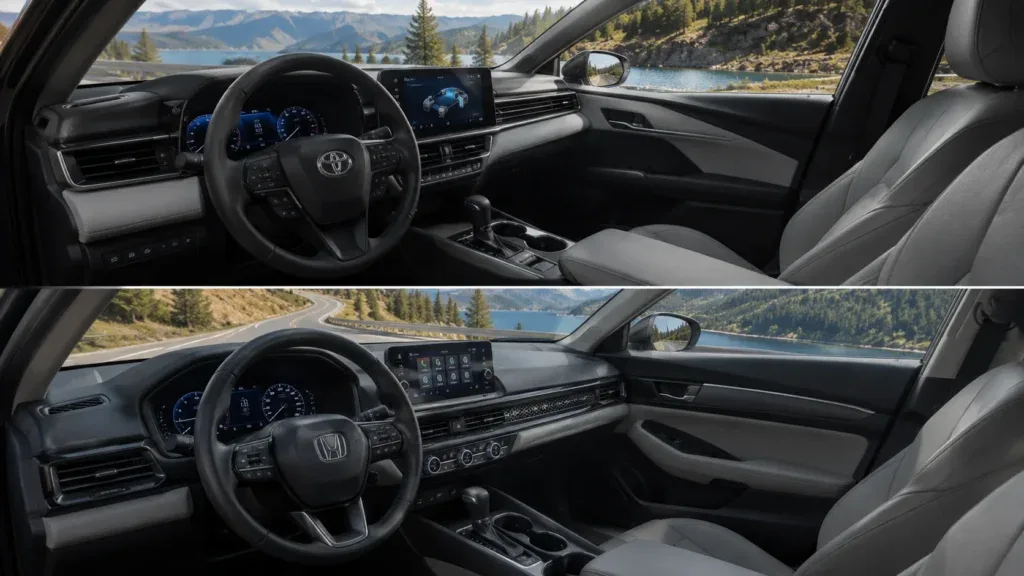
Insurance, parts, and dealer coverage are close enough that they should not decide the purchase. Test-drive both. The better car is the one whose seats and steering you prefer after a highway loop and a few broken city streets.
Who Should Buy Which
Buy the Camry Hybrid if:
- Maximum mpg and a lower starting price matter most
- You want available AWD
- You keep cars a long time and prioritize predicted reliability
- You will actually order the LE (or a similar efficiency-focused trim)
Buy the Accord Hybrid if:
- How the car drives matters as much as the mpg number
- You want the EX-L’s 48 mpg combined plus Honda’s ride and handling
- You do not need AWD
- You prefer the Accord’s cabin and steering feel
The Bottom Line The 2026 Camry Hybrid LE’s 51 mpg combined is the real efficiency winner in this pairing. The Accord Hybrid’s best combined rating is 48, and several popular Honda trims are rated 44. That gap is enough to save a noticeable amount of fuel over years of commuting if you buy the Camry LE and drive it like an efficiency car.
The Accord remains the nicer car to drive. If you spend the extra money on an EX-L and value the chassis, the 3 mpg combined difference (51 vs 48) is not a reason to skip Honda. If you were about to buy a 44-mpg Accord Sport hybrid solely because it is a Honda, the Camry LE is the more honest fuel-economy choice — and it costs less.
One honest answer: get the Camry LE for mpg and value. Get the Accord Hybrid EX-L if you care more about the drive than the last few miles per gallon.
Would you take 51 mpg and AWD availability, or 48 mpg and the Accord’s ride