
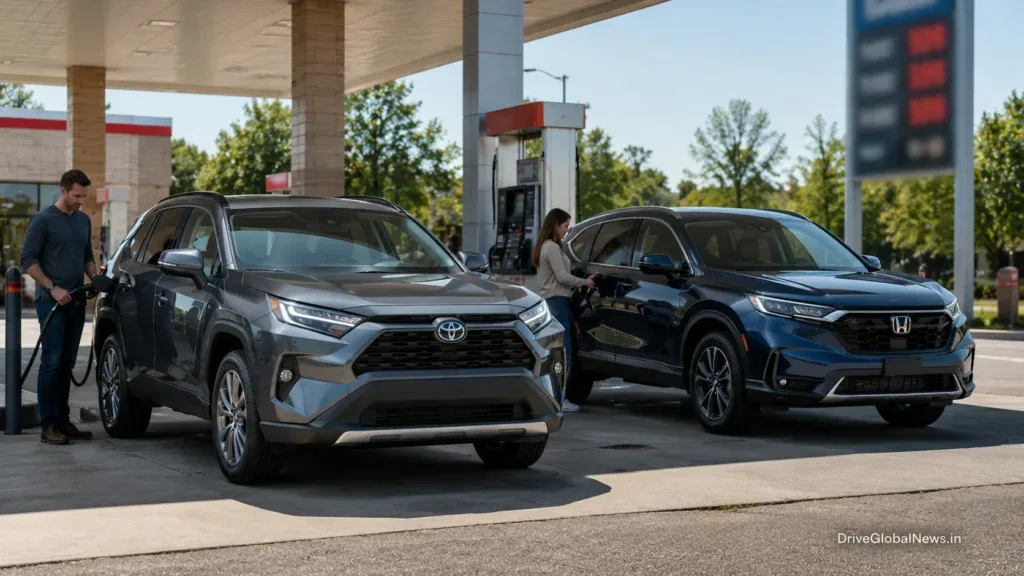
A typical gas compact SUV still lives in the mid-20s for combined MPG. Drive 15,000 miles a year at about $4 a gallon and you are looking at roughly $2,200–$2,400 in fuel.
A 40–43 mpg hybrid on the same commute is closer to $1,400–$1,500. That is $700–$1,000 right there. Swap the comparison to an older 20–22 mpg midsize SUV or pile on highway miles, and the $1,000-plus number is not marketing. It is arithmetic.
These seven start under $40,000 before destination. Stay off the top trim or the promise disappears.
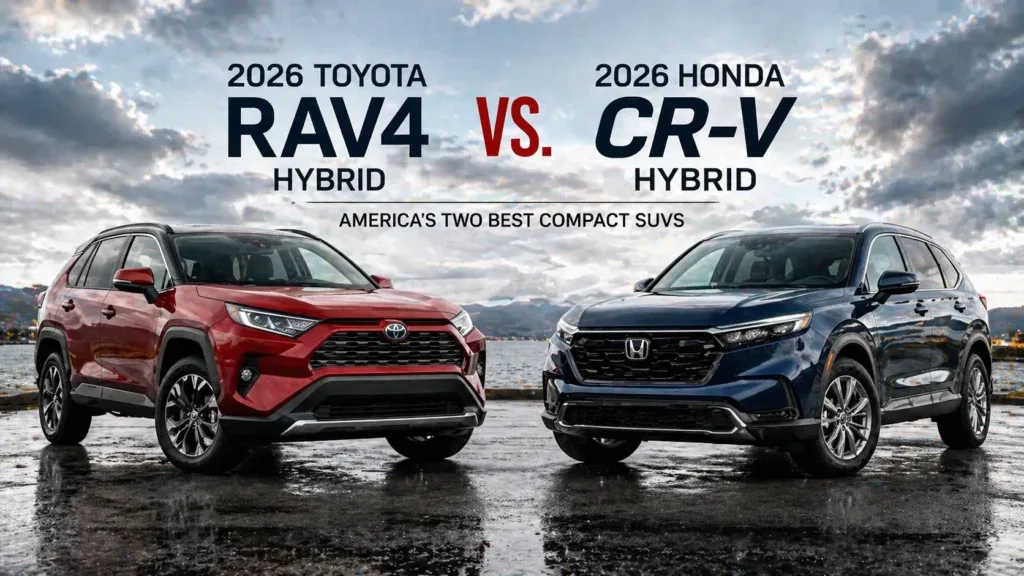
1. Toyota RAV4 Hybrid — from about $31,900
The default answer in this class, now that the 2026 RAV4 is hybrid-only in the U.S. Front-drive LE models are rated around 43 mpg combined. AWD trims still sit in the high 30s to low 40s. Resale, dealer coverage, and the fact that every new RAV4 is a hybrid make this the safe pick. Woodland and Limited blow past $40,000. The LE and SE do not have to.
2. Honda CR-V Hybrid — from $37,080
Starts higher than the RAV4 and the Kia. Rides better than both for a lot of people. Up to 40 mpg combined, a grown-up interior, and Honda’s reputation for just working. Sport Touring jumps over $40,000. Sport Hybrid is the one that keeps the math honest.
3. Kia Sportage Hybrid — from about $30,290
Cheapest “real” compact hybrid SUV that does not feel like a tall hatchback. FWD LX is EPA-rated around 42 mpg combined. AWD drops that into the mid-30s. Cabin space and cargo beat the price. SX Prestige crosses $40,000. LX and EX are where the savings live.
4. Hyundai Tucson Hybrid — from about $32,200
Same family as the Sportage, quieter ride, long warranty. New lower SE/Blue SE trims pulled the hybrid under the old $34,000 floor. AWD models are closer to 38 mpg combined. FWD should land nearer the Sportage’s 42. Ten-year powertrain coverage is the adult argument if you keep cars past 80,000 miles.
5. Toyota Corolla Cross Hybrid — from about $31,190
Smaller than a RAV4. Standard AWD. About 42 mpg combined. This is the hybrid SUV for people who do not need the extra cargo cube and do not want to pay for it. It will not tow like a Forester or swallow a stroller like a Santa Fe. It will cost less to fill every week.
6. Subaru Forester Hybrid — from $34,730
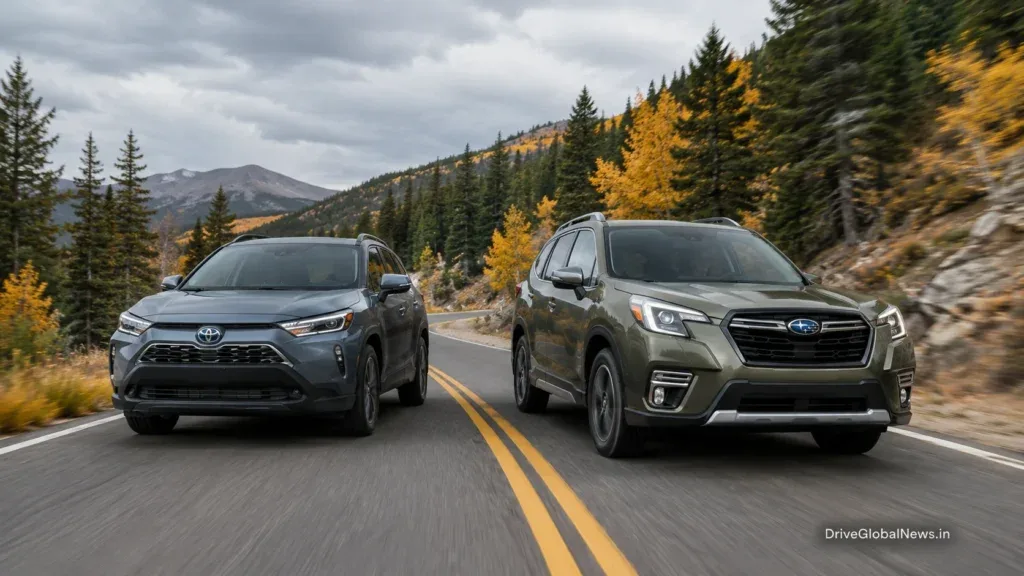
Standard symmetrical AWD. About 35 mpg combined — not the class leader, but better than a gas Forester and better than most gas compact SUVs in snow country. Premium Hybrid stays under $40,000. Touring does not. If winter traction is the job, this is the hybrid that does not make you argue about front-wheel drive.
7. Hyundai Santa Fe Hybrid — from $38,000
The only three-row vehicle on this list that still starts under $40,000. About 34–36 mpg combined. That is not Niro territory. Compared with a gas three-row that struggles to break 24 mpg, the annual gap is still real — often the full $1,000 if you actually use the third row and put miles on it. AWD versions sit right on the $40,000 line. Keep it simple.
The $1,000 Question, Without the Brochure
Kia’s Niro Hybrid starts under $29,000 and hits 53 mpg combined. It saves the most fuel. It also drives like a tall hatch, not a family SUV. If your definition of SUV is “I need ground clearance and a square back,” skip it. If your definition is “I want the lowest fuel bill in a tall body,” it wins.
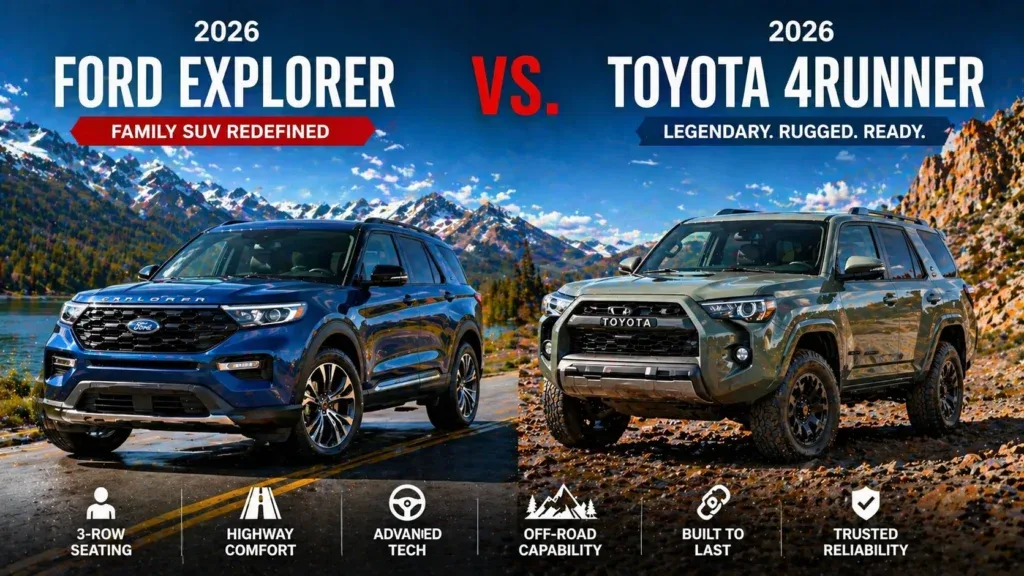
Fuel savings assume 15,000 miles and mid-$3 to $4 gas. Drive 8,000 miles a year in a cheap gas Civic and the hybrid premium takes longer to earn back. Drive 18,000 miles in a 22-mpg Explorer and the hybrid pays for itself in the first two years of fuel alone.
Insurance, tires, and hybrid-battery coverage still matter. Toyota and Honda win the keep-it-10-years argument. Kia and Hyundai win the features-per-dollar argument. Subaru wins snow. Santa Fe wins the third-row argument.
The wrong buy is a loaded Limited that costs $44,000 so you can say you own a hybrid. The right buy is the cheapest trim that still has the powertrain — and a gas bill that finally looks like 2026 instead of 2016.
Which one fits — maximum MPG, maximum space, or the Toyota you can sell in 2032 without explaining anything?