
The renewal letter is not a suggestion. If you do nothing, the new rate starts.
Most auto policies run six or twelve months and roll forward automatically. Insurers mail or email the packet 30 to 60 days early. That window is the only cheap time to catch a silent increase, a missing discount, or a coverage change you never approved.
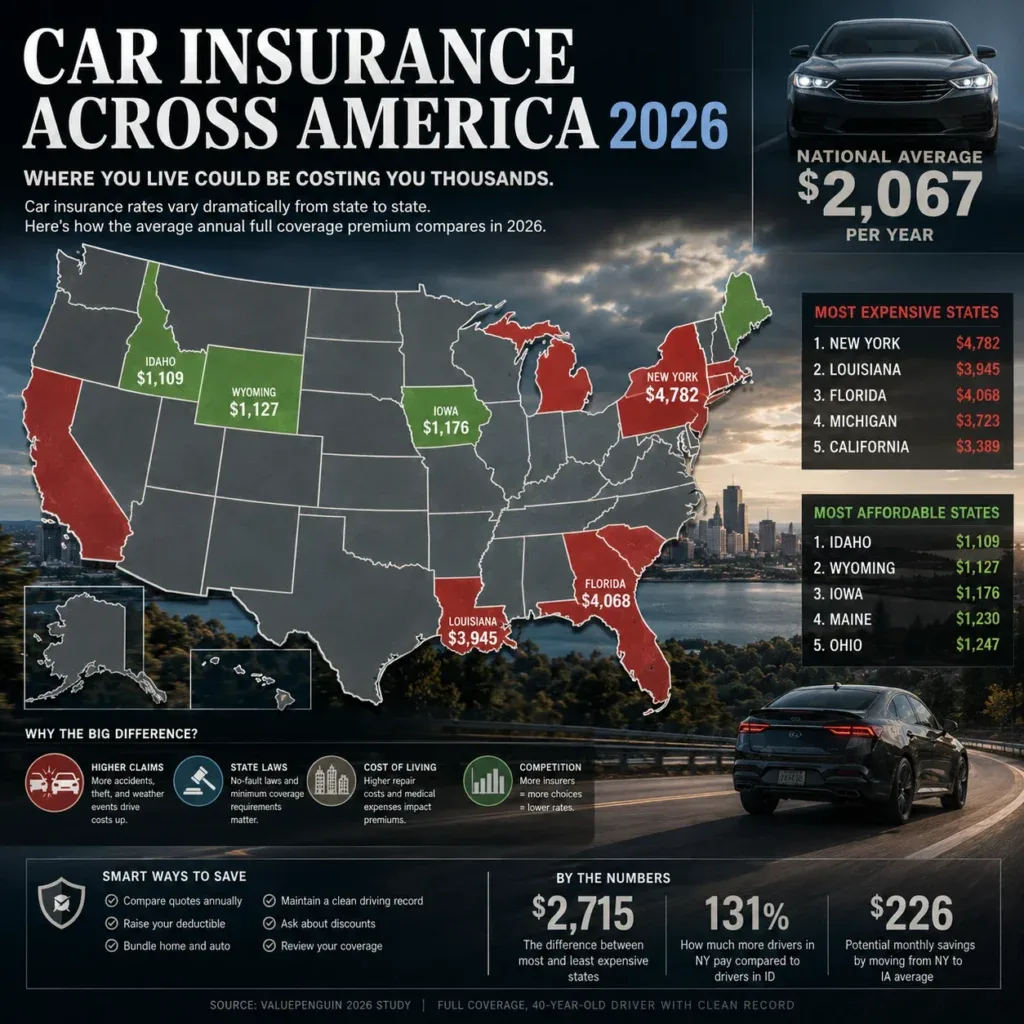
National full-coverage averages in 2026 sit around $2,200 to $2,350 a year depending on the survey. After the big jumps of 2023–2024 and a dip in 2025, many 2026 renewals are up only a little on paper — and still up a lot versus three years ago. Your letter can look “normal” and still be wrong.
Open the declarations page next to last term’s page. Then check four numbers.
1. The new premium versus the old one
This is the headline. Write both annual totals down. Then do the percentage.
A $180 increase on a $2,200 policy is about 8%. That can be a company-wide filing, not a ticket you forgot. A $600 jump with a clean record is a shopping event, not a shrug.
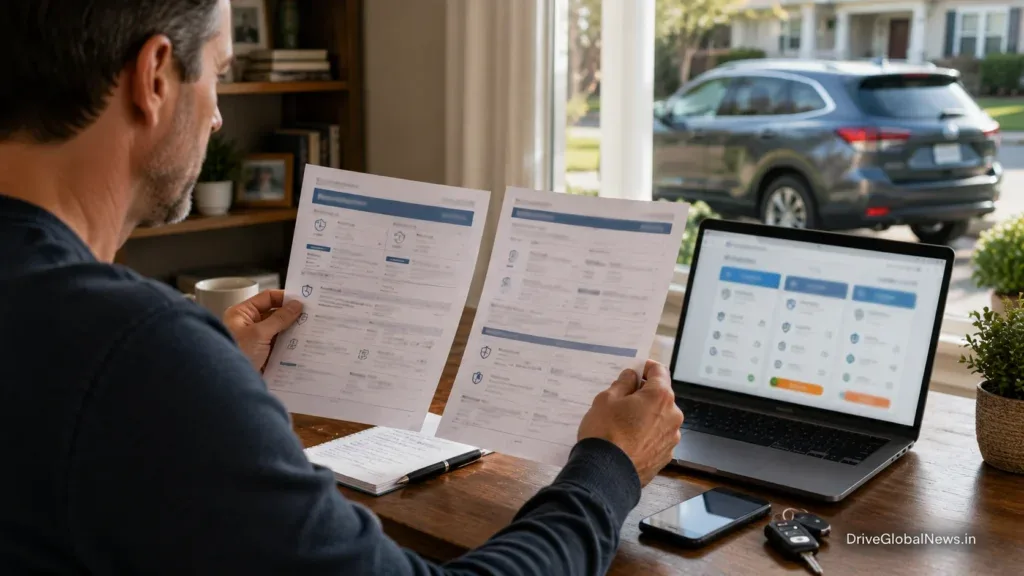
If the notice does not explain the change, call and ask for the reason in one sentence: rate filing, credit rescore, ZIP rerate, mileage, claim, or discount removed. Get that answer before you accept the draft.
Shop two or three other carriers with the exact same limits. Drivers who compare at renewal often find hundreds of dollars. The current company is pricing last year’s customer. Competitors are pricing this year’s market.
2. Liability limits — the numbers that pay when you hit someone
Look at bodily injury and property damage. A common older setup is 25/50/25. That is the legal minimum in some states and not enough if you cause a serious crash.
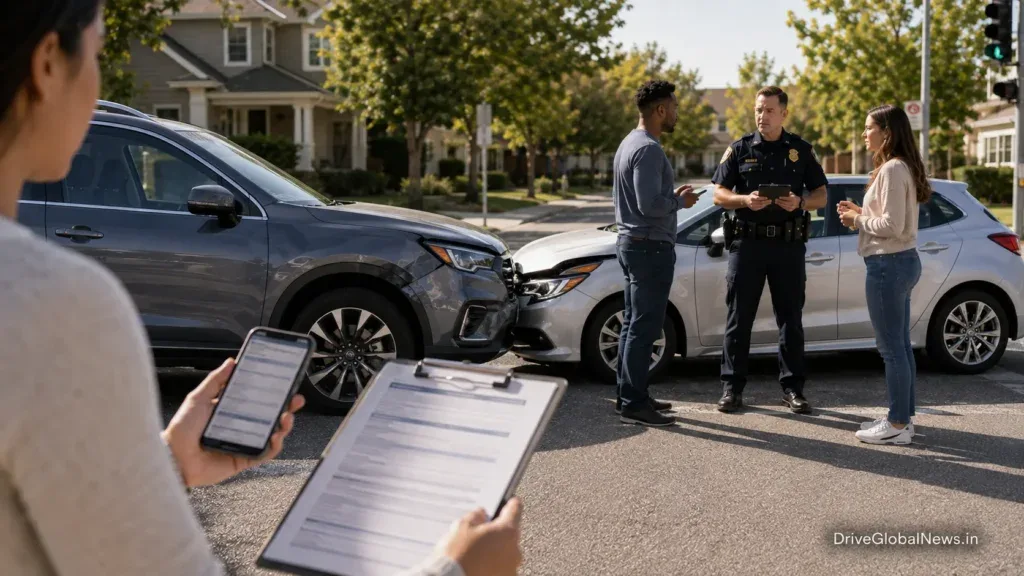
25/50/25 means $25,000 per person, $50,000 per accident for injuries, $25,000 for other people’s property. Hospital bills and a newer SUV blow through that. 100/300/100 is the floor a lot of advisors now treat as adult coverage. Umbrella policies sit on top of that.
Auto-renewal loves to copy last year’s limits. If your income, house, or car values changed, last year’s limits are stale. Raising liability is often cheaper than people expect. Dropping it to “save” $12 a month is how a fender-bender becomes a lawsuit.
3. Deductibles on comprehensive and collision
These two numbers decide what you pay out of pocket if the car is stolen, hailed on, or wrecked.
$500 is common. $1,000 lowers the premium. $0 comprehensive looks comforting until you see the price. On an older car worth $4,000, collision may not be worth keeping. On a $38,000 hybrid with a loan, dropping collision to save $20 a month is a bad trade.
Confirm the deductibles did not change without a conversation. Some renewals quietly reset them. Some add rental or roadside you did not ask for. Some remove glass coverage you thought you had.
4. Discounts still on the page — and the ones that vanished
This is the number people skip. Multi-policy, paperless, autopay, good-driver, low-mileage, student, defensive-driving, telematics.
A bundle discount that falls off because you moved the home policy is a $200–$400 surprise. A low-mileage discount that dies when the estimate ticked from 7,500 to 12,000 miles is another. A teen who left for college but is still listed as a rated driver can cost more than the car payment.
Check the vehicle list and the garaging ZIP. A sold car still on the policy is wasted premium. A new ZIP after a move can rerate the whole household. Mileage estimates should match how you actually drive.

Do This Before the Date on the Letter
You do not need a new agent relationship. You need two quotes and 20 minutes with last year’s declarations page.
If the four numbers match and the increase is small, staying can be rational. Loyalty discounts exist. So does inertia pricing.
If the premium jumped, a discount disappeared, or the limits still look like 2019, do not let auto-renew finish the job. Canceling mid-term is allowed. Shopping before the new term starts is cleaner.
The policy will renew. The only question is whether you read it first.
When did you last compare that renewal to another company’s quote — this year, or the year you first signed up?