The midsize sedan is not dead. It just got honest.
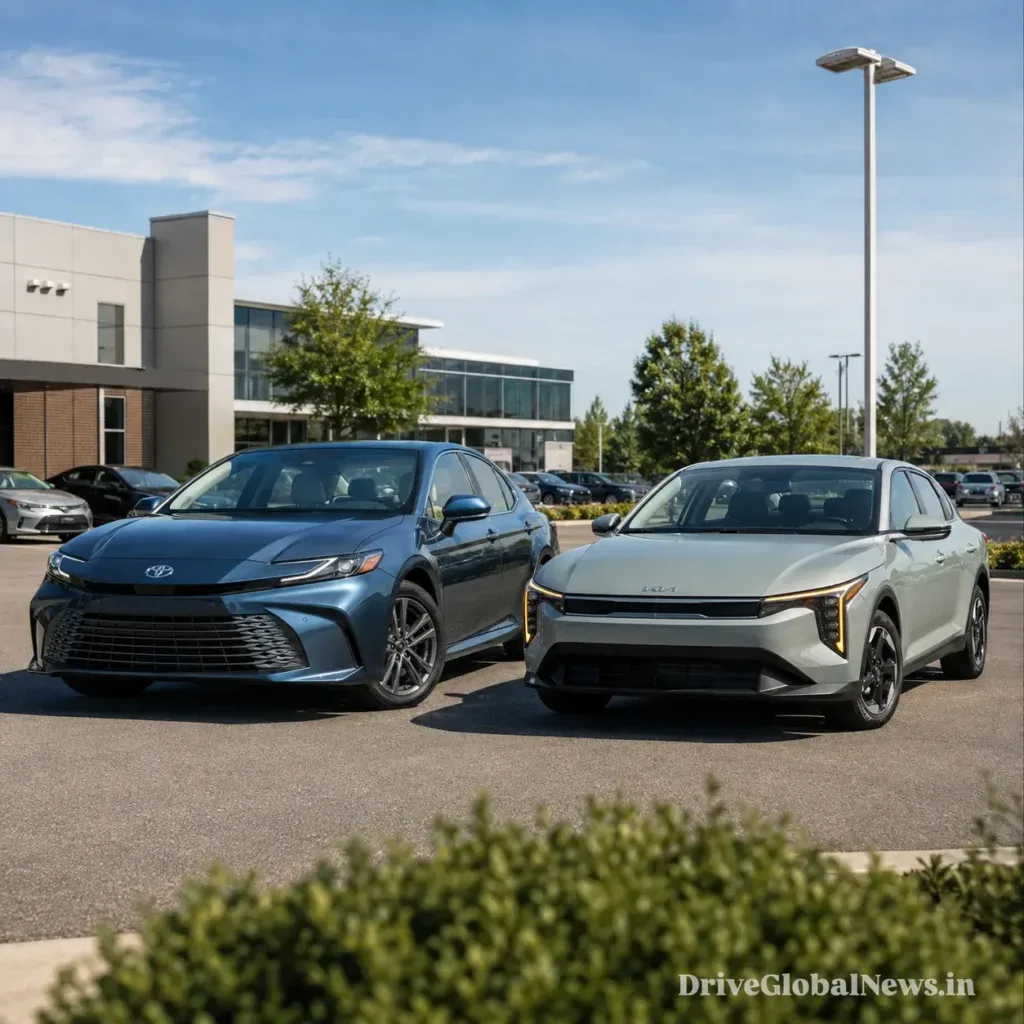
A 2026 Toyota Camry Hybrid LE starts around $29,000 to $30,900 before destination, depending on how the dealer prints the sheet. It is hybrid-only. Combined EPA on the front-drive LE is 51 mpg. That is Prius-adjacent economy in a car that still looks like a Camry.
A 2026 Kia K4 LX starts at $22,290, or about $23,535 with destination. The 2.0-liter four makes 147 horsepower. Combined EPA is about 33 mpg. The whole sedan lineup, including the GT-Line Turbo at $28,390, still sits under $35,000.
Same budget band. Two different bets.
The Price Gap Is Real
Seven to eight thousand dollars separates a base K4 from a base Camry. That is not a cupholder package. That is a year of insurance, or a chunk of the down payment, or the difference between financing 60 months and sleeping at night.
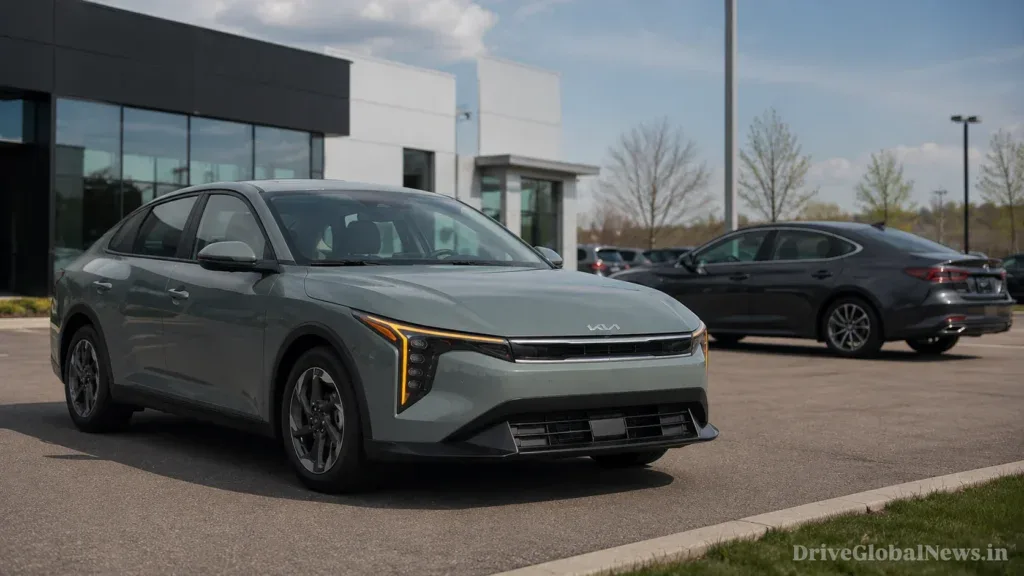
Kia will also put more screen and more styling on a $26,000 GT-Line than Toyota puts on a $30,000 LE. Warranty is the other Kia card: 5 years/60,000 miles basic, 10 years/100,000 miles powertrain. Toyota is 3 years/36,000 and 5 years/60,000, plus ToyotaCare on scheduled maintenance for a stretch.
If the job is “leave the lot for the least money,” the K4 wins before you turn the key.
The Fuel Math Is Also Real
Drive 15,000 miles a year at $4 a gallon.
Camry LE at 51 mpg: about 294 gallons, roughly $1,176.
K4 at 33 mpg: about 455 gallons, roughly $1,820.
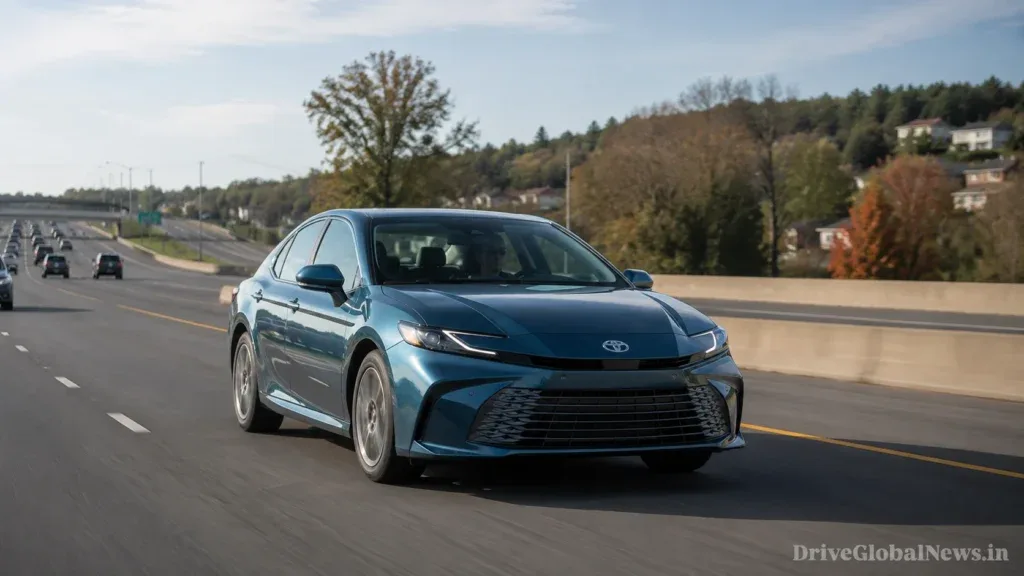
That is about $640 a year. Over five years it is more than $3,000 — before you count the Camry’s resale, which historically eats the Kia alive.
The Camry also makes 225 horsepower in FWD form and 232 with the extra rear motor. The K4’s base engine is 147. The GT-Line Turbo jumps to 190 hp and drops to about 28 mpg combined. Faster. Thirstier. Still no hybrid.
If the job is “I drive a lot and I keep cars,” the Camry starts paying you back in year two.
What You Sit In
The Camry is the larger car — midsize, more rear shoulder room, a quieter highway ride, available AWD on every trim for about $1,525. It is the sedan you put parents in without apologizing.
The K4 is a compact that feels bigger than the old Forte. Rear legroom is competitive. The cabin looks newer. There is now a hatchback if you want a square hole in the back. It will not feel as planted at 80 mph. It will feel like you spent $23,000, not $32,000.
Neither is a sports sedan. The Camry SE and K4 GT-Line add attitude. The attitude does not change the assignment.
Which One Actually Makes Sense
Buy the K4 if cash today is the constraint. Short commute. Tight approval. You want the extra features and the long warranty more than you want 51 mpg. Sell it or trade it in four years and the depreciation hit is the cost of getting in cheap.
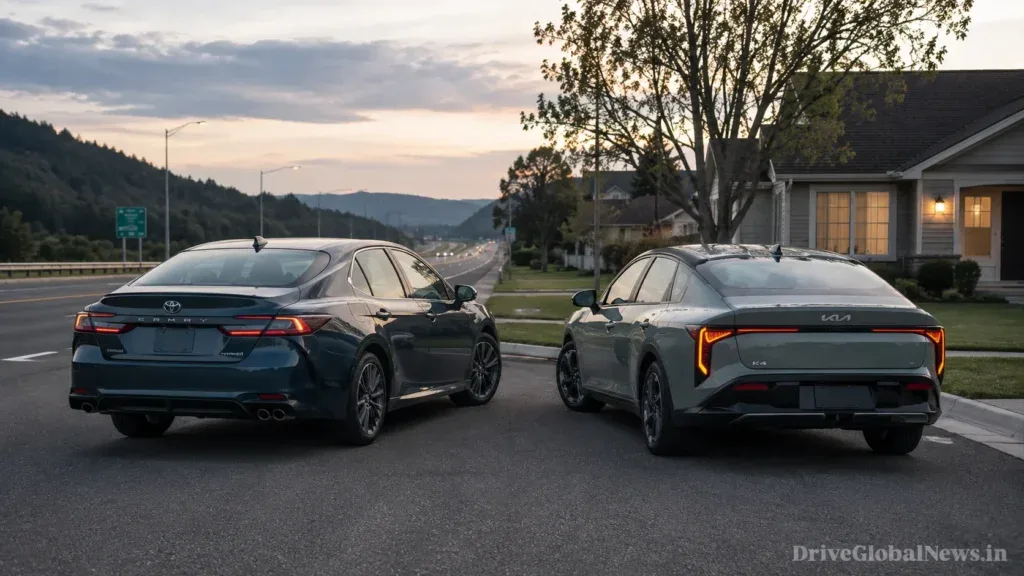
Buy the Camry Hybrid if you will keep it past 80,000 miles, if you do highway weeks, or if you care what the car is worth in 2031. Toyota’s hybrid system is the boring miracle in this comparison. It is why the Camry still exists as a sedan while everyone else fled to crossovers.
Under $35,000, both make sense. They do not make the same sense.
The K4 is the cheaper car. The Camry is the cheaper car to own if you actually drive it. Pick the sentence that matches your life, not the one that looks better on a Facebook ad.
Would you take the $7,000 back at the dealer — or take it $50 at a time at the pump?