
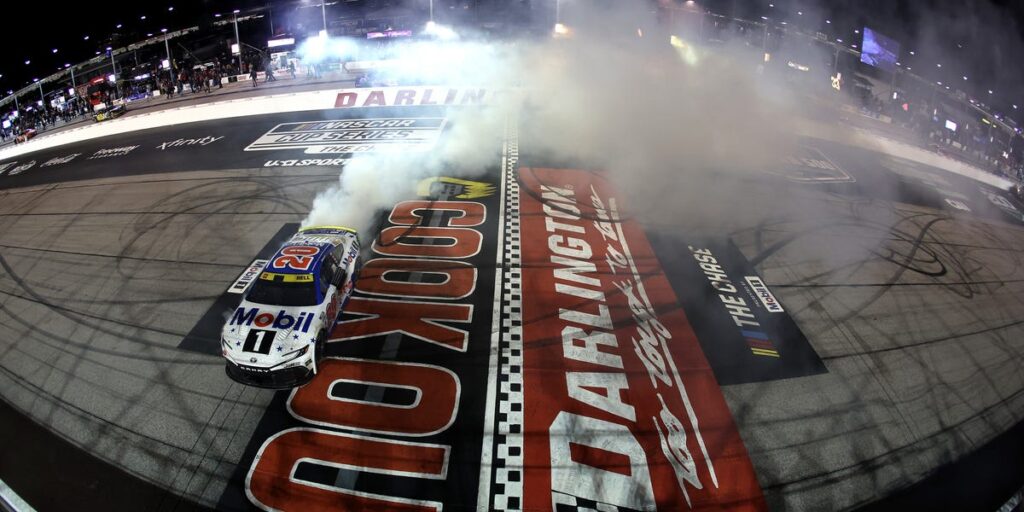
The roar isn’t a suggestion. It’s a 358-cubic-inch ultimatum, a V8 that shakes the grandstands before Christopher Bell even rolls off pit road. We’re not talking about a $45,000 Camry you’ll finance over 72 months. This is a Toyota Camry in name only, a 670-horsepower Cup Series weapon where the “trunk” is carbon fiber and the “MSRP” is measured in playoff points, not window stickers. But here’s the uncomfortable truth nobody in the broadcast booth will tell you: this race car’s success does absolutely nothing for the Camry sitting on your dealer’s lot. Zip. Zero. The suspension geometry that hooks Bell into Turn 1 at Martinsville won’t make your morning commute any smoother. Let’s be honest about what this machine actually is—a marketing halo with a steering wheel, and a damn expensive one at that.
Christopher Bell: The 670-HP Reality Check: Why This V8 Ignores Your Wallet
Under the hood sits a pushrod V8 that traces its lineage back to the Eisenhower administration. It’s a dinosaur, and it’s glorious. The 4-speed manual gearbox is a museum piece in an era of paddle-shift hypercars, yet it demands more driver skill than anything with flappy paddles ever will. The seat back arrives before your foot fully commits to the floor, and the sound—a mechanical thunder that makes your neighbor’s straight-piped Mustang sound like a sewing machine.
Here’s the friction: that 670 horsepower is restricted by a tapered spacer, mandated by NASCAR’s rulebook to keep the playing field level. Bell doesn’t get to dial up boost like a street racer with a laptop. The engineering brilliance is in the chassis setup, the aero balance, the pit strategy. That’s where races are won, not in the engine bay. For the average buyer, this powertrain is a history lesson, not a shopping guide. Do the math: the development cost of this single race car could buy a fleet of actual road-going Camrys.

The financial stakes here are dizzying, but they’re not yours. Every round Bell advances in the playoffs triggers performance bonuses from Toyota Racing Development and keeps primary sponsor Rheem’s logo in prime television real estate. A deep championship run can mean millions in equivalent advertising value. That’s real money—for the race team, not for you.
Consider the competitive landscape. Kyle Larson brings dirt-track wizardry and a Hendrick Motorsports budget that seems to print cash. Martin Truex Jr. is the veteran who’s been to the dance and knows how to close. Denny Hamlin has the speed but a history of playoff heartbreak that would make a Greek tragedian wince. Bell’s path is narrow. He needs stage points, he needs clean pit stops, and he needs luck—the kind of luck that doesn’t show up in a wind tunnel.
– Sponsor Exposure: Every lap on camera is a six-figure value proposition for Rheem and Toyota.
– Team Funding: Playoff winnings directly fund next season’s R&D, creating a vicious cycle of success or stagnation.
– Driver Market Value: A championship transforms Bell’s next contract negotiation from a conversation into a coronation.
Tuesday Morning Reality: Zero Crossover to the Showroom
And then there’s this: the uncomfortable gap between the racetrack and the dealership. Toyota will sell you a Camry TRD with a V6 that makes 301 horsepower. It’s a fine car. It handles respectably. But it shares nothing with Bell’s machine beyond a badge and a vague family resemblance. The race car’s tube-frame chassis, the carbon fiber body panels, the sequential-shift gearbox—none of it translates.
The cabin of the Cup car is a carbon fiber tub with a seat molded to Bell’s exact posterior. There’s no touchscreen, no Apple CarPlay, no lane-keeping assist. The steering wheel is a disorienting array of buttons that control everything from radio communication to brake bias. It’s a cockpit, not a cabin. The NVH levels would make a Jeep Wrangler feel like a Lexus. Every ripple in the pavement is a data point, every bump a message from the tires. That’s the point. This is a tool, not a transport pod.
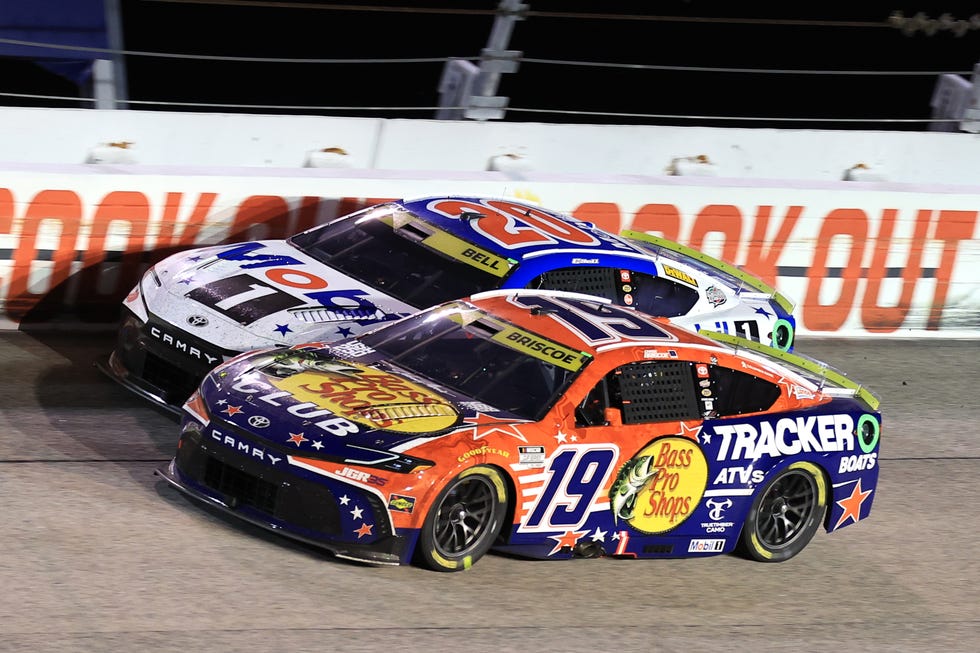
The Verdict: Who Signs Up and Who Walks Away
Here’s the definitive split. If you’re a diehard NASCAR fan who lives for Sunday afternoons and wants to understand the machinery behind the spectacle, Bell’s Camry is a masterpiece of purpose-built engineering. It’s a testament to what happens when rules constrain creativity and drivers push the absolute limit. Worth knowing: the 4-speed manual is a deliberate anachronism, a gearbox that demands heel-toe downshifts at 200 mph—a skill that separates the contenders from the field.
But if you’re shopping for a sedan, walk over to the actual Toyota dealer. The race car’s victories won’t reduce your monthly payment. The technology that wins on Sunday doesn’t trickle down to Monday’s commute—it’s too expensive, too fragile, too extreme. Bell’s machine is a beautiful, deafening, brutally expensive advertisement. Enjoy the show. Just don’t confuse the commercial with the product. The Camry in the showroom is a fine car. The Camry on the track is a different species entirely. Know which one you’re buying.