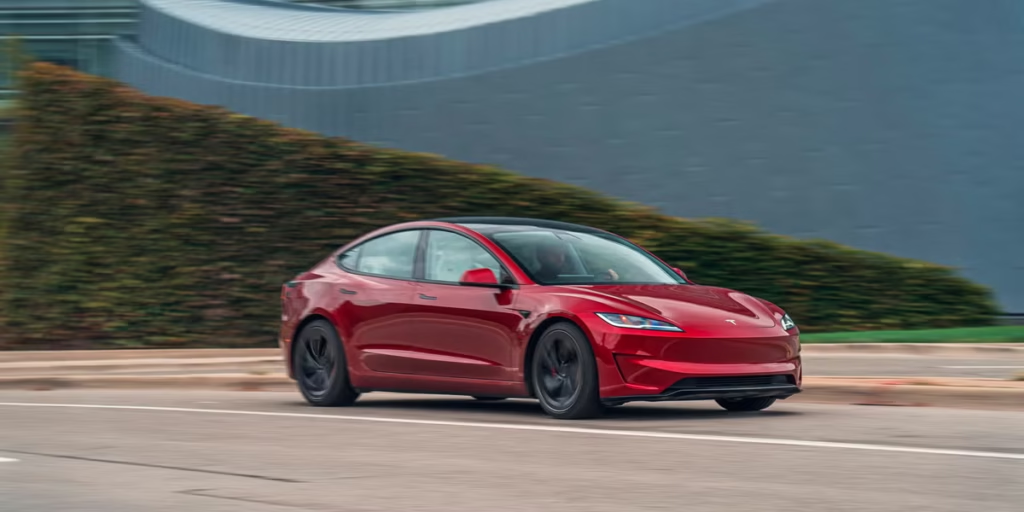
Tesla Model 3 buyers woke up this week to a headline making the rounds across automotive news feeds, and the claim inside it deserves far more scrutiny than it has received so far. According to a headline-only report with no attached press release, no EPA filing, and no pricing sheet, Tesla has allegedly updated the Model 3 with quicker acceleration and a larger center display screen. That is the entire story as it stands. No confirmed figures. No trim breakdown. No dollar amounts.
The claim itself is plausible on its face, since Tesla routinely pushes running changes into production without a formal model-year announcement. However, “plausible” is not “confirmed,” and readers should treat both the acceleration improvement and the screen size increase as unverified until Tesla publishes official specifications or a Monroney label surfaces on a dealer lot.
What the Tesla Model 3 Update Claim Actually Says
Strip the headline down and two specific changes are being reported. First, quicker acceleration. Second, a bigger screen. Neither number has been released. We do not know whether the improvement amounts to a tenth of a second or half a second off the zero-to-60 sprint. We do not know whether the display grows from the current 15.4-inch unit to something larger, or whether the change applies to the base rear-wheel-drive car, the Long Range all-wheel-drive variant, the Performance trim, or all three.
Pricing remains equally opaque. Tesla has spent the past two years adjusting Model 3 MSRPs repeatedly, sometimes by thousands of dollars in a single quarter, so any hardware change carries real financial weight. If a larger screen and quicker acceleration arrive without a price increase, that is a meaningful value story. If Tesla quietly folds the changes into a higher sticker, buyers are simply paying more for hardware they may not have asked for.
Moreover, the timing is notable. Tesla has been pushing incentives aggressively across its lineup while rivals such as Kia have revealed up to $10,000 off on EV deals, a pricing war that directly pressures Model 3 transaction prices. Therefore, any unannounced hardware update could be a competitive response rather than a pure product refresh.
Why Acceleration and Screen Size Matter to Real Buyers
Acceleration figures sell cars, but they also affect insurance premiums, tire wear, and drivetrain stress. A quicker Model 3 is not automatically a better Model 3 for a commuter racking up 15,000 miles a year. The Performance trim already delivers sub-four-second zero-to-60 runs, and most buyers never use that capability beyond an occasional on-ramp pull.
Screen size, by contrast, touches daily usability. A larger display can improve map legibility and camera clarity, particularly for the rearview and side repeater feeds that Tesla routes through the center monitor. However, a bigger screen also means more glare, more fingerprints, and potentially a higher replacement cost if the unit fails outside warranty. Those trade-offs rarely make it into launch coverage.
Furthermore, no ADAS changes have been mentioned in the report. Buyers cross-shopping the Model 3 against newer competitors should assume the driver-assistance suite carries over unchanged unless Tesla says otherwise. That assumption could prove wrong, but it is the safer position given the absence of confirmed details.
The Pricing Question Nobody Has Answered
Financial stakes here are straightforward. A Model 3 currently starts in the low $40,000 range before incentives, and a mid-cycle hardware bump historically has not triggered a price cut. Therefore, buyers waiting for a discount tied to the update may wait a long time. Conversely, if Tesla does hold pricing flat, the updated car becomes the better deal relative to remaining inventory of the previous configuration.
Anyone weighing a purchase right now should also understand how trade-in valuations shift when a manufacturer changes hardware without notice. Dealers price used inventory against the newest configuration, and an unannounced update can soften resale values on older examples faster than a formal model-year change would. Our guide on how car trade-in works explains how dealers calculate those numbers.
Frequently Asked Questions
Q: How much quicker is the updated Tesla Model 3?
Tesla has not confirmed any acceleration figures for the updated Model 3. The headline claims quicker performance, but without an official press release or EPA filing, the exact improvement remains unknown. Buyers should wait for verified specs before assuming a specific 0-100 km/h time.
Q: How much bigger is the new Tesla Model 3 screen?
The exact screen size increase is unverified. Tesla has not released official dimensions, and no press release confirms the new display size. Until Tesla publishes confirmed specifications, treat any screen size claims as unconfirmed and check the official configurator before ordering.
Q: Does the Tesla Model 3 update apply to all trims?
It is unclear whether the quicker acceleration and bigger screen apply to every Model 3 variant. Tesla has not confirmed trim-level details or pricing. Buyers should verify with Tesla directly or check the official website before placing an order for any specific trim.
What Buyers Should Do Now
Option One is to wait for official confirmation. Tesla has not announced pricing, availability, or a trim breakdown, so any deposit placed today is a bet on unverified information. Option Two is to check existing inventory for the current configuration, since dealers and Tesla’s own inventory listings may discount cars built before the change. Option Three is to lease rather than buy, which limits exposure to resale volatility while the details of the Tesla Model 3 update remain unconfirmed. Whichever path you choose, verify the acceleration figure and screen dimension in writing before signing anything.