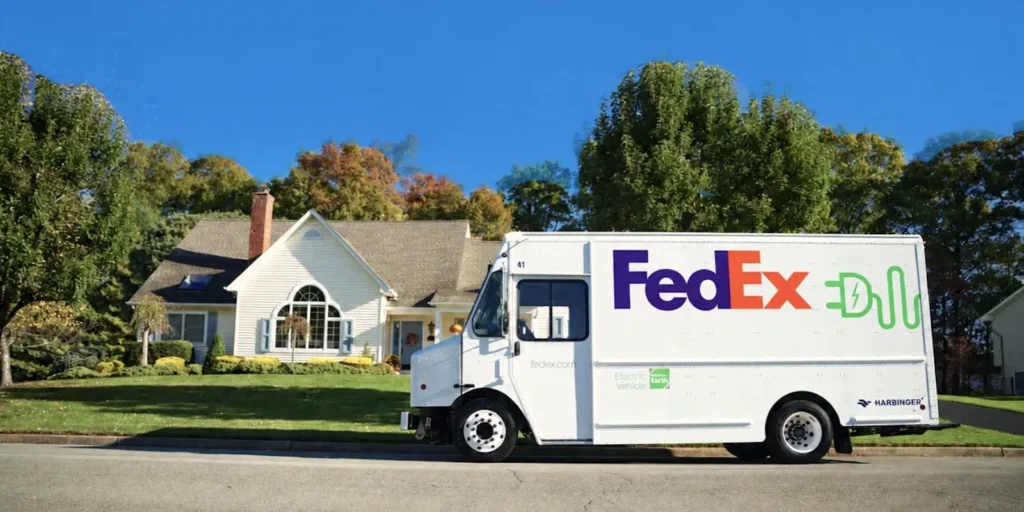
FedEx Electric Delivery Trucks (Fleet Electrification Program) promises a $300 million electric truck investment that will supposedly wipe out $800 million in diesel costs, according to headline claims circulating without a press release, an EPA filing, or a single confirmed vehicle specification attached to them. That is the entire public record as it stands. No unit count. No battery range. No payload rating. No depot charging plan. No timeframe. Just two big numbers and a lot of silence where the engineering details should sit.
Commercial fleet operators reading those figures face a familiar problem. The math looks beautiful until you ask what truck, over how many years, at what price per gallon of diesel. Moreover, the 2.7-to-1 return implied by those two figures depends entirely on duty cycle, route length, and the electricity rate at the depot. Change any one input and the savings evaporate.
FedEx electric trucks: What the Data Shows
According to Reuters coverage of fleet electrification efforts across the parcel industry, carriers have spent years testing electric step vans and Class 6 trucks, yet published cost-per-mile comparisons against diesel remain scarce. FedEx has not joined that published record with hard numbers. The $300 million spend figure lacks a vendor list, a delivery schedule, and a confirmed vehicle make or model.
UPS runs comparable pilot programs with Arrival and other suppliers. Amazon deployed custom Rivian vans at scale across US routes. Both rivals published at least partial operational data. FedEx, by contrast, announced a dollar figure and stopped there. The silence from the company on basic specifications speaks volumes about how early this program sits.
What does this mean for a fleet manager weighing a purchase? Everything hinges on inputs the company has not released. Diesel at $6 a gallon, as recent record fuel prices have shown, makes any electric alternative look attractive on paper. At $3.50 a gallon, the same truck takes far longer to pay back its premium. Therefore, the $800 million savings claim needs a diesel price assumption before anyone can validate it.
The Numbers Behind the Diesel Savings Claim
At $300 million in electric truck spending, the implied return of roughly 2.7 times assumes the $800 million in diesel savings arrives within a defined window. Nobody has stated that window. Five years? Ten? The difference changes the annual savings rate from $160 million to $80 million, and that gap decides whether the program pencils out for investors.
Fleet electrification economics also depend on depot charging rates, which vary wildly by region and utility contract. A carrier charging overnight at industrial rates might pay 8 cents per kilowatt-hour. A carrier charging during peak demand might pay triple that. Consequently, the same truck on the same route can deliver wildly different savings depending on when it plugs in.
Enthusiasts dismiss delivery vans as boring, yet this segment drives more real-world electrification than any sports car. The commercial duty cycle, with fixed routes and central depots, suits battery power better than almost any consumer application. However, that advantage only materializes when the charging infrastructure exists. FedEx has not confirmed a single depot buildout.
What Rivals Have Already Proved
Amazon and Rivian showed the playbook works at scale, with tens of thousands of custom vans logging real miles. Similarly, Amazon’s deployment of 50 Mercedes-Benz eActros electric trucks by 2026 demonstrates that heavy-duty electric logistics keeps expanding. Those programs came with vehicle names, range figures, and deployment timelines. FedEx offered none of that.
Owners face a hard choice when evaluating any fleet electrification pitch without specs. Commit capital on a headline, or wait for documentation that may never arrive. The financial stakes for a mid-size carrier run into millions of dollars, and a wrong bet on unproven range or payload claims could strand trucks at depots with no charging capacity.
Moreover, the broader electric truck market keeps shifting. Battery prices fluctuate, charging standards evolve, and diesel prices swing month to month. A savings projection built on today’s assumptions may look foolish in three years. Therefore, any fleet operator should treat the FedEx figures as directional at best until the company publishes verifiable data.
Frequently Asked Questions
Q: How much is FedEx spending on electric trucks?
FedEx projects a $300 million investment in electric delivery trucks. The company claims this spend will offset roughly $800 million in diesel costs, though neither figure has been independently verified through filings, press releases, or confirmed vehicle specifications.
Q: Which electric truck models will FedEx use?
No confirmed make, model, battery range, or charging infrastructure details have been disclosed. FedEx has not named suppliers or released unit counts, leaving fleet operators and analysts unable to validate the $800 million savings projection against real-world duty cycles.
Q: Over what period will FedEx save $800M in diesel?
The timeframe remains undisclosed. Without a defined period or diesel price per gallon assumption, the $800 million figure cannot be independently validated. Fleet electrification savings typically hinge on duty cycle and depot charging rates, neither of which FedEx has shared. For more details, check our recent coverage on Citroen 2CV EV: Affordable Electric Revival Explained.
What Buyers Should Do Now
Consumers seeking a passenger EV should walk away from this story entirely, because it concerns commercial fleet economics, not showroom inventory. Fleet managers, however, should request the underlying assumptions behind the FedEx Electric Delivery Trucks (Fleet Electrification Program) before signing anything. Ask for the diesel price baseline, the evaluation period, the confirmed vehicle supplier, and the depot charging plan. Without those four items, the $800 million savings claim lacks documentation and awaits confirmation from the company itself.
Watch for an EPA filing, an NHTSA record, or an official press release with vehicle specifications. Until one of those surfaces, treat both dollar figures as unverified headline claims. The electrification transition will happen in this segment regardless, but smart buyers wait for the math to show its work.