AI in Cars 2026: How Mercedes, Geely & Nvidia Are Building the World’s Smartest Vehicles
Your next car won’t just drive — it will think, learn, and improve over time. In 2026, artificial intelligence has moved from the lab to the road. Mercedes-Benz, Geely, and Nvidia are leading the charge. Here’s everything you need to know.
For decades, artificial intelligence in cars meant little more than a voice assistant that misheard your commands. In 2026, that era is definitively over. AI is now the central nervous system of modern vehicles — controlling driving assistance, infotainment, safety systems, and even the emotional tone of your car’s voice. Two launches define this moment: the Mercedes-Benz CLA with Nvidia’s MB.OS, and Geely’s full-domain AI 2.0. Together, they signal that the AI-defined car is no longer a concept. It’s here.
Mercedes-Benz CLA + Nvidia: The First Truly AI-Defined Car
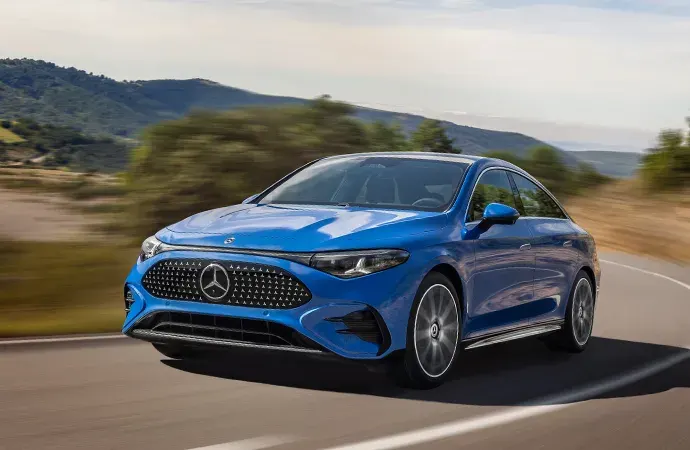
The all-new 2026 Mercedes-Benz CLA is not just a beautiful electric sedan — it is the first production car in the world to run Nvidia’s complete DRIVE AV software stack. This means the car doesn’t just react to the road. It reasons about it, predicts it, and learns from it — just like a human driver would over years of experience.
AI-Defined Vehicle
Compute Power: 508 TOPS
Sensors: 10 cameras, 5 radar, 12 ultrasonic
AI Level: Level 2++ (point-to-point)
US Launch: End of 2026
Starting Price: ~$50,000
Range (EV): 350+ miles
Full-Domain AI
Architecture: Single central intelligence engine
Controls: All vehicle functions — driving, cabin, safety
Driving System: Geely Afari Smart Driving
Data: Large-scale real-world driving data
Sensors: High-performance sensor array
Debut: CES 2026
What Makes Nvidia’s AI Different?
Nvidia’s secret weapon is a new AI model family called Alpamayo — a 10-billion parameter Vision-Language-Action (VLA) model that solves what engineers call the “long tail problem.” These are the rare, unpredictable situations on the road — a child chasing a ball, a wrong-way driver, a flooded underpass — that have historically caused self-driving systems to fail or disengage.
Nvidia’s system uses a dual-stack design: one AI end-to-end stack handles core driving decisions, while a parallel classical safety stack called NVIDIA Halos runs simultaneously as a fail-safe. This redundancy is why Mercedes calls it “Level 2++” — it goes beyond standard Level 2 systems while keeping the driver in control at all times.
https://driveglobalnews.in/new-york-auto-show-2026-ev-slowdown-new-hybrid/
What the Mercedes CLA AI Can Actually Do:
- Navigate point-to-point through complex city streets — without driver input
- Automatically detect and yield to pedestrians, cyclists, and scooter riders
- Execute automated parking in tight urban spaces
- Proactively avoid collisions — not just react to them
- Improve over time through over-the-air (OTA) software updates
- Understand your emotions and adjust its voice responses accordingly
Geely AI 2.0: China’s Answer to the AI Car Race
While Mercedes and Nvidia dominate headlines in the West, Chinese automaker Geely has quietly launched something equally ambitious: Full-Domain AI 2.0. Unlike traditional systems that use separate computers for different functions, Geely’s approach uses a single central intelligence engine to control every function in the car — from driving and braking to climate control and entertainment. This unified architecture is faster, simpler, and more powerful than multi-computer setups.
Geely’s CEO Jerry Gan put it bluntly at CES 2026: “AI is reshaping the automotive industry — from powertrains to a systematic reconstruction of mobility ecosystems and lifestyles.” The company’s Afari Smart Driving system combines AI with large-scale real-world driving data and high-performance sensors to deliver confident, safe autonomous driving capability.
What This Means for Car Buyers in 2026 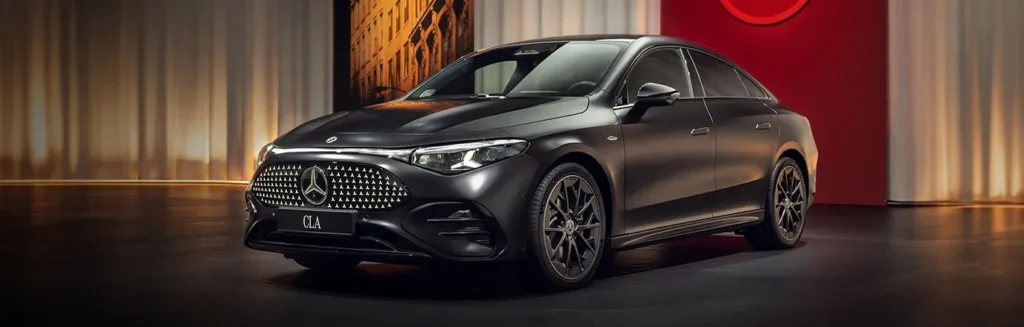
AI-powered cars are no longer just for tech enthusiasts. The Mercedes CLA starts at around $50,000 — expensive, but within reach for a luxury buyer. More importantly, the underlying technology from Nvidia is open-source and available to all automakers, which means AI driving features will rapidly spread across price points over the next 2–3 years. The car you buy in 2028 — even a $35,000 mainstream model — will likely feature some version of this technology.
For now, if you want the most advanced AI in a production car you can buy today, the answer is clear: the 2026 Mercedes-Benz CLA, arriving at US dealerships by end of 2026.