
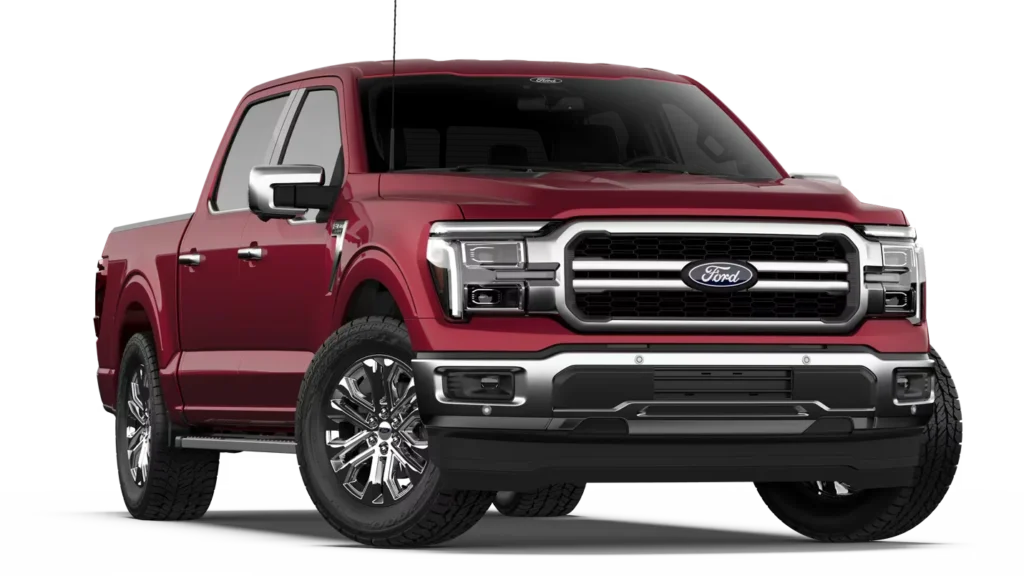
If you’ve recently walked onto a Ford dealership lot looking for an F-150 or Super Duty and found it surprisingly empty, you’re not alone — and the reason behind the shortage is more dramatic than most people realize. A series of fires at a critical aluminum supplier has triggered one of the most significant inventory crises in Ford’s recent history, pushing F-Series sales down 16% in the first quarter of 2026 and leaving thousands of buyers waiting.
Here’s everything you need to know about the Ford F-150 shortage in 2026, what caused it, when it might end, and what it means for buyers right now.
What Happened? The Novelis Supplier Fire Explained
The story begins in late 2025, when a series of fires broke out at the hot mill facility owned by Novelis, an aluminum manufacturer based in Oswego, New York. This wasn’t just any plant — Novelis supplies an estimated 40% of the aluminum sheeting used across the U.S. automotive industry, and Ford is one of its largest customers. The F-Series body is built with high-strength aluminum, making this supplier relationship absolutely critical to truck production.
Three separate fire incidents at the Oswego facility caused production to halt almost immediately. While Ford scrambled to source aluminum from alternative suppliers, the shortfall turned out to be far deeper and longer-lasting than initially anticipated. Dealers entered 2026 with far fewer trucks on their lots than usual, and the effects quickly showed up in the sales numbers.
The Sales Numbers Tell the Story
The damage to Ford’s bottom line became painfully clear when Q1 2026 sales data was released. F-Series sales — which include the F-150, F-250, and Super Duty lineup — came in at approximately 159,901 units for the first quarter, compared to 190,389 units in Q1 2025. That’s a drop of roughly 30,000 trucks in just three months. For context, the F-Series has been the best-selling vehicle in the United States for decades. A 16% quarterly decline is not just a Ford problem — it contributed significantly to the broader U.S. auto market contracting about 6% in Q1 2026.
Ford’s overall sales figures reflected not just the truck shortage but also the discontinuation of the Ford Escape crossover and declining EV sales following the expiration of the $7,500 federal EV tax credit in September 2025. However, the F-Series supply crunch was by far the biggest single factor.
The good news for Ford? Demand for the F-Series remains robust. The shortage is a supply problem, not a demand problem.
Ford’s Recovery Plan: 50,000 Trucks and 1,000 New Jobs 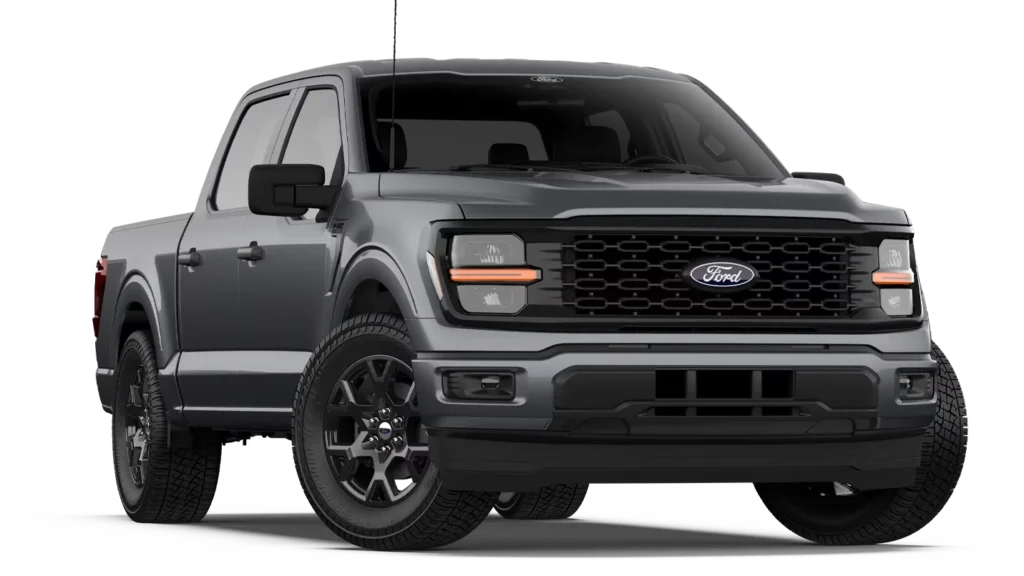
Ford isn’t sitting still. The automaker has laid out an aggressive plan to recover the lost production volume. According to Ford’s official Q1 2026 sales report, the company has:
- Eliminated summer shutdowns at its full-size truck plants, meaning those facilities will run continuously through the season rather than taking the traditional breaks.
- Added approximately 900 workers at its Dearborn Truck Plant in Michigan.
- Hired around 100 additional employees at the Kentucky Truck Plant, which handles Super Duty production.
The goal of these measures is to produce an additional 50,000 F-Series trucks to make up for the units lost during the aluminum shortage. Ford’s U.S. sales team has expressed optimism, pointing to the fact that F-Series sales figures actually improved throughout the quarter — March deliveries were stronger than January and February as new aluminum sources kicked in.
Meanwhile, Novelis has indicated it expects its Oswego hot mill to return to full capacity as early as May 2026, with the company also accelerating work on a brand-new plant in Bay Minette, Alabama. Once that facility is online in the second half of 2026, it will add meaningful new capacity to the U.S. aluminum supply chain.
What Ford Is Saying — and What Buyers Should Know
Ford has been candid about the road ahead. In its official Q1 report, the company stated it “expects the Novelis recovery plan to be uneven, with more volume recovery in the back half of the year.” Translation: don’t expect a sudden flood of new F-Series trucks at your local dealer in April or May. The real inventory recovery is likely to happen in Q3 and Q4 2026.
For buyers in the market for an F-150 or Super Duty right now, here’s what that means practically:
Inventory is tight, but improving. Dealers do have trucks, but popular configurations — especially higher trims and specific cab/bed combinations — may require a wait or a search across multiple dealerships.
Prices may hold firm. With supply constrained and demand strong, don’t expect significant discounts or dealer incentives on new F-Series trucks anytime soon. Ford and its dealers have less pressure to cut prices when inventory is lean.
The F-150 Lightning is gone for now. Adding to the complexity, Ford discontinued the Lightning electric truck ahead of a next-generation range-extended replacement. So buyers looking for an electric F-150 option currently have no new option available.
Ordering direct is your best bet. If you have flexibility on timing, placing a factory order for the exact configuration you want may be a smarter move than hunting for what’s on the lot.
The Bigger Picture: Supply Chain Risk in the Modern Auto Industry
The Ford-Novelis situation is a textbook example of the supply chain vulnerabilities that automakers have been grappling with since the semiconductor shortages of 2021–2022. A single supplier facility handling 40% of a critical raw material creates enormous concentration risk. When something goes wrong — whether it’s a fire, a natural disaster, or a geopolitical event — the effects ripple all the way to the dealership lot.
Ford has already signaled awareness of this problem. The new Novelis plant in Alabama will reduce dependence on the single Oswego facility. But the broader lesson for the industry is clear: diversifying supply chains is no longer optional, it’s a competitive necessity.
For the average F-150 buyer, the immediate takeaway is straightforward: your truck is coming, just maybe not as quickly as you’d like. Ford’s production is ramping up, the aluminum supply is healing, and by the time fall rolls around, F-Series inventory should be approaching more normal levels.
Until then, patience — and possibly a factory order — may be your best strategy.
Thinking about financing your next pickup? Use our Car Loan EMI Calculator to estimate your monthly payments before you visit the dealership. And if you’re weighing an electric F-150 replacement down the road, our EV vs Gas Cost Calculator can help you run the numbers.