
Something significant is happening in the American car market in 2026, and it’s not what many industry experts predicted a few years ago. Instead of a rapid shift to fully electric vehicles, American drivers are choosing hybrids — in record numbers.
Here’s a deep dive into why hybrids have become the hottest segment in the US auto market and what it means for car buyers like you.
The Numbers Don’t Lie
Electrified vehicles reached a record-high 26% of the US market in 2025, with that growth driven almost entirely by hybrid-electric powertrain growth. CarBuzz
That momentum is carrying into 2026. Across every major market research firm tracking US auto sales, hybrids are the bright spot in an otherwise challenging market environment.
Toyota continues to dominate hybrid sales, accounting for about 43% of all hybrid-electric vehicle sales in the US, followed by Honda, Ford, Hyundai, and Kia. CarBuzz
Why Are Americans Choosing Hybrids Over Full EVs?
Several factors have combined to make 2026 the year of the hybrid.
Gas Prices Are High — And Staying That Way
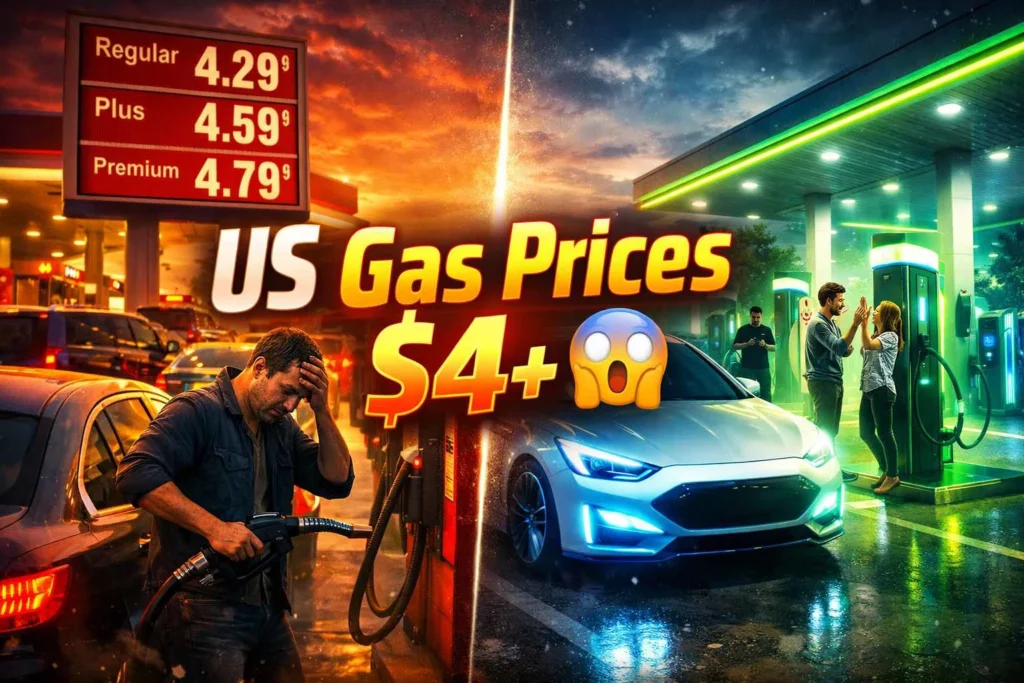
With the national average sitting above $4 per gallon, American drivers are feeling the pain at the pump every single week. Hybrids offer a direct, immediate solution: significantly better fuel economy without any charging infrastructure concerns.
A typical hybrid SUV gets 35-45 mpg in real-world driving compared to 25-30 mpg for its gas-only counterpart. At $4+ per gallon, those savings add up to hundreds of dollars a year for the average American driver.
Use our EV vs Gas Cost Calculator to see exactly how much a hybrid could save you compared to your current vehicle.
The Federal EV Tax Credit Is Gone
The elimination of the federal EV tax credit has made fully electric vehicles more expensive to buy upfront. Consumers are gravitating toward hybrids as a lower-cost, lower-commitment entry point into electrified driving, especially amid affordability pressures. CarBuzz
Hybrids typically cost less upfront than comparable full EVs, don’t require a home charger installation, and eliminate range anxiety entirely. For the average American buyer, that combination is extremely appealing right now.
No Charging Infrastructure Concerns
One of the biggest barriers to EV adoption in the US remains charging infrastructure — especially for drivers who live in apartments, rural areas, or places without easy access to Level 2 or DC fast chargers.
Hybrids sidestep this problem entirely. You fill up at any gas station, just like always, while still enjoying significantly better fuel economy from the electric assist.
Which Hybrids Are Americans Buying? 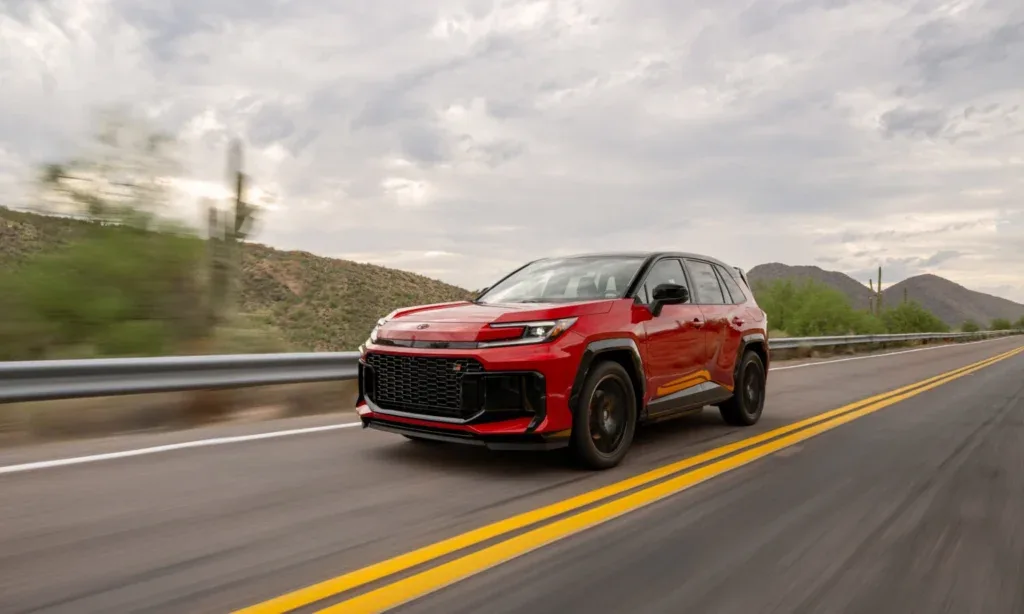
The hybrid market is dominated by a handful of proven, popular models:
Toyota RAV4 Hybrid The best-selling hybrid in America by a wide margin. Excellent real-world fuel economy, Toyota’s legendary reliability, and a practical SUV body make this a no-brainer for millions of buyers. The RAV4 Hybrid consistently sells out at dealerships nationwide.
Toyota Camry Hybrid America’s favorite sedan in hybrid form. The 2026 Camry Hybrid offers exceptional fuel economy in the mid-40s mpg and one of the most comfortable, refined rides in the segment.
Honda CR-V Hybrid Honda’s hybrid compact SUV has been a hit with buyers who want strong fuel economy in a practical package. The CR-V Hybrid competes directly with the RAV4 Hybrid and offers a slightly different driving character.
Ford F-150 PowerBoost Hybrid Even truck buyers are going hybrid. The F-150 PowerBoost is the best-selling hybrid truck in America, offering better fuel economy than any other full-size pickup while retaining full towing and hauling capability.
Hyundai Tucson Hybrid The Tucson won the 2026 Best Compact SUV for the Money award, praised as an easy daily driver and comfortable highway cruiser. U.S. News & World Report The hybrid version adds fuel efficiency to an already compelling package.
What’s Coming Next in the Hybrid Market?
The hybrid segment is only getting more competitive in the second half of 2026. New hybrid models arriving soon include:
- 2027 Subaru Forester Wilderness Hybrid — Off-road capability with 25% better fuel efficiency
- 2027 Kia Seltos Hybrid — An affordable compact SUV hybrid arriving later in 2026
- 2027 Chrysler Pacifica Plug-in Hybrid — The popular minivan continues with hybrid power
Every major automaker is now prioritizing hybrid variants of their most popular models. The message from American consumers is clear — they want better fuel economy without the full EV commitment.
Should You Buy a Hybrid in 2026?
If you’re on the fence about whether to buy a hybrid, a full EV, or a traditional gas vehicle, here’s a simple framework to help you decide:
Buy a Hybrid If:
- You drive a significant number of miles each year
- Gas prices are hurting your monthly budget
- You’re not ready to commit to an EV
- You want to save money without changing your routine
Buy a Full EV If:
- You have reliable home charging access
- Your daily driving is well within EV range
- You want zero tailpipe emissions
- You’re comfortable with the upfront cost without tax credits
Stick With Gas If:
- You drive very low miles per year
- You frequently take long road trips in areas with limited charging
- Upfront cost is your primary concern
Our EV vs Gas Cost Calculator can help you run the numbers for your specific situation — whether you’re comparing a hybrid, EV, or gas vehicle.
Final Thoughts
Traditional hybrids are well positioned to remain the primary driver of electrified growth in 2026, as affordability, ease of ownership, and a wide range of hybrid model options continue to resonate with mainstream buyers. CarBuzz
The hybrid revolution is here — and it’s not slowing down anytime soon. If you haven’t considered a hybrid for your next vehicle purchase, 2026 might be the perfect time to take a closer look.
Stay tuned to DriveGlobalNews.in for the latest hybrid car news, reviews, and buying guides for US drivers.
Already thinking about your next hybrid or EV purchase? Check our Car Loan EMI Calculator to plan your monthly payments.