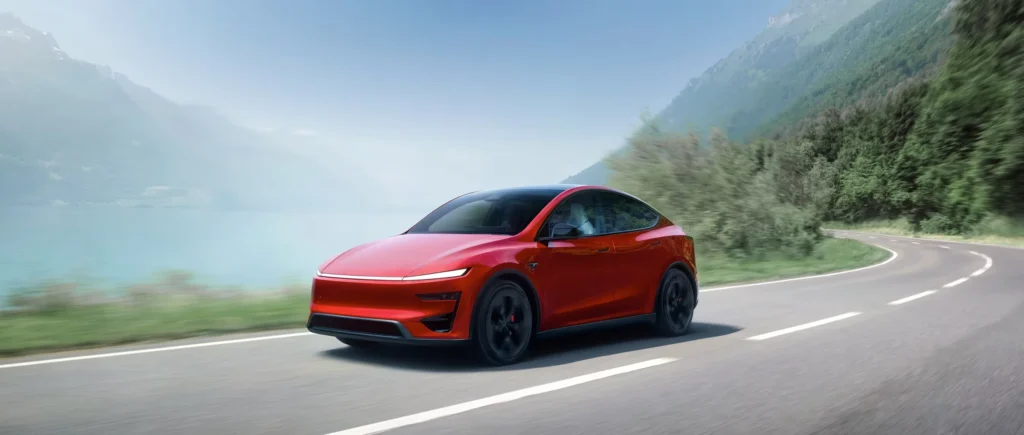
Tesla is developing a brand-new compact electric SUV that would be smaller and more affordable than anything the company currently sells — and the auto world is paying close attention. According to a Reuters report published April 9, 2026, four sources familiar with the matter confirmed that Tesla has already reached out to suppliers to discuss component specifications and manufacturing processes for this new vehicle. It would not be a variant of the existing Model 3 or Model Y, but an entirely new platform built from scratch.
If it reaches production, this could be the closest Tesla has ever come to delivering on its long-promised dream of a truly affordable electric car for the masses. But Tesla has said something like this before — and pulled the plug. Here’s everything known right now, and why cautious optimism is probably the right response.
What We Know So Far
According to Reuters’ sources, the new Tesla compact SUV would measure approximately 14 feet (4.28 meters) in length — significantly smaller than the Model Y’s 15.7 feet. To put that in perspective, it would be roughly the same size as a Honda HR-V or Hyundai Kona, making it a true subcompact crossover.
On pricing, two sources told Reuters the target would come in substantially below the Model 3’s $37,000 starting price in the U.S. — potentially landing under $30,000 before any incentives or discounts.
To hit that price point, Tesla plans to make some trade-offs. The new SUV would use a single electric motor rather than the dual-motor setup on most current Tesla models, and a smaller battery pack — which means shorter range than the Model Y’s 306–327 miles. Think of it as optimized for city driving and daily commutes rather than cross-country road trips.
Three of the four sources told Reuters that initial production would happen at Tesla’s Shanghai factory, with one source adding that Tesla also aims to eventually expand manufacturing to the United States and Europe. Production is not expected to begin in 2026.
Why This Would Be a Big Deal
If Tesla can actually deliver a sub-$30,000 EV with respectable range, it would land in a segment that is desperately underserved in the U.S. right now. The $7,500 federal EV tax credit expired in September 2025, making every EV effectively $7,500 more expensive overnight. At the same time, affordable small EVs have been disappearing from the American market — Volvo canceled the EX30 for the U.S., and the Chevy Bolt has had a turbulent existence.
Tesla’s brand recognition, Supercharger network access, and over-the-air software updates give it inherent advantages in any segment it enters. A genuinely affordable Tesla could bring hundreds of thousands of new buyers into the EV market — buyers who have wanted a Tesla for years but simply couldn’t stretch to $37,000-plus.
For comparison, Kia is targeting around $35,000 for the incoming EV3, and the Nissan Leaf starts around $31,500. A Tesla in that range — or below — would be a genuinely disruptive product.
Tesla’s History of Promising Cheap Cars (And Canceling Them)
Before getting too excited, it’s worth remembering Tesla’s track record on affordable vehicles.
For years, Elon Musk promised a $25,000 EV widely nicknamed the “Model 2.” It was supposed to democratize electric driving the way the Model 3 did for the premium segment. Then in 2024, Tesla abruptly scrapped the entire program. Musk declared it “pointless” and “silly” to build a traditional affordable EV when self-driving vehicles were supposedly on the horizon. The company pivoted hard to robotaxis, humanoid robots, and autonomous technology.
When more affordable Teslas did finally arrive in late 2025, they were stripped-down Standard trim versions of the existing Model 3 and Model Y — starting at $37,000 and $39,990 respectively. Far from the $25,000 dream.
Meanwhile, Tesla’s sales have been in decline. The company peaked at 1.81 million deliveries in 2023, dropped to 1.79 million in 2024, and fell further to 1.636 million in 2025. Q1 2026 deliveries of 358,000 units missed analyst expectations once again. The pressure to find new buyers is real.
The Autonomous Angle: More Than Just a Cheap Car 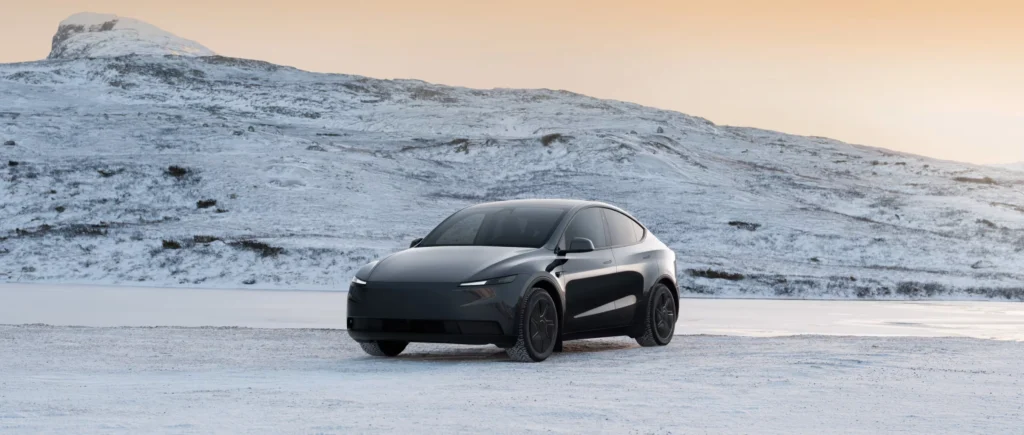
One interesting detail from Reuters’ report is how Tesla employees describe the new vehicle’s intended purpose. A Tesla employee told Reuters that the new car is meant to be “driverless but offer a human-driven option” — suggesting this isn’t simply an affordable Model Y for budget buyers, but rather a vehicle designed to eventually function as an autonomous unit that can also be driven conventionally.
That dual-purpose philosophy reflects where Tesla sees the market in global regions where full autonomy won’t be legally permitted for years. The company is developing the Cybercab robotaxi for markets like Austin, Texas where it has started limited operations, but it recognizes that most of the world needs a traditional steerable car with a steering wheel and pedals for the foreseeable future.
Should You Wait for It?
The short answer: don’t hold your breath for 2026 delivery, but keep it on your radar.
The project is at an early development stage. Reuters confirmed that none of its sources expect production to begin this year. Even with Tesla’s rapid manufacturing capabilities, a brand-new platform typically takes 18 to 24 months from first supplier contact to the start of production — and that assumes no program changes or cancellations. Given Tesla’s history, a 2027 or 2028 launch would be optimistic.
If you’re in the market for an affordable EV right now, alternatives like the incoming Kia EV3 (targeting $35,000, arriving late 2026), the Nissan Leaf, or the Chevy Bolt may be more immediate options. But if you’re willing to wait, and Tesla actually delivers on this compact SUV at a sub-$30,000 price, it would be one of the most significant EV launches in years.
The affordable Tesla dream is alive again. Just don’t plan the test drive quite yet.
Wondering how much you’d save driving a compact EV daily compared to your current gas car? Our EV vs Gas Cost Calculator gives you real numbers in seconds. And when Tesla does confirm pricing, our EV Tax Credit Calculator 2026 will help you figure out what you’d actually pay out of pocket.