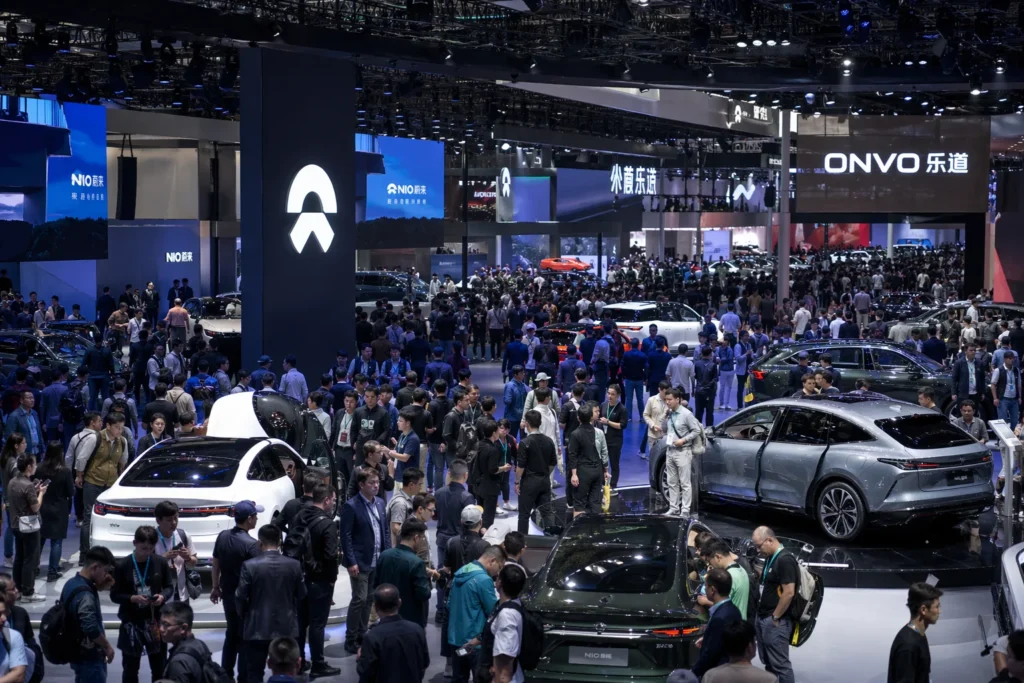
2026 Beijing Auto Show Opens : The world’s most important automotive event just got even bigger. The 2026 Beijing International Automotive Exhibition — better known as Auto China — officially opens its media days on April 24, 2026, and by every measure it is the largest auto show on earth. The numbers are staggering: 1,451 vehicles on display, 181 world premiere models, 71 concept cars, and a total exhibition area of 380,000 square meters spread across two venues for the first time in the event’s history. For context, the New York International Auto Show — itself a major global event — occupies roughly 100,000 square meters. Beijing is nearly four times its size this year.
But the Beijing show isn’t just big. It’s arguably the most strategically important automotive event of 2026 for one simple reason: China is now the center of global EV innovation, and what launches in Beijing today shapes what the rest of the world drives tomorrow.
Why Beijing Matters More Than Ever
A generation ago, the Beijing Auto Show was primarily a place for Western automakers to launch right-hand-drive variants of Western-designed cars in China’s fast-growing market. That dynamic has been inverted. Today, China sells over 34 million vehicles annually — more than the U.S. and Europe combined — with EVs accounting for more than 50% of new car sales. Chinese manufacturers exported over 7 million vehicles globally in 2025, with that number growing.
The result is that virtually every major automaker — BMW, Mercedes-Benz, Volkswagen, Toyota, Ford, Honda, Nissan — now develops vehicles specifically designed for and in China, with Chinese technology inside, at Chinese development speed. The phrase circulating among industry analysts is “in China, for China and the world.” Products that launch in Beijing increasingly preview what Western markets will receive years later.
For American car buyers, this matters for several reasons: the EV technology being showcased in Beijing — battery chemistry, charging speeds, AI-integrated driver assistance, software-defined vehicle architectures — represents the competitive benchmark that U.S. automakers must eventually match. And in several cases, the vehicles being launched today will reach American shores sooner than many expect.
Major International Brand Launches
Volkswagen Group is arriving with one of the most aggressive “in China for China” strategies of any Western automaker. Key debuts include the ID.ERA 9X — a large electric SUV developed with Chinese partner SAIC — the ID.UNYX 08/07 developed with local engineers in just 24 months (a speed essentially impossible at VW’s traditional pace), and the AUDI E7X from the new AUDI Four Letters brand designed specifically for Chinese premium buyers. The Jetta X concept previews a new vehicle from VW’s dedicated Chinese sub-brand.
BMW is showcasing the iX3 Long Wheelbase and i3 Long Wheelbase — extended body versions of models that have proven wildly popular in China’s preference for larger rear-seat dimensions. The BMW presentations will emphasize software-defined vehicle features developed with Chinese technology partners.
Mercedes-Benz is presenting the GLC Long Wheelbase alongside updates to its EQ electric family that incorporate Chinese-developed AI features and connectivity systems not yet available on U.S.-market Mercedes vehicles.
GM’s Chinese operations (Buick and Cadillac) are bringing the ELECTRA E7 and Cadillac VISTIQ — both developed primarily for the Chinese market but potentially previewing future North American offerings.
Ford has a presence focused on its commercial vehicle business, reflecting the brand’s strategic recalibration in China after pulling back from passenger car sales.
Chinese Brand Highlights: The Real Show 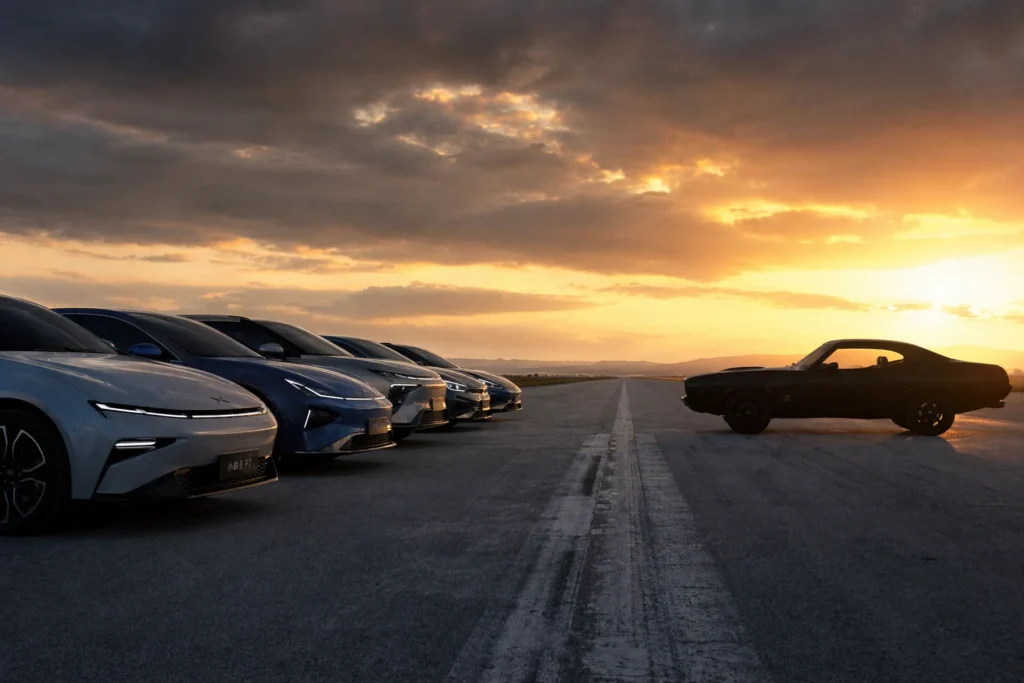
The most significant unveilings at Beijing this year come from Chinese brands, and they deserve American attention even if they’re not yet for sale in the U.S.
BYD — the world’s largest new energy vehicle manufacturer — is showcasing the Seal 08 with second-generation Blade Battery technology, and the large Sealion 08 SUV. BYD’s flash charging network and battery technology are setting global benchmarks (covered in our separate article today).
NIO is presenting all three of its brands — NIO, Onvo, and Firefly — at the same booth for the first time. The recently launched 100,000th third-generation ES8 is a milestone moment for the brand.
Xpeng, Li Auto, Xiaomi, and Huawei-backed Aito are all presenting their latest AI-driven EV platforms. Xiaomi’s second vehicle is generating significant attention given the brand’s success with its first model, which sold out initial production almost instantly.
CATL — the world’s dominant battery manufacturer — is holding a separate Tech Day event with what company management described as “the densest lineup of new and updated technologies announced at a single event ever,” including the third generation of its Shenxing supercharging battery capable of 15C charging rates.
What This Means for U.S. Car Buyers
The Beijing show has direct and indirect implications for Americans shopping for cars in 2026 and beyond.
Battery technology competition pressure. The charging speeds and energy density being showcased by BYD, CATL, and others are the benchmarks that American and European automakers must eventually match to compete globally. Tesla’s Supercharger network at 250 kW and most domestic EVs at 150-200 kW DC fast charging are already behind what Chinese mass-market vehicles are beginning to deploy.
Software-defined vehicles. The integration of Chinese AI platforms — Huawei, Alibaba, Baidu — into vehicles from brands like VW, BMW, and Mercedes is creating product tiers that are specifically more advanced than what those brands offer in the U.S. This creates pressure on global automakers to accelerate their U.S. market software roadmaps.
Potential future arrivals. Several Chinese brands have announced global expansion intentions. BYD is building European manufacturing and has export operations across Southeast Asia and Latin America. While U.S. tariffs currently block most Chinese vehicles from the American market, the technology being displayed in Beijing represents the competitive landscape that American consumers will eventually encounter.
The Beijing Auto Show opened today. Watch it carefully — it’s showing you where the car industry is heading.
aslo read https://driveglobalnews.in/2027-subaru-forester-wilderness-hybrid-rugged/
Interested in EVs with the best charging technology? Our EV Charging Cost Calculator shows monthly costs for current US EVs. Use our EV vs Gas Cost Calculator to compare total running costs, and our Car Ownership Cost Calculator for the full annual picture.