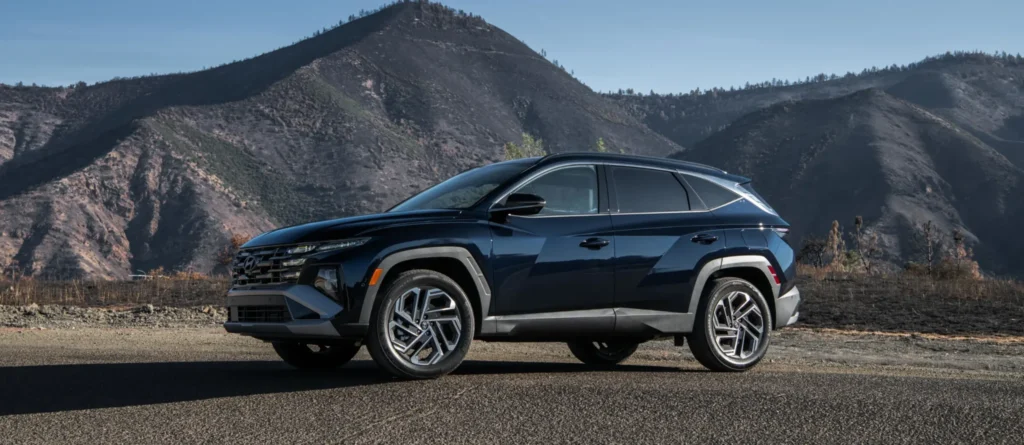
2026 Hyundai Tucson PHEV Review : The 2026 Hyundai Tucson PHEV sits at an interesting crossroads in the compact SUV market. It offers the convenience of an all-electric daily commute for most drivers, the zero-range-anxiety of a gas engine for longer trips, and a charging cost that’s a fraction of what gas costs — all wrapped in one of the most refined compact SUV packages available today. The Limited AWD version, priced at $50,140, arrives at a price point that initially surprised Auto Channel reviewer David Colman. “I was profoundly surprised to discover the $50,140 bottom line,” he wrote. But after a week of driving, his assessment shifted: the Tucson PHEV justifies its premium in ways that the sticker alone doesn’t convey.
Here’s the complete story on the 2026 Tucson PHEV — what it offers, what it costs, and whether a plug-in hybrid is the right choice for you right now.
What Is a PHEV and Why Choose One?
A plug-in hybrid electric vehicle (PHEV) combines the best of both EV and gas-hybrid worlds. Unlike a conventional hybrid that charges only through regenerative braking, a PHEV has a battery large enough to run purely on electricity for a meaningful distance — then seamlessly transitions to hybrid gas operation when the battery depletes.
For most American drivers who commute 20–40 miles daily and charge at home overnight, the PHEV proposition is compelling: most weekday driving happens entirely on electricity, at roughly $0.03–0.05 per mile cost versus $0.12–0.15 per mile for gas. Weekend road trips and longer hauls use the gas engine, so there’s no range anxiety. The result is dramatically lower fuel costs for daily drivers while maintaining the flexibility of gas for anything else.
The 2026 Tucson PHEV delivers 33 miles of EPA-estimated pure electric range — enough for most daily commutes with electricity to spare. The average American commuter drives approximately 27 miles round trip per day, meaning many Tucson PHEV drivers could go weeks without burning a drop of gasoline.
Powertrain: 261 HP Hybrid System
The Tucson PHEV uses a 1.6-liter turbocharged four-cylinder engine combined with a plug-in hybrid electric motor, producing a combined system output of 261 horsepower and 258 lb-ft of torque — a significant step up from the standard Tucson Hybrid’s 227 hp. All-wheel drive is standard on the PHEV, using Hyundai’s HTRAC AWD system that can distribute torque between axles electronically.
The 13.8 kWh battery enables the 33-mile EV range. Level 2 (240V) charging replenishes the battery in approximately 2 hours at home — plug in when you arrive home, and you have a full charge by bedtime. A standard 120V Level 1 outlet charges overnight as well, though more slowly.
When the battery depletes and the system transitions to hybrid operation, fuel economy is approximately 35 MPG combined — competitive with the best non-plug-in compact SUV hybrids. For drivers who charge regularly, the effective combined fuel cost is dramatically lower than any gas-only vehicle.
Interior: Hyundai’s Best Compact SUV Cabin 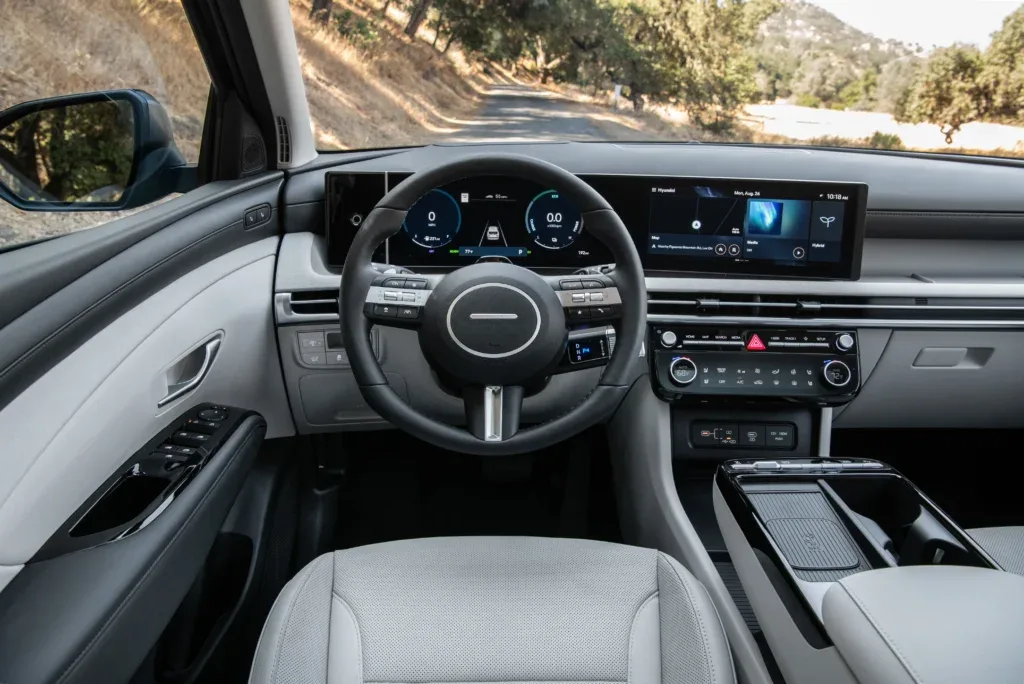
The 2026 Tucson received a mid-cycle refresh that lifted its interior quality meaningfully. The Limited AWD tested by Auto Channel comes with a 10.25-inch digital driver display and a 10.25-inch center touchscreen with Hyundai’s latest infotainment software — wireless Apple CarPlay, Android Auto, and over-the-air update capability.
Front seats are heated and ventilated. A panoramic sunroof and Bose premium audio system are standard on the Limited trim. The dashboard layout is clean and logical, with physical climate controls supplementing the touchscreen — a design choice that reflects Hyundai listening to customers who disliked having everything buried in software menus.
Rear passenger space is excellent for the segment. Cargo capacity behind the rear seats measures approximately 39 cubic feet — the PHEV battery pack does reduce this slightly compared to the standard Tucson, but the reduction is modest and the remaining space handles typical family use comfortably.
Safety is standard-setting: the 2026 Tucson PHEV was named the 2026 Best Compact SUV for the Money by U.S. News, in part due to its comprehensive standard safety suite including forward collision avoidance, lane keeping assist, blind-spot monitoring, rear cross-traffic alert, and Highway Driving Assist.
The Pricing Question: Is $50,140 Fair? 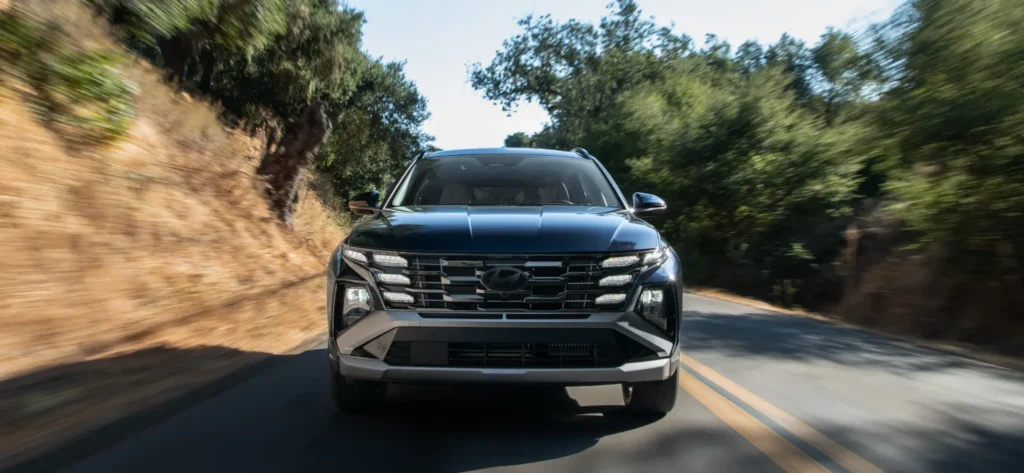
The Limited AWD PHEV at $50,140 is, as the reviewer noted, a surprising number for a compact SUV. It is roughly $13,000–$15,000 more than a comparably equipped standard Tucson gas model, and about $7,000 more than the Tucson Hybrid SEL.
The calculus for justifying that premium comes down to your driving situation:
If you charge at home and have a daily commute under 33 miles, the fuel savings are substantial. A driver avoiding 10,000 miles of gas driving per year at $4/gallon saves approximately $1,600 annually in fuel alone. Over five years of ownership, that’s $8,000 in fuel savings — substantially closing the premium gap. State EV incentives and utility rebates for home charger installation in several states can add further savings.
If you don’t charge regularly — relying on public charging stations or never plugging in — the PHEV simply operates as a hybrid, and the extra cost for the larger battery is harder to justify. The standard Tucson Hybrid at a lower price would be the better choice.
Hyundai’s 10-year/100,000-mile powertrain warranty covers the PHEV system and provides a meaningful buffer against concerns about long-term hybrid component costs.
also read https://driveglobalnews.in/byds-9-minute-charging-battery-is-a-wake-up/
How It Compares
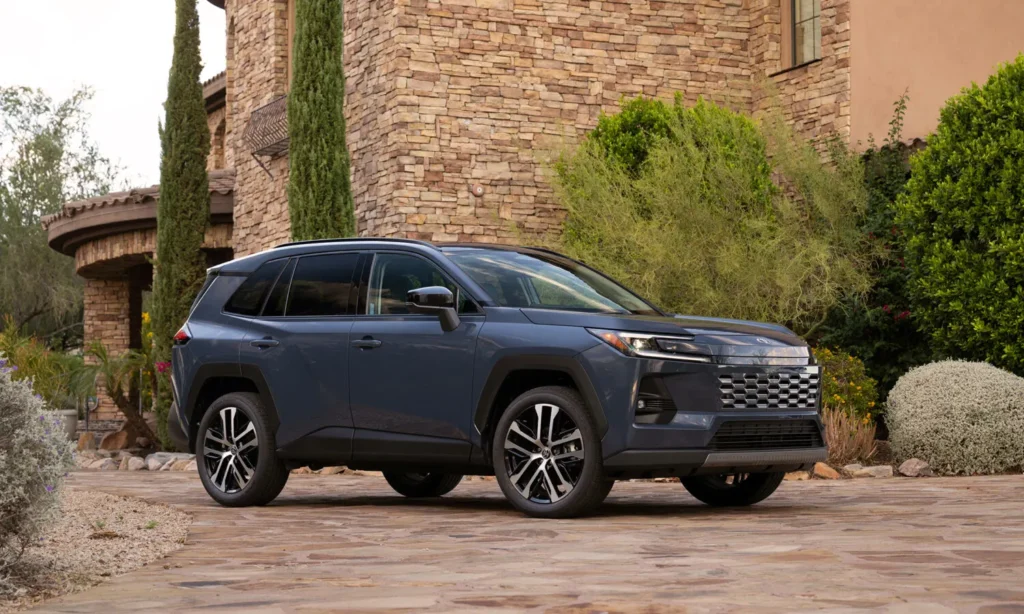
Toyota RAV4 Prime — the segment benchmark plug-in, starting around $42,000 with 42 miles of EV range and 302 HP. Better EV range and performance, lower starting price. The RAV4 Prime is the Tucson PHEV’s primary competitor.
Ford Escape PHEV — starts lower around $37,000 but offers only 37 miles of EV range and less power. The Tucson PHEV’s interior quality advantage is notable.
Kia Sportage PHEV — corporate sibling, similar specs at a slightly lower price. The Tucson has a modest interior quality edge.
Honda CR-V PHEV — excellent reliability reputation, 40 miles of EV range, but less powerful at 212 HP.
The Tucson PHEV Limited AWD at $50,140 is priced at the premium end of the segment. For buyers who prioritize interior quality, Hyundai’s warranty, and the HTRAC AWD system, the premium is defensible. For buyers focused purely on EV range or lowest entry cost, the RAV4 Prime remains the segment leader.
Bottom Line
The 2026 Hyundai Tucson PHEV is a genuinely excellent plug-in hybrid compact SUV — refined, well-equipped, and capable of dramatically reducing fuel costs for daily commuters who charge at home. The $50,140 Limited AWD price requires justification, and for buyers who commute within the EV range and charge nightly, that justification exists in the form of multi-year fuel savings.
For buyers unsure about full EV ownership, the Tucson PHEV is an ideal transition vehicle: you get EV efficiency for daily driving, no range anxiety, and a gas engine safety net that makes it feel as flexible as any conventional car.
Considering the Tucson PHEV? Our EV vs Gas Cost Calculator shows your actual fuel savings compared to a gas SUV at $4/gallon. Our Car Loan EMI Calculator estimates your monthly payment. Use the Car Ownership Cost Calculator for total annual cost, and our EV Charging Cost Calculator to see what charging at home would cost you monthly.