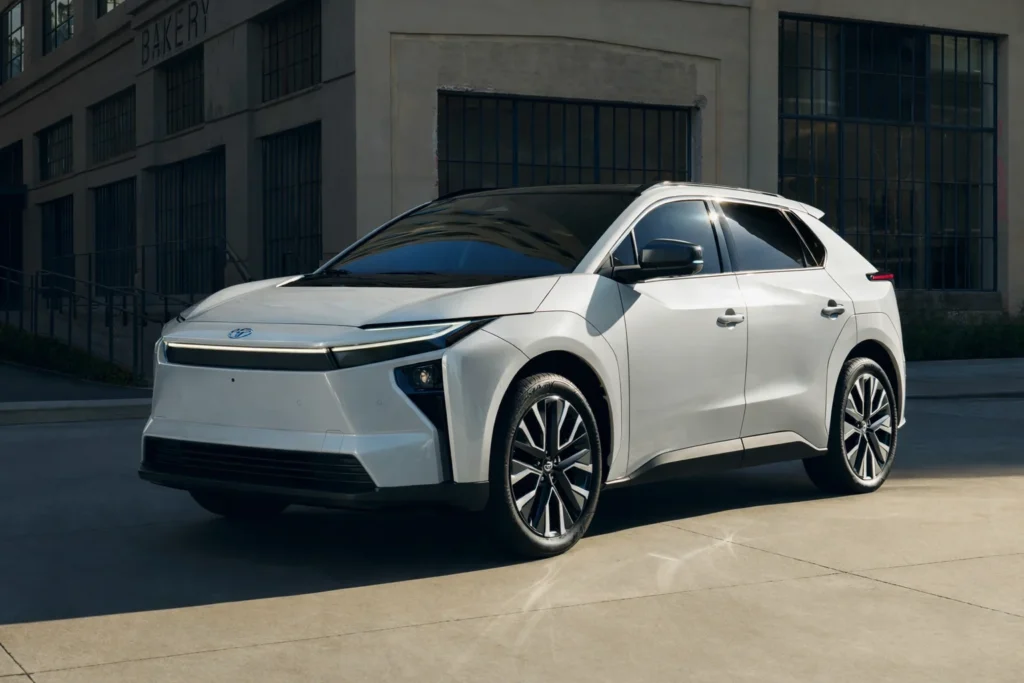
2026 Toyota bZ Review : Not many people saw this coming. Toyota — the brand that spent years being criticized for dragging its feet on battery-electric vehicles — has quietly produced one of the most compelling EV values in the United States for 2026. The 2026 Toyota bZ (formerly known as the bZ4X) has been on sale since late 2025, and the numbers tell a story that’s getting harder to ignore: in the first quarter of 2026, Toyota sold over 10,000 bZ units in the U.S. — outselling the Chevy Equinox EV and beating out every Ford EV combined.
First drive reviews from Tom’s Guide, InsideEVs, and Edmunds are landing this week, and the consensus is surprisingly enthusiastic: the 2026 bZ is a genuine step change from its troubled predecessor, offering real-world range that exceeds its EPA estimate, a driving experience that is lighter and more agile than expected, and a starting price of $37,900 that undercuts many key rivals.
Here’s the full breakdown of what the 2026 Toyota bZ gets right — and what one key criticism still holds it back.
What Changed From the bZ4X
The original Toyota bZ4X was, by Toyota’s own standards, a rare stumble. Critics dinged it for below-average range (just 252 miles maximum), slow charging speeds, mediocre cold-weather performance, and a 2022 recall for a wheel-detachment issue. A 2025 software update addressing a defroster problem further hurt the model’s reputation. Toyota was transparent: they knew the bZ4X needed a major rethink.
The 2026 bZ is that rethink. Here’s what’s changed:
Battery and range: The new 74.7 kWh battery (up from 71.4 kWh) enables up to 314 miles of EPA-estimated range on the XLE FWD Plus trim — a 25% improvement over the outgoing model’s best figure. A base model with a smaller 57.7 kWh battery starts with 235 miles of range.
Power: AWD models receive a massive upgrade — 338 horsepower, up from just 214 hp on the outgoing bZ4X AWD. FWD models gain 20 hp to reach 221 hp. The AWD bZ is genuinely quick.
Charging: The old CCS port is gone, replaced by a native NACS port — full Supercharger network access, no adapter required. Maximum fast charge speed is 150 kW, which is midpack by 2026 standards, but the charging curve has been meaningfully improved. Importantly, the bZ can now fast charge multiple times in a single day — a basic capability its predecessor embarrassingly lacked.
Design: The exterior gets a sleeker front end, and the interior receives a major update — a new 14-inch multimedia screen as standard across all trims, a redesigned center console, customizable 64-color ambient lighting, and a lighter, less claustrophobic cabin layout compared to the bZ4X’s cockpit-style interior.
Price: Starting at $37,900 — down from the 2024 bZ4X’s $43,070 starting price. A $5,170 reduction in a market where most EVs have been rising in price is significant.
also read https://driveglobalnews.in/2027-kia-telluride-hybrid-completely-redesigned/
What First Reviewers Are Saying
Tom’s Guide tested the XLE FWD Plus trim for a full week and came away with a finding that genuinely surprised them: in real-world driving, the bZ averaged 5.4 miles per kilowatt-hour — the highest efficiency of any EV the reviewer has tested to date, beating the previous record of 4.5 mi/kWh held by the Hyundai Kona Electric. At that efficiency rate, the reviewer calculated a theoretical real-world range of approximately 403 miles from the 74.7 kWh battery — well beyond the 314-mile EPA estimate.
The reviewer noted the bZ feels “like a diamond in the rough I didn’t expect to shine this brightly,” pointing to the spacious interior, refined ride quality, and surprisingly agile handling for a vehicle in this weight class.
InsideEVs praised the driving character specifically: “Engineers put real thought into how this car handles, and it shows on the road.” At 4,057 pounds, the bZ is notably lighter than EV crossover rivals from Chevy and Hyundai, and the chassis tuning reflects that — the car moves with a lightness and precision that feel very Toyota.
The one remaining criticism: DC fast charging speed. At 150 kW maximum, the bZ charges more slowly than the Hyundai Ioniq 5’s 800-volt architecture (which charges at up to 350 kW) or Rivian’s R2 (217 kW). For most daily driving and overnight home charging, this is irrelevant. For frequent road trippers who rely on DC fast charging, it is a real limitation. Toyota engineers have acknowledged the feedback and indicated improvements are being worked on for future generations.
The Numbers: How It Compares
| Toyota bZ | Hyundai Ioniq 5 SE | Chevy Equinox EV | |
|---|---|---|---|
| Starting Price | $37,900 | $35,000 | $36,495 |
| Max Range | 314 mi | 318 mi | 319 mi |
| Max Power | 338 hp (AWD) | 320 hp | 213 hp |
| Fast Charge | 150 kW | 350 kW | 150 kW |
| Network Access | NACS (Supercharger) | NACS | NACS |
The bZ is competitive on price and range against its key rivals. Its efficiency advantage in real-world testing is a meaningful differentiator. The charging speed gap with the Ioniq 5 remains real, but for buyers who charge primarily at home — the majority of EV owners — it is not a daily obstacle.
Toyota’s Expanding EV Lineup
The 2026 bZ is not Toyota’s only new EV push. The brand has launched three electric SUVs in the U.S. this year: the bZ, the compact C-HR electric, and the adventure-oriented bZ Woodland variant. Later in 2026, Toyota’s three-row Highlander BEV will arrive — the brand’s first full-size three-row electric SUV for the American market.
This is a significant shift for a brand that was publicly skeptical of all-electric vehicles as recently as 2023. Toyota is no longer sitting out the EV race. Whether it’s doing so because of genuine strategic conviction or competitive necessity, the 2026 bZ suggests the brand knows how to make a good EV when it commits to doing so.
Should You Buy the 2026 Toyota bZ? 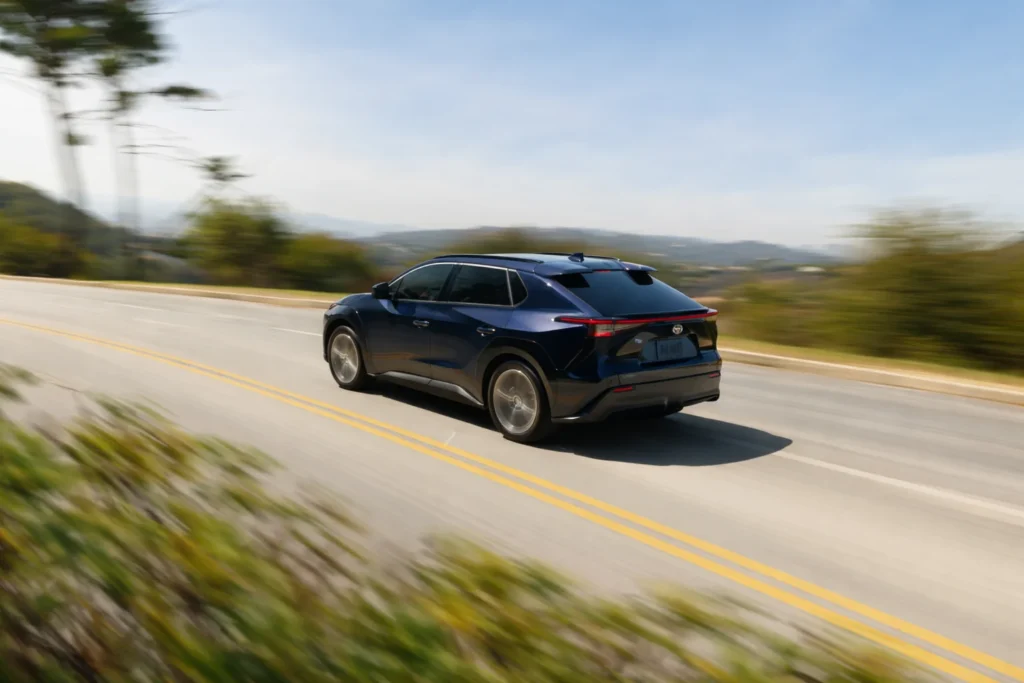
If Toyota reliability matters to you — and for many American buyers, it matters enormously — the 2026 bZ is now a legitimate consideration. With 314 miles of range, real-world efficiency that exceeds the EPA estimate, Supercharger network access, and a starting price under $38,000, it checks the core boxes.
Toyota is also currently offering up to $7,500 off plus 0% APR financing on the bZ lineup — making the effective entry price for some trims approach $30,000. That is a genuinely competitive position in the current EV market.
The bZ is not the most exciting EV to drive, nor the fastest to charge. But for a buyer who wants the most reliable, efficient, and practically sorted electric crossover they can find at a fair price, the 2026 Toyota bZ deserves serious consideration — and it’s getting it, one 10,000-unit quarterly sales report at a time.
Considering the Toyota bZ? Our EV Charging Cost Calculator shows what monthly electricity costs would look like. The EV vs Gas Cost Calculator compares long-term running costs, and our Car Loan EMI Calculator helps you plan monthly payments. Don’t miss our Car Ownership Cost Calculator for total annual cost comparison.