Here is the most expensive habit in American personal finance that nobody talks about.
It’s not buying coffee every morning. It’s not paying for streaming services you don’t use. It’s not even the gym membership collecting dust.
It’s staying with the same car insurance company year after year without getting a single competing quote.
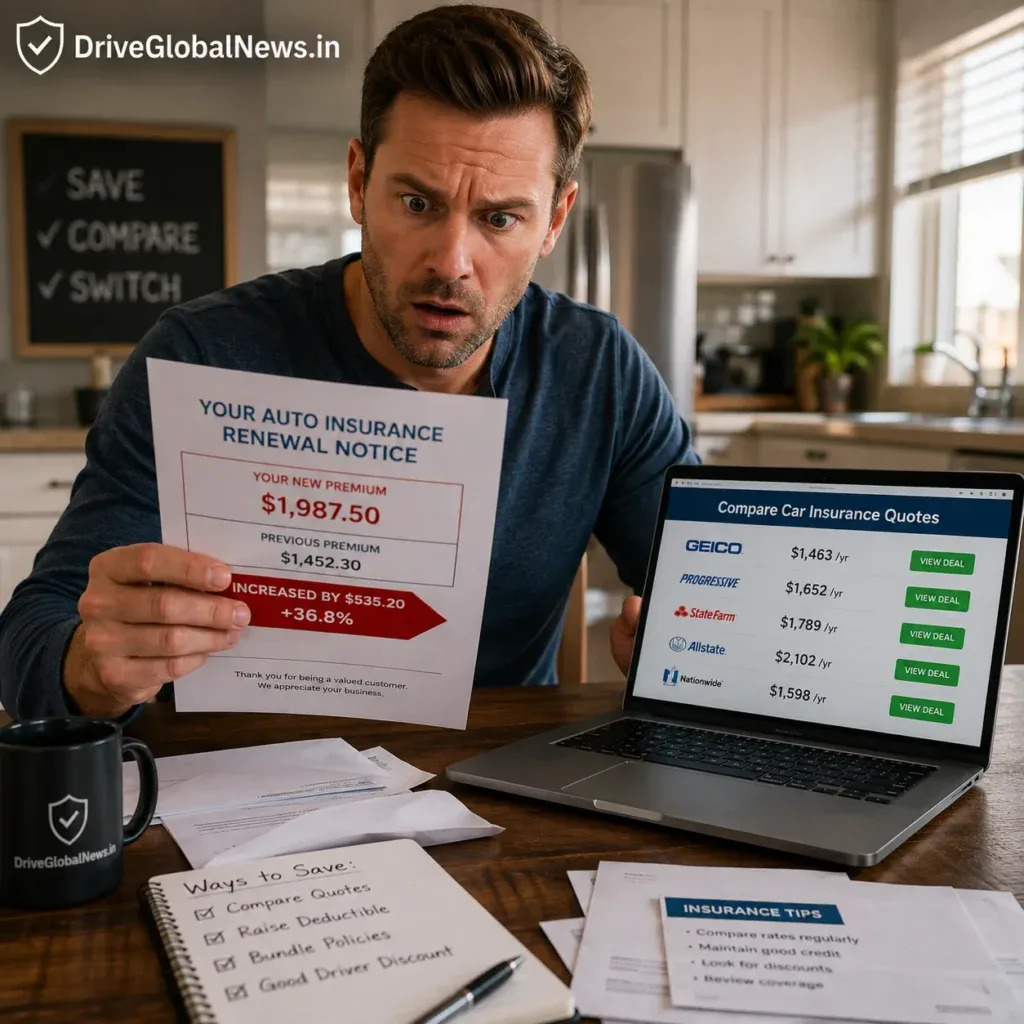
CarInsurance.com published a survey this year that contains a number so stunning it should be in every personal finance textbook. Nearly two-thirds of American drivers saw their car insurance rates increase in the past 12 months. And of those people — the ones who watched their bill go up, often without explanation, often without notice — 87% did nothing. Didn’t call. Didn’t shop. Didn’t switch. Just renewed.
87 percent.
They paid more. For the same coverage. From the same company. Because that’s what most people do with insurance.
Here’s what that habit is actually costing them — and what the data says about how to stop.
The Math of Staying Put
Car insurance companies are not charities. They are businesses with sophisticated actuarial departments that have calculated, with precision, how likely you are to shop around at renewal time.
The answer they’ve calculated: not very likely. The 87% figure proves it.
Insurance pricing in America operates on what industry analysts call “price optimization” — a practice where insurers use data to identify customers who are unlikely to leave, and gradually increase those customers’ rates more aggressively than they would otherwise. If you’ve been with the same company for four years and never requested a competing quote, your insurer has data suggesting you’ll accept a higher renewal rate than a newer customer would.
Your loyalty is being monetized against you.
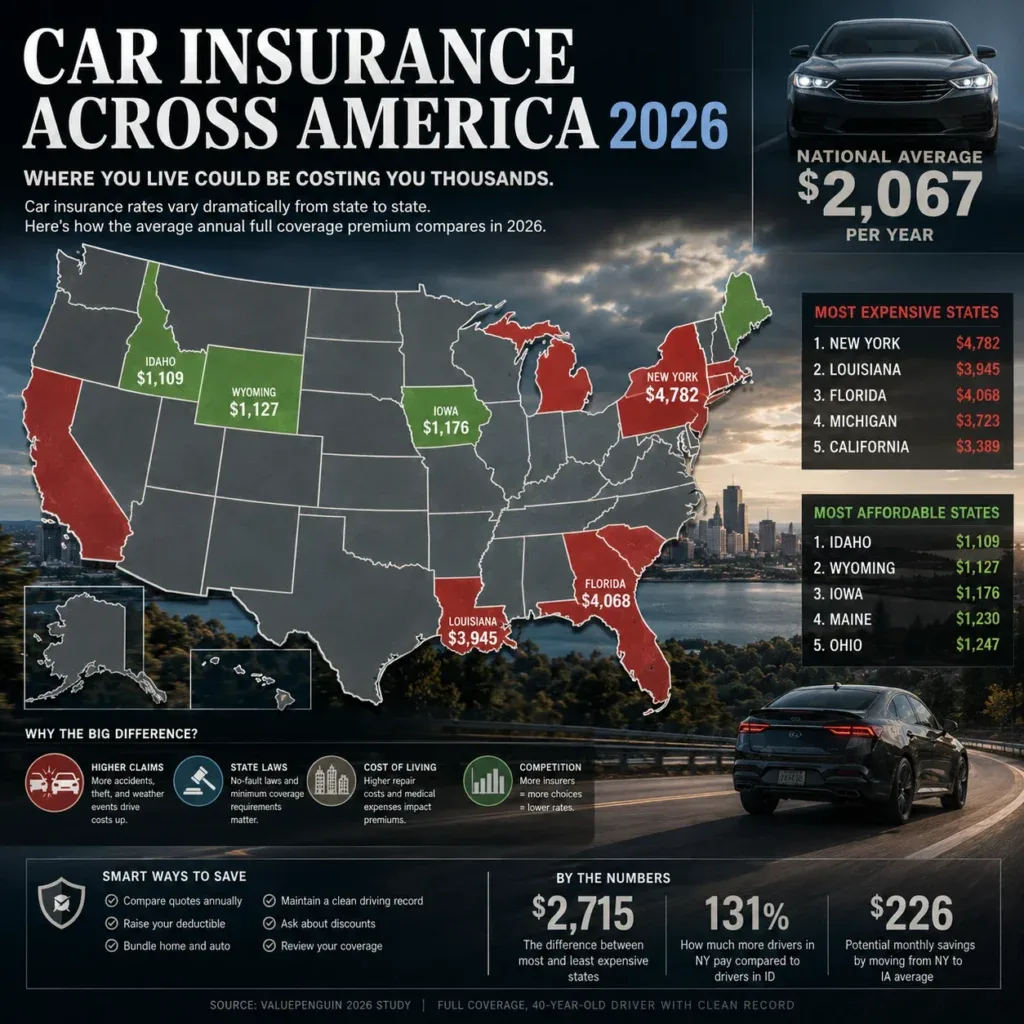
The national average cost of full coverage car insurance in 2026 sits at $208 per month according to ValuePenguin’s comprehensive state report — $2,496 per year. But that national average is a blend of new customers who shopped aggressively and long-term customers who are paying rates set years ago and incrementally increased since.
The gap between what a careful shopper pays and what a passive renewal customer pays averages $700 to $1,100 per year, according to multiple industry analyses. For a $2,496 annual premium, that means the average American who hasn’t shopped recently is paying somewhere between 28% and 44% more than they need to.
What’s Actually Happening to Rates Right Now
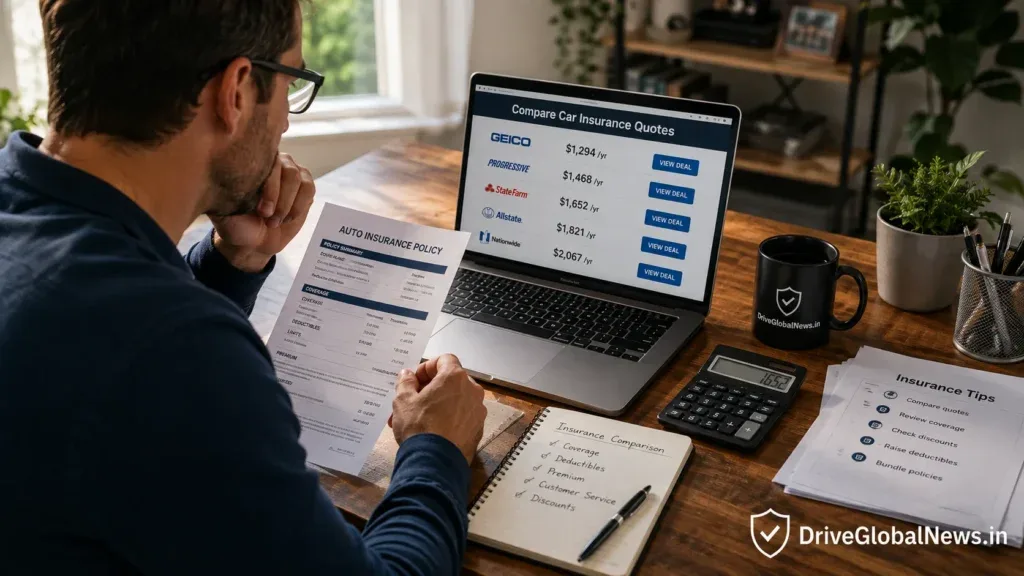
The insurance market in August 2026 is more favorable for shoppers than at any point since 2022.
After a brutal three-year stretch — premiums rose 46% between 2022 and 2024 — the market stabilized in 2025. Rates fell nationally by about 6% as insurers who had rebuilt their financial margins began competing for new customers rather than simply raising prices on existing ones. In 2026, Insurify projects the national average will increase just 1% — the smallest projected rise since before inflation hit.
That stabilization matters because it creates genuine competitive pressure between insurers. Five of the ten largest car insurance companies in America are expected to lower their rates in 2026 according to ValuePenguin’s analysis. State Farm and Liberty Mutual both cut rates. Country Financial offers liability coverage starting at just $42 per month — the cheapest of any major national insurer, according to Insurify’s current data.
When multiple large insurers are actively cutting rates to acquire new customers, the shopper wins. The person who renews automatically wins nothing.
The State-by-State Reality That Makes Switching Even More Urgent
The national average obscures enormous variation that changes the calculation depending on where you live.
The states getting worse: Washington D.C. ($3,601 annually), New Jersey (rates up 20% in 2025 and still rising), Rhode Island, Maryland. If you live in these states and haven’t shopped recently, the combination of rising market rates and insurer loyalty pricing means you are almost certainly significantly overpaying.
The states getting better: Wyoming (rates fell over 20% in 2025), Iowa (projected 6.19% decrease in 2026), Arkansas (over 20% decrease last year), North Dakota (down over 8% recently — The Zebra confirmed this week that Florida is also seeing decreases in 2026, a rarity for one of America’s most expensive insurance states).
If you’re in a state where rates are declining, your insurer should be passing that decrease to you at renewal. If they’re not — and many won’t without being prompted — you’re subsidizing their margin while your neighbors who shopped are benefiting from the market correction.
The Five Specific Actions That Work in August 2026
Get competing quotes this week — not at renewal. The conventional wisdom says to shop 30 days before renewal. The better advice: shop now. If you find a significantly cheaper rate, most insurers will let you cancel your current policy with a prorated refund and switch immediately. You don’t have to wait for a renewal date to capture savings.
Start with Country Financial and Travelers. Country Financial at $42 per month for liability is the current cheapest option nationally. Travelers is consistently the cheapest for full coverage at competitive rates. These two should be your baseline before evaluating others.
Ask your current insurer one specific question. Before you assume switching is required, call your current company and say: “I’ve received a competing quote for significantly less money. What can you do on my renewal rate?” Some companies have retention departments empowered to match or approach competing rates. Most people never ask. The answer sometimes surprises them.
Check your coverage levels against your current vehicle value. The standard recommendation applies: if your annual collision and comprehensive premium exceeds 10% of your car’s current market value, you’re over-insured. A paid-off 2019 Honda CR-V worth $18,000 needs full coverage. A paid-off 2016 Civic worth $8,000 might not. Dropping collision and comprehensive on a low-value vehicle saves $400-$800 annually at most insurers.
Enroll in telematics if you’re a safe driver. Progressive Snapshot, State Farm Drive Safe & Save, and Liberty Mutual’s RightTrack all offer discounts up to 30% for demonstrated safe driving behavior. The programs track your actual driving — not your record, not your demographics. If you drive carefully and conservatively, these programs pay. Consistently. The 87% of Americans who didn’t switch after a rate increase almost certainly aren’t enrolled in telematics either.
The Real Problem Isn’t the Insurance Industry
It’s easier to blame insurance companies for the 87% who overpay and do nothing.
But the insurance industry doesn’t hide any of this. The competing quotes are available online in minutes. The discounts are listed on every insurer’s website. The ability to switch at any point — not just at renewal — is standard in every state.
The real problem is that most people treat car insurance like a utility bill. Something to set up once and pay forever without reviewing. Gas, electric, phone — you pay them and move on.
Car insurance isn’t a utility. It’s a negotiated financial product in a competitive market. The people who treat it like one pay accordingly. The 87% who don’t pay the price for that assumption — literally — every single month.