
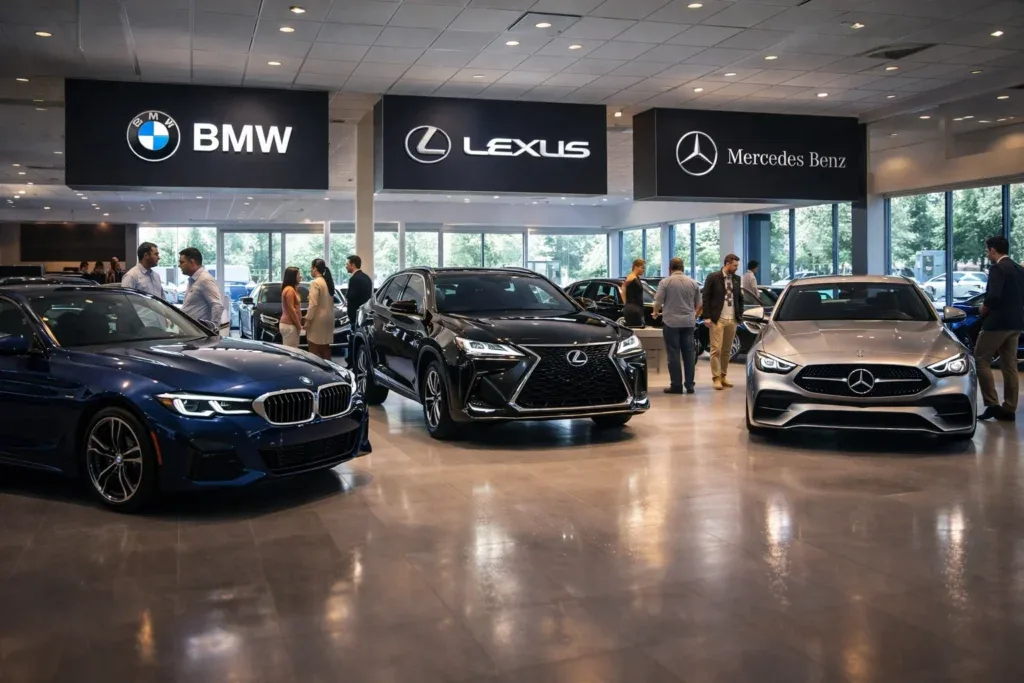
BMW vs Lexus vs Mercedes : The American luxury car market is in the middle of one of its most interesting competitive battles in years. Q1 2026 sales data is in, and it tells a story of razor-thin margins at the top, dramatic collapses in the middle, and one unexpected Japanese brand quietly gaining ground. With the broader U.S. auto market down roughly 6% in the first quarter, the luxury segment has not been immune — but within the turbulence, clear winners and losers are emerging.
Here’s the full breakdown of who is leading, who is losing ground, and what it all means heading into the rest of 2026.
BMW: Still on Top, But by a Narrower Margin Than Expected
BMW retained its position as the best-selling luxury brand in America for Q1 2026, delivering 84,231 vehicles between January and March. That figure represents a 3.9% decline from Q1 2025’s 87,615 units — a drop that reflects broader market softness rather than any structural problem with the brand.
The story within the numbers is instructive. BMW’s SUV lineup is carrying the weight. The X3 surged 58% year-over-year — a remarkable number driven by strong demand for the new generation and a market that increasingly rewards capable, practical luxury SUVs over sedans. The X5 gained 7.1% to 18,680 units, maintaining its position as one of the best-selling premium midsize SUVs in America.
BMW’s car lineup was a different story, falling 17.3% overall. One bright spot: the 3 Series ticked up 10.2% to 8,189 sales, helped by buyers moving quickly ahead of a generational redesign arriving for 2027. Interestingly, the 8 Series — now in its final weeks of production — outsold every quarter of 2025 combined as last-chance buyers rushed to secure the outgoing grand tourer.
The most concerning datapoint for BMW: electrified vehicle sales collapsed 50%, falling from 19,761 units in Q1 2025 to just 9,856. This likely reflects the post-EV-credit-expiration hangover affecting the entire luxury EV segment, combined with a model transition period ahead of the all-important iX3 launch later in 2026. The new Neue Klasse architecture debuts with the iX3 — the most important BMW product launch in years.
Lexus: Within 3,274 Vehicles of BMW 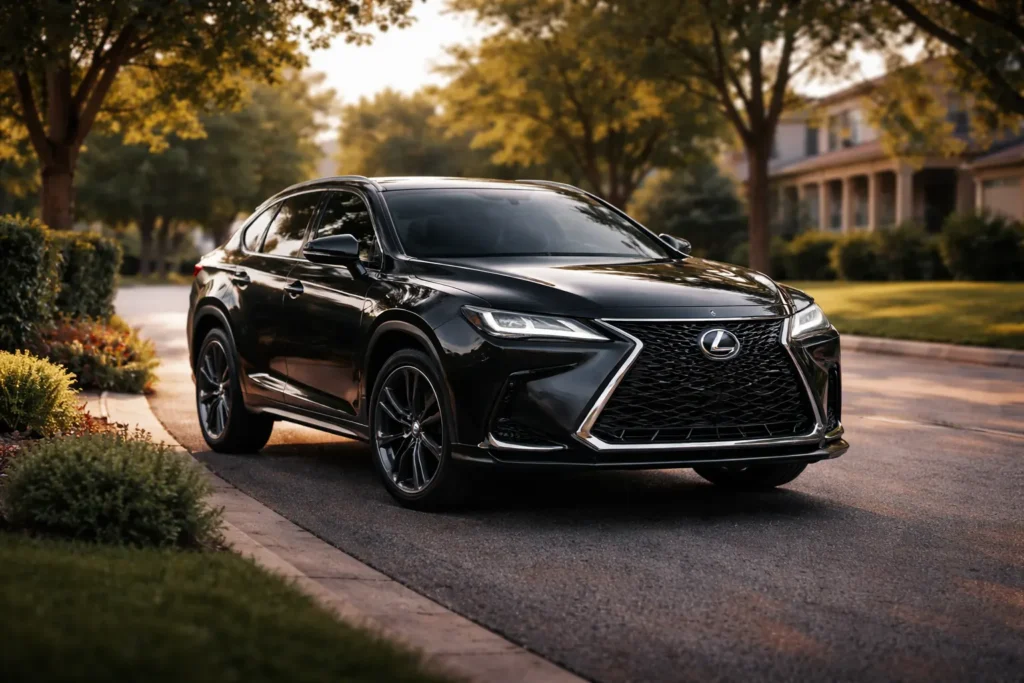
Lexus delivered 80,952 vehicles in Q1 2026 — just 3,274 units behind BMW, the closest the Japanese luxury brand has come to the top spot in years. Lexus posted a 2.5% decline, a smaller drop than BMW and a sign that the brand’s electrification strategy is actually working better than the numbers might initially suggest.
The Lexus story in Q1 is fascinating. The brand’s traditionally dominant ES sedan — its long-running volume leader — fell by two-thirds to just 3,044 units. Why? Because the fully redesigned 2026 ES has just started reaching dealerships in its all-electric form, with the hybrid variant not arriving until late June. That transition gap created a temporary sales vacuum in what is normally Lexus’s highest-volume model.
Meanwhile, Lexus’s electrification play is paying off in other areas. The RZ electric crossover tripled its sales to 4,456 units — a record. The NX Plug-in Hybrid hit 3,229 units, also a record. Total electrified deliveries across Lexus reached 34,907 units — nearly 43% of all Lexus sales. That is an extraordinary electrification rate for a luxury brand that competes heavily with BMW and Mercedes.
Lexus’s SUV lineup — the RX, TX, and LX — all gained. The brand’s bet on SUVs and electrification is clearly the right one; the Q1 numbers are temporarily skewed by the ES transition.
When the 2026 ES hybrid hits dealers in late June and the full lineup is in stock, Lexus has a real shot at closing or erasing the gap with BMW in Q2.
Mercedes-Benz: Third Place, SUV-Dependent
Mercedes-Benz reported Q1 2026 U.S. sales of approximately 70,000 vehicles, down 3.0% from Q1 2025. That puts it roughly 14,000 units behind BMW — a gap that has been growing, not shrinking, in recent years.
The Mercedes Q1 story is one of extreme SUV concentration. The GLC, GLE, and GLS collectively grew 22% year-over-year and accounted for roughly 61% of all Mercedes passenger car sales. Without those three models, the brand’s results would be dramatically worse.
Mercedes notably avoided detailed reporting on sedan and EV results — a sign that those segments are underperforming. The brand is in the middle of a significant product transition, with the all-new electric CLA among the most anticipated launches of 2026. If the CLA resonates with American buyers, it could meaningfully shift the brand’s trajectory in the second half.
The Big Losers: Audi and Cadillac
Audi posted the most alarming Q1 in the German brand’s recent American history. Sales fell 30% to just 29,886 vehicles — the first time since 2012 that Audi has failed to sell 30,000 vehicles in a single U.S. quarter. Every SUV and crossover declined, with electric variants hit particularly hard. The A3, A5, and A6 sedans actually gained slightly, but the volume just isn’t there to compensate.
Cadillac fared even worse in percentage terms, falling 25.5% to 31,098 units. GM’s luxury brand continues to struggle with a lineup in transition, with multiple EV launches that haven’t yet found significant volume.
The Quiet Winner: Acura
The most positive luxury story in Q1 2026 belongs to Acura, which was the only major luxury brand to post a year-over-year sales increase — up 5.2% to 32,352 vehicles. The Integra rose 25.6%, the MDX gained 2.7%, and the brand-new ADX compact crossover is off to a strong start with 7,864 units sold.
Honda’s luxury arm is finding its footing in a market that is increasingly rewarding reliability, value, and practical luxury — exactly what Acura has traditionally represented.
What the Numbers Tell Us for the Rest of 2026
Several themes emerge from the Q1 luxury data. SUVs are everything — every brand that grew its SUV lineup gained market share; every brand caught flat-footed in the SUV space is suffering. Electrification remains strategically important but has hit a near-term speed bump as the post-tax-credit hangover works through the system. Sedan segments are under severe pressure across every brand.
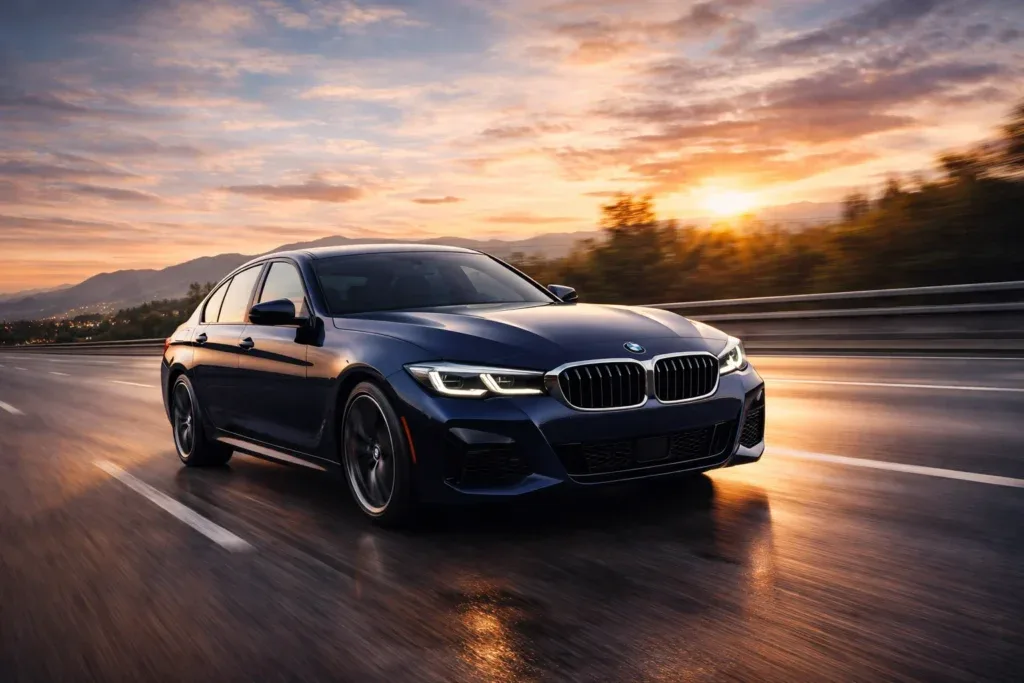
For BMW, the second half of 2026 depends heavily on the iX3 launch and whether the Neue Klasse architecture resonates with American buyers. For Lexus, a full lineup of the new ES will likely produce a Q2 and Q3 rebound. For Mercedes, the CLA electric is the brand’s most important American launch of the year. For Audi, recovery requires a product answer — and the Q9 SUV, expected later this year, may be it.
The luxury market remains one of the most dynamic and competitive in U.S. auto history. Three thousand cars separate first from second place. Every decision counts.
Considering a luxury vehicle purchase? Our Car Loan EMI Calculator helps you estimate monthly payments on premium vehicles. Use our Car Ownership Cost Calculator to compare true annual costs between luxury brands, and our EV vs Gas Cost Calculator if you’re weighing a luxury EV against a gas alternative.