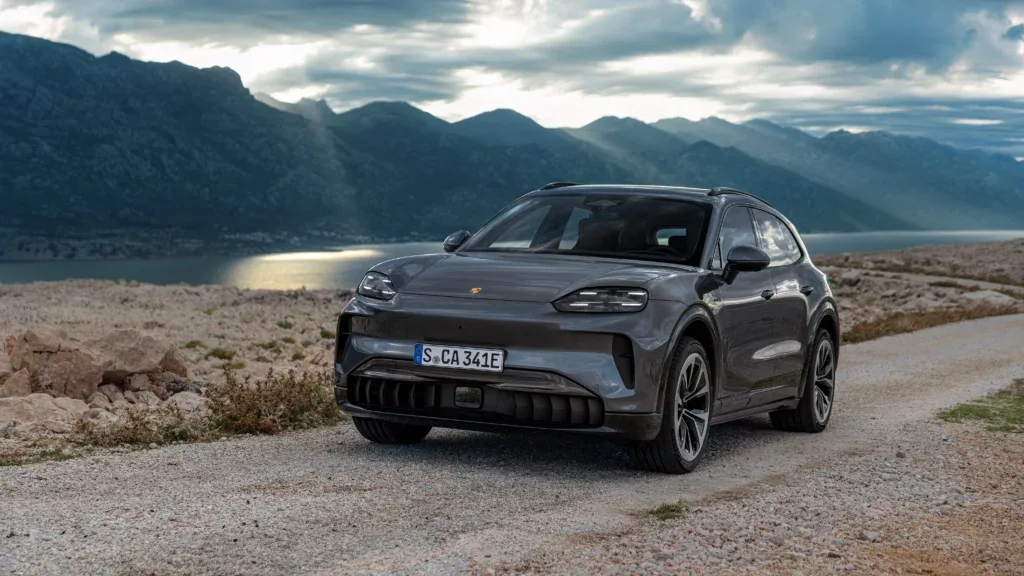
2026 Porsche Cayenne Electric Review : There are electric vehicles that impress you with numbers on a spec sheet. And then there is the 2026 Porsche Cayenne Electric — a vehicle that makes you forget you are driving an EV entirely and simply reminds you why Porsche is Porsche. First drive reviews from Motor1, Edmunds, The Drive, and Top Gear have been landing in recent weeks, and the verdict is remarkably consistent: this is not just a good electric SUV. It may be the best driving electric SUV money can buy, at any price.
Here’s the complete breakdown of what the 2026 Cayenne Electric offers, what first reviewers are saying, and who should be considering buying one.
Three Trims, Three Personalities
The 2026 Porsche Cayenne Electric is offered in three configurations, each sharing the same 113 kWh battery and dual-motor all-wheel-drive architecture, but delivering dramatically different performance:
Cayenne Electric (Base) — from $111,350 The entry point produces 435 horsepower in normal driving, briefly hitting 435 hp and 615 lb-ft with launch control activated. Porsche claims a 4.5-second 0-60 time — more than adequate for a nearly 5,000-pound luxury SUV. EPA-estimated range comes in up to 399 miles (WLTP), with real-world estimates of around 280–350 miles depending on driving conditions.
Cayenne S Electric — approximately $130,000+ The middle variant produces 536 horsepower continuously, jumping to 657 hp with launch control. An oil-cooling system on the rear motor keeps temperatures optimal under sustained high-load driving — a racing-derived solution that sets it apart from most EV competitors. Zero to 60 mph in 3.6 seconds.
Cayenne Turbo Electric — from $165,350 This is the headline-grabber. The Turbo produces 1,139 horsepower and 1,106 lb-ft of torque, making it officially Porsche’s most powerful production vehicle ever — edging out the legendary 918 Spyder and the Taycan Turbo GT. Porsche claims a 2.4-second 0-60 time and a 9.9-second quarter-mile — numbers that put it firmly in the company of purpose-built supercars, in a vehicle that can carry five people and their luggage. A push-to-pass button on the steering wheel briefly boosts output by an additional 120 hp for 10 seconds. As-tested price on the Motor1 review vehicle: $213,190.
All three trims share the same 113 kWh battery, 800-volt architecture, NACS charging port, and air suspension.
Charging: Among the Fastest EVs Ever Made 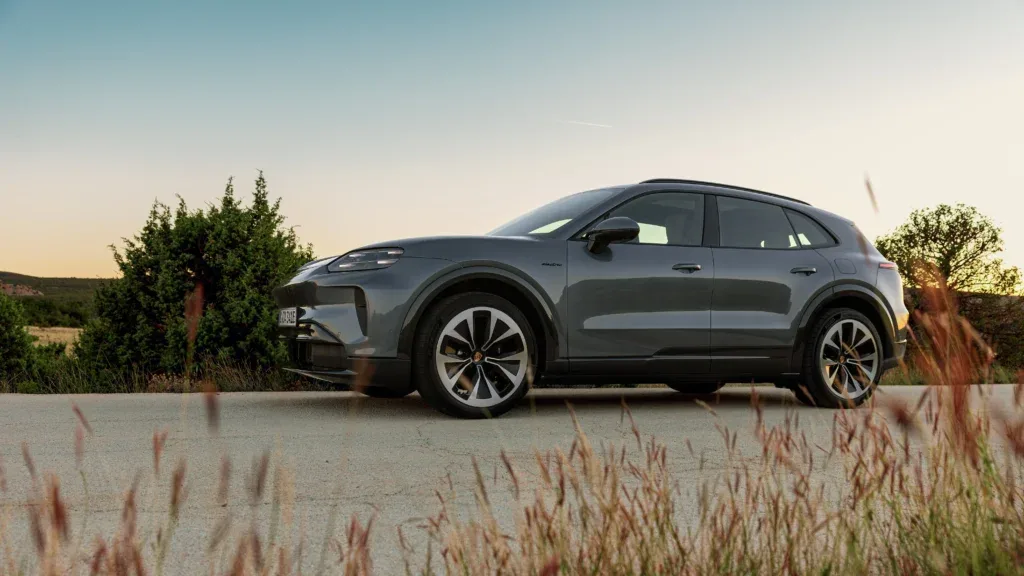
The Cayenne Electric’s charging capability is genuinely exceptional. Porsche claims a peak DC fast charge rate of 400 kW, which puts it at or near the fastest charging speed available in any production vehicle on the market. In real-world testing at a 400 kW station in Germany, Top Gear measured a 10% to 80% charge in approximately 15 minutes — barely enough time for a coffee stop on a road trip.
In the United States, most DC fast chargers currently top out at 350 kW, meaning the Cayenne Electric’s peak charging capability will be limited somewhat by available infrastructure. However, as 400 kW stations become more widely deployed — particularly in the Electrify America and IONNA networks — the Cayenne’s charging advantage will become more accessible to American owners.
The NACS port is standard, giving owners seamless access to the Tesla Supercharger network across the country.
What First Reviewers Are Saying
The critical reception has been overwhelmingly positive, with a few clear themes:
Throttle calibration is extraordinary. Motor1’s reviewer, who admits to rarely finding electric sports cars fully compelling, wrote that the Cayenne Turbo belongs on the short list of truly great performance EVs alongside the Taycan, Audi e-tron GT, and Hyundai Ioniq 5 N. The reason: where most high-power EVs deliver torque in a way that feels jumpy or nauseating, Porsche’s pedal calibration is precise and deeply satisfying. The power is massive but always feels controllable.
The Active Ride suspension is a marvel. The optional Active Ride system — a $7,790 option on the Turbo — uses active dampers to essentially eliminate the compromise between ride comfort and handling. Motor1’s reviewer called it “cheating.” The result is an SUV weighing over 5,400 pounds that handles and rides better than any large SUV the reviewer has ever driven. Comfort mode effectively eliminates pitch, dive, and body roll — the car floats over bumps in a way that feels almost physically impossible given its mass.
Range is the question mark. Multiple reviewers noted that Porsche’s EPA range estimates tend to be conservative and real-world numbers often exceed them. However, the Cayenne Electric — at roughly 2,600 kg (5,732 lbs) — is a heavy vehicle, and spirited driving will compress range faster than the numbers suggest. Expect real-world highway range of around 280–320 miles under normal driving conditions.
The sound. In Sport and Sport+ modes, Porsche has added a V8-inspired soundtrack to the Cayenne Electric — subtle, not theatrical, but present enough to provide sensory feedback that many EV performance vehicles lack. No fake gear shifts like the Ioniq 5 N, but the audio cues are appreciated.
Styling divides opinion. Multiple reviewers found the exterior design somewhat generic compared to previous Cayenne generations. The aerodynamic brief (0.25 drag coefficient) has clearly influenced the shape in ways that prioritize efficiency over drama. Interior quality and design, however, receive universal praise — one of the finest luxury cabin environments in any EV at any price.
How It Compares to Rivals
The Cayenne Electric enters a small but serious segment of premium electric SUVs. Its direct competitors include:
BMW iX — strong range and luxury but significantly less powerful and less engaging to drive. Starting around $90,000.
Lucid Gravity — exceptional range (over 440 miles), stunning design, but very new to market with limited real-world reliability data. Starting around $95,000.
Rivian R1S — outstanding off-road credibility and adventure identity, strong range. Starting around $75,000 but a fundamentally different brand positioning.
Mercedes EQS SUV — ultra-luxury focus, very long range, but not performance-oriented. Starting around $110,000.
Lotus Eletre — the most direct performance rival, with similarly staggering power outputs, but far less established brand in the SUV space.
The Cayenne Electric’s advantage is the one thing money can’t easily buy: Porsche’s 70+ years of experience dialing in driving dynamics. On a twisting road, this SUV simply behaves unlike anything else in the segment.
Should You Buy One?
If you have $111,000 to $213,000 to spend on an electric SUV and driving feel matters to you, the Cayenne Electric is likely the best choice on the market today. It is the vehicle that EV skeptics — the drivers who argue that electric cars are soulless — need to drive before making any further proclamations.
For buyers who want the most powerful, most capable version: the Turbo is an almost absurd machine that happens to carry your family and luggage at the same time. For most buyers, the base Cayenne Electric at $111,350 delivers the core of the experience without the stratospheric pricing.
Deliveries are underway now. The base and S trims are currently available; the Turbo has been in limited supply but is rolling out to dealers and reservation holders.
Curious what a Cayenne Electric would cost to charge monthly? Use our EV Charging Cost Calculator. Our EV Cost Per Mile Calculator shows real running costs vs. a gas luxury SUV. And our Car Loan EMI Calculator helps estimate monthly payments on the purchase or lease.