

The American luxury car market told a mostly gloomy story in the first quarter of 2026. BMW was down 3.9%. Lexus fell 2.5%. Mercedes dropped 3%. Cadillac collapsed 25.5%. Audi had its worst quarter since 2012, falling 30%. And yet, in the middle of this broad-based retreat, one luxury brand not only held its ground but actually grew: Genesis, Hyundai’s standalone Korean premium brand, posted a record first quarter of 18,317 units — up 4.6% year-over-year.
This is not a fluke. Genesis has been quietly, consistently building something that the German legacy brands have struggled to match in recent years: a product lineup that delivers genuine premium quality at prices that feel fair, backed by customer experience scores that routinely top J.D. Power surveys.
Here’s the full story of why Genesis is winning while others are retreating.
The Numbers: A Record Quarter in a Down Market
Genesis delivered 18,317 vehicles in Q1 2026 — its highest-ever first-quarter total. In March alone, the brand posted 7,417 units — a 32% increase in GV70 deliveries drove much of that growth. To put this in perspective: while every other major luxury brand in the United States experienced year-over-year declines in Q1, Genesis accelerated.
The brand has now grown its U.S. sales for six consecutive years since its American launch. From a niche experiment in 2016 to 77,666 vehicles sold in all of 2025, Genesis has been one of the most consistent growth stories in the American auto industry.
The brand also recently surpassed 1 million cumulative domestic sales in its home Korean market — a milestone announced in mid-April 2026 — confirming that Genesis has transcended its early-brand struggles and achieved genuine mainstream luxury credibility.
What Is Genesis Selling?
The backbone of Genesis’s American success is its SUV lineup — and specifically, the GV70.
The 2026 Genesis GV70 — a compact luxury SUV starting around $44,900 — has been the brand’s best-seller almost since its 2022 launch. For 2026, it received a midcycle refresh including a redesigned G-Matrix Crest Grille, updated front fascia, refined interior with Bang & Olufsen audio, and improved infotainment. The changes were subtle — Genesis understood that the outgoing design was still fresh and well-received — but meaningful enough to keep the GV70 competitive against freshened rivals.
At its price point, the GV70 is difficult to argue with. A GV70 at $44,900 includes features that push German luxury rivals into $60,000–$70,000 territory. The brand’s value proposition is real and measurable.
The GV80 — Genesis’s midsize luxury SUV — continues to add volume, while the G80 sedan holds its own as one of the most elegant and well-designed luxury sedans in America, consistently praised for cabin quality that rivals vehicles costing significantly more.
On the electric side, the Electrified GV70 — built at Hyundai Motor Manufacturing Alabama — is insulated from import tariffs, giving it a meaningful pricing advantage over rival European luxury EVs that face significant tariff exposure.
aslo read https://driveglobalnews.in/2026-porsche-cayenne-electric-review-the/
Why Genesis Is Outperforming: Five Key Reasons 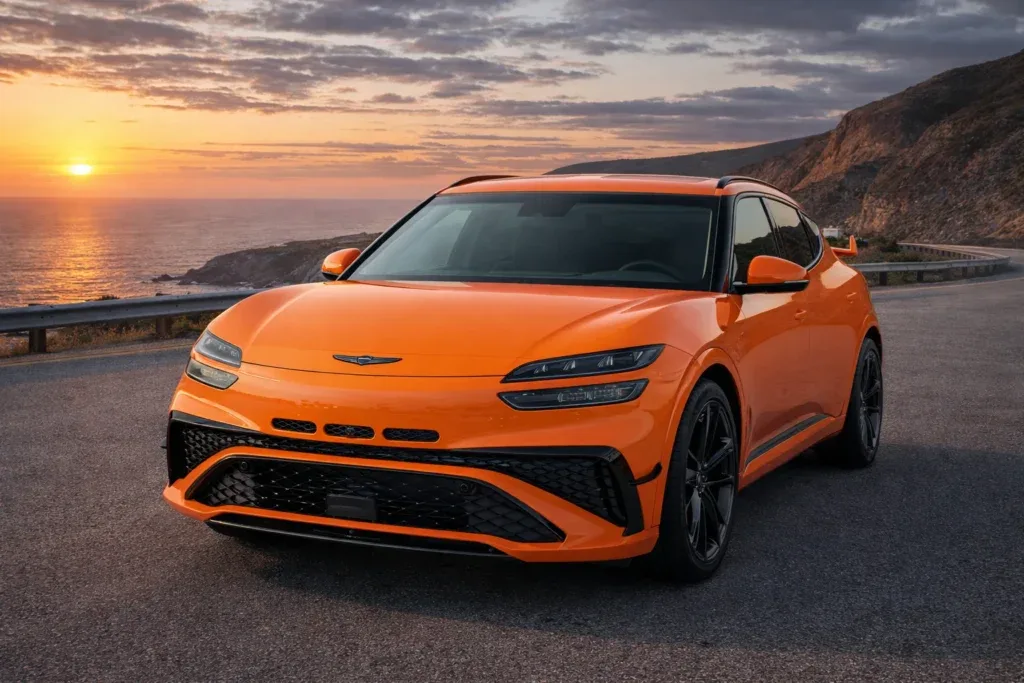
1. Outstanding value against German rivals. The single most powerful driver of Genesis’s growth is pricing. The GV70 competes directly with the BMW X3, Mercedes GLC, and Audi Q5 — all of which start significantly higher. Buyers who do side-by-side comparisons consistently find that Genesis matches or exceeds the luxury, technology, and build quality of its German competitors at a lower price.
2. J.D. Power quality leadership. Genesis has ranked first among premium brands in J.D. Power’s Initial Quality Study five times in seven years. Reliability perception is a massive driver of luxury car purchases — once a buyer trusts that a brand will not embarrass them with quality issues, price becomes the deciding factor.
3. Domestic EV production. Building the Electrified GV70 in Alabama means Genesis’s electric flagship isn’t subject to the same import tariff headwinds hammering European luxury EVs. As American buyers increasingly consider EVs, having a domestically produced option at a competitive price is a genuine structural advantage.
4. Network expansion. Genesis has been steadily growing its dedicated standalone dealership network, reaching 84 U.S. locations — a 12% increase in recent months. More accessible retail presence means more test drives, which means more conversions. Every Genesis buyer who has driven the car tends to be a strong advocate for the brand.
5. The anti-premium premium. Counterintuitively, Genesis’s relative obscurity works in its favor with certain buyers. The brand’s “Athletic Elegance” design philosophy produces vehicles that are beautiful without being flashy — the kind of understated luxury that appeals to buyers who don’t want to broadcast wealth. In an era where conspicuous consumption has become culturally complicated, a Genesis is a quiet signal of taste.
The Competitive Landscape: How Long Can Genesis Sustain This?
Genesis’s growth trajectory is impressive, but it faces real challenges ahead:
Scale limitations. At 18,317 units in a quarter, Genesis is still a fraction of BMW (84,231) or Lexus (80,952). The brand has room to grow, but expanding from niche to mainstream requires significant investment in network, service capacity, and marketing.
EV transition pressure. Genesis originally committed to a full EV lineup by 2026 — a target it has since moderated. Balancing hybrid, gas, and electric offerings while managing tariff exposure and consumer demand shifts is a complex operational challenge.
Rising competition. Brands like Acura (up 5.2% in Q1 2026) are waking up to the same value-luxury opportunity. And Chinese luxury EV brands are eyeing the U.S. market with competitive pricing that could eventually pressure Genesis’s value proposition from below.
For now, however, the numbers tell a clear story. While the legacy German brands regroup and the rest of the luxury market contracts, Genesis is the one name in American luxury that buyers are actively seeking out in greater numbers. That trajectory, built over nearly a decade of consistent product quality and pricing discipline, is not easily reversed.
Considering a Genesis for your next vehicle? Use our Car Loan EMI Calculator to estimate monthly payments. Our Car Ownership Cost Calculator helps you compare true annual costs against competing luxury brands, and our EV vs Gas Cost Calculator shows long-term savings if you’re considering the Electrified GV70.