
Audi just answered a question that’s been hanging over the brand for years.
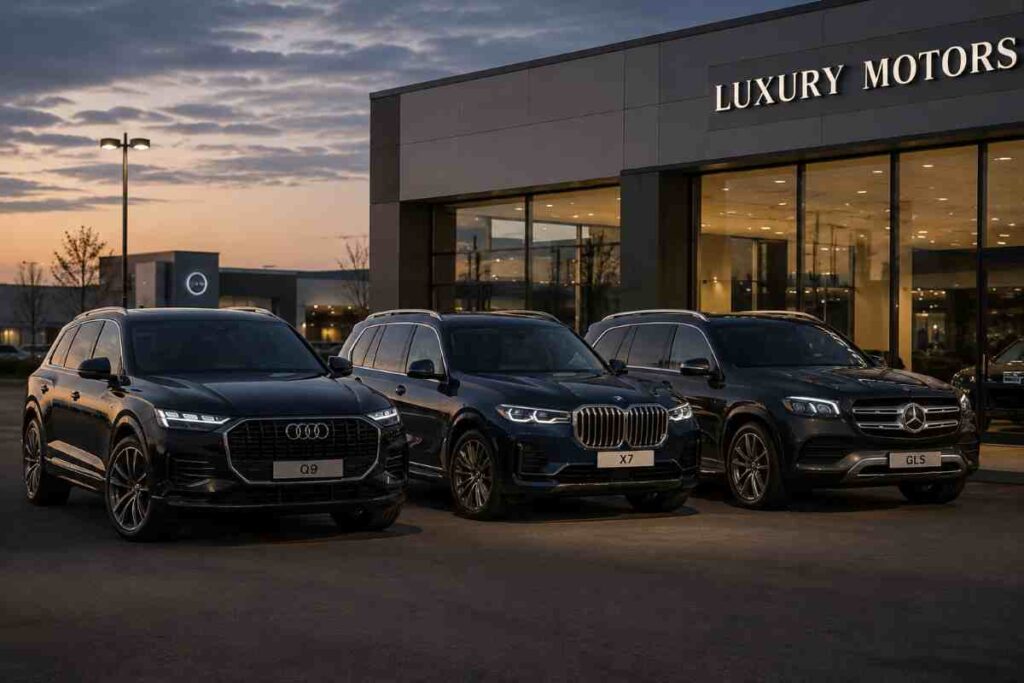
BMW has the X7. Mercedes has the GLS. Lexus has the LX. Every premium German or Japanese rival has a genuine flagship three-row SUV — the kind of vehicle that says “this is the best we make.” The kind that justifies the badge at the highest price point.
Audi didn’t have one. The Q7 is excellent but not enormous. It’s never quite been the definitive statement piece that the X7 and GLS are for their respective brands.
That changes with the 2026 Audi Q9 — confirmed this week as part of Audi’s sweeping 7-model product offensive for 2026. It sits above the Q7. It’s the biggest Audi SUV ever built. And given what Audi has packed into the Q7 and Q5 recently, the expectations are justified.
Why Audi Needed This Vehicle
The numbers tell the story. In Q1 2026, Audi posted its worst American sales quarter since 2012 — down 30% year-over-year. The brand is under pressure from every direction: BMW improved, Genesis grew, luxury buyers who wanted a three-row American premium SUV went to the Lincoln Navigator or Cadillac Escalade.
Audi had no answer for those buyers. The Q7 maxes out at three rows but feels compact against the X7 and GLS in terms of presence. The Q8 is a gorgeous coupe-SUV but seats five and positions itself as a performance luxury vehicle rather than a family hauler.
The Q9 plugs that gap directly. A genuine flagship. A vehicle that Audi dealers can put next to an X7 and say — here’s ours.
also read : https://driveglobalnews.in/tesla-model-y-2026-just-became-the-first-car-to/
What We Know About Specs and Design
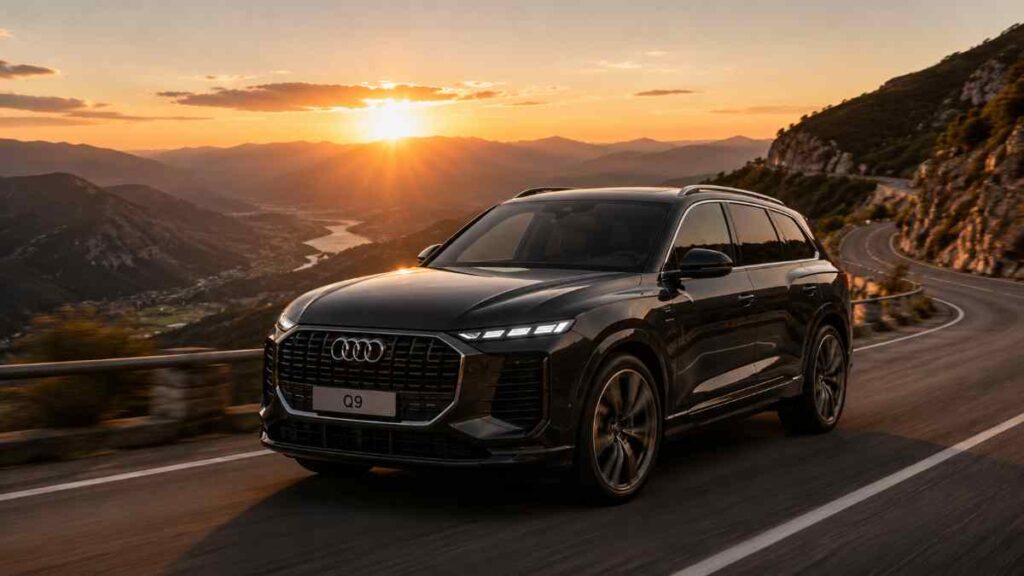
Audi has confirmed the Q9 but hasn’t released full specifications. Based on confirmed details and credible reports heading into May 2026, here’s the picture:
Platform: Shared with the Volkswagen Group’s MLB Evo architecture — the same foundation under the current Q7, Q8, Lamborghini Urus, and Porsche Cayenne. This is a proven, capable platform that Audi’s engineers know intimately. Expect the same confident, car-like handling that makes the current Q7 surprisingly enjoyable despite its size.
Size: Meaningfully larger than the Q7. The Q9 will position itself to compete dimensionally with the BMW X7 and Mercedes GLS — both of which offer genuinely generous third-row space. This is Audi’s answer to the criticism that the Q7’s third row is tight for adults.
Powertrains: A turbocharged V6 as the base engine is expected, with a plug-in hybrid variant — likely using the same 14.1 kWh battery and 60+ miles of electric range that Audi has deployed in other Volkswagen Group vehicles. A mild-hybrid 48V system will be standard across the lineup. An all-electric Q9 e-tron is planned but likely arrives after the combustion/hybrid launch.
Interior: Audi’s current interior design is among the best in the German luxury segment — the Q7’s cabin is consistently praised for material quality and logical layout. The Q9 will debut Audi’s next-generation digital cockpit combining a curved OLED driver display with a large central touchscreen and an available passenger display. Expect rear-seat entertainment, massaging seats, and four-zone climate control on upper trims.
Pricing: Expected to start around $80,000 for the base V6 trim, climbing to $95,000+ for the top Prestige PHEV configuration. That brackets it neatly between the BMW X7 ($84,300 base) and Mercedes GLS ($92,600 base) — giving Audi room to compete on value at the entry point while matching rivals at the top.
also read : https://driveglobalnews.in/kia-ev9-vs-hyundai-ioniq-9-in-2026-two-korean/
The Tariff Situation Is the One Problem
Here’s the concern that shadows every Audi announcement in May 2026.
The Q9 will almost certainly be built in Germany. Trump’s just-announced 25% EU auto tariff — effective this week — means an $80,000 German-built SUV faces roughly $15,000-$18,000 in additional landed costs compared to a domestically assembled rival.
Audi hasn’t announced how they’ll handle this. Options are absorbing margin, raising prices, or accelerating a North American production option. The Q7 is already a tough sell against a Hyundai Palisade Calligraphy at $58,000 with arguably better third-row space. A Q9 at $95,000+ will need to deliver an exceptionally compelling product to justify the premium in the current pricing environment.
The vehicle itself sounds like it can do that. The tariff math is the variable nobody can fully predict.
Who Should Be Excited
If you’ve been shopping large three-row luxury SUVs — the X7, GLS, Navigator, or Escalade — the Q9 deserves to be on your consideration list. Audi’s engineering quality and interior refinement at the Q7 level suggest the Q9 will deliver a genuinely impressive product.
The timing is late in 2026 for the first deliveries. If you’re shopping now, the Q7 remains an excellent vehicle. If you can wait until year-end — the Q9 will be worth test-driving before you decide.
Use our Car Loan EMI Calculator to compare monthly payments on Q9 vs X7 before you visit either dealer.