Tesla just got some genuinely good news — and it’s not about robotaxis, Roadsters, or anything Elon Musk posted on social media.
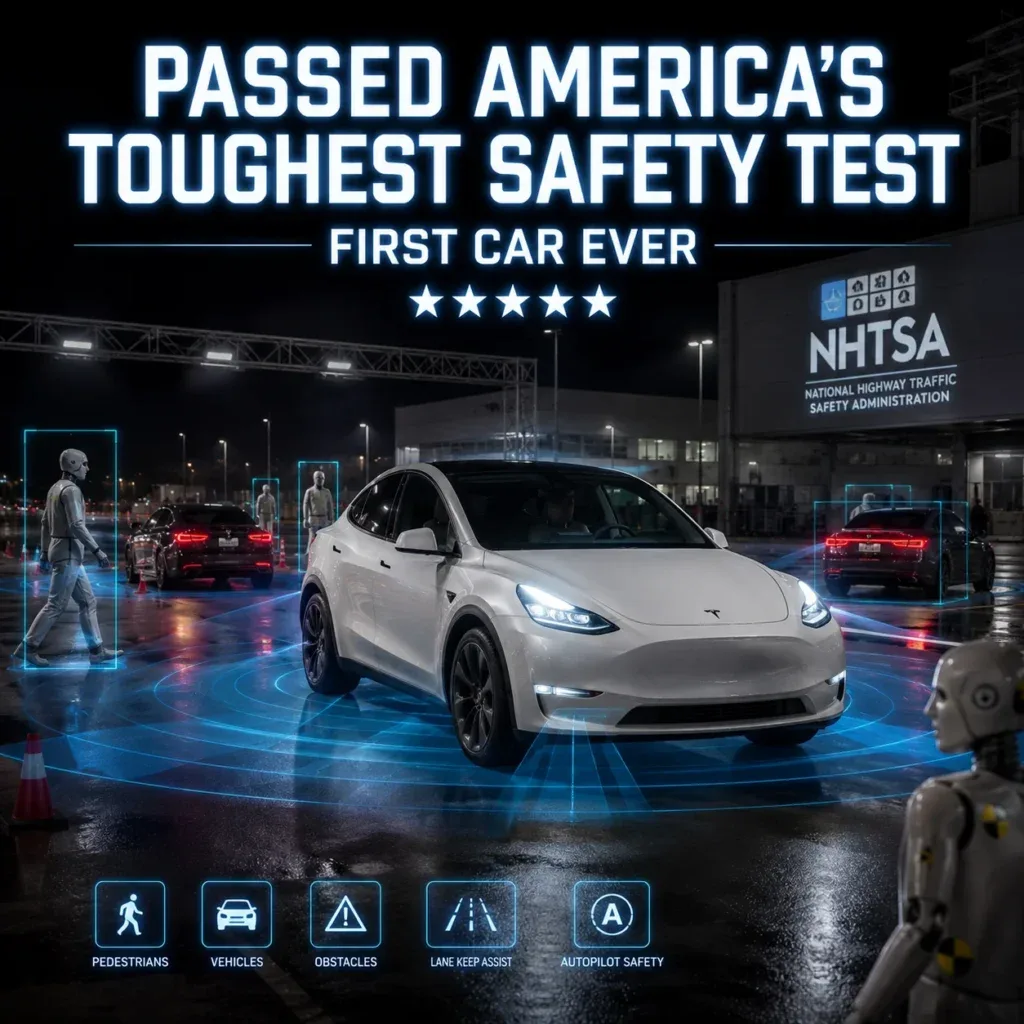
The 2026 Tesla Model Y became the first vehicle in America to pass NHTSA’s brand-new advanced driver assistance system benchmark tests under the updated New Car Assessment Program. The agency called it “a milestone for vehicle safety.”
Credit where it’s due: Tesla passed all eight evaluations. That’s real progress on something that actually matters — how well a car’s driver assistance technology performs in standardized, repeatable conditions.
But the context around this news is important. Let’s give you the full picture.
also read : https://driveglobalnews.in/ferraris-first-electric-car-gets-a-world-premi/
What NHTSA Actually Tested
The new ADAS benchmark tests are part of NHTSA’s updated New Car Assessment Program — the same program responsible for the five-star safety ratings you see on new car window stickers. 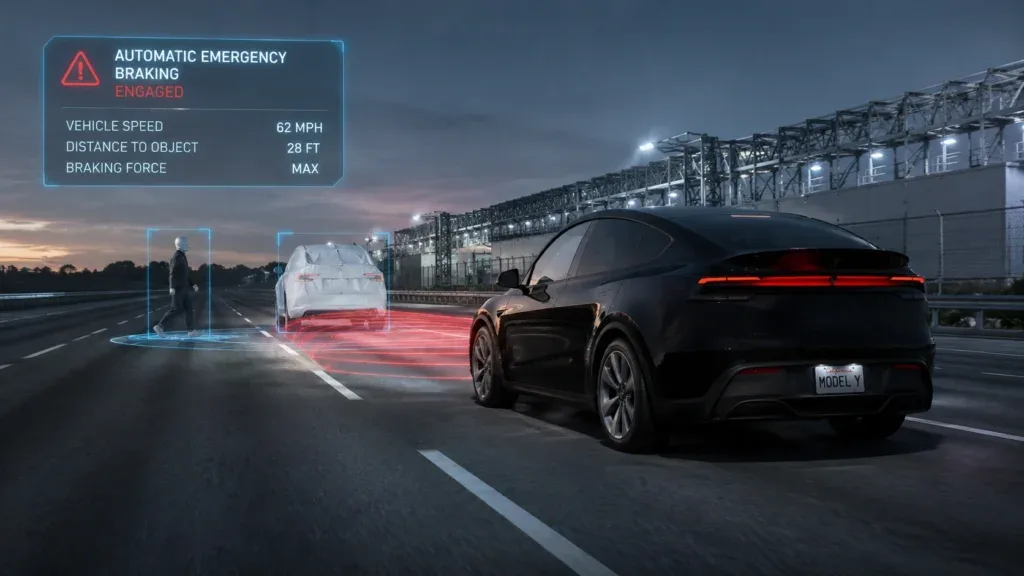
Until now, that program focused almost entirely on crash protection: how well does the structure hold up in a collision? The updated program adds a new layer: how well does the car’s technology prevent the collision in the first place?
Eight specific evaluations were developed. They test things like:
Forward collision warning and automatic emergency braking — does the car detect and respond to a vehicle suddenly stopping ahead? What about a pedestrian stepping into the road at night?
Lane departure and lane centering — does the system keep the car in its lane on highways with and without clear lane markings?
Driver monitoring — does the car detect when the driver is not paying attention and appropriately alert them or reduce autonomous capabilities?
Highway driving assistance — does the adaptive cruise control and lane centering work together reliably in real-world highway conditions?
The Model Y passed all eight. No other vehicle has done that yet under this new framework.
Why the Context Matters
NHTSA was careful with its language — and buyers should be too.
Passing these eight tests means the Model Y’s ADAS systems perform well in controlled, standardized scenarios designed by NHTSA engineers. It does not mean Tesla’s Full Self-Driving is ready for unsupervised real-world driving. It does not address the accidents that have occurred with Autopilot engaged. It does not evaluate edge cases, unusual road conditions, or the behavior when the technology encounters something it wasn’t designed for.
The Model Y’s Autopilot has been involved in fatal accidents. Tesla is still under NHTSA investigation for several incidents involving FSD. Those investigations didn’t pause because of this benchmark result.
What this result tells you: in the specific scenarios NHTSA cares most about for supervised driver assistance — the technology that helps you stay in your lane and avoid rear-ending the car ahead — the Model Y performs at a level no other tested vehicle has matched yet.
That’s meaningful. It’s just not the whole story.
also read : https://driveglobalnews.in/hyundai-ioniq-6-vs-tesla-model-3-the-electric/
What It Means for Buyers Considering a Tesla Model Y in 2026
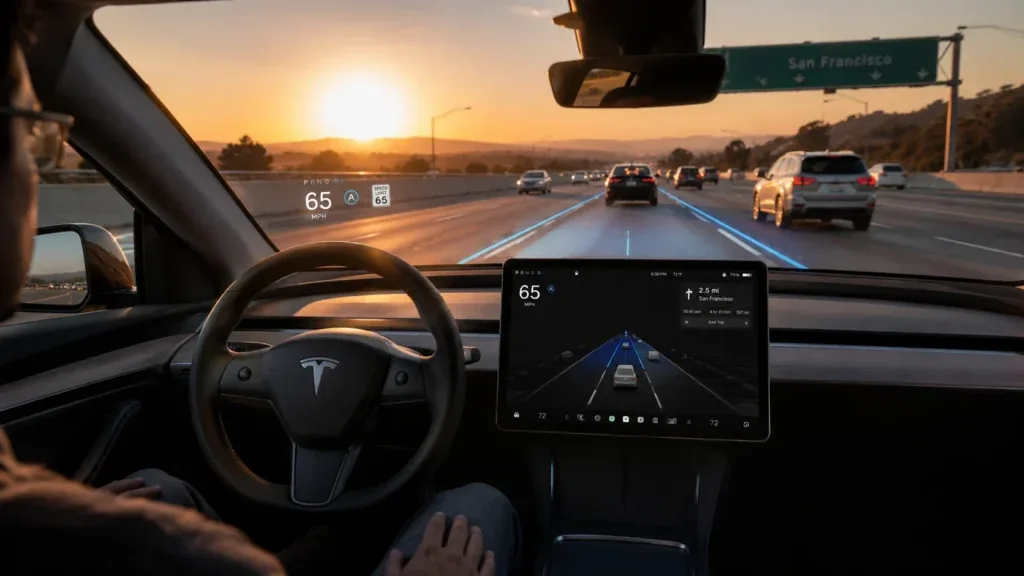
For the average buyer, this test result is a genuine positive data point.
The most common use of driver assistance technology in daily life is exactly what these tests measure: highway driving, adaptive cruise, emergency braking. If you commute on a highway regularly and want a car whose technology will reliably assist you in those conditions — the Model Y’s clean sweep is relevant and reassuring.
It’s also a competitive signal. Every other automaker’s engineering team now has a benchmark to beat. Expect Hyundai, Toyota, and BMW to publish their own test results as they go through NHTSA’s new evaluation process. The competition that follows will benefit every buyer.
The Tesla Model Y remains one of America’s best-selling vehicles for reasons that go beyond any single test result. Strong Supercharger network, proven over-the-air updates, the longest continuous production EV history of any mainstream model. This ADAS milestone adds one more legitimate point in its column.
For buyers who’ve been on the fence about driver assistance technology reliability — this is the most credible positive signal Tesla has received from a regulatory body in years.