Tesla pushed a software update in late April. Nothing unusual — the company sends over-the-air updates constantly, and most Tesla owners have learned to check their release notes the way iPhone users check iOS patch notes.
But this one was different.
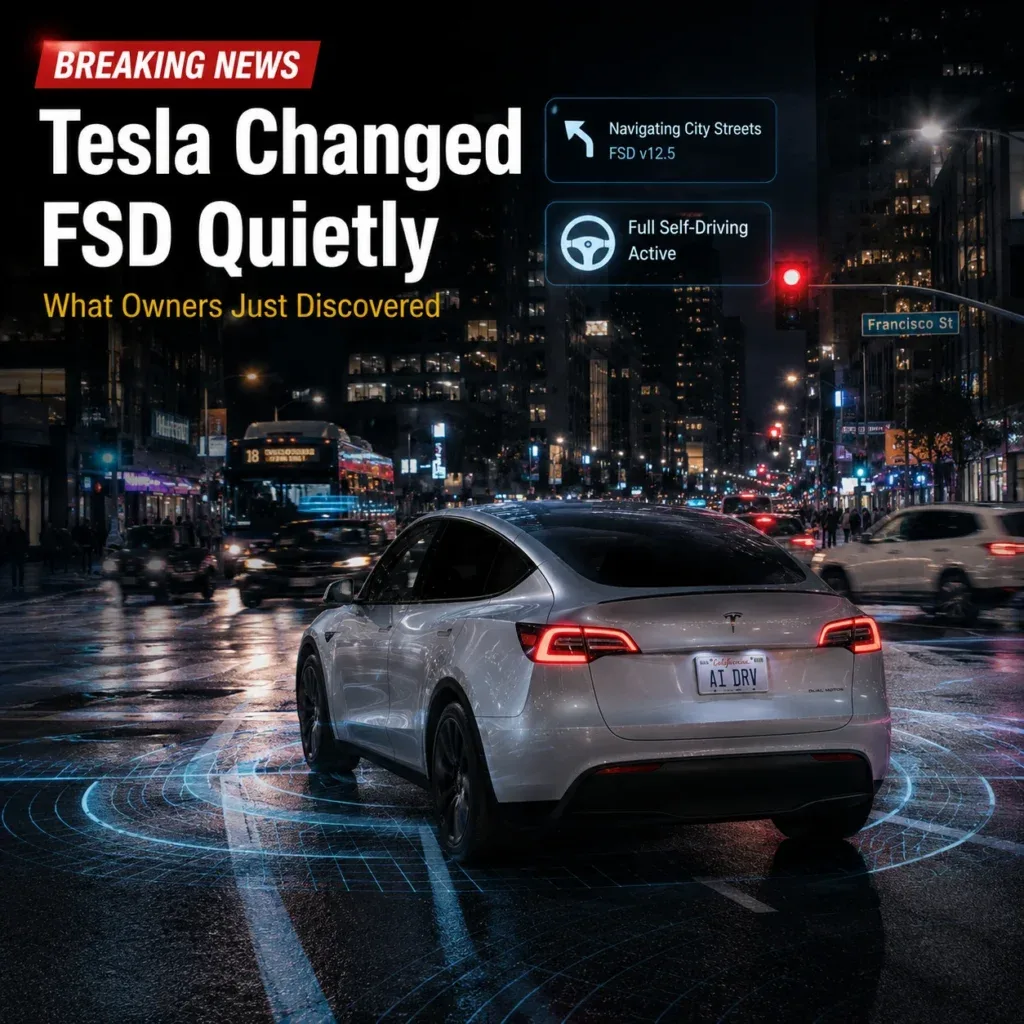
FSD version 14.3.2, which rolled out as part of software update 2026.2.9.9, contained a significant behavioral change that Tesla didn’t mention in the initial release notes. Owners noticed something felt different. They asked questions on forums and social media. They compared notes.
Only then — after the update had already rolled out to millions of vehicles — did Tesla quietly retroactively update the release notes to describe what changed.
No announcement. No heads-up. No explanation for why it wasn’t mentioned the first time.
What Actually Changed
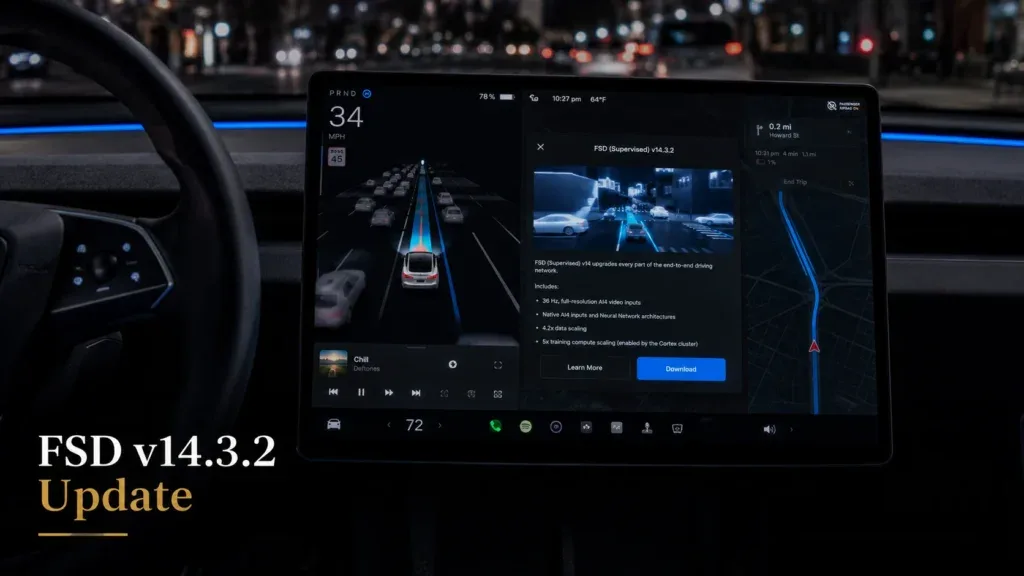
The specific behavior modification involves how FSD handles certain urban intersections — particularly the system’s decision-making around unprotected left turns and its following distance behavior in stop-and-go traffic.
Owners in California and Texas — where FSD usage is highest — reported noticing the changes almost immediately. The system felt more conservative at some intersections where it had previously moved decisively. In stop-and-go highway traffic, the following distance behavior shifted slightly.
Neither change is dangerous. In fact, the conservative intersection behavior arguably makes the system safer. The issue isn’t the change itself.
The issue is the process.
Why Transparency Matters Here
Tesla has built an extraordinary amount of customer trust on the promise that over-the-air updates make their cars better over time. When you buy a Tesla, you’re partly buying the idea that the vehicle you own in two years will be meaningfully improved from the one you took delivery of.
That relationship works when customers trust the updates. It starts to fray when updates change driving behavior without explanation.
FSD is not a convenience feature. It’s a system that controls a multi-ton vehicle at highway speeds and in complex urban environments. When behavior changes — even for good reasons — owners deserve to know what changed and why. Not after they notice something feels different. Before.
Tesla has done this well in some previous updates, with detailed release notes explaining changes to Autopilot following distance, intervention rates, and intersection handling. The decision to omit the v14.3.2 behavior changes from initial release notes — intentional or oversight — is a step backward from that standard.
also read : https://driveglobalnews.in/2027-mitsubishi-lancer-ev-the-30000-electric/
The Bigger FSD Picture in May 2026
This incident sits in a complicated context for Tesla’s autonomous driving program.
FSD v14 is genuinely good. Owners using it regularly in California, Texas, and Arizona report intervention rates significantly lower than previous versions. The system handles highways, on-ramps, lane changes, and familiar urban routes with a fluency that earlier versions didn’t have.
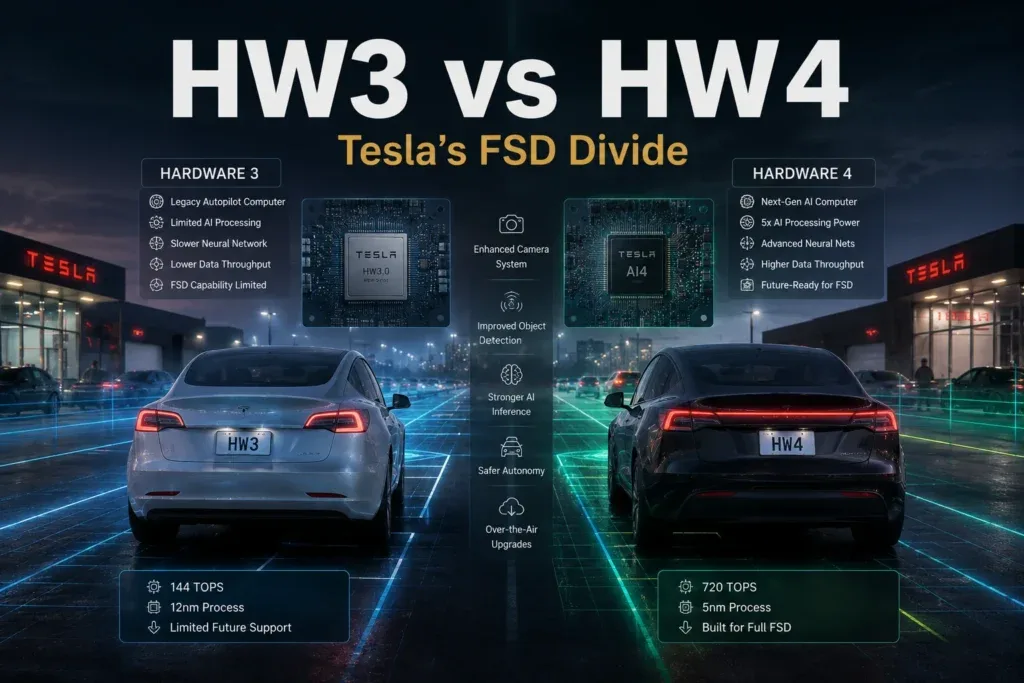
Tesla also just confirmed that Hardware 3 vehicles — the generation sold from 2019 through early 2023 — cannot achieve unsupervised FSD capability due to memory bandwidth limitations. Millions of buyers who paid $8,000-$15,000 for FSD on those vehicles are now in a holding pattern waiting for discount trade-in programs and hardware upgrade paths that Tesla hasn’t fully detailed.
Against that backdrop, a software update that changes driving behavior without notification reinforces a narrative that Tesla would rather avoid: that the company treats owners as beta testers rather than customers.
The cars are good. The technology is advancing. The communication around both needs to catch up.
also read : https://driveglobalnews.in/polestar-just-revealed-a-100000-electri/
What Tesla FSD Owners Should Do Right Now
If you’re on Hardware 4 and running FSD v14: the system is the best it’s ever been. Check your current release notes for the updated description of v14.3.2 behavior changes, do a couple of miles of supervised driving in your regular areas to calibrate to the new behavior, and continue using it as you were.
If you’re on Hardware 3: the v14-lite update promised for late June will bring meaningful improvements to supervised FSD. It won’t enable unsupervised driving. The hardware upgrade path through Tesla’s planned micro-factories remains the only route to full capability — and specific pricing and timing for those programs still hasn’t been announced.
If you’re considering buying a Tesla specifically for FSD: buy a vehicle with Hardware 4. Verify the hardware version before you sign anything. The capability gap between HW3 and HW4 is now confirmed and significant.
Tesla’s FSD story in 2026 is genuinely mixed. Better software than ever. Worse transparency than it should have. The company has proven the technology works. It still needs to prove it respects the customers who paid for it.