Three years ago, Honda stood in front of the world and made a promise.
By 2040, every Honda sold globally would be battery-electric or hydrogen. No combustion engines. No hybrids as a long-term strategy. Pure electrification or nothing.
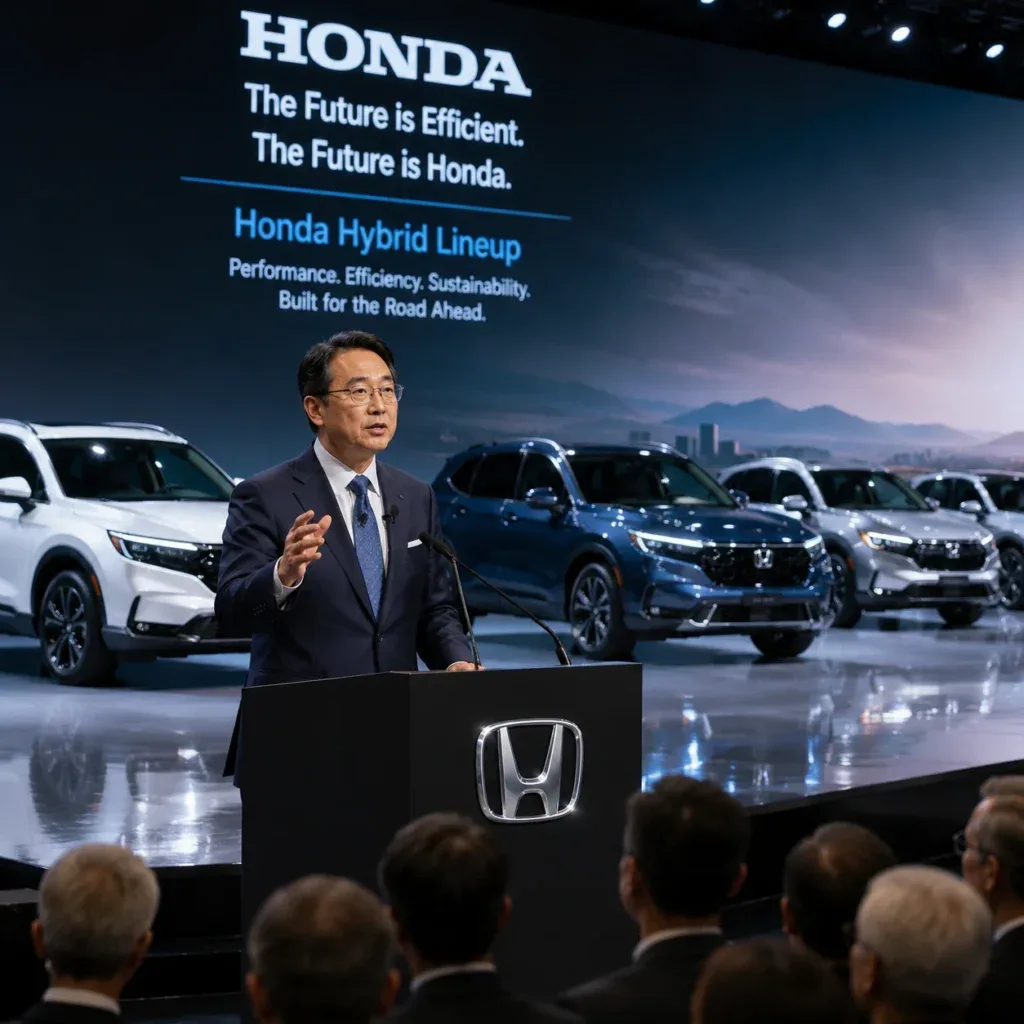
This week, Honda CEO Toshihiro Mibe stood in front of the world again and said: never mind.
The 2040 combustion-free goal is gone. The replacement strategy: 15 new hybrid models across Honda and Acura, a renewed commitment to gasoline engines, and an honest admission that the brand bet too much, too fast, on an electric future that American and global buyers weren’t ready to fund.
What Happened to Honda
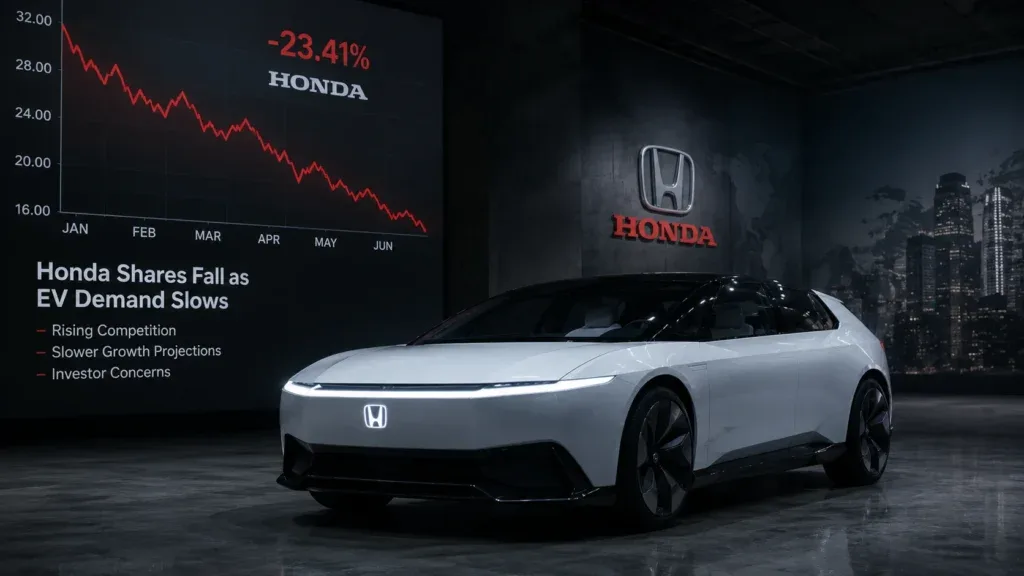
The losses tell the story first. Honda reported a historic financial loss driven primarily by write-downs on EV investments that didn’t generate the returns projected when they were made. The Prologue — Honda’s first mainstream American EV, built on GM’s platform — was discontinued. The all-electric Honda 0 Series, meant to be the brand’s EV future, had its timeline pushed back significantly.
Meanwhile, the Honda CR-V Hybrid was selling out. The Accord Hybrid was making the top 15 best-selling list. The Pilot, the Odyssey, the Passport — gas and hybrid models that Honda had been quietly planning to phase out were generating almost all of the brand’s profit.
The data was unmistakable. Honda’s customers wanted hybrids. Honda’s balance sheet needed hybrids. The 2040 all-electric goal was a vision statement written in a different market environment, by a different leadership team, under different assumptions about how fast consumers would adopt EVs.
Mibe read the data and made the call.
What 15 New Hybrids Actually Means
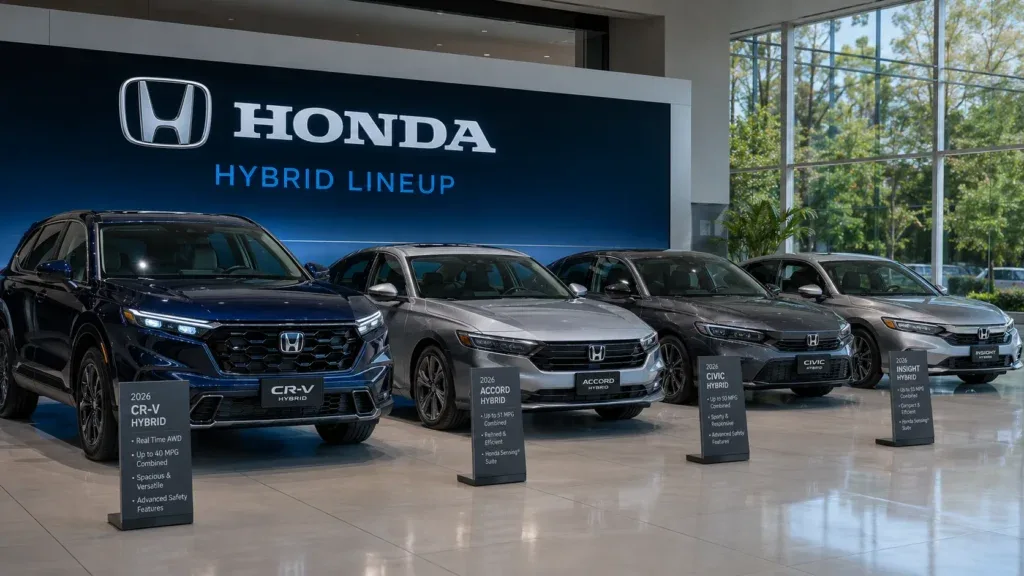
This is not Honda giving up on electrification. It’s Honda choosing a specific form of electrification that its customers are actually buying.
The 15 new hybrid models cover Honda and Acura across both brands’ lineups. The Civic Hybrid — already one of the best-selling non-truck vehicles in America — gets an updated version. The CR-V Hybrid continues. The Pilot and Passport add hybrid variants. Acura, per the announcement, accelerates toward a hybrid-only future — meaning every Acura model will eventually be electrified, just through hybrid technology rather than pure battery-electric.
The Accord Hybrid expansion is particularly interesting. Honda has confirmed additional Accord hybrid configurations — sport-focused trims that use the hybrid system’s instant torque delivery for performance rather than purely efficiency. If Honda can make the Accord Hybrid feel genuinely sporty while getting 44 MPG, they’ve potentially built a car that attracts enthusiasts back to sedans at scale.
The Prelude’s return is directly connected to this strategy. The 2026 Prelude — a hybrid sport coupe using Civic Hybrid mechanicals and Type R suspension — is the first visible product of Honda’s renewed hybrid commitment. Its reception in the market will tell Honda leadership whether their pivot is reading the buyer correctly.
also read : https://driveglobalnews.in/iran-war-is-accidentally-helping-chinese-evs/
Acura’s Hybrid-Only Future
The Acura piece of the announcement is strategically significant.
Acura moving toward hybrid-only — abandoning its own pure-EV plans — means the RSX Electric arrives as originally planned, but subsequent Acura models will use advanced hybrid technology rather than battery-electric platforms.
This is counterintuitive. The RSX Electric is built on Honda’s 0 Series platform, confirmed for 2026 delivery in Ohio. It’s real and it’s happening. But beyond it, Acura’s roadmap shifts. The next generation of MDX, RDX, and future models will be electrified through hybrid systems rather than pure EVs.
For Acura buyers, this means longer-term practicality. Hybrids don’t require home charging infrastructure. They work identically to a gas car on road trips. Acura’s traditional customer — a professional buying a $50,000-$70,000 vehicle for reliability and refinement — responds well to hybrid efficiency without range anxiety.
aslo read : https://driveglobalnews.in/honda-cr-v-hybrid-vs-mazda-cx-5-in-2026-the-mos/
The Honda vs Toyota Comparison Nobody Is Making
Here’s the uncomfortable parallel that nobody in the automotive press is fully addressing.
Toyota made the same basic decision years earlier. Toyota leadership publicly questioned all-electric timelines. Toyota doubled down on hybrid technology while rivals bet on pure EVs. Toyota was mocked in 2022 for not moving fast enough.
In May 2026, Toyota’s RAV4 Hybrid is perpetually sold out. The Camry Hybrid is back in the top 15 best-sellers. Toyota is the most profitable automaker in the world and growing market share in America.
Honda is now following the same playbook — under pressure from losses rather than by choice, but arriving at the same destination. The question is whether Honda can execute the pivot quickly enough to matter before more market share bleeds to Korean competitors who already have mature, popular hybrid lineups.
The 15 new hybrids are the answer. Whether they arrive fast enough, and whether the products are compelling enough to reclaim buyers who moved to Hyundai and Kia — that’s what the next three years will determine.