
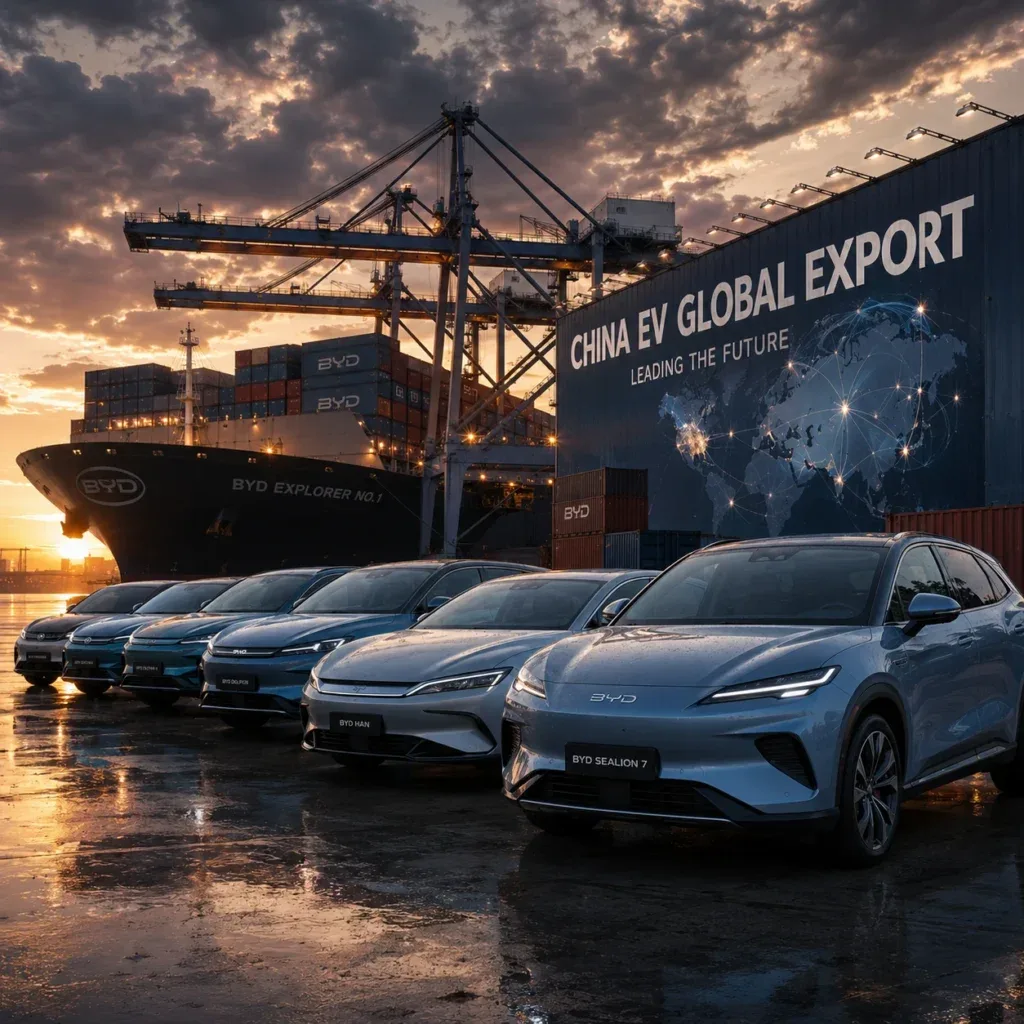
In the 1970s, America was in the middle of an oil crisis. Gas lines stretched around the block. Prices were catastrophic by the standards of the time.
Japan’s automakers saw an opening. Fuel-efficient, reliable, affordable cars from Toyota, Honda, and Datsun flooded American showrooms. Detroit was caught flat-footed. The Japanese brands never left.
Automotive News published an analysis this week with a headline that should make every American automaker uncomfortable: “Iran war accelerates Chinese EV makers’ global expansion — echoing Japan’s 1970s rise.”
The parallel is not subtle. And it might be the most important automotive story of 2026.
What’s Actually Happening
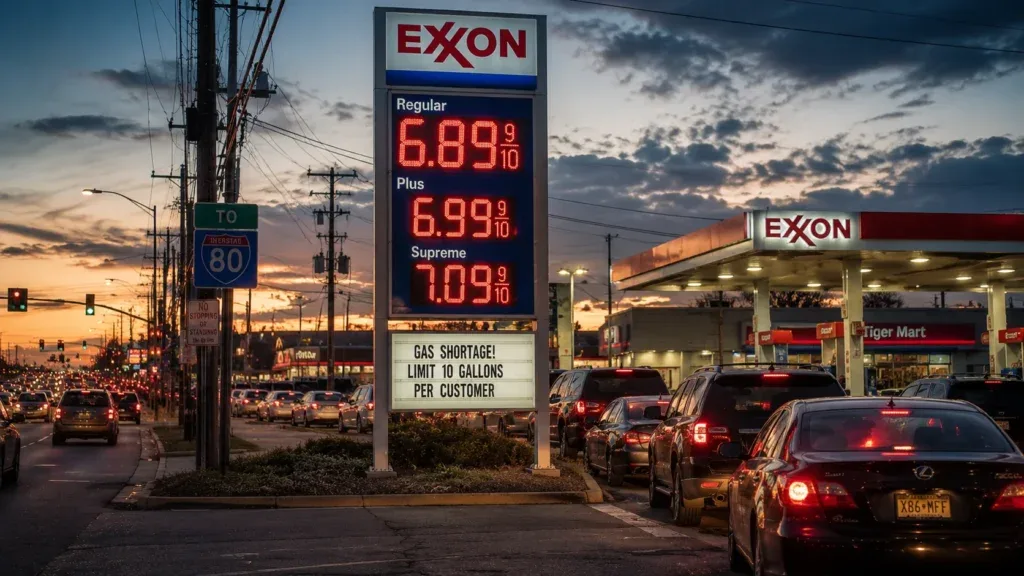
Gas is $4.50 per gallon nationally. The Iran conflict has choked off roughly 20% of global oil supply. Countries across Southeast Asia, Latin America, Europe, and the Middle East are watching their fuel costs surge — and reconsidering what kind of cars they’re buying.
BYD, Xpeng, NIO, and Xiaomi are building EVs at costs that make Western automakers genuinely nervous. BYD’s new Blade Battery 2.0 charges from 10% to 97% in 9 minutes. Their cheapest vehicles start under $12,000 in Chinese domestic pricing. Their exports — into markets where American and European tariffs don’t apply — are growing at rates that look like the early Toyota charts from the 1970s.
In Thailand, BYD took 17% of the entire new car market in April 2026. In Brazil, Chinese EVs now account for over 12% of monthly EV sales. In the Middle East — where you’d expect oil producers to resist electric vehicles — Chinese EVs are finding buyers who are furious about local gas prices that are suddenly less subsidized.
The speed of this expansion is the story. It’s not happening in 10-year timelines. It’s happening in months.
Why American Tariffs Only Solve Part of the Problem
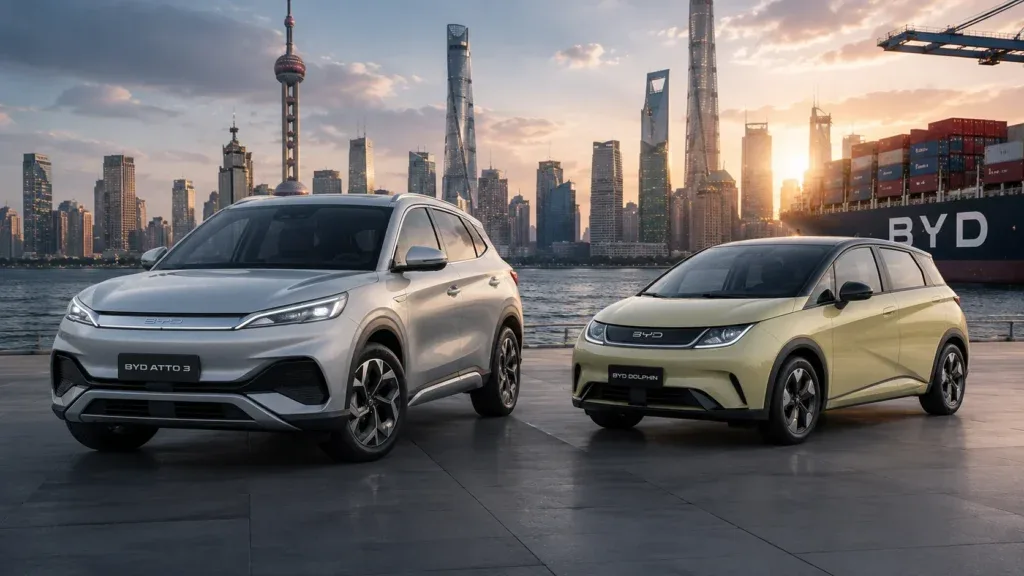
The US currently imposes a 100% tariff on Chinese-made EVs. That effectively blocks BYD, Xpeng, and others from the American market at competitive prices. A BYD Seagull that costs $10,000 in China would effectively cost $20,000 landed in the US before dealer markup — still competitive, but the tariff wall is real.
Here’s what the tariff doesn’t do: it doesn’t stop Chinese automakers from building manufacturing plants outside China. BYD is building a factory in Brazil. Discussions are ongoing about facilities in Mexico, Hungary, and Southeast Asia. A BYD built in Mexico wouldn’t face the 100% China tariff — it would face USMCA rules, which are complicated but navigable.
The 1970s Japanese parallel holds here too. When US manufacturers tried to limit Japanese imports with quotas in the 1980s, Toyota built a factory in Georgetown, Kentucky. The competition didn’t stop. It moved.
What This Means for American Car Buyers
Right now — directly and immediately — almost nothing. Chinese EVs are not available in American showrooms. The tariff wall is real and high.
But indirectly, the acceleration of Chinese EV development is already reshaping what American buyers can expect from domestic brands.
The BYD Blade Battery 2.0’s 9-minute charging capability is the benchmark that Hyundai, Toyota, and GM are now engineering toward. The low-cost manufacturing techniques that make a $10,000 BYD possible are the techniques Ford was studying in its Long Beach EV development center — the one that revealed plans for a $30,000 electric pickup.
Competition that can’t reach your market directly can still force you to improve. Every time BYD announces a new specification milestone — longer range, faster charging, lower price — American and Korean engineers get a new target to beat.
For American buyers, that competition ultimately means better, cheaper, more capable EVs from the brands they can actually buy. The pressure is real. The response — from Ford’s UEV platform, from GM’s next-gen Bolt, from Hyundai’s continued investment in Georgia manufacturing — is also real.
The Iran war made Chinese EV expansion faster. American consumers will eventually benefit from the competition that creates. The question is whether American automakers adapt fast enough to remain competitive when the tariff walls inevitably face political pressure to come down.
The 1970s took a decade to play out. This might take five years.