Toyota Isn’t Slowing Down on Hybrids : There are two kinds of automakers in America right now.
The first group is spending billions trying to convince buyers that fully electric vehicles are the future.
The second group is looking at hybrid sales numbers, looking at gas prices, and quietly building more hybrids.
Toyota belongs firmly in the second group.
And right now, it’s becoming increasingly difficult to argue with the results.
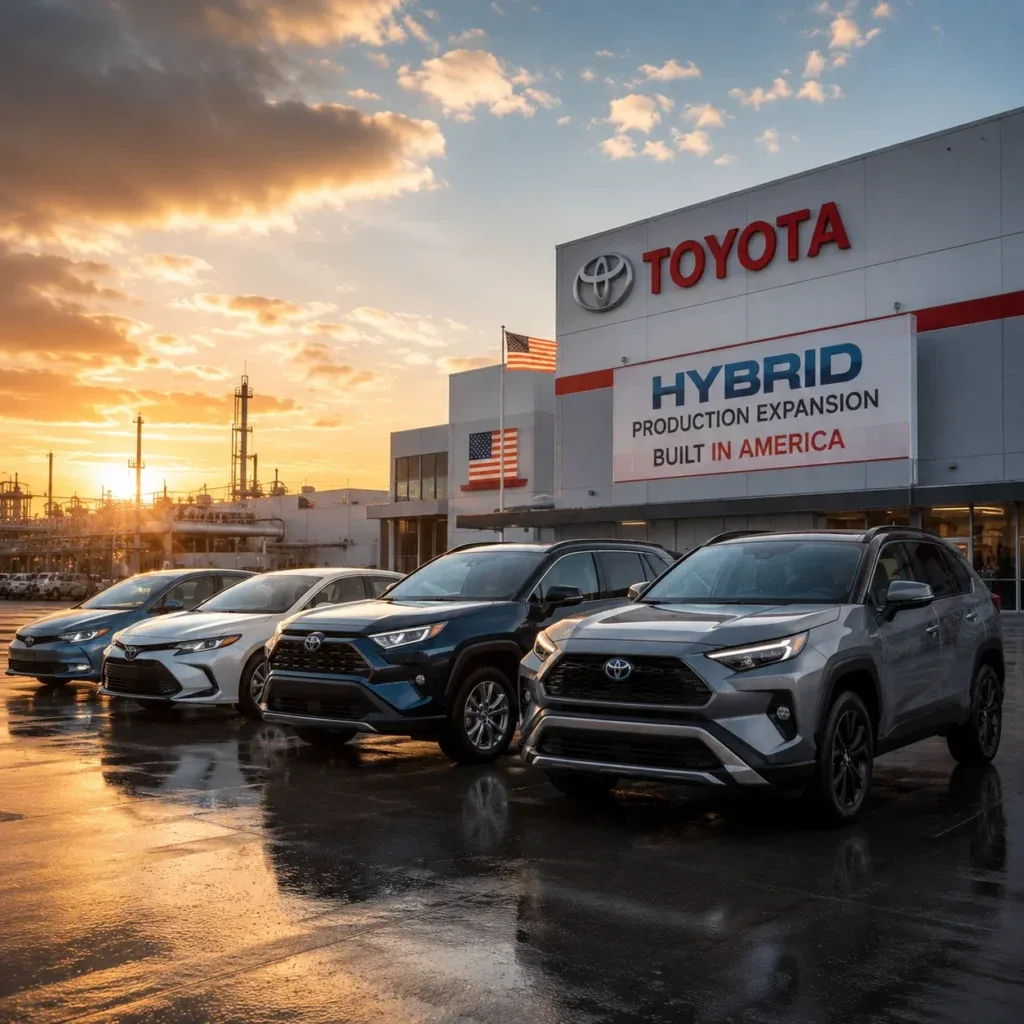
While several automakers have started slowing EV production plans, adjusting investments, or talking more carefully about demand, Toyota is moving in the opposite direction. The company is expanding hybrid production, investing in American factories, and preparing to build significantly more hybrid vehicles over the next few years.
That decision tells you something important.
Toyota doesn’t think America’s hybrid boom is temporary.
It thinks it’s just getting started.
also read : https://driveglobalnews.in/best-hybrid-suvs-under-40000-america/
The Market Is Moving Toward Toyota
For years, critics accused Toyota of moving too slowly toward EVs.
Now many of those same companies are discovering something uncomfortable.
A large number of American buyers still want better fuel economy.
They just don’t necessarily want a completely different ownership experience.
They want to fill up at a gas station.
They want long road trips without charging stops.
They want lower fuel bills without changing how they live.
That’s exactly where hybrids fit.
And Toyota has spent more than two decades building vehicles around that idea.
The result?
The company’s hybrid lineup suddenly looks perfectly positioned for the current American market.
The RAV4 Hybrid Is Becoming One of Toyota’s Biggest Advantages
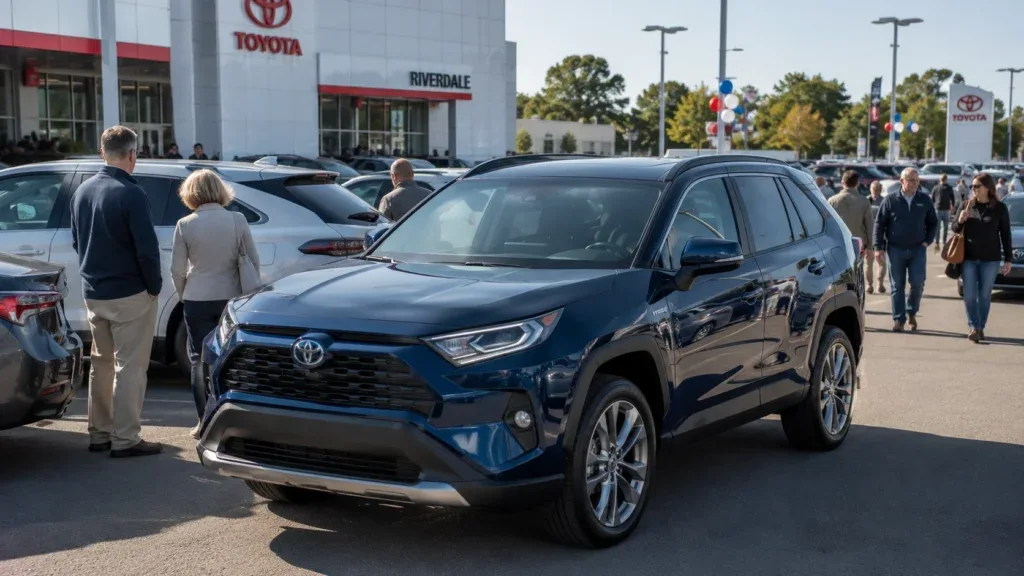
If you want to understand why Toyota is investing so heavily in hybrids, start with the RAV4.
Not the electric bZ4X.
Not some future concept vehicle.
The RAV4 Hybrid.
Because it solves a problem millions of Americans actually have.
Gas isn’t cheap.
Families still want SUVs.
And most buyers don’t want to spend luxury-car money just to save fuel.
The RAV4 Hybrid sits directly in the middle of that equation.
Around 40 MPG.
Available AWD.
Strong resale value.
Toyota reliability.
That’s why demand continues to remain strong across the country.
The bigger story isn’t that Toyota built a successful hybrid SUV.
It’s that buyers keep choosing it over many traditional gas-powered alternatives.
also read : https://driveglobalnews.in/toyota-camry-hybrid-vs-honda-accord-hybrid-202/
Toyota Is Putting Real Money Behind Hybrids
Companies don’t spend hundreds of millions of dollars on products they think are fading away.
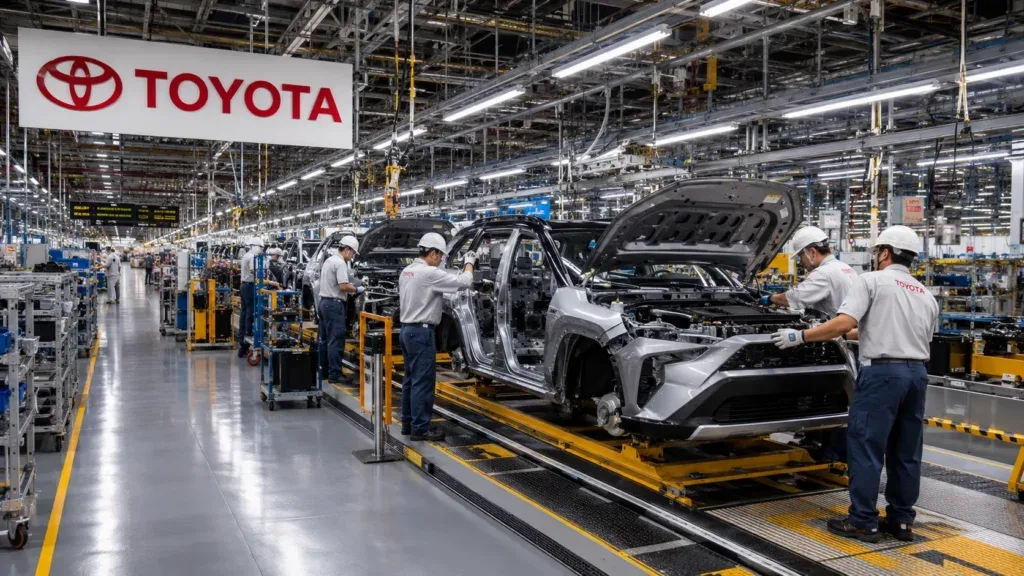
Toyota recently announced a major investment across multiple American manufacturing plants connected to hybrid production. Facilities in states including Kentucky, Mississippi, Tennessee, Missouri, and West Virginia are receiving funding to increase hybrid-related manufacturing capacity.
Part of that investment includes expanding production for hybrid components and preparing American factories for additional hybrid vehicle output. Hybrid Corolla production is also becoming a larger part of Toyota’s U.S. manufacturing strategy.
That’s not a short-term move.
That’s a company preparing for years of demand.
Toyota Thinks Hybrids Will Matter Even More By 2028
One of the most interesting parts of Toyota’s strategy isn’t what it’s building today.
It’s what the company expects to happen next.
Reports indicate Toyota is planning a substantial increase in hybrid and plug-in hybrid production over the coming years, with electrified vehicles expected to represent a larger share of overall output.
That suggests Toyota sees hybrids as more than a transition technology.
It sees them as a major part of the future automotive market.
And honestly, that view doesn’t seem unreasonable.
Because while EV adoption continues to grow, so does demand for vehicles that offer better efficiency without requiring charging infrastructure.
That’s the space hybrids dominate.
The Real Reason Toyota Looks Smart Right Now
The automotive industry spent years debating whether the future would be gas or electric.
Toyota quietly built something in between.
And millions of buyers decided that was exactly what they wanted.
Lower fuel costs.
No range anxiety.
No charging routine.
No major lifestyle adjustment.
Just better efficiency.
Sometimes the most successful strategy isn’t the most exciting one.
It’s the one that matches how people actually live.
Toyota spent years getting criticized for betting on hybrids.
Now it’s expanding hybrid production across America because customers keep showing up to buy them.
At some point, that stops looking like caution.
And starts looking like foresight.