For 40 years, this comparison has started arguments at dinner tables, in office parking lots, and in every automotive forum on the internet.
Toyota Camry or Honda Accord?
In 2026, the question got more interesting. The Camry went hybrid-only — every single Camry sold in America now has a hybrid powertrain. No gas-only option. No choice. You want a Camry, you get a hybrid.
The Accord kept its gas models but added a hybrid lineup that’s become the version most serious buyers want.
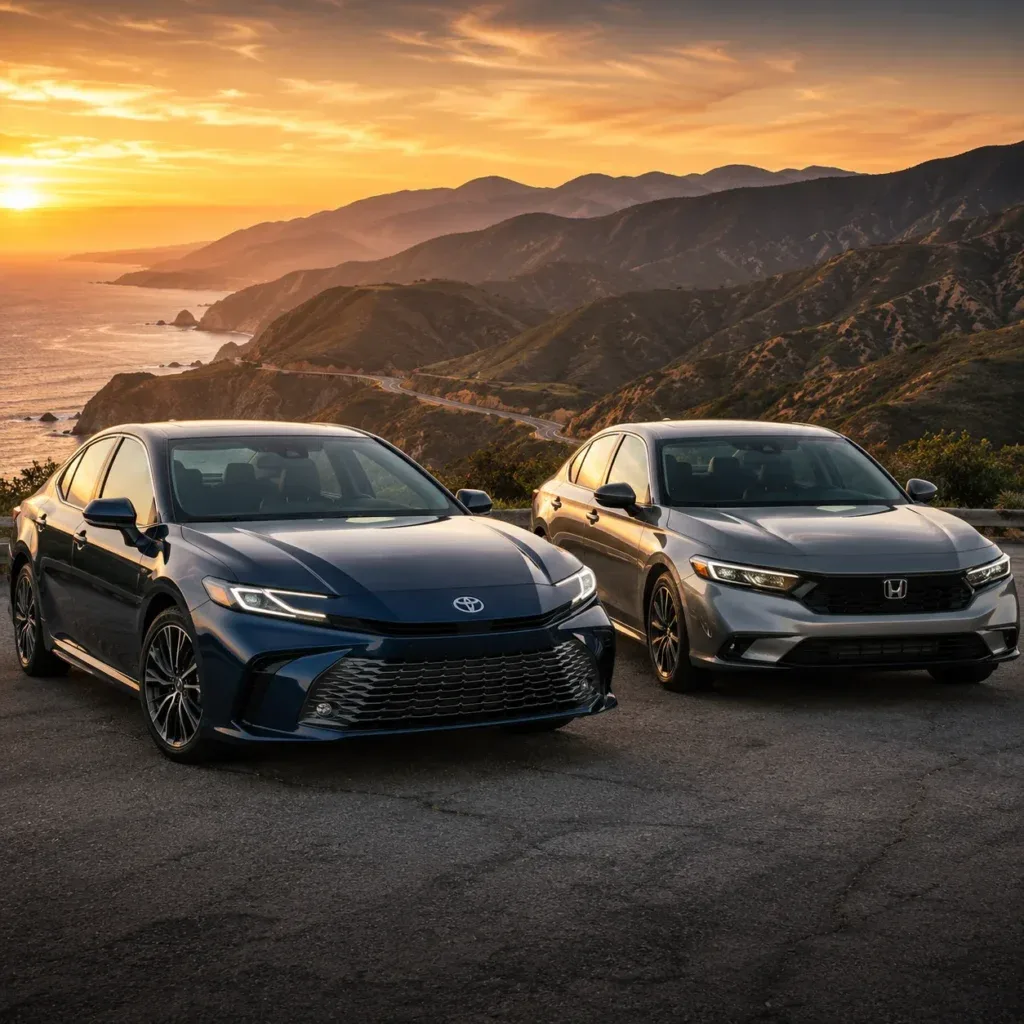
So now it’s Camry Hybrid versus Accord Hybrid. Same segment. Same general purpose. Two very different philosophies about what a family sedan should prioritize.
Car Edge ran the five-year total cost of ownership numbers. The gap between these two cars — once you include fuel, insurance, maintenance, depreciation, and loan interest — is $2,919 over five years.
That’s real money. And it doesn’t fall where most people expect.
also read : https://driveglobalnews.in/most-reliable-toyota-suvs-in-the-usa-ranked/
The Numbers — Everything That Matters
| 2026 Toyota Camry Hybrid | 2026 Honda Accord Hybrid | |
|---|---|---|
| Starting Price | $29,300 | $33,795 |
| Fuel Economy | 51 MPG combined | 44 MPG combined |
| Horsepower | 225 HP | 204 HP |
| Rear Legroom | 38.9 inches | 40.8 inches |
| Trunk Space | 15.1 cu ft | 16.7 cu ft |
| AWD Available | Yes | No |
| 5-Year Ownership Cost | $34,297 | $37,216 |
| Insurance (avg/year) | ~$2,372 | ~$2,232 |
| Built | Georgetown, Kentucky | Marysville, Ohio |
The Camry wins on price, fuel economy, horsepower, and AWD availability. The Accord wins on rear legroom, trunk space, and — surprisingly — insurance cost.
Both are built in America. Both earn IIHS Top Safety Pick+. Both will run 200,000 miles if you maintain them.
The competition is real and it’s close. But it’s not tied.
The Case for the Toyota Camry Hybrid
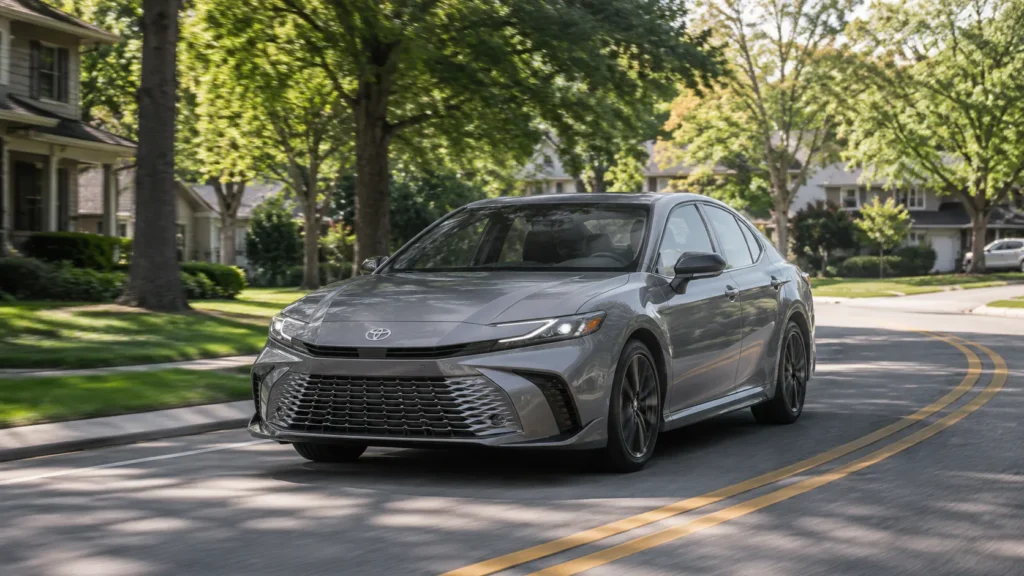
Start with the number everyone notices: 51 MPG combined.
Not 44 MPG. Not 48 MPG. Fifty-one miles per gallon in a full-size family sedan. That’s Prius territory — in a car that doesn’t look like a Prius, seats five adults comfortably, and starts at $29,300.
At $4.50 gas and 15,000 annual miles, 51 MPG costs approximately $1,324 per year in fuel. The Accord Hybrid at 44 MPG costs approximately $1,534 per year. That’s $210 per year less for the Camry. Over five years — $1,050 in pure fuel savings.
Combined with the $4,495 lower starting price at the base hybrid comparison (Camry LE vs Accord Sport Hybrid) — the Camry is over $5,500 cheaper to own at the five-year mark before you even factor in the rest of the ownership equation.
Car Edge’s actual five-year ownership cost calculation — including depreciation, insurance, maintenance, loan interest, and fuel — comes in at $34,297 for the Camry versus $37,216 for the Accord. The Camry costs $2,919 less to own over five years.
That’s not a statistical tie. That’s a meaningful real-world difference.
The AWD option is the Camry’s other quiet advantage. The Accord is front-wheel drive at every trim level. No AWD option exists. The Camry XSE AWD gives buyers in Colorado, Minnesota, Michigan, and any other state that sees real winter weather a genuine all-weather option — without paying a premium that pushes it above the Accord. The Camry XSE AWD still comes in below the Accord Touring Hybrid’s price.
Toyota also beats Honda on reliability in every vehicle category except midsize trucks, according to the most recent comparative reliability data. The Camry’s hybrid system — Toyota’s 5th Generation system, shared with the Prius — has been continuously refined for over two decades. The failure modes are known and rare. The repair costs when something does go wrong are lower than the Accord’s more complex dual-motor system.
Buy the Camry Hybrid if: Fuel economy is the priority. AWD matters for your climate. You’re keeping the car 8-10 years and want the proven track record. Or budget is the deciding factor and you need the lowest possible purchase price.
also read : https://driveglobalnews.in/kia-telluride-hybrid-vs-toyota-highlander-hybrid/
The Case for the Honda Accord Hybrid
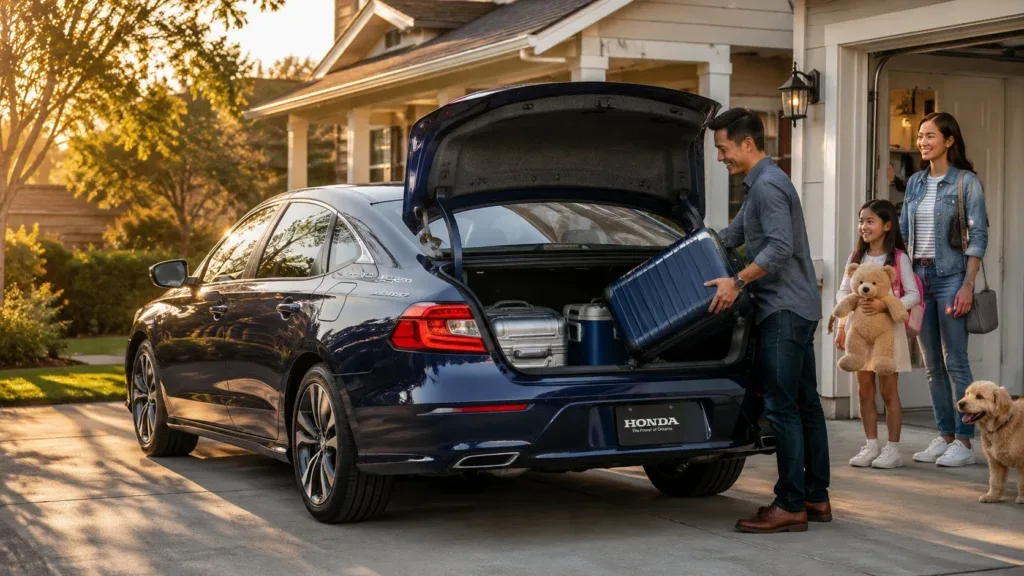
The Accord doesn’t win on spreadsheets. It wins in the driver’s seat and in the back seat.
40.8 inches of rear legroom. That’s almost two inches more than the Camry’s 38.9 inches. For a family that regularly carries tall adults — parents over 6 feet, teenage kids who grew too fast, visiting relatives who are done contorting themselves — those two inches are felt on every drive over 30 minutes.
The comparison isn’t abstract. Put a 6’1″ adult behind a 5’10” driver in a Camry, then do the same in an Accord. The difference is immediate. The Accord’s rear passengers are comfortable. The Camry’s rear passengers are managing.
The trunk is the same story. 16.7 cubic feet versus 15.1 cubic feet. Not dramatic. But families who regularly pack for road trips — luggage, strollers, sports equipment, the mountain of stuff that accumulates when you have children — will feel the difference at every departure.
The Honda infotainment system on the Sport Hybrid and above features a 12.3-inch touchscreen with Google built-in natively integrated. The Camry LE ships with an 8-inch screen — you have to step up to the SE or XSE for the larger display. Honda’s standard at base is noticeably larger.
The Accord’s dual-motor hybrid system delivers power differently than Toyota’s parallel hybrid. Where the Camry’s system optimizes for efficiency — sometimes at the expense of feel — the Accord’s system delivers more immediate throttle response and a driving experience that feels more engaged. Every reviewer who has driven both back-to-back describes the same thing: the Accord feels more like a sports sedan. The Camry feels more like an appliance.
That’s not a criticism of the Camry. Appliances are reliable and efficient. But if getting into your car every morning should feel like something more than commuting — the Accord delivers that.
Insurance surprise: The Accord averages approximately $2,232 per year for full coverage versus the Camry’s $2,372. The Camry’s higher purchase price pushes its comprehensive and collision premium slightly higher — meaning Honda’s slightly lower vehicle value actually works in buyers’ favor on insurance costs. It’s a modest difference — about $140 per year — but it slightly offsets the ownership cost gap.
Buy the Accord Hybrid if: You regularly carry tall adults in the back. Driving feel genuinely matters to your daily experience. You want the larger screen standard without stepping up a trim. Or you prioritize the more engaging driving character over the maximum fuel economy number.
The Five-Year Money Reality
Here’s the complete picture that most comparison articles skip.
Toyota Camry Hybrid LE, 5 years: Purchase price: $29,300 Fuel cost (51 MPG, 15K miles, $4.50 gas): $6,618 Insurance (5 years): $11,860 Maintenance: ~$3,250 Depreciation: variable Car Edge 5-year total: $34,297
Honda Accord Sport Hybrid, 5 years: Purchase price: $33,795 Fuel cost (44 MPG, 15K miles, $4.50 gas): $7,670 Insurance (5 years): $11,160 Maintenance: ~$3,500 Depreciation: variable Car Edge 5-year total: $37,216
The Accord’s slightly lower insurance cost saves $700 over five years. The Camry’s better fuel economy saves $1,052 over five years. The Camry’s lower purchase price saves $4,495. Net result: $2,919 in favor of the Camry over five years.
Who Should Buy Which — The Honest Final Answer
The Camry wins the financial argument. Every number points the same direction: lower purchase price, better fuel economy, lower five-year ownership cost, available AWD, proven reliability.
The Accord wins the experiential argument. More rear room, bigger standard screen, better driving feel, slightly lower insurance.
If you’re buying primarily for financial reasons — commuting, keeping costs down, long-term ownership — the Camry is the correct choice. $2,919 over five years is real money. 51 MPG at $4.50 gas is genuinely felt every week. The AWD option for winter states is available nowhere else in this comparison.
If you regularly carry tall adults and they matter more to you than $2,919 over five years — the Accord is worth it. Rear legroom quality of life compounds over years of ownership in ways that don’t appear in CarEdge calculations.
If driving feel matters to you every single day — the Accord rewards you for caring. The Camry doesn’t care whether you’re paying attention.
Two excellent sedans. One clear financial winner. The right answer depends on which kind of excellent matters more to your actual life.
See your exact 5-year ownership costs for both with our Car Ownership Cost Calculator.