Five days.
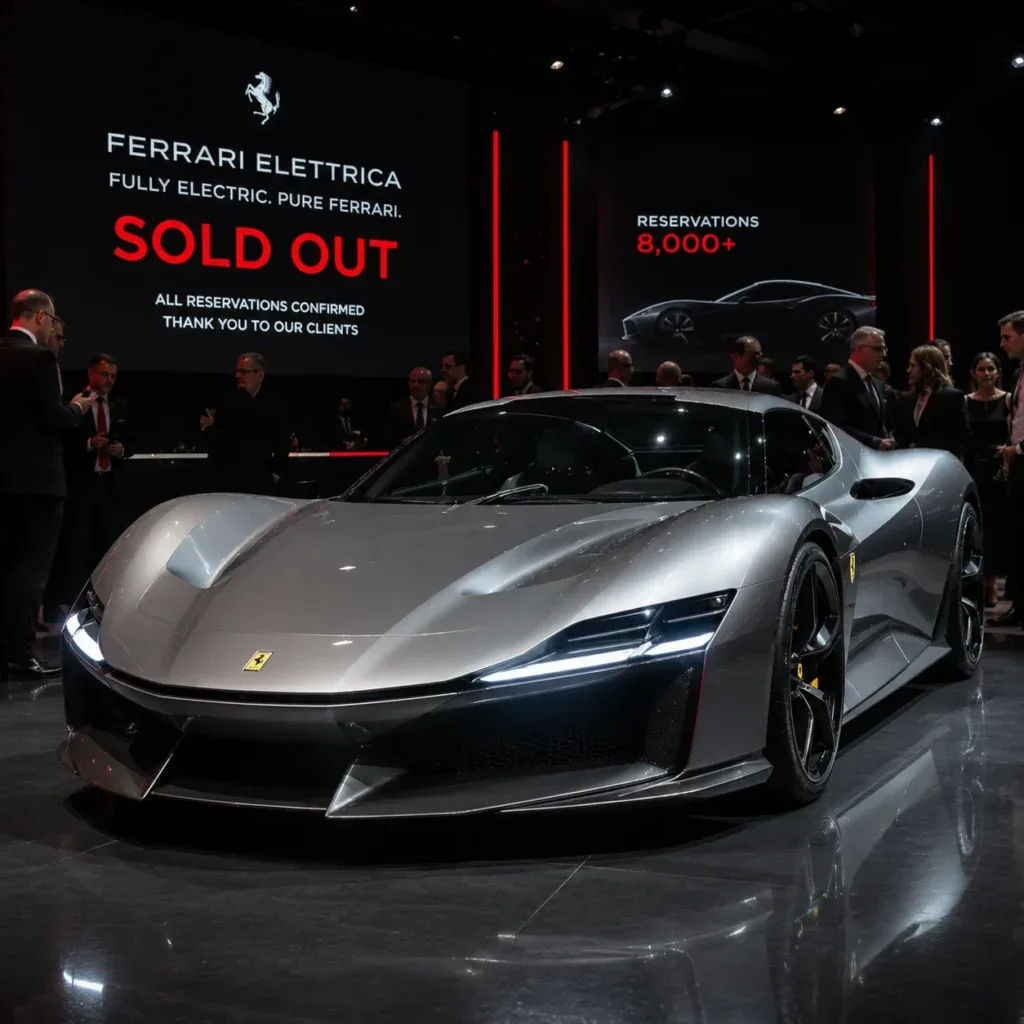
The Ferrari Luce had its world premiere on May 25. By May 30 — five days later — Ferrari CEO Benedetto Vigna confirmed to Bloomberg that the order book already extends toward the end of 2027.
A car that costs $640,000. Sold out for 18 months. In five days.
That’s the EV market in May 2026 in one headline. Ultra-premium demand is extraordinary. Mass-market demand is complicated. And somewhere in between, several genuinely interesting things happened this week that most people missed.
also read : https://driveglobalnews.in/cheapest-cars-to-maintain-usa/
The Ferrari Number That Nobody Expected
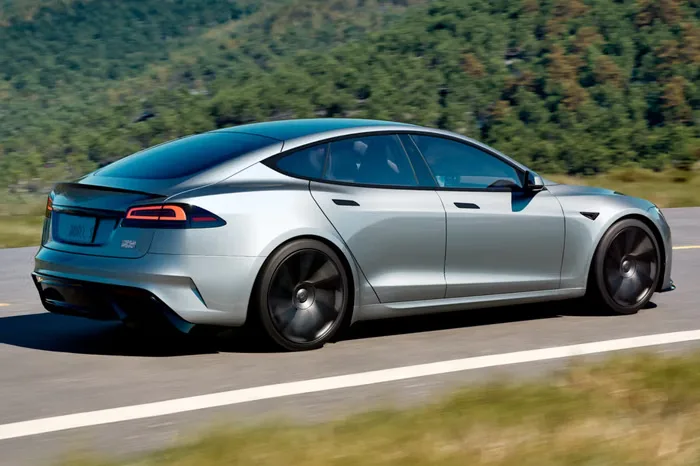
The stock market punished Ferrari shares immediately after the Luce premiere. We covered that. Wall Street’s concern: the Luce is slower in a straight line than a $97,000 Tesla Model S Plaid, and analysts questioned whether Ferrari’s brand premium can justify a 6x price multiplier over the nearest competitor on raw performance metrics.
Vigna’s order book update answers that question clearly: it can.
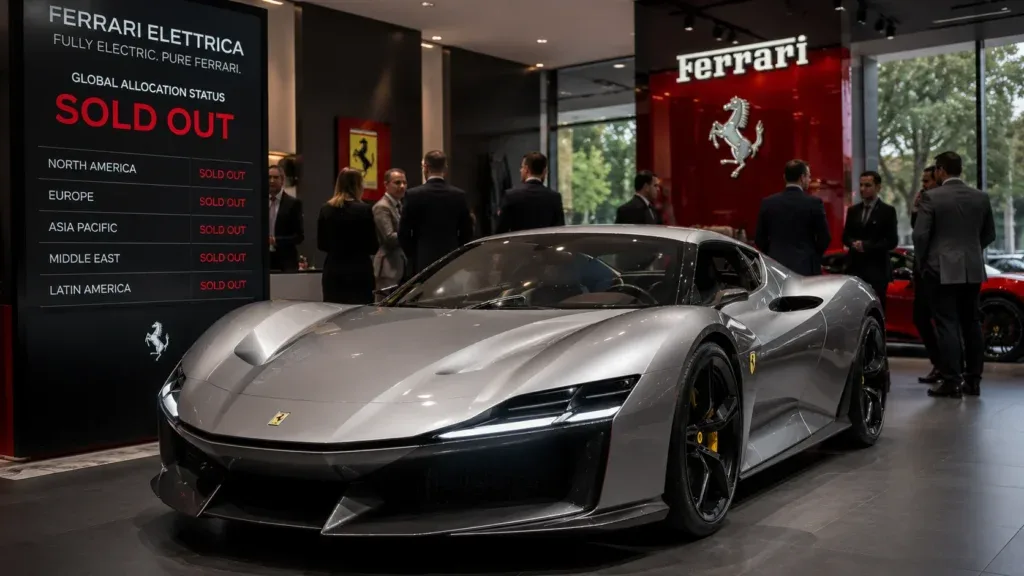
Ferrari sold production allocations for the Luce through late 2027 before the automotive press had filed their first full reviews. The buyers — existing Ferrari customers who have purchased multiple previous models — weren’t waiting for a Car and Driver comparison test. They wanted a Ferrari EV. Now they have one on order.
The order timeline also confirms what Ferrari’s commercial strategy has always been: severely constrained production, deliberately managed scarcity, a customer waitlist that reinforces exclusivity. The Luce isn’t being sold to anyone who wants one. It’s being sold to people who have already proven their Ferrari loyalty. New customers, per Ferrari’s statement, are also ordering — which matters strategically. If the Luce brings genuinely new buyers into the Ferrari ecosystem, the long-term commercial case is even stronger than the order book alone suggests.
The performance comparison to cheaper EVs will continue in automotive media. It won’t affect Ferrari’s order intake.
Mercedes AMG GT 4-Door: The Number That Rewrites the Spec Sheet
While Ferrari got the premiere attention, a confirmed specification update on the Mercedes-AMG GT 4-Door electric quietly rearranged the performance hierarchy this week.
The official numbers: 1,153 horsepower and 1,475 lb-ft of torque from three axial-flux motors. Zero to 60 mph in 2.0 seconds flat. An electronically limited top speed of 186 mph. A 106 kWh NCMA battery chargeable at up to 600 kW. Estimated maximum WLTP range of over 435 miles.
Let’s stay on that charging number for a moment.
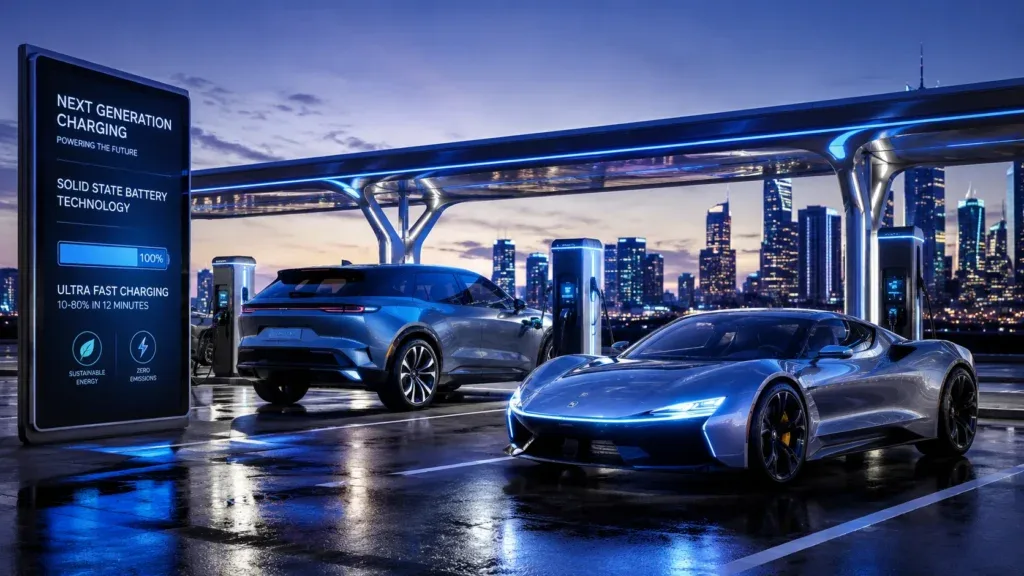
600 kW peak charging. The Ferrari Luce charges at 350-400 kW. The Porsche Taycan Turbo GT charges at 320 kW. The Hyundai Ioniq 5 — the fastest-charging mainstream EV in America — charges at 350 kW. The Mercedes AMG GT 4-Door is confirmed to charge at 600 kW, which would make it the fastest-charging production vehicle on earth.
At 600 kW, adding 100 miles of range takes approximately 3.5-4 minutes. A 20-minute charging stop at a compatible station would add roughly 280-300 miles. For a vehicle targeting buyers who take it on aggressive driving tours and long road trips — that charging speed changes what “range anxiety” means in a practical sense. You can drive it hard, stop for lunch, and leave with a full battery.
The price range for the AMG GT 4-Door is confirmed at $150,000-$210,000 depending on configuration. U.S. deliveries begin in the second half of 2026.
The competitive positioning against the Ferrari Luce is direct and aggressive. Mercedes is offering more horsepower, faster charging, longer range, and a lower price. The Luce counters with Ferrari’s brand, the Jony Ive interior, and micro-LED technology. Both will sell every unit they build. Different buyers, similar outcome.
also read : https://driveglobalnews.in/toyota-2026-lineup-america-hybrid-strategy/
The Other EV News Worth Knowing This Week
Stellantis confirmed the industry’s first range-extended large SUV and range-extended pickup at their May 21 Investor Day. CEO Antonio Filosa was specific: “We will introduce a new range-extended EV, including the industry’s first range-extended large SUV and the industry’s first range-extended pickup.” The Ram 1500 REV is the pickup. The large SUV — built on the STLA Frame platform with 14,000-pound towing capacity — adds a new category that no EV has touched before. Range-extended large SUV. If Stellantis executes, this vehicle solves the argument that EVs can’t serve full-size SUV buyers who tow and travel long distances simultaneously.
Toyota’s solid-state battery is still happening — and 750 miles of range is the target. U.S. News reported this week that Toyota’s solid-state battery development continues toward commercialization, with a range target of approximately 750 miles. That number, if achieved in a production vehicle, doesn’t just lead the EV market — it eliminates the core practical objection to EV ownership for virtually every American driver. The bZ5X, expected to start around $50,000, is the likely first vehicle to use it. Timeline remains 2027-2028 for production readiness.
Lucid’s Cosmos SUV confirmed for late 2026 production start, sales in 2027. Starting below $50,000 with Lucid’s UX 4.0 software platform, the Cosmos is Lucid’s answer to the affordability gap that has kept the Air as a low-volume luxury product. If Lucid can deliver a $50,000 SUV with the engineering quality their Air demonstrated — the Rivian R2 has genuine competition arriving in 2027.
What All of This Actually Means for Buyers
The EV market in late May 2026 is bifurcating in ways that are getting clearer every week.
At the high end — Ferrari, Mercedes AMG, Porsche — demand is extraordinary and supply is the constraint. These buyers have resources to wait, aren’t deterred by tariff uncertainty, and aren’t price-sensitive in any conventional sense. The $640,000 Luce sold out in five days. The $150,000-$210,000 Mercedes AMG GT 4-Door will do the same.
At the mass-market level — where most American buyers live — the picture is more complicated. EVs at $35,000-$50,000 are the strongest they’ve ever been on specifications and value. The market has weakened since the federal tax credit expired. Gas at $4.50+ is slowly rebuilding the financial case. The next wave of launches — Kia EV3, Rivian R2 Standard, Lucid Cosmos — arrives in the second half of 2026 with products specifically designed for this price-sensitive environment.
The EV market isn’t growing uniformly. It’s growing at the extremes and recalibrating in the middle. Whether the middle-market recalibration resolves through new product launches, state incentives, or the sustained pressure of $4.50+ gas is the question that will define American EV adoption for the next two years.
This week’s news suggests the high end has already answered its version of that question.