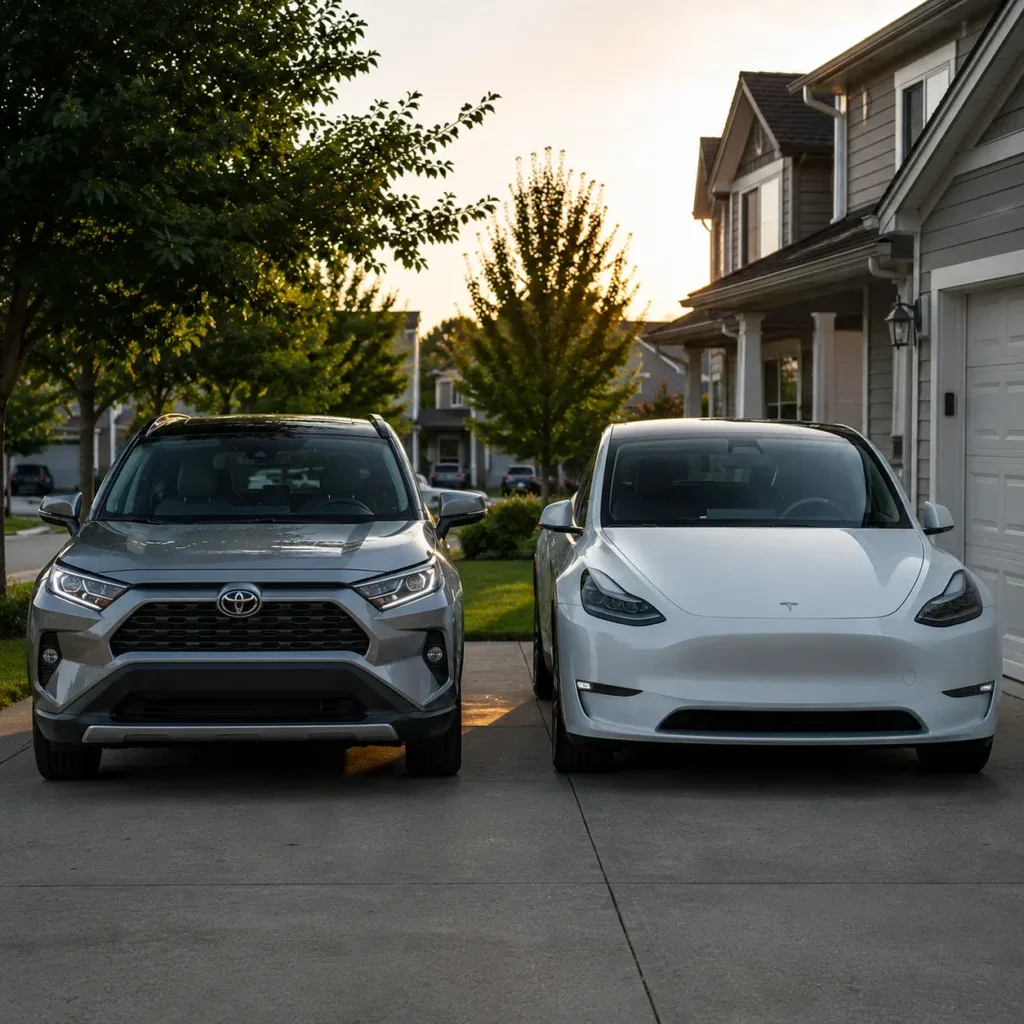
RAV4 Hybrid vs Tesla Model Y : A surprising number of people start this comparison with the wrong question.
They ask:
“Which vehicle is cheaper?”
That’s understandable.
But it’s also incomplete.
Because buying a vehicle is a little like buying a house.
The purchase price matters.
What happens afterward matters even more.
Fuel.
Insurance.
Maintenance.
Depreciation.
Repairs.
Registration.
Daily use.
That’s where ownership gets interesting.
And that’s why the battle between the Toyota RAV4 Hybrid and Tesla Model Y has become one of the most fascinating comparisons in America.
On the surface, they seem similar.
Both are practical family vehicles.
Both promise lower operating costs.
Both attract buyers who think long-term.
Yet they represent two completely different philosophies.
One says:
“Let’s use less fuel.”
The other says:
“Let’s stop buying fuel altogether.”
The question is simple.
Five years from now, which approach leaves more money in your pocket?
The answer is more complicated than many people expect.
The Purchase Price Sets The Tone
Let’s start where every ownership journey begins.
The check.
Or more accurately, the loan.
The RAV4 Hybrid generally enters the conversation with a lower purchase price.
That’s an immediate advantage.
Lower payments.
Lower financing costs.
Less money committed on day one.
The Model Y asks for a larger financial commitment upfront.
Tesla owners often justify that difference by pointing toward future savings.
And to be fair, there is logic behind that argument.
But the starting point still matters.
Because every dollar spent upfront is a dollar that could have stayed in your bank account.
Fuel vs Electricity
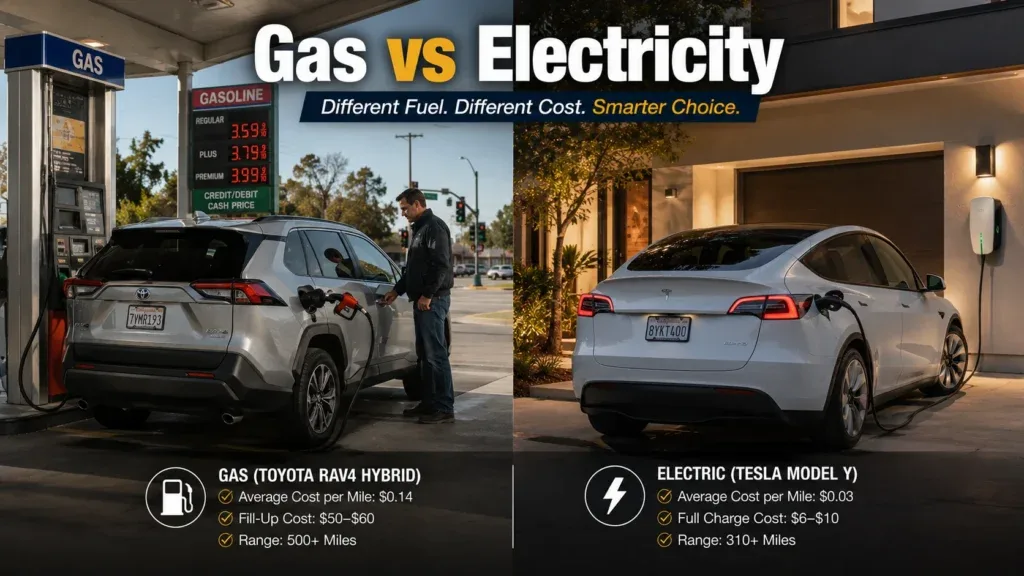
This is where things get interesting.
The RAV4 Hybrid is incredibly efficient.
Many owners spend far less on fuel than they expected.
Toyota’s hybrid system has spent decades proving itself.
The Model Y takes a completely different route.
No gasoline.
Just electricity.
For drivers who charge at home and benefit from reasonable electricity rates, operating costs can be remarkably low.
Sometimes shockingly low.
The advantage usually goes to Tesla.
But not always.
Electricity prices vary.
Charging habits vary.
Driving habits vary.
The difference depends heavily on where you live and how you drive.
Insurance Can Change Everything

This is the ownership cost many buyers underestimate.
A lot.
The RAV4 Hybrid often benefits from relatively predictable insurance costs.
The Tesla can be a different story.
Depending on location, driving history, and provider, insurance expenses may be noticeably higher.
That doesn’t automatically erase Tesla’s fuel savings.
But it can reduce them significantly.
And that’s why ownership calculations should never focus on energy costs alone.
Real ownership is bigger than fuel.
Also Read:
https://driveglobalnews.in/why-monthly-payments-matter-more-than-vehicle-price/ – The ownership costs many buyers overlook while focusing on the sticker price.
Maintenance Is A Different Conversation
Toyota and Tesla approach maintenance from opposite directions.
The RAV4 Hybrid still has an engine.
Oil changes.
Engine-related service.
Traditional maintenance items.
The Model Y eliminates many of those requirements.
No oil changes.
No exhaust system.
Fewer moving parts in some areas.
Tesla generally enjoys an advantage here.
But there’s a catch.
When repairs do occur, repair costs can sometimes be more unpredictable.
That’s one reason long-term ownership discussions often become more complicated than expected.
The Depreciation Question
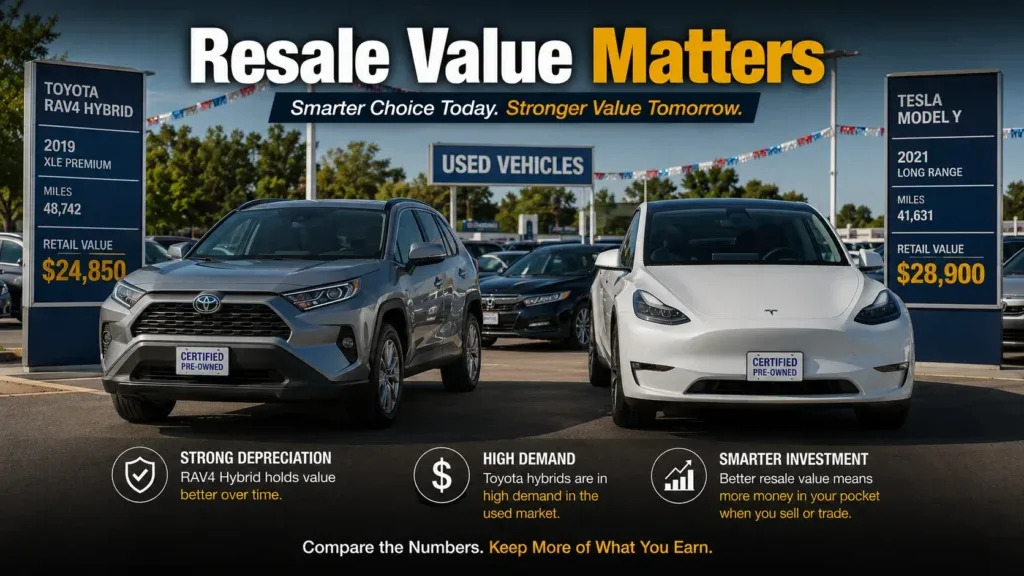
Few ownership costs matter more than depreciation.
Yet few buyers think about it.
Historically, Toyota products have performed extremely well.
The RAV4’s reputation for reliability helps maintain strong demand in the used market.
Tesla’s depreciation story has been more dynamic.
Market conditions, pricing changes, and EV demand can influence resale values significantly.
That’s not necessarily bad.
It’s simply less predictable.
Predictability has value.
Especially for buyers who plan ahead.
Which Vehicle Creates Less Stress?
This question rarely appears on spreadsheets.
But it matters.
A lot.
The RAV4 Hybrid asks almost nothing from its owner.
Fill it with gas.
Drive it.
Maintain it.
Repeat.
The Model Y introduces a different experience.
Charging habits become part of ownership.
Road-trip charging becomes part of ownership.
Software updates become part of ownership.
Many Tesla owners love that experience.
Others prefer simplicity.
The right answer depends on personality as much as economics.
Also Read:
https://driveglobalnews.in/the-biggest-car-buying-mistake-americans-will-make-this-year/ – Why focusing on the wrong ownership costs can become surprisingly expensive.
The Five-Year Winner Depends On The Driver
Here’s the truth many comparison articles avoid.
There isn’t one answer.
A high-mileage commuter with home charging may save significant money with the Tesla Model Y.
The fuel savings can be substantial.
Maintenance costs can remain low.
The ownership math often looks impressive.
A typical family driving moderate distances may find the RAV4 Hybrid surprisingly competitive.
Lower purchase costs.
Strong reliability.
Predictable ownership.
Excellent resale value.
The gap becomes much smaller than many people expect.
Which One Would I Buy?
If my primary goal was maximizing technology and reducing gasoline spending as much as possible, I’d strongly consider the Model Y.
The ownership experience remains unique.
The operating costs can be excellent.
But if I were spending my own money and planning to keep one vehicle for the next five years with the least amount of uncertainty, I’d lean toward the RAV4 Hybrid.
Not because it’s more exciting.
Because it’s easier to predict.
And when it comes to personal finance, predictability is often underrated.
The Real Lesson From This Comparison
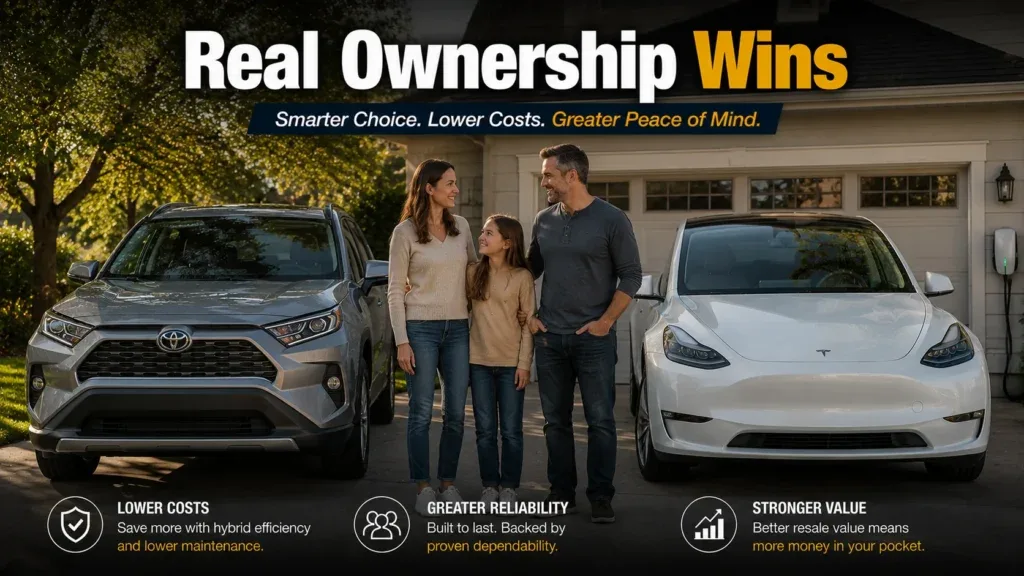
The interesting thing isn’t whether the Toyota or Tesla wins.
It’s what the comparison reveals.
Five years ago, buyers often focused on horsepower.
Today they’re focusing on ownership.
Monthly expenses.
Long-term value.
Operating costs.
That’s a smarter conversation.
And it’s one that’s becoming increasingly common across America.
Because the best vehicle isn’t always the one that costs the least on purchase day.
It’s the one that quietly saves money year after year without demanding much in return.
And whether that vehicle ends up being a RAV4 Hybrid or a Tesla Model Y depends less on the badge on the hood and more on the life of the person behind the wheel.