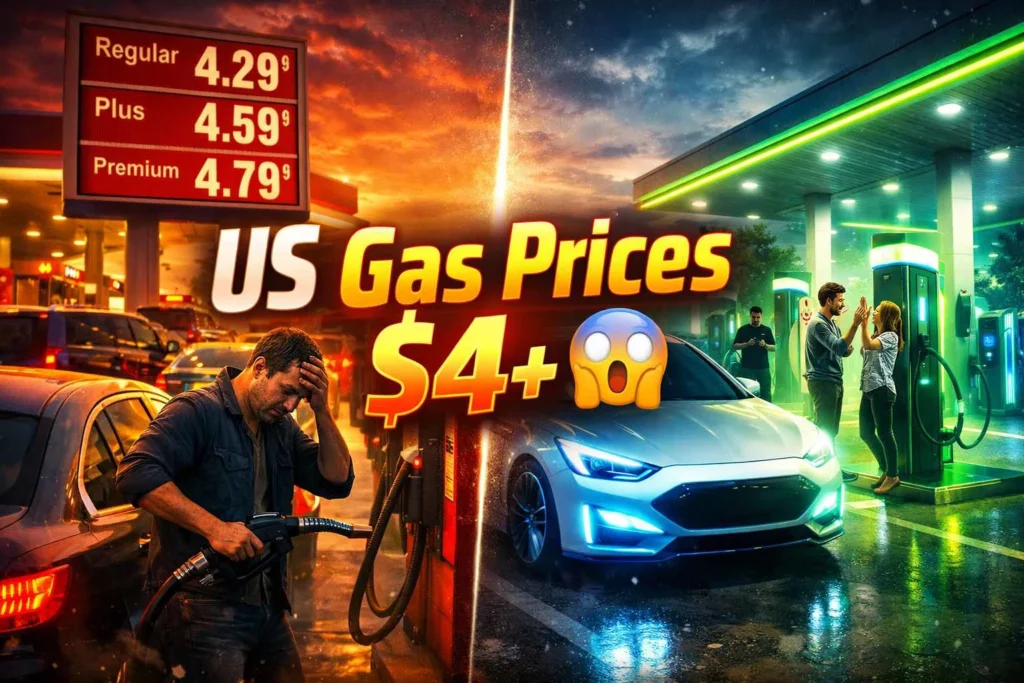
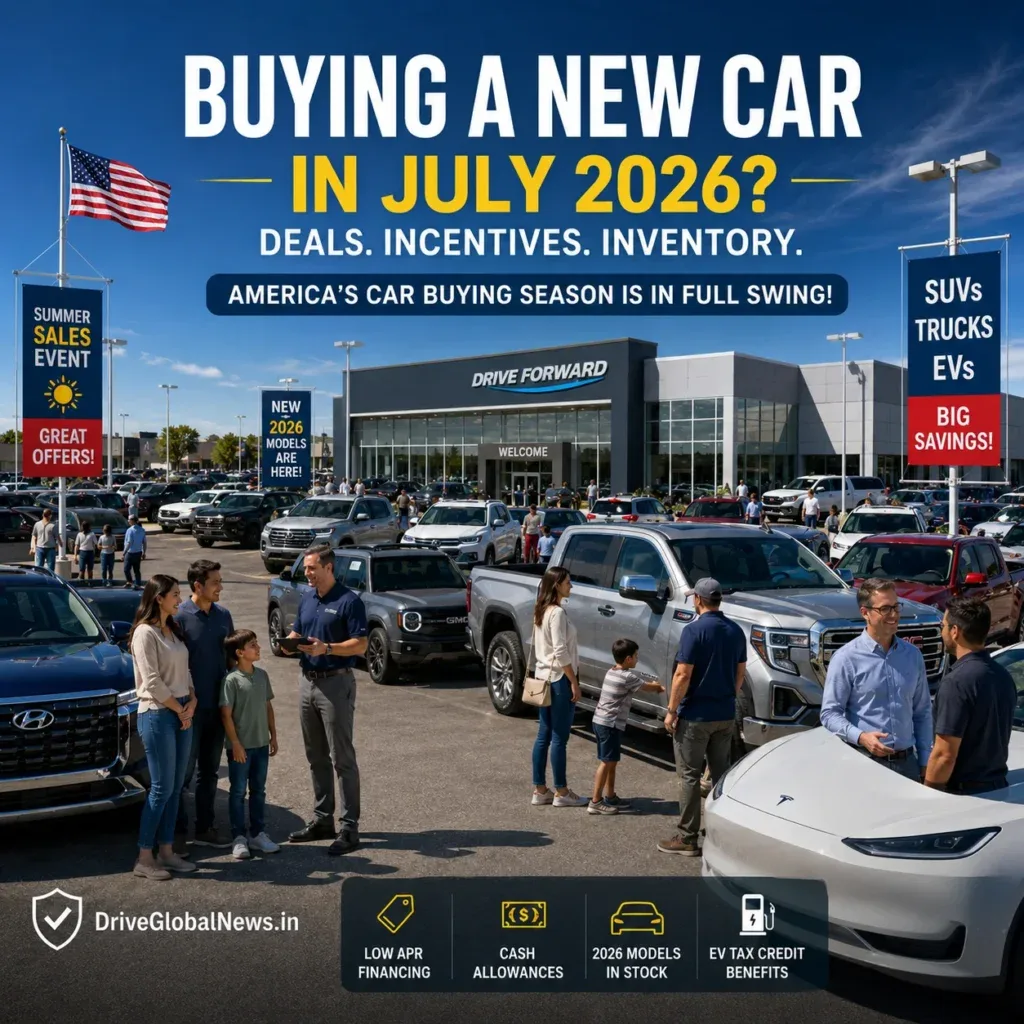
Three months ago, automotive analysts were writing the kind of cautious headlines that signal a market in trouble.
Tariffs added $5,000 to $8,900 to import prices. The average new car payment hit $812 per month. EVs were sitting on lots for 243 days. New vehicle sales were down year-over-year in April and May. Every signal pointed toward a market that was grinding down under the weight of too many headwinds at once.
Then July happened.
Cox Automotive — the most widely cited data source in the automotive industry — confirmed today that July 2026 is tracking as the strongest new vehicle sales pace of the entire year. Not a recovery. Not a partial bounce. The strongest month of 2026, in a market everyone expected to struggle through summer.
Ford announced the same day that it’s raising its full-year 2026 profit outlook. Despite tariffs. Despite EV write-downs. Despite production disruptions.
Something shifted. Here’s what actually happened — and what it means for anyone buying a car right now.
The Numbers Behind the Surprise

Cox Automotive’s July 30 sales data covers the first three weeks of the month, which gives a reliable projection for full-month performance. Their assessment: the seasonally adjusted annualized rate of vehicle sales in July is running above every previous month in 2026.
For context: the SAAR measures how many vehicles America would sell in a year if the current month’s pace continued for twelve months. A reading above 16 million is considered healthy. A reading below 15 million signals genuine market stress.
July’s number has come in above expectations. That’s not a trend yet — one strong month doesn’t erase five months of cautious data. But it’s a meaningful signal that something in the demand environment has shifted.
The most likely explanation combines three things happening simultaneously.
Pent-up demand released. The April and May slowdowns created a backlog of buyers who genuinely needed vehicles but were waiting to see whether tariff prices would stabilize. They did. The dramatic week-to-week price swings of April and May settled into a new normal that, while higher than before, is at least predictable. Buyers who postponed decisions started executing them.
Manufacturer incentives working. The $18,000 in lease cash behind the Hyundai Ioniq 9. The $12,000 on the Kia EV9. The $13,739 off the Ram 1500. Manufacturers who were sitting on aging inventory pushed aggressive incentive programs in June and July. Those programs pulled buyers off the fence. Lease payments that looked unacceptable in April looked compelling in July with $18,000 in manufacturer support behind them.
Rate psychology shift. The Federal Reserve held rates steady at its July 30 meeting — confirming what most buyers already suspected. Rates are not going down this year. Once buyers accepted that the current 6.5-7% financing environment is permanent for 2026, the logic of waiting disappeared. Waiting for lower rates that aren’t coming is just paying rent in your old car.
Ford’s Story — Raising Guidance Despite Everything
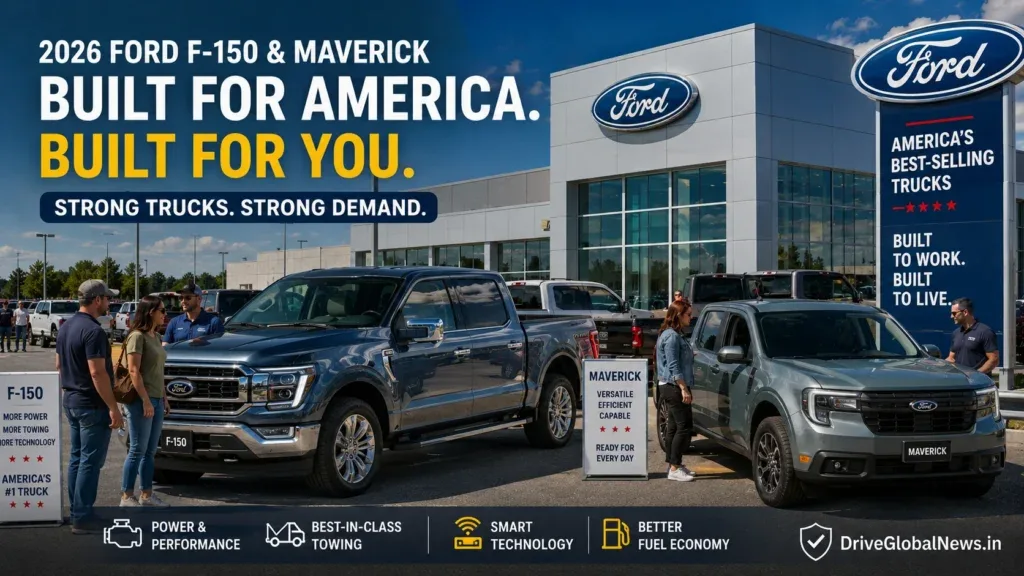
Ford raising its full-year 2026 profit outlook on the same day as the strong sales data is not a coincidence. They’re reading the same demand signals.
The specific language from Ford’s guidance update: raising outlook “despite tariffs, EV charges, and production disruptions.” Each of those three qualifiers is a genuine headwind.
The 25% EU tariff affects Ford’s European-manufactured vehicles and components. The EV charges are ongoing losses from the Model e electric vehicle division that Ford has been burning cash on for three years. The production disruptions come from the ongoing supplier complexity of transitioning manufacturing operations.
Ford is raising guidance anyway because the business performing better than expected isn’t the EV business or the international business — it’s the American truck business. The F-Series. The Maverick. The Bronco. The vehicles that Ford makes in American factories for American buyers who are clearly still buying.
The F-150 remains the best-selling vehicle in America. It has been for 49 consecutive years. Every year, automotive observers wonder if something will finally break that streak. Every year, the streak continues. In July 2026, with sales tracking at their strongest monthly pace of the year, the F-Series is almost certainly pulling a significant portion of that volume.
What It Means for Buyers Right Now
Strong sales momentum in July has a counterintuitive implication for buyers: the best deals of the summer may be ending.
When inventory moves quickly, dealer incentive to discount decreases. The Ram 1500 that was 15% off in early July because it had been sitting for 90 days becomes less negotiable when July’s sales pace shows it’s moving. Manufacturers pull back incentive programs when they see strong demand — the $18,000 Ioniq 9 lease cash doesn’t need to exist if buyers are coming in without it.
The window between “dealers desperate to deal” and “dealers comfortable at MSRP” opens and closes faster than most buyers realize. July’s strong sales data suggests that window, which was wide open in May and June, is narrowing.
Three categories where deals still clearly exist in the final days of July:
EVs with aging inventory. The Ioniq 9’s 243-day average hasn’t reversed overnight. The incentives are still active for the moment. If you were considering an EV lease and had been waiting — the urgency to act before July ends is real.
Outgoing model year inventory. With August arriving, 2026 model year vehicles that haven’t sold face one more month before 2027 models start arriving. That transition window historically produces the best discounts on outgoing model years. Watch for it.
European vehicles. The 25% EU tariff created a two-tier market — domestically built vehicles selling well, European imports under continuing price pressure. BMW and Mercedes models with significant remaining 2026 inventory are still being discounted to compete against Korean and domestic alternatives. That pressure hasn’t resolved.
The Honest Takeaway

The automotive market in July 2026 is doing something that most observers didn’t predict: recovering faster than expected in the face of conditions that seemed designed to prevent it.
High prices. High rates. Tariff uncertainty. And yet — strongest sales pace of the year.
The lesson is one that automotive analysts learn and relearn every cycle: American consumers who need cars buy cars. They adjust to the price environment, they respond to incentives, and eventually the pent-up demand releases.
For buyers, the message is simple: the incentive environment that made June and early July exceptionally favorable is tightening. If you have been waiting for the right moment — July’s final days are the moment, not the weeks ahead.