

You just found the perfect car.
The MSRP fits your budget. The monthly payment works. You’ve done the research, test driven it, and you’re ready to sign.
Then the finance manager slides you the final purchase sheet.
Suddenly there’s a line item you didn’t see in any advertisement. It wasn’t on the window sticker when you were researching. And it isn’t optional.
Destination and Delivery Fee: $2,795.
That’s the number Ford and General Motors now charge on their trucks — confirmed by KBB this week as a record high, outpacing inflation and quietly driving up the cost of every new vehicle purchase in America.
You were never told about it. Almost nobody explains it. And most buyers just pay it without asking a single question.
What Is a Destination Fee and Why Does It Exist?
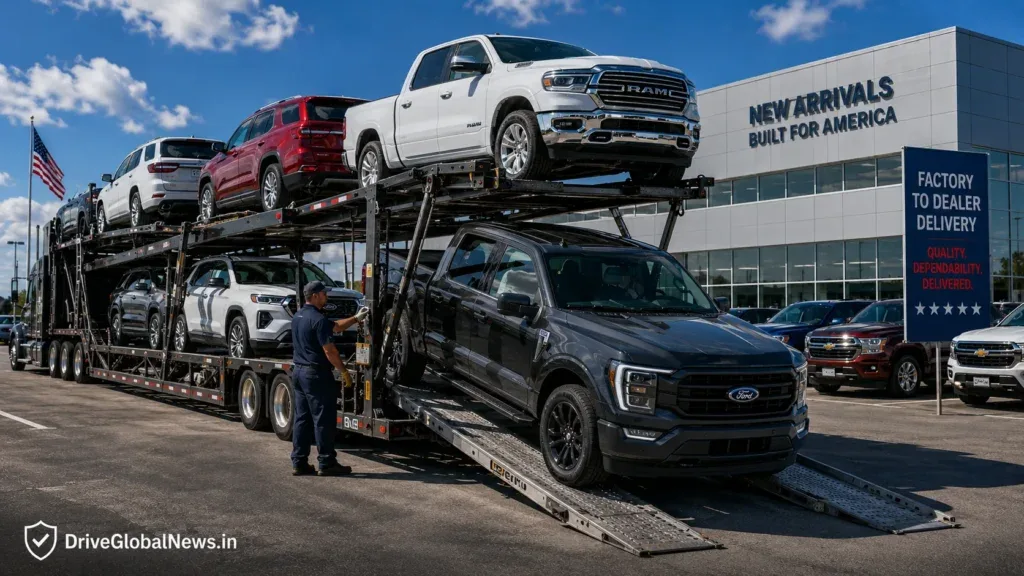
The destination fee — sometimes called a freight charge or delivery fee — is the cost of transporting a vehicle from the manufacturing plant to the dealership. Every new car sold in America has one. It’s been a standard part of new car pricing for decades.
The original logic was simple and fair. Moving a vehicle from a Michigan assembly plant to a dealer in Phoenix costs money. That cost gets passed to the buyer through the destination fee. Reasonable.
What’s happened since then is less reasonable.
Destination fees have grown at a rate that has nothing to do with actual transportation costs. When fuel was $4.50 per gallon and trucking costs spiked, destination fees jumped. When fuel prices moderated, destination fees didn’t come back down. They ratcheted up and stayed up.
KBB’s August 2026 data shows the average destination fee across all new vehicles now sits at $1,847. Ford’s F-150 and GM’s Silverado are at the top at $2,795 — a figure that has increased roughly 25% in the past two years alone.
For reference: when the average F-150 sells for around $56,000, the destination fee alone represents 5% of the purchase price. For a charge that covers moving the truck from a factory to a dealer lot.
The Part That Should Actually Anger You
Here’s what separates destination fees from other standard car expenses.
You can shop around for a better interest rate. You can negotiate the purchase price. You can skip optional add-ons. You can choose a trim with fewer features to hit your budget.
The destination fee? Identical at every dealer in the country selling that model.
It doesn’t matter if you live one mile from the assembly plant or 2,000 miles away. If you buy an F-150 in Dearborn, Michigan — where Ford makes it — you pay $2,795. If you buy the same truck in Anchorage, Alaska — where shipping it actually costs money — you also pay $2,795.
The fee has no relationship to your actual geographic location. It’s standardized nationally by the manufacturer — which means it’s essentially a hidden price increase that bypasses the MSRP headline number that most buyers research.
When Ford raises its MSRP by $500, that shows up in every comparison, every negotiation, every buyer’s research. When Ford raises its destination fee by $500, most buyers never notice.
That’s why destination fees have risen 25% in two years while MSRP increases have gotten public scrutiny and pushback.
Can You Negotiate the Destination Fee?

Direct answer: No — with the manufacturer. Yes — with the dealer.
The manufacturer sets the destination fee and dealers cannot legally advertise below it. If you call Ford’s customer service, they will tell you the destination fee is mandatory and non-negotiable. Technically true.
But here’s what actually happens in negotiations.
The destination fee is a legitimate cost that the dealer paid to receive the vehicle. You cannot get it removed from the purchase agreement. However, a dealer who is motivated to sell can effectively absorb the destination fee into their overall discount from MSRP.
Example: an F-150 with MSRP of $56,000 and a $2,795 destination fee has a total price of $58,795. If a dealer offers you $3,500 off MSRP, your effective price is $55,295 — plus the $2,795 destination fee brings you to $58,095. The destination fee is still on the paperwork. But the dealer’s discount more than covered it.
The practical takeaway: negotiate total out-the-door price, not price plus fees separately. Tell the dealer: “My budget is $X out the door — including destination, doc fees, and everything except tax and registration.” Force the negotiation onto the total number rather than letting them separate out fees that look smaller in isolation.
The Other Fees That Are Actually Negotiable
Since we’re here — destination fees aren’t the only charge on a new car purchase sheet that most buyers don’t examine closely enough.
Documentation fee (doc fee): What the dealer charges to process paperwork. Ranges from $85 in some states to $799 in others. This one IS negotiable in most states. Ask for it reduced or waived entirely.
Dealer add-ons: Paint protection, fabric protection, VIN etching, extended warranties presented at signing. All optional. All frequently marked up dramatically over actual cost. All negotiable or refusable.
Advertising fees: Some dealers add a regional advertising fee to the purchase. Not required by the manufacturer. Negotiable.
Preparation fees: “Prep” charges for cleaning and inspecting the vehicle before delivery. The dealer did this regardless of whether you pay for it explicitly. Negotiable.
The destination fee is the one that isn’t truly negotiable on its own — but it’s also the one most people simply accept without understanding why they’re paying $2,795 for a truck to drive itself off an assembly line.
The Honest Bottom Line
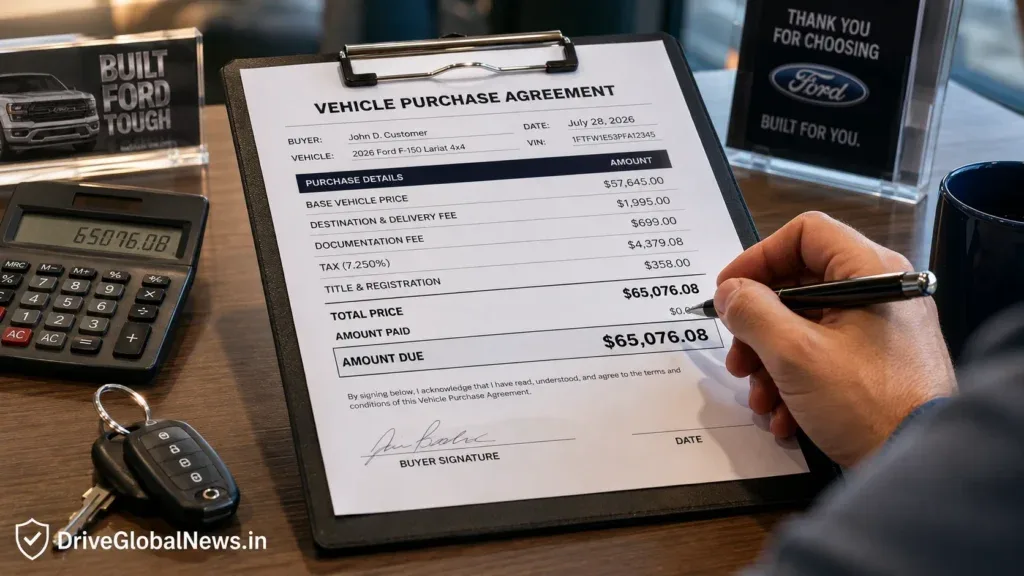
Every car you buy in America in August 2026 includes a destination fee that didn’t exist in its current form when your parents bought their first car. It’s higher than it’s ever been. It’s going up faster than inflation. And it will continue going up because most buyers don’t know it exists until they’re sitting in the finance office with a pen in their hand.
Knowing it exists before you walk in is worth exactly what it costs you not to know it.